
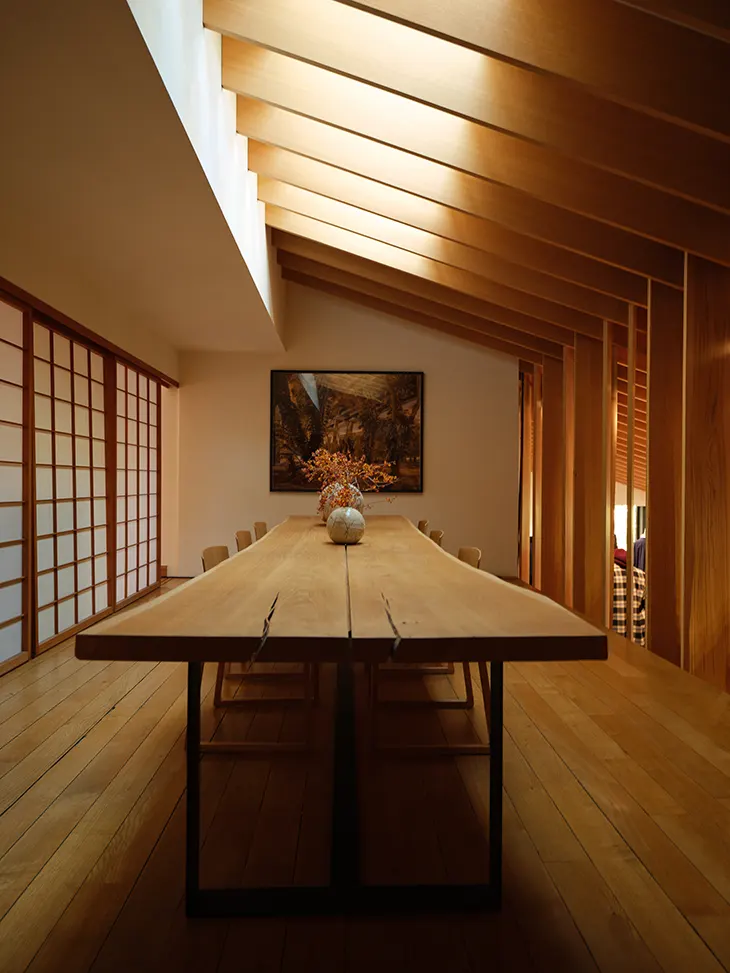
For Paris Men’s Fashion Week 2026, KENZO returned home. Creative director Nigo welcomed guests to the former residence of Kenzo Takada, transforming the designer’s private sanctuary into the stage for his Fall-Winter 2026 collection. The choice of venue was more than symbolic: it was a statement about the enduring dialogue between architecture, fashion, and the cross-cultural vision that has defined the house since its founding.
The House: A Japanese Oasis in the Bastille
Hidden in the heart of Paris’s Bastille district, the 1,600 square meter residence stands as one of the city’s most remarkable private homes. Designed by Kenzo Takada and his partner, architect Xavier de Castella, the four-level cedar-clad structure took nearly seven years to complete. The first stage of building work finished in 1989, with all materials imported directly from Japan. Following de Castella’s death in 1990, Takada oversaw the completion of the house in 1993 and lived there until 2009.
Imagined as an “oasis house,” the residence served as both private sanctuary and creative vitality for Takada. It was a space for meditation and rest, but also for photoshoots, showrooms, and the legendary parties that became part of fashion folklore. Set in the courtyard of an 18th-century apartment building, the home exists as a world apart from the surrounding city.
East Meets West: The Architectural Philosophy
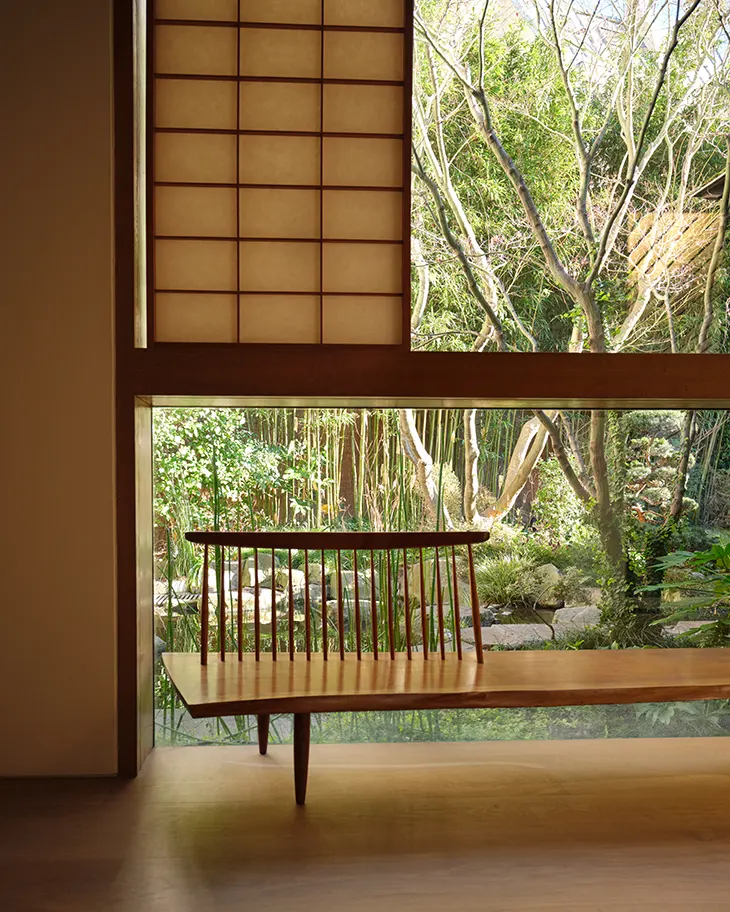
Like Takada’s eponymous Maison, the house brought together French and Japanese aesthetics in ways that still feel radical decades later. Modelled in part on his father’s teahouse in Himeji, Hyōgo Province, the home included a traditional space for tea ceremonies, tatami floor mats, and shoji sliding doors that slide open to reveal the garden beyond.
The Japanese garden itself remains one of the property’s most striking features: bamboo, junipers, mosses, maple and cherry trees surround a rocky koi carp pond. “You could be in Kyoto,” Takada once said, with justification. The garden required minimal intervention during later renovations, its careful maintenance preserving Takada’s original vision.
Yet in other areas, the house embraced a thrilling eclecticism. The sprawling interior juxtaposed Japanese screens with 18th-century French daybeds, African artifacts with South Asian textiles. This vivid patchwork epitomized Takada’s approach to both fashion and life: cultures mixing freely, codes colliding and recombining into something new.
Kengo Kuma’s 2018 Renovation
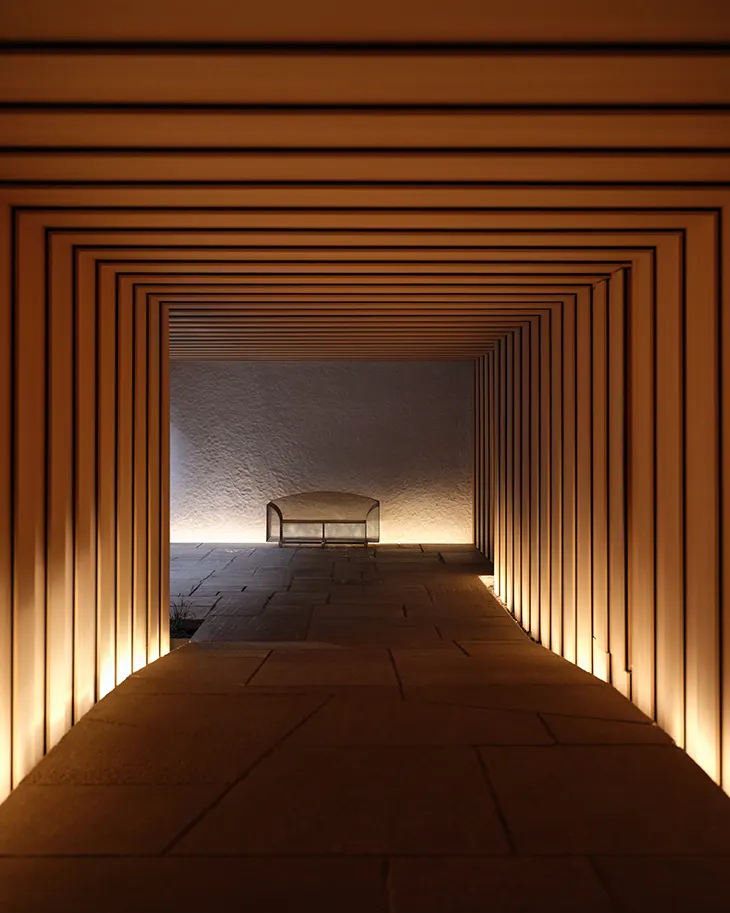
When French entrepreneurs Isabelle and Olivier Chouvet, founders of The Independents, acquired the property, they commissioned architect Kengo Kuma to refresh the residence for contemporary use. The 2018-2019 renovation stayed faithful to Takada’s original intentions while lifting the property into a new phase.
“Although I’d never been inside the house, I had always known about it and been curious how such a beautiful Japanese garden had been created in the heart of Paris,” Kuma noted. “The condition of the garden was just perfect, so carefully maintained. And I could feel Kenzo’s spirit in every part of the building.“
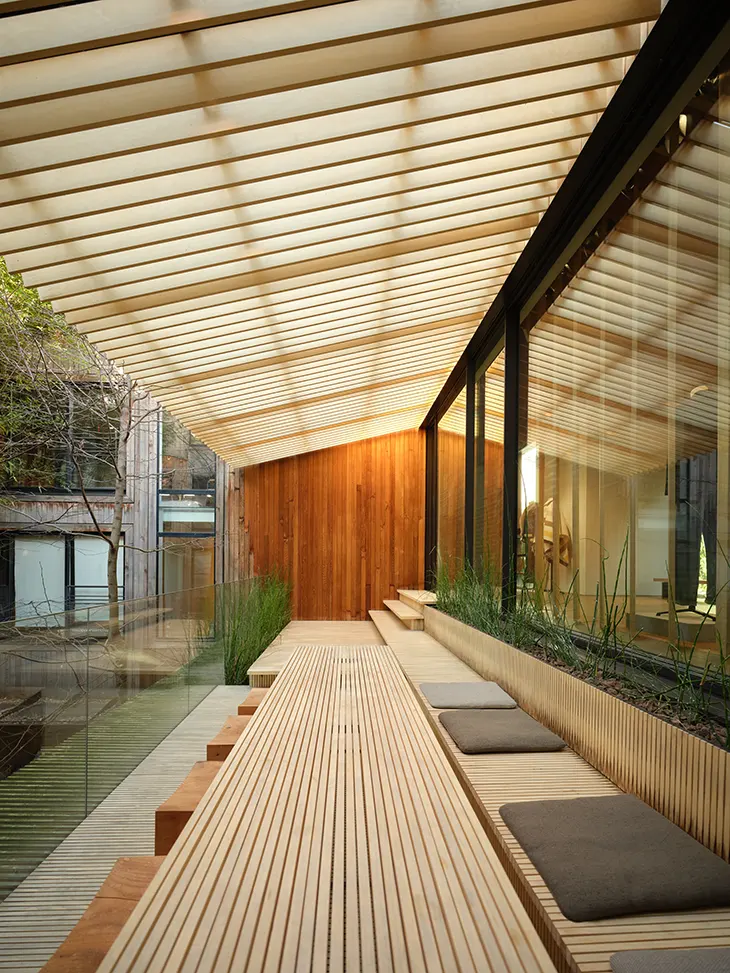
Kuma partnered with local architect Loïk Corre of Atelier Kiol, who had worked closely with Takada on the original house. The biggest structural change involved removing the indoor lap pool and replacing it with a glass-roofed, cedar-walled terrace that opens views into the inner courtyard. The solid wall between dining and living rooms was removed, and natural materials including wood, stone, and soil-based plaster applied by Japanese artisans brought warmth and texture to updated areas.
Towering planks of French oak, their edges left natural, now serve as vertical louvers between living and dining spaces. Japanese ash was used for massive pivoting doors at the entry and in the master bedroom. The tatami-floored portion of the house, including the tearoom that Kuma described as “of a quality that would be hard to find even in Japan,” was refreshed but otherwise left intact.
The Presentation: Fashion Meets Architecture
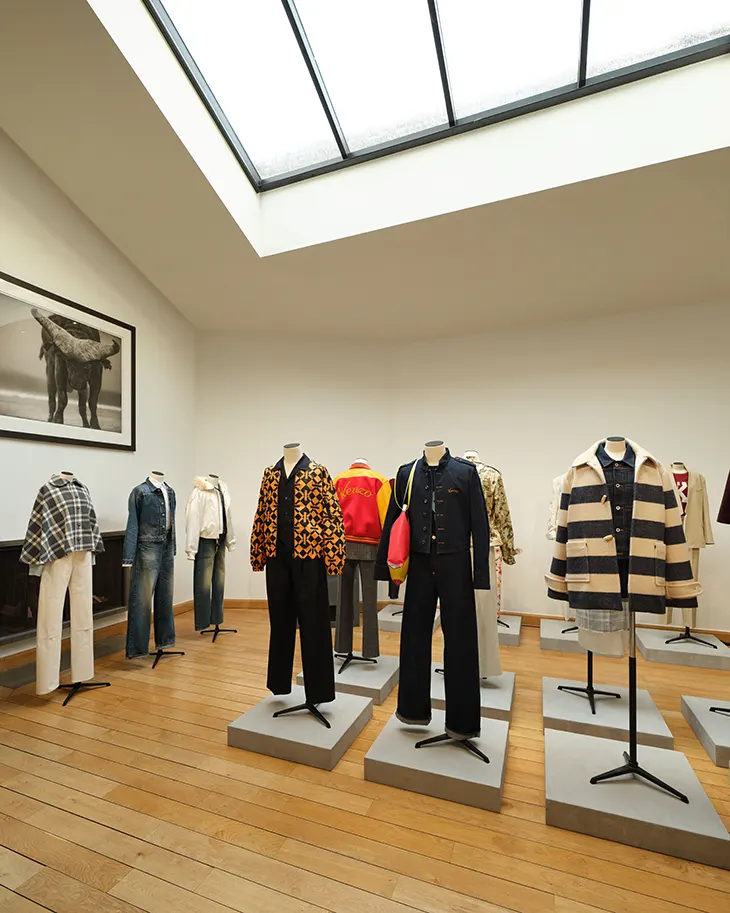
For Fall-Winter 2026, Nigo used the house’s unique character to frame his collection. Kenzo Takada used to meditate in a specific spot in front of the koi pond, and Nigo reenacted this ritual when visiting the house for the first time. The gesture speaks to the continuity between founder and successor, and to the way architecture can hold memory and meaning.
A library room presented a select curation from the KENZO archive: sketches, editorials, and invitations charting the evolution of Takada’s creativity from the founding of his Maison in 1970 through the late 1990s. The space also featured a men’s quilted jacket from Fall-Winter 1983 and a woman’s embroidered jacket from Fall-Winter 1987. The archival display attested to the originality of Takada’s vision and to shapes and codes that remain generative for Nigo today.
In the kitchen, Télescope, Nigo’s favorite coffee shop in Paris, provided a bespoke menu using the designer’s preferred coffee filter, recreating his routine stop between home and the KENZO atelier. Sweet and savory snacks included matcha cookies, a mini ham sandwich with shiso, and fresh goat cheese in nori leaf and ume.
Architecture as Brand Statement
The decision to stage a fashion presentation in a private residence rather than a conventional venue reflects broader shifts in how luxury houses communicate their values. Architecture becomes narrative, space becomes message. For KENZO, a house founded by a Japanese designer in Paris and now led by another Japanese creative, the Takada residence embodies the cross-cultural dialogue that defines the brand.
The house’s continued relevance, more than three decades after its completion, speaks to the timelessness of Takada’s vision. His approach to blending cultures anticipated the globalized fashion landscape that would emerge in subsequent decades. In returning to this source, Nigo signals both respect for heritage and confidence in the ongoing conversation between past and present.
Discover more in our gallery of the Kenzo Takada’s Residence:
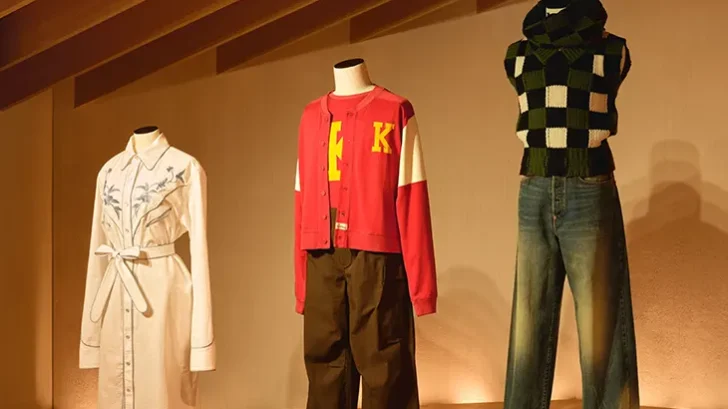
KENZO Fall-Winter 2026 was presented on Wednesday, January 21st, 2026, during Paris Fashion Week. The former residence of Kenzo Takada is currently owned by Isabelle and Olivier Chouvet, founders of The Independents. The 2018-2019 renovation was completed by Kengo Kuma & Associates in partnership with Atelier Kiol. Find more of the fashion collection on DSCENE Magazine.