
In Vilamacolum, a small village in Catalonia’s Alt Empordà region (Spain), architect Clara Crous has built a home that reads like a quiet manifesto on contemporary rural living. Casa al Pradet, completed in 2024, is the residence she designed for her own family on the last available plot along one of the village streets, a triangular site where agricultural fields meet the edge of domestic life.
Building with the Land
The project emerged from circumstance as much as intention. Crous’s partner Carles, who works in digital fabrication with wood and plastic, comes from a local farming family with access to machinery capable of handling large-scale materials. This practical advantage shaped the entire approach: Casa al Pradet was conceived from the outset as a self-construction project, with design, technical resources, and timelines woven together from the first sketch.
INSPIRING HOMES ON ARCHISCENE
Construction began at the end of the corn harvest, when local labor became available to participate. What could have been a scheduling convenience became something more deliberate—a decision to align the building process with the agricultural rhythms that have defined this landscape for generations.
Structure and Form
The house rises on a light timber frame, prefabricated in the workshop to optimize efficiency. From this skeleton, Casa al Pradet unfolds as a series of modules varying in shape and height, echoing the vernacular outbuildings traditionally added to Catalan masias as families expanded over time.
Elevated 1.2 meters above grade, a response to the site’s position at the village’s lowest point, where rainwater flows toward a river below, the house also shields itself from the tramontana, the fierce wind that sweeps through the region. The staggered volumes follow the triangular geometry of the plot while referencing the fragmented massing of traditional country houses nearby.
Material Language
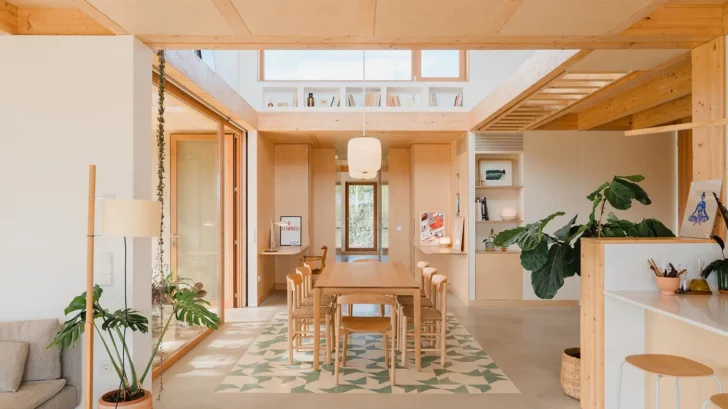
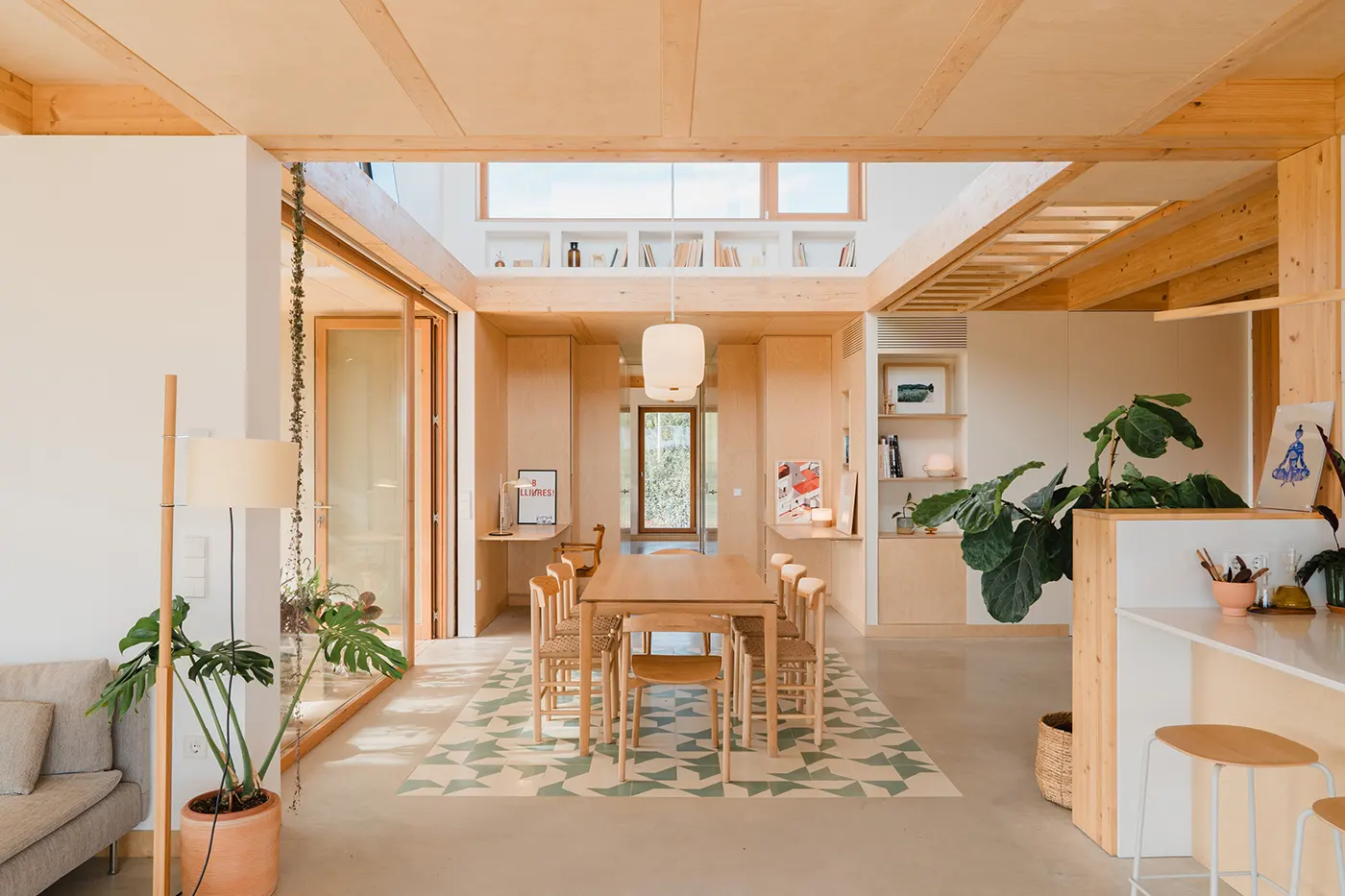
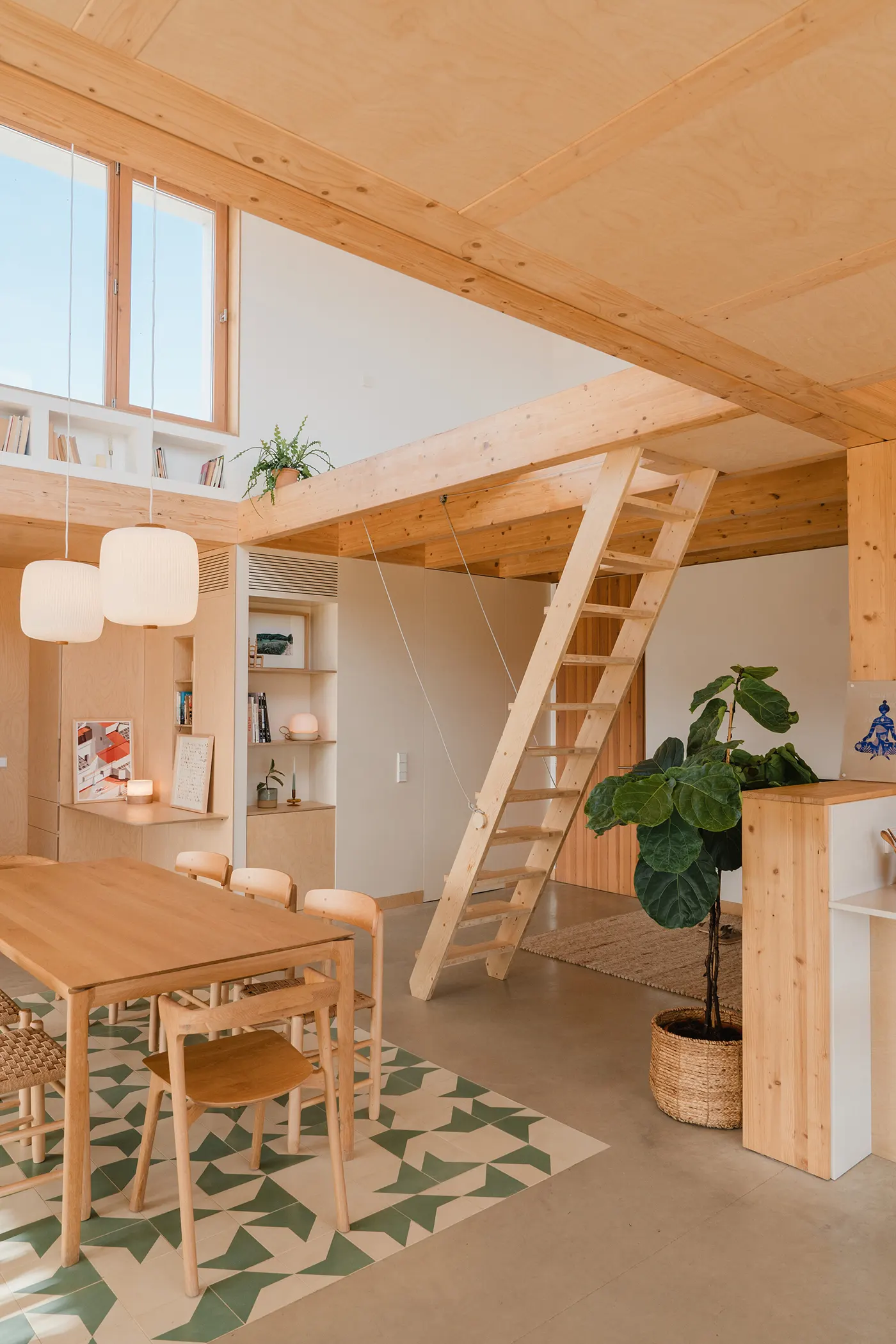
Local and natural materials anchor the project in its context. Cork, lime mortar, adobe, hydraulic tiles from Mosaics Torra, and handmade ceramics appear throughout floors, skirtings, exterior surfaces, and architectural details. Inside, three-layer spruce wood shapes both structure and furniture, wall panels, custom shelving, and the kitchen, creating continuity and warmth across every room.
The façade wears crushed lime mortar. Ceilings combine spruce laminated beams with birch panels. Polished concrete covers the ground floor, while hand-cooked terracotta extends across exterior surfaces and terraces. Bathrooms feature lime stucco, clay walls, and handmade beige artisanal zellige.
Tradition Meets Technology
Traditional elements coexist with contemporary solutions throughout. Barcelona-style shutters have been motorized and connected to a smart system that adjusts them according to sun exposure and wind conditions. Pine wood frames the windows, finished with oven-painted iron on the exterior. A perimeter of ceramic gravel aids drainage around the house, completing a construction approach where every decision balances inherited knowledge with technical precision.
Interior Details
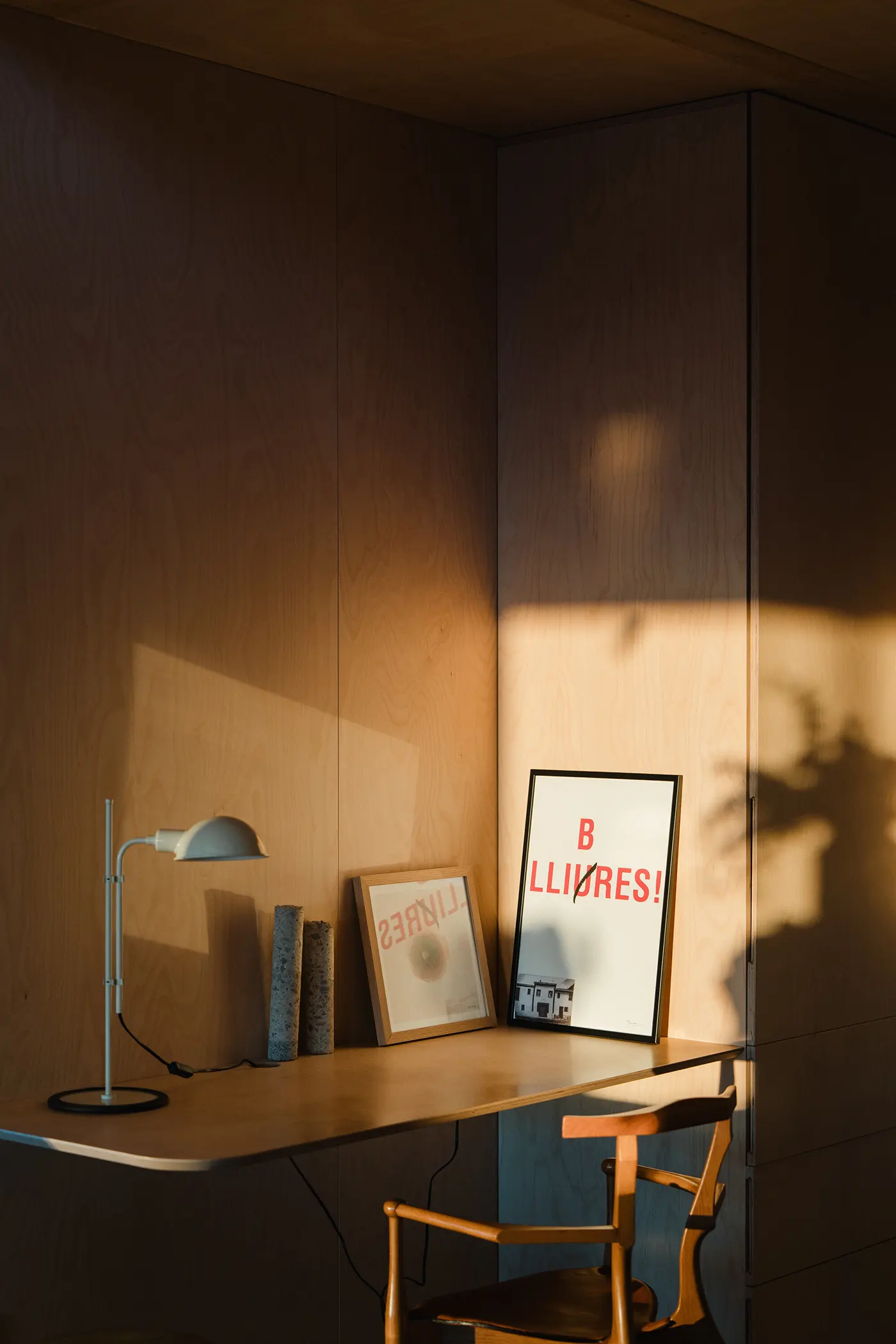
The furnishings reinforce the project’s commitment to craft and regional identity. Chairs, stools, and armchairs come from Vergés Design. The Formentor armchair by Blasco&Vila and the Maca hammock by Calma Outdoor furnish the living spaces. Lighting includes pieces from Santa & Cole (Cesta, Disa, and TMM lamps), a small linden and alabaster lamp by Siete Formas, a kitchen bar lamp from IHI Studio, and a wooden bedside lamp by Alex Mestre. The Funículi lamp by Marset and the EK61 by Carl Hansen & Søn complete the selection. Faucets throughout are from Icónico, with switches by JUNG.
The kitchen, designed by Albert Aubach, features Compac countertops and a custom stainless steel hood.
Collaborators
Technical architect Francesc Xavier Coromina Corominas oversaw construction alongside contractor Fustech. Carpentry was handled by Deco Fusta Pey, blacksmithing by Moragas Salvans, and technical installations by Jaume Ruiz. Innovative wood solutions came from 7VETES, with polished concrete floors by Grup Curanta.
About Clara Crous Arquitectura
Founded in 2017 in the Alt Empordà, Clara Crous Arquitectura focuses on residential design—renovations and new construction, with a commitment to natural materials, traditional techniques, and sustainability. The studio has also developed projects in tourism, including holiday rentals, campsites, and restaurants, always approaching each commission with sensitivity to context, identity, and memory.
Working locally remains a priority, collaborating with regional artisans and sourcing nearby materials. The studio’s projects have appeared in AD, Diseño Interior, On Diseño, and La Vanguardia.
Discover more of the project in our gallery: