

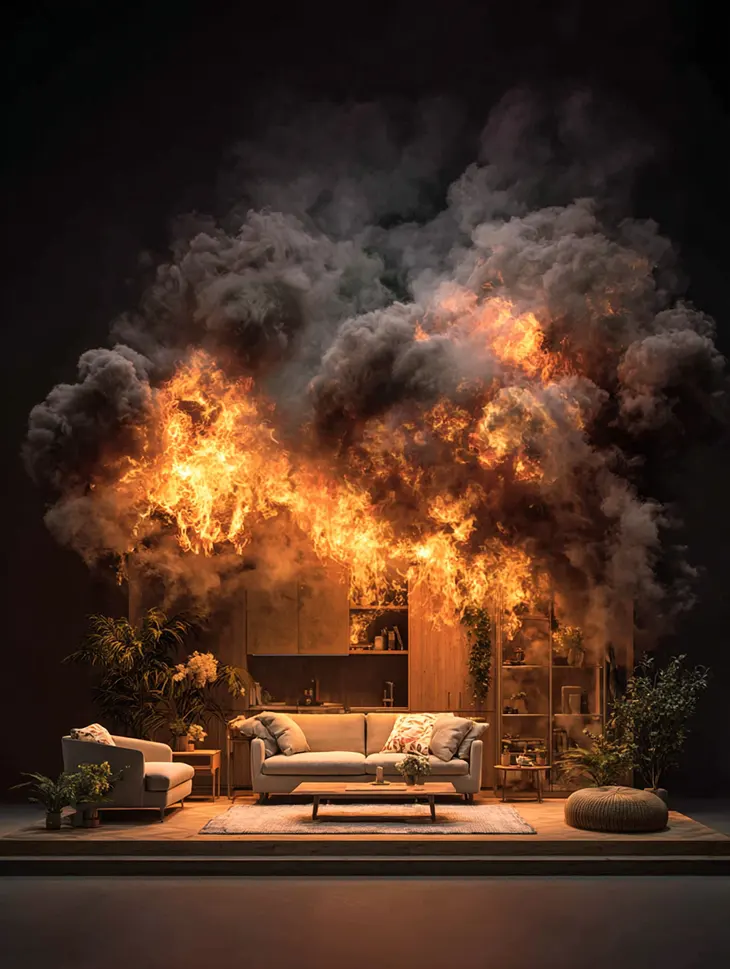
Forty years ago, the average person had roughly 17 minutes to safely exit their home after a fire started. Today, that number has plummeted to just about three minutes, and in some cases, even less. This dramatic reduction is not due to changes in fire department response times or building codes, but to a fundamental shift in the materials used to construct and furnish our homes.
The escape time itself is a showcase of the stark difference between then and now. ARCHISCENE Editors investigate:
Synthetics: The Double-Edged Sword of Modern Living
The interiors of homes built in the 1970s were dominated by natural materials, solid wood, cotton, and wool. These substances burn slowly and produce less toxic smoke. As a result, fires spread at a manageable pace, and residents had more time to react and escape. Modern homes, in contrast, are filled with synthetic materials: polyurethane foam in sofas and mattresses, polyester in carpets and curtains, and plastics in a wide range of household goods. While these materials have made furniture more affordable and design more versatile, they are highly flammable and contribute to fires that ignite rapidly and burn with intense heat.

The Science: What Fire Safety Experts Have Discovered
Underwriters Laboratories (UL) conducted a controlled experiment to compare fire development in two nearly identical rooms whole measuring the house fire escape time, one furnished with legacy materials, the other with modern synthetics. The legacy room took over thirty minutes to become life-threatening, while the modern room became unsurvivable in less than three minutes. This experiment, widely cited in fire safety literature, demonstrates just how quickly synthetic materials can turn a small flame into a deadly inferno.
The Hidden Killer: Toxic Smoke and House Fire Escape Time
The house fire escape time is also impacted by smoke – Most fatalities in house fires are not caused by burns, but by smoke inhalation. The smoke from burning synthetics contains a cocktail of toxic gases, including carbon monoxide and hydrogen cyanide. According to the National Fire Protection Association (NFPA), these gases can render a person unconscious in under a minute—often before they are even aware of the fire. Rapid incapacitation is a major reason why escape times have become so short in modern homes.
Action Steps to Improve Home Fire Safety
- Install smoke alarms on every level and in every sleeping area
- Test alarms monthly and replace batteries annually
- Develop and practice a home fire escape plan, aiming for an escape time under three minutes
- Choose furnishings with natural fibers or certified fire-retardant materials when possible
- Keep escape routes clear and easily accessible
What This Means for Designers, Homeowners, and Renters
The implications for interior designers, architects, and homeowners are significant. The affordability of synthetic, fire-prone materials has made them ubiquitous in today’s market. Mass-produced furniture, mattresses, and textiles are now available at a fraction of the price of their natural counterparts, fueling a global shift toward interiors filled with products that can turn deadly in minutes. This trend is not isolated to any one region; it’s a worldwide phenomenon, affecting urban apartments and suburban homes alike.
RELATED: Designing Architecture for Safety
This reality demands a heightened commitment to fire prevention and safety from everyone involved in shaping our built environment. Specifying natural or fire-resistant materials, even in select high-risk zones like bedrooms and living rooms, can significantly reduce danger.
For homeowners and renters, it’s crucial to recognize that the furniture and finishes chosen for a home directly impact escape times and survivability in a fire. Ensuring that smoke alarms are installed and functional, developing a practiced escape plan, and keeping escape routes clear are no longer optional, they are essential steps for modern living. As the market continues to prioritize affordability and convenience, it is more important than ever to advocate for safety standards, demand transparency from manufacturers, and make informed decisions about what we bring into our homes.