
For the Fall Winter 2026/27 presentation in Milan, Marni invited Formafantasma to develop the spatial environment for the runway show titled Dioramas of Everyday Life. Working under the creative direction of Meryll Rogge, the design studio constructed a temporary architecture that reflects on the relationship between fashion, lived experience, and representation. The result transforms the runway into an installation where garments, spectators, and fragments of ordinary life coexist within a layered visual field.
SET DESIGN
The show took place inside the Marni showroom on Viale Umbria on February 26, 2026. Formafantasma approached the set as a device for examining how fashion operates within everyday environments. Runway presentations typically isolate garments through controlled lighting, choreography, and perspective. Instead of masking this structure, Dioramas of Everyday Life acknowledges the artificiality of the runway and uses it to explore how clothing circulates between staged presentation and real life.
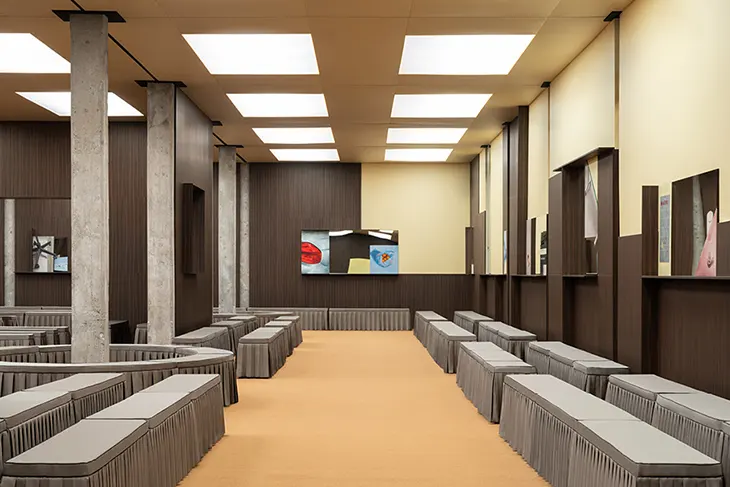
The architecture of the set resembles the interior framework of a building. Wooden structural elements define recognizable spatial proportions, suggesting corridors and rooms while remaining intentionally incomplete. This fragmentation avoids the appearance of a finished interior and instead frames the runway as an environment in transition. The structure situates the audience and models within a shared spatial field where observation becomes part of the performance.
At ground level, the designers replaced the conventional runway carpet with an unexpected element. The floor takes the form of an oversized doormat, enlarging a familiar domestic object until it becomes architectural. The gesture introduces the concept of threshold. A doormat marks the passage between exterior and interior space, and its monumental scale places the runway itself within this moment of transition. Visitors move from everyday reality into the staged environment of the show while remaining aware of both conditions.
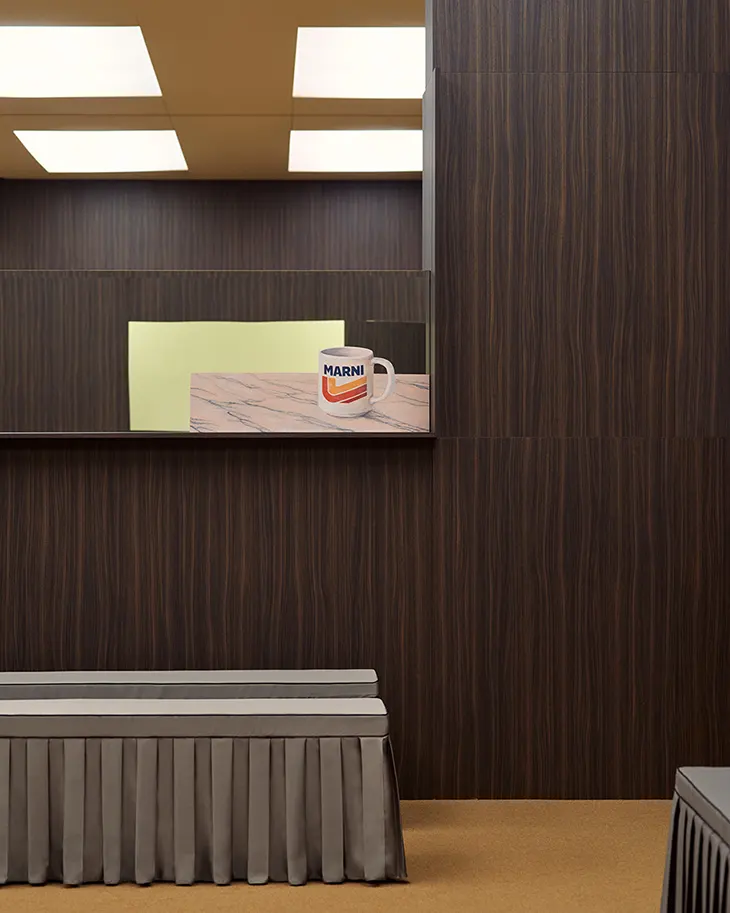
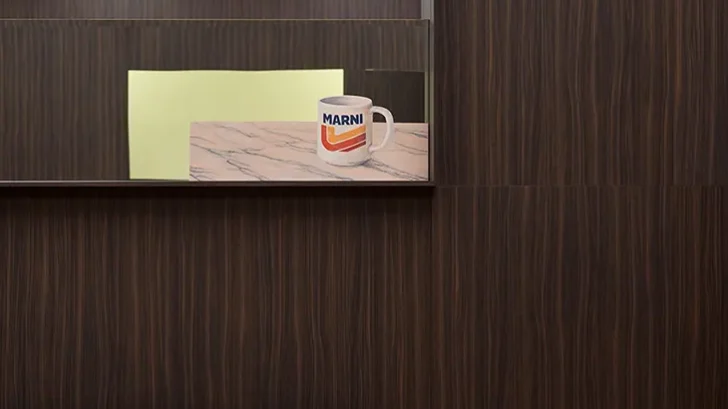
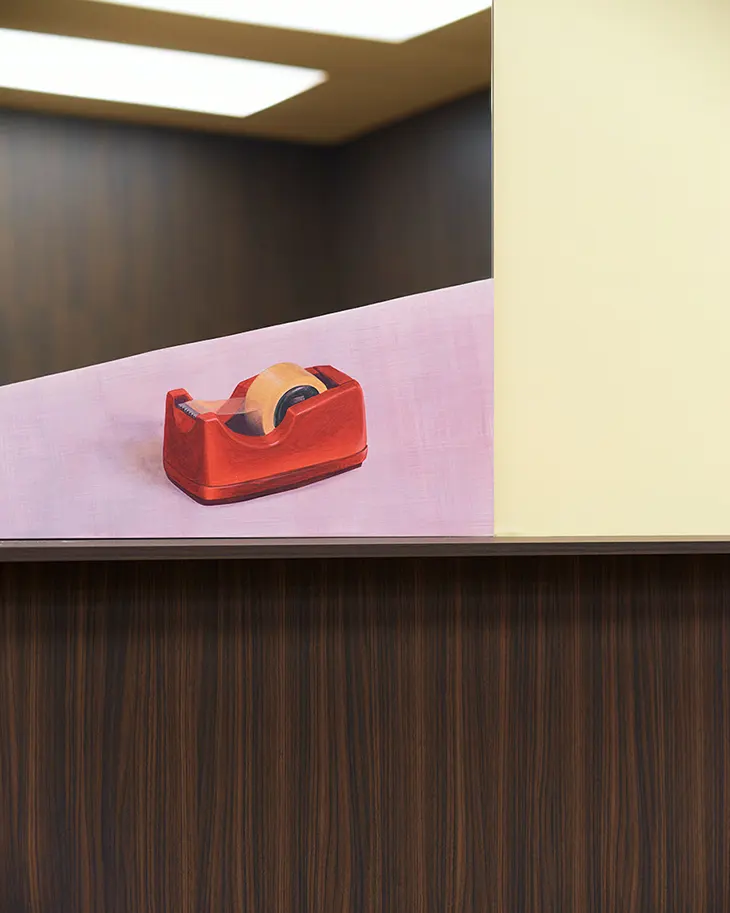
Mirrors form the central element of the installation. Positioned throughout the structure, these reflective surfaces create multiple perspectives that dissolve clear distinctions between audience, models, and surroundings. The mirrors do not function as simple reflective panels. Each one carries hand-painted imagery drawn from fragments of ordinary life.
The painted scenes include objects that normally escape attention: a car door, an office chair, leftovers on a table, a computer interface, a surveillance camera. These details represent peripheral elements that accumulate within everyday environments without becoming focal points. By selecting such unremarkable subjects, the installation shifts attention toward the unnoticed background of daily life.
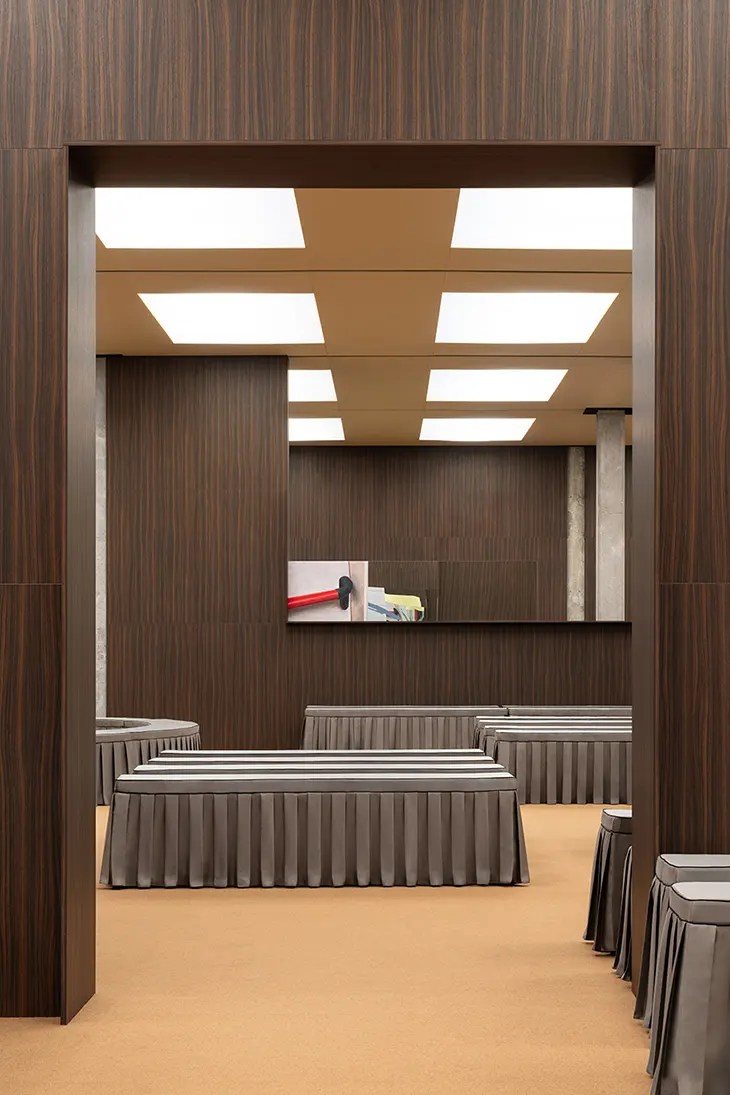
Reflection and painting operate together to construct a complex visual condition. When the mirrors capture the movement of models and spectators, the live reflections overlap with the painted images. The viewer encounters a surface where representation and presence occupy the same space. Clothing appears within this layered environment rather than as an isolated spectacle.
Formafantasma developed this approach through an ongoing dialogue with Meryll Rogge around the notion of the “real” in fashion. The designers and creative director shared an interest in presenting garments on bodies that feel present rather than idealized. In this context, the set functions as an environment where clothing remains connected to the rhythms of everyday life.
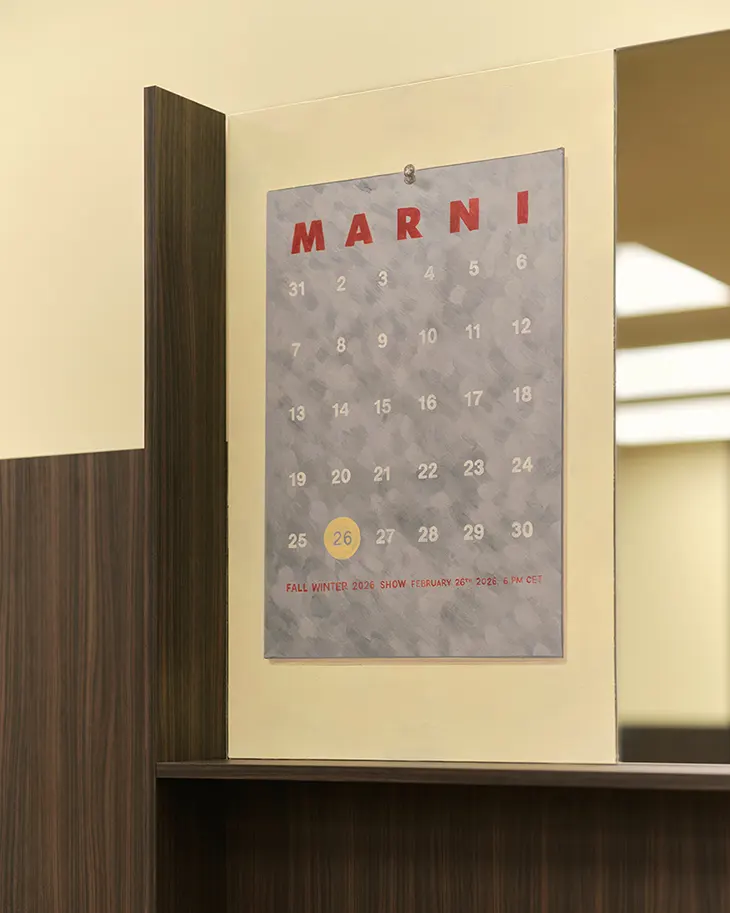
The decision to produce the imagery through hand painting introduces another dimension to the project. In a fashion system where digital images circulate instantly, painting requires time, repetition, and careful observation. The process slows the visual tempo of the installation. Brushstrokes remain visible, preventing the reflections from blending seamlessly into the painted scenes.
This slower rhythm echoes the life of clothing after the runway. Once garments leave the controlled conditions of a fashion show, they enter daily routines where they crease, move, and gather meaning gradually. The painted fragments emphasize this temporal dimension by holding ordinary scenes in place long enough for them to be seen.