
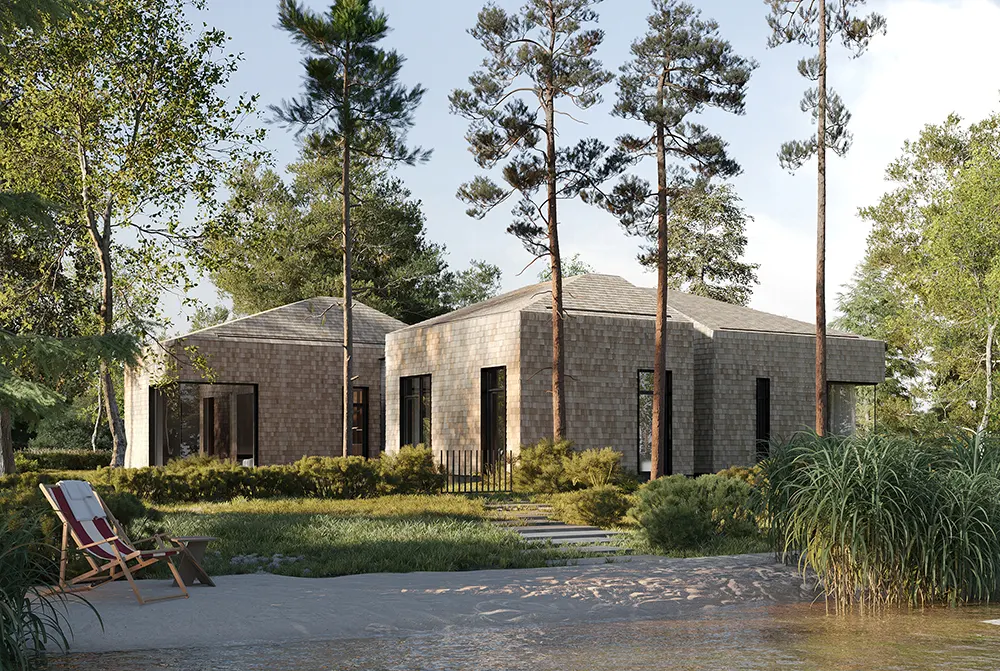
Set along the edge of the Volga River, The House of Five Roofs approaches domestic architecture through spatial sequencing and environmental control. Designed by Alexander Tischler LLC under the creative direction of Karen Karapetian, the project responds directly to the clients’ way of living, shaping a house that supports movement between work in Moscow and time spent near water. The site conditions drive the entire concept. Positioned between the river and a smaller inlet, the house establishes a clear relationship with its surroundings while maintaining privacy through its placement at the end of a cul-de-sac.
HOUSING
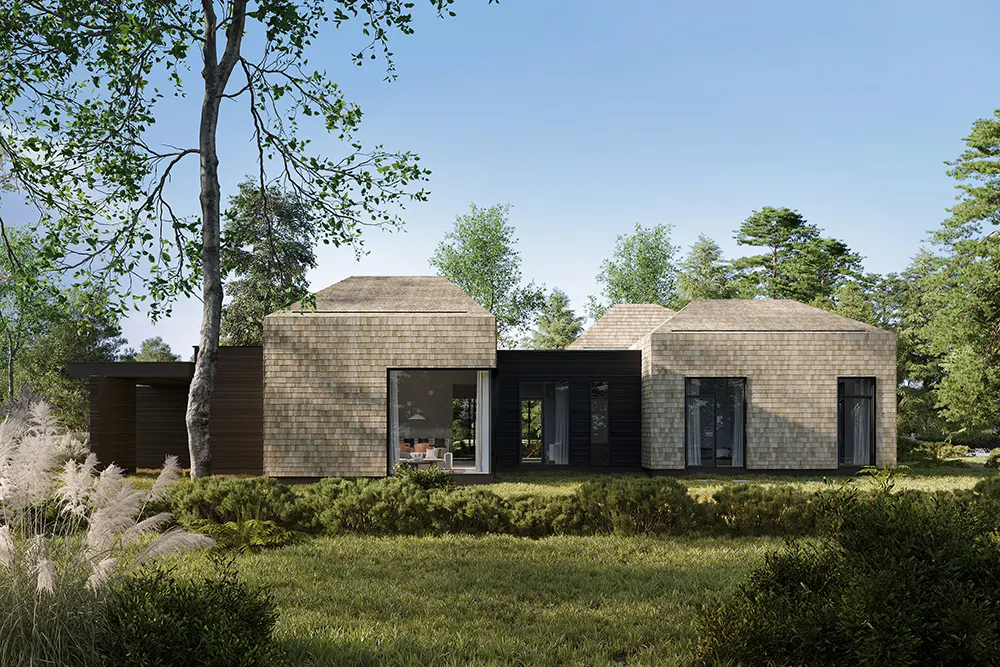
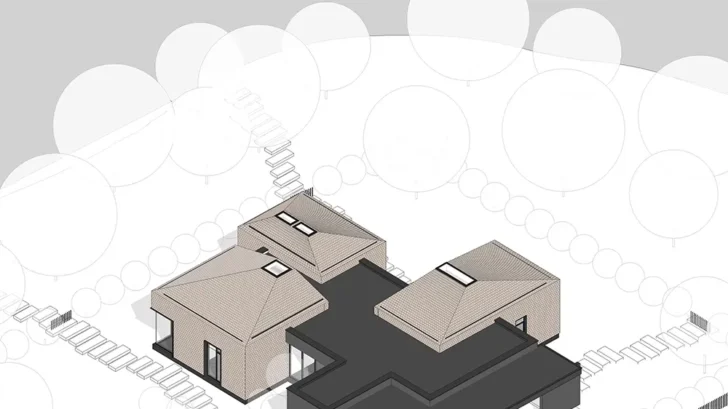
The architectural strategy begins with three primary volumes, each assigned a distinct function. One volume holds the kitchen and living room, another contains the master suite, and the third organizes the children’s rooms. This division allows each space to orient itself toward a specific view, ensuring that every room engages with the landscape in a controlled and deliberate way. Windows act as calibrated frames, offering varied perspectives of the river, garden, and surrounding vegetation rather than a single dominant view.
A central hallway connects these volumes, introducing a secondary layer of program that includes a study, guest suite, and service areas. This corridor functions as both circulation and spatial experience. From the entrance, the view extends toward a large window at the far end, establishing a continuous visual axis that anchors the house within its natural context. The sequence remains uninterrupted, reinforcing a sense of openness while guiding movement through the interior.
The house balances openness with privacy through its layout. Living spaces remain directly connected to the hallway, allowing for fluid movement and shared use, while the bedrooms shift further away from the entrance. This arrangement introduces a gradient of intimacy without relying on complex transitions. The absence of doors between the kitchen-living area and circulation spaces extends sightlines and strengthens the connection between interior zones and the landscape beyond.
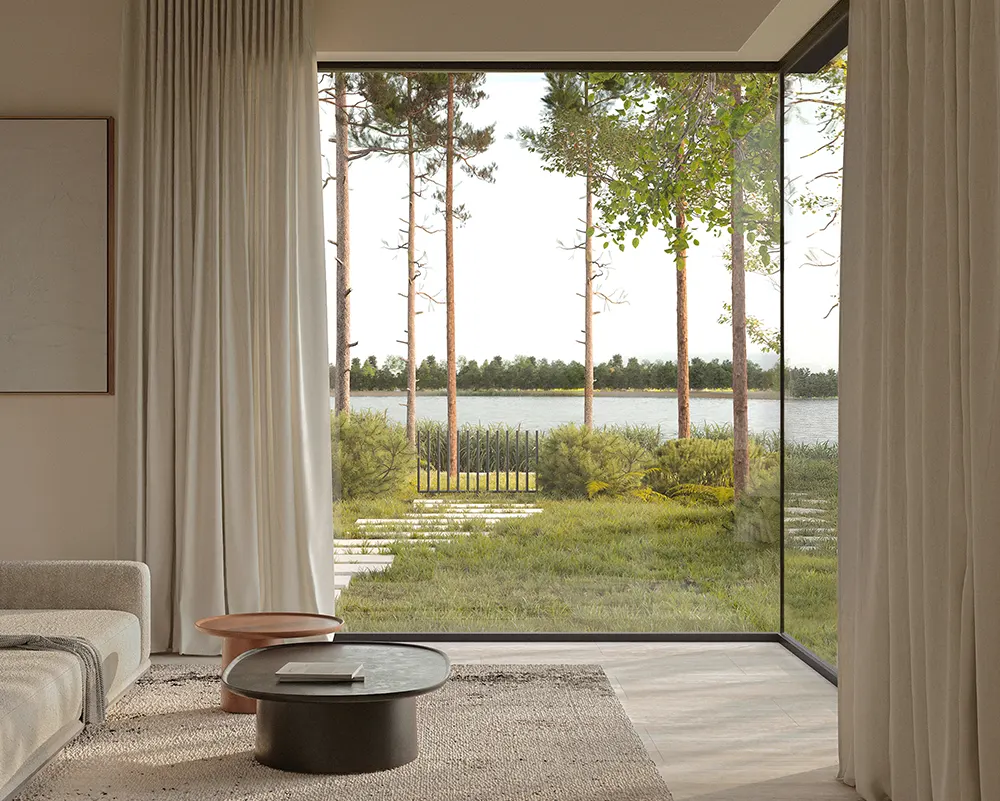
Material decisions reinforce this spatial clarity. Larch shingles cover both the facades and roof, creating a unified surface that will evolve over time as it weathers. Their texture introduces depth while maintaining a consistent architectural language across the volumes. In contrast, darker porcelain stoneware marks the service areas, producing a clear distinction between functional and residential zones. This contrast operates visually and programmatically, allowing the architecture to communicate its internal organization through its exterior expression.
Light plays a central role in shaping the interior. With the house oriented toward the north and limited southern openings, skylights become essential. They draw daylight into the core spaces, particularly within the double-height living areas where ceilings reach six meters. These openings extend the experience of the house beyond daytime use. At night, they frame the sky, reinforcing the distance from the city and strengthening the connection to the site.
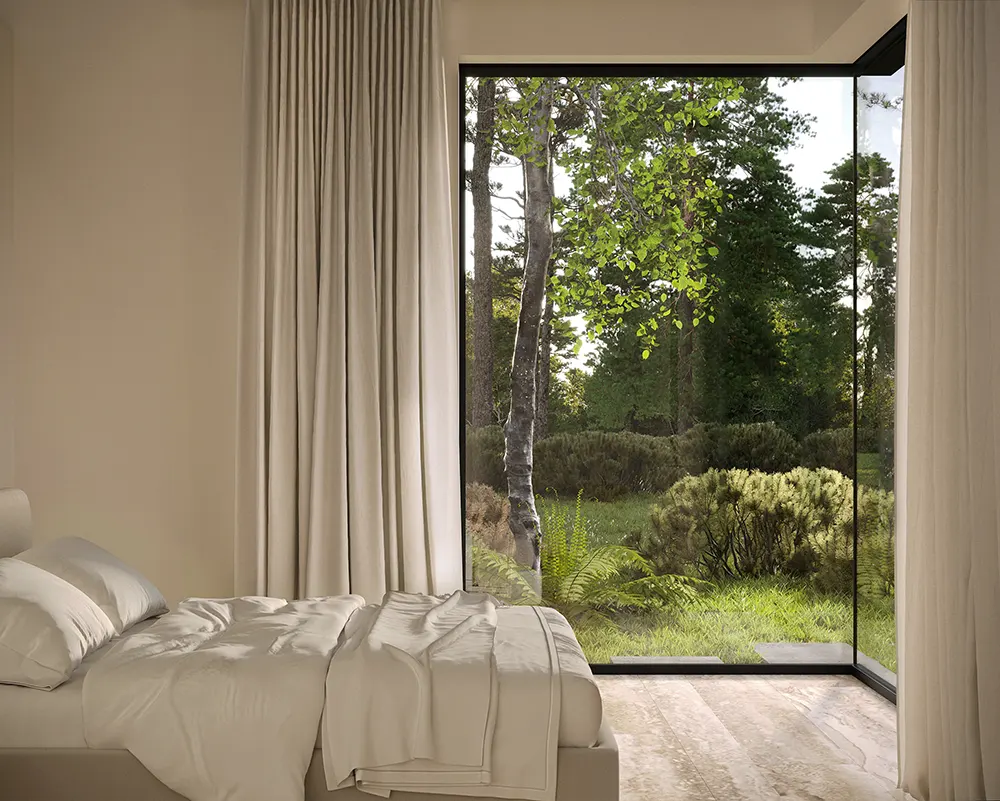
The project also considers outdoor space as an extension of the architecture. The positioning of the kitchen and living areas defines a courtyard that shields part of the garden from the road, creating a controlled exterior environment for daily use. At the same time, direct access to the river and surrounding landscape supports a lifestyle centered on proximity to water and open space.
Viewed from the shore, the clustered gable roofs recall a small settlement, reinforcing the relationship between the house and its setting. This composition avoids singular monumental form in favor of a distributed presence that aligns with the scale of the landscape. The House of Five Roofs, led by Karen Karapetian with Tatiana Cherkasova as Lead Project Architect and Diana Besedina as Lead Project Designer, does not rely on formal gestures. It organizes space, material, and light into a coherent system that supports daily life while maintaining a precise connection to its environment.
Company: Alexander Tischler LLC
Karen Karapetian: Creative Director;
Tatiana Cherkasova: Lead Project Architect;
Diana Besedina: Lead Project Designer;
Dimitri Rimss: Architectural Visualizer;
Vera Minchenkova: Copywriting