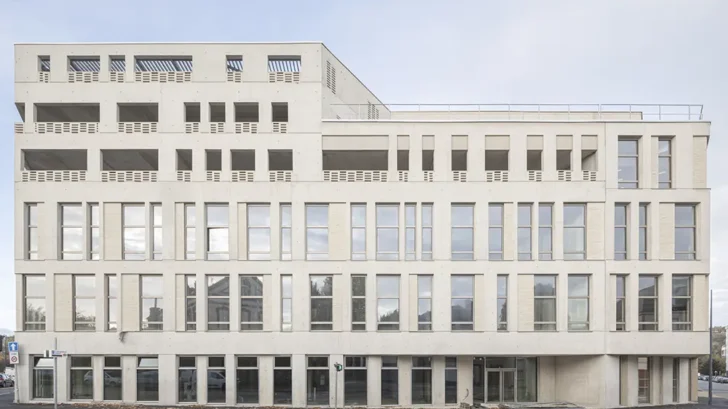

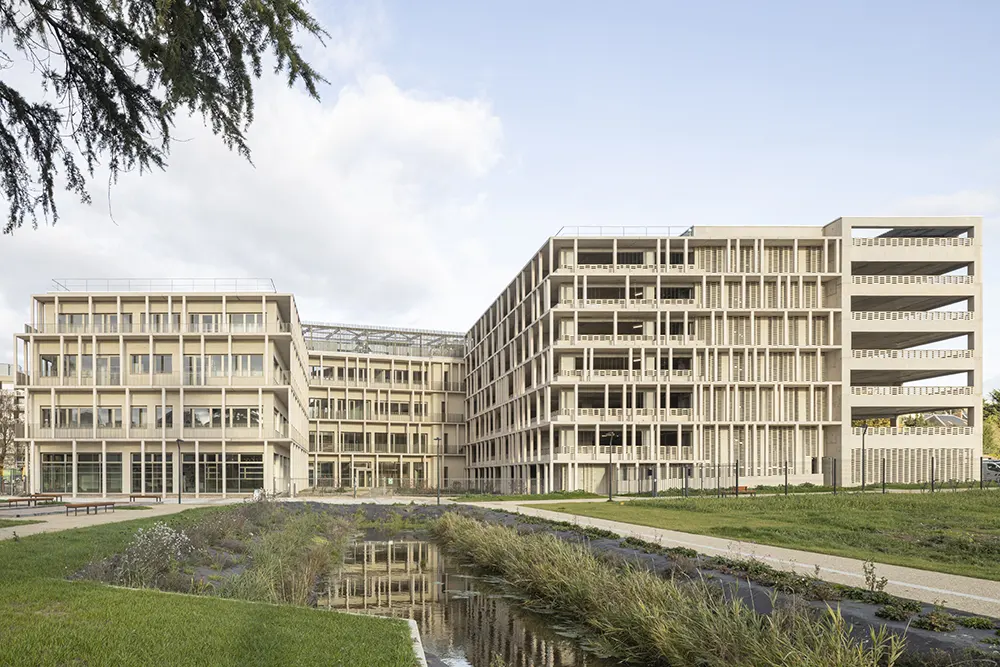
The Eure Paramedical Training Institute in Évreux does not present itself as a singular object. VIB architecture approaches the project as a working system where education, mobility, landscape, and urban life intersect. Located on the former Saint-Louis hospital site in the historic center, the building introduces a new layer to the city while carrying the weight of what stood there before. The program combines a healthcare training school with a 318-space parking structure, a decision that immediately sets the tone. This is a project built around coexistence, not separation.
EDUCATIONAL ARCHITECTURE
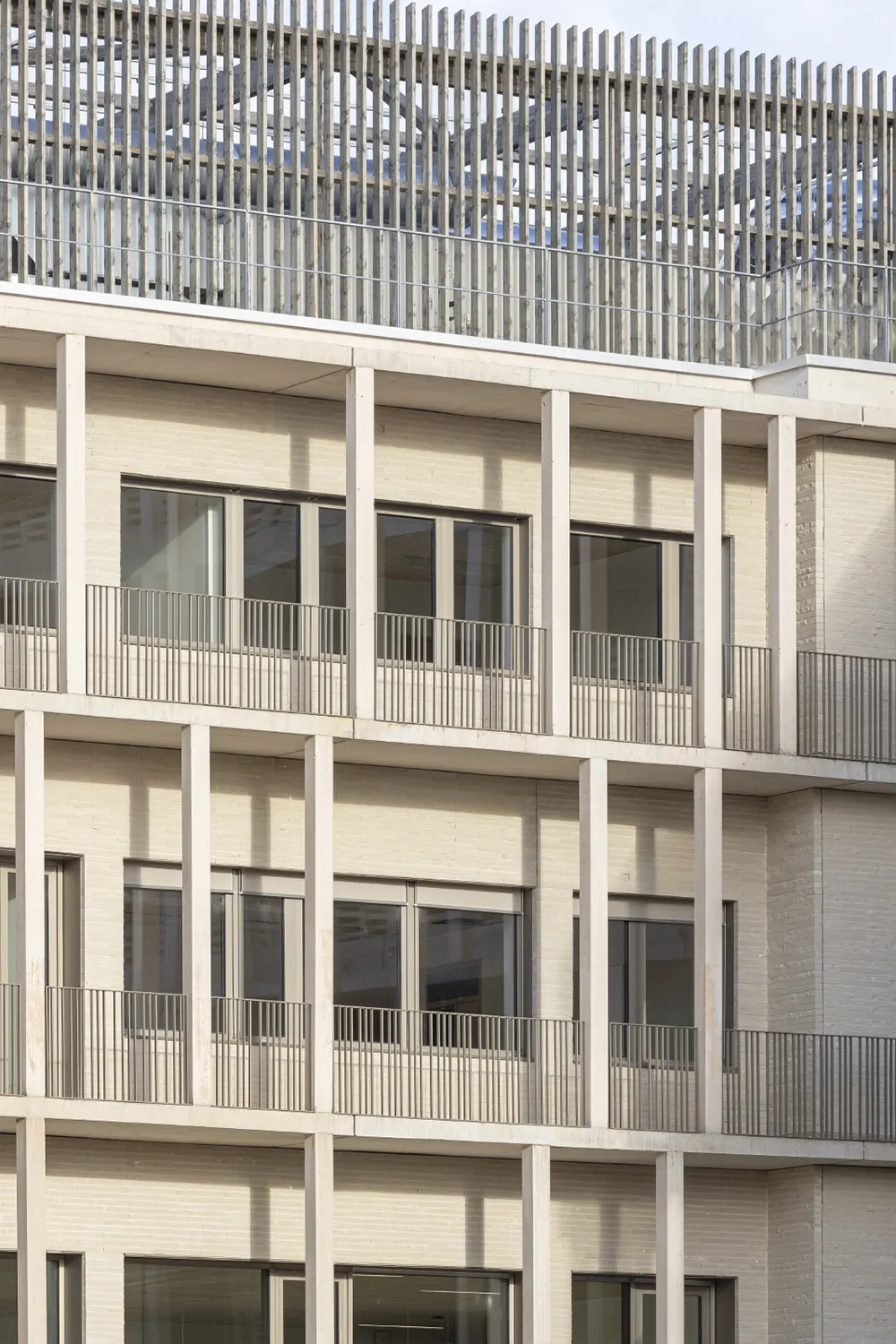
That coexistence defines the architecture. The U-shaped volume holds both functions without forcing them into a single expression. On the street side, the building aligns with the surrounding urban fabric through a vertical rhythm of openings that signal its public role. Toward the garden, the language shifts. Horizontal slabs, balconies, and external walkways open the structure toward light, air, and vegetation. This dual reading allows the building to respond to the city and the landscape at once, without compromise. The parking structure, often treated as secondary, becomes fully integrated into this composition. Split levels allow it to adapt over time, extending the lifespan of the building while maintaining spatial clarity.
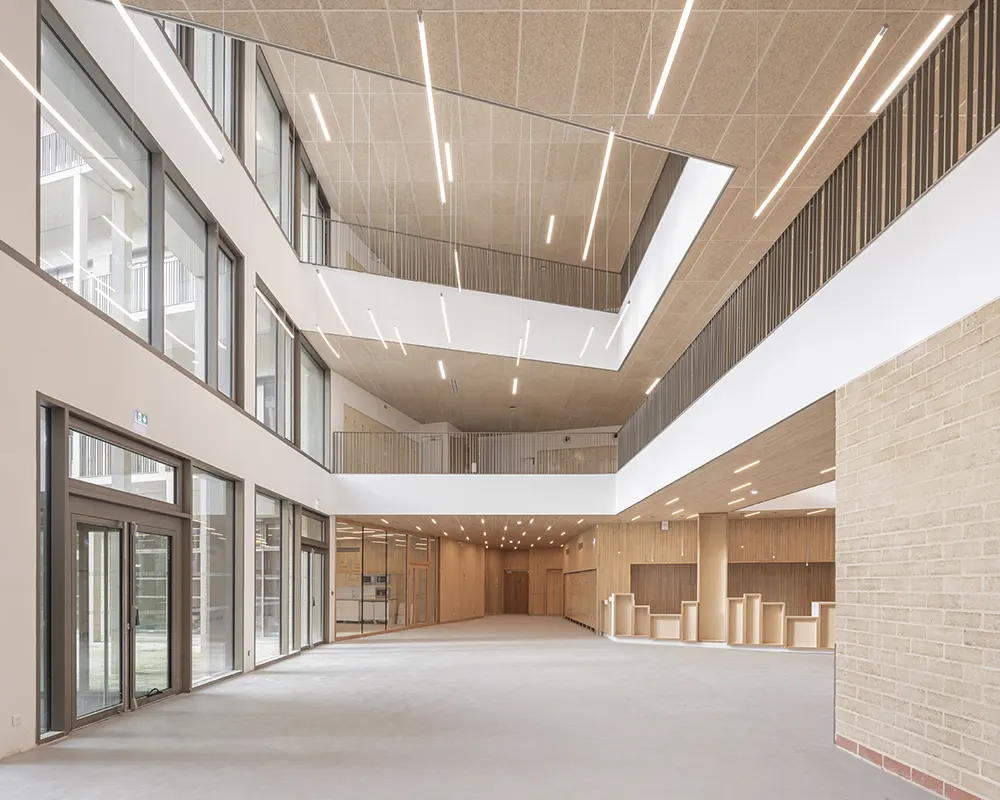
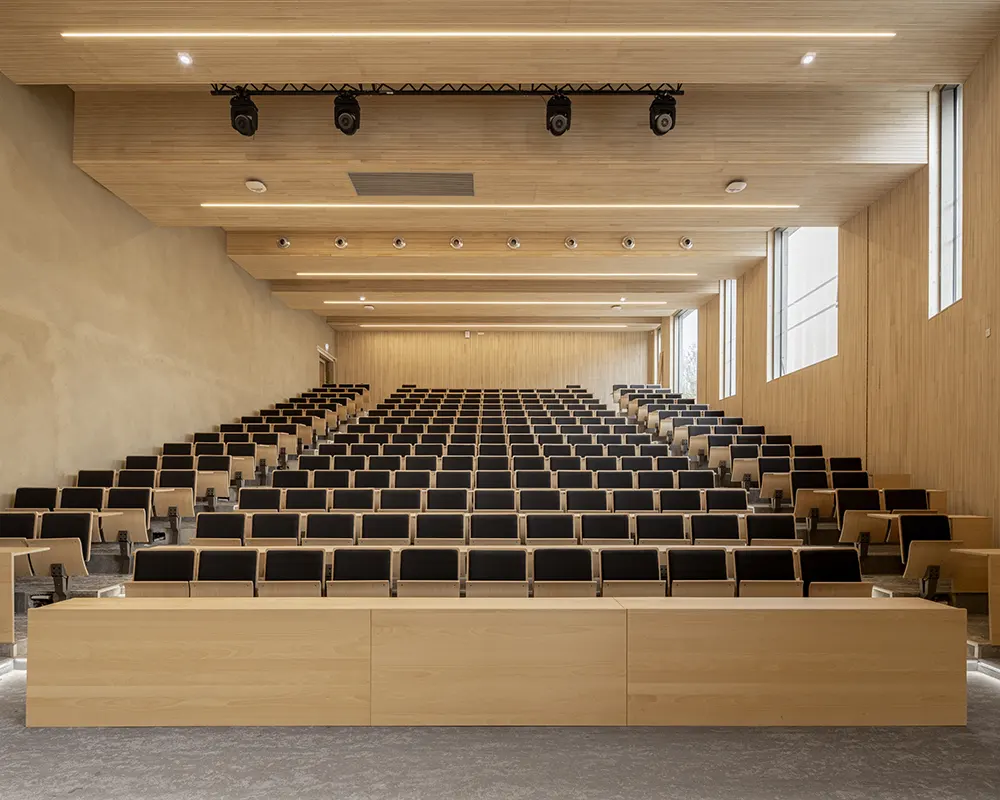
At the center of the project, a planted garden draws light deep into the building and connects directly to the Saint-Louis park. This move does more than improve comfort. It reorganizes how the building functions on a daily level. Circulation flows around a central atrium that links all floors, from the semi-underground lecture hall to the upper teaching spaces. The result feels open and legible, with movement shaped by light rather than corridors. The lecture hall itself, visible from the street, reinforces this openness. It extends the building into the city and positions the institute as a place of exchange, not an isolated academic facility.
The interiors support demanding use without turning clinical. Classrooms, simulation spaces, and shared areas rely on natural materials, controlled acoustics, and large openings that stabilize the atmosphere. Raw earth brick partitions and wooden absorbers introduce warmth while maintaining durability. The structure allows flexibility through large spans, which accommodate different teaching formats without restructuring the building. Every decision here links back to the intensity of healthcare training. The architecture supports concentration, repetition, and interaction without friction.
Material choices extend this logic outward. The façades use limestone tones drawn from the Évreux region, connecting the building to its immediate context and nearby heritage. Low-carbon concrete, prefabricated bricks, and Vernon stone create depth through variation in light and surface. Screens, planters, and walkways add another layer of scale, allowing the building to shift between close and distant readings. These elements do not decorate the façade. They respond directly to light control, ventilation, and climate. The composition reads as precise because it grows from use.
The environmental strategy follows the same approach. Green roofs, planted terraces, and more than eighty plant species bring biodiversity into the project while improving thermal performance. A landscaped swale manages rainwater naturally, while photovoltaic panels contribute to energy production. Timber structures, compressed earth walls, and bio-based insulation reduce the building’s carbon footprint without compromising performance. These measures do not sit on top of the architecture. They define it.
What makes the IFPE project convincing lies in its clarity. It accepts the complexity of its program and resolves it through structure, not gesture. Education, parking, landscape, and public access remain visible within a single system that stays coherent from every angle. The building does not try to soften its role or dramatize it. It operates with precision, giving future healthcare professionals a space that reflects the discipline and responsibility of their work.