
The design competition for the new Malpensa Hospital – “Grande Ospedale della Malpensa” – has concluded with Zaha Hadid Architects (ZHA) and an international consortium claiming the commission. The project, awarded by the Lombardy Regional Health Authority, will unify the legacy Gallarate and Busto Arsizio hospitals into a single, state-of-the-art campus serving nearly one million residents between Milan and Varese.
Continue reading for more about the project:
Responding to Evolving Healthcare and Community Needs
Malpensa Hospital is conceived as a flexible, future-ready medical campus. The design responds to the region’s growing healthcare demands and integrates advanced medical technology with a human-centric approach. The new facility will accommodate evolving technologies while ensuring operational efficiency, with a modular structure that enables rapid expansion or reconfiguration in response to emergencies.
Campus Design: Integration, Accessibility, and Sustainability
The hospital’s compact structure comprises five above-ground levels and a basement, totaling approximately 90,000 square meters. The organization of spaces is driven by the intensity of care, with emergency, surgical, and critical-care functions housed in a multifunctional block supported by radiology, interventional, and diagnostic facilities. Outpatient and inpatient areas, maternal and infant care wards, rehabilitation zones, and specialist clinics are designed for seamless reconfiguration, ensuring adaptability to changing needs.
MORE MEDICAL PROJECTS
Strategic circulation pathways separate routes for visitors, patients, staff, and goods, minimizing cross-traffic and reducing contamination risks. Dedicated elevators for medical materials, goods, and waste are positioned to avoid interference with patient and visitor flows. An automated delivery system will optimize logistics throughout the campus.
Human-Centric Design and Community Integration
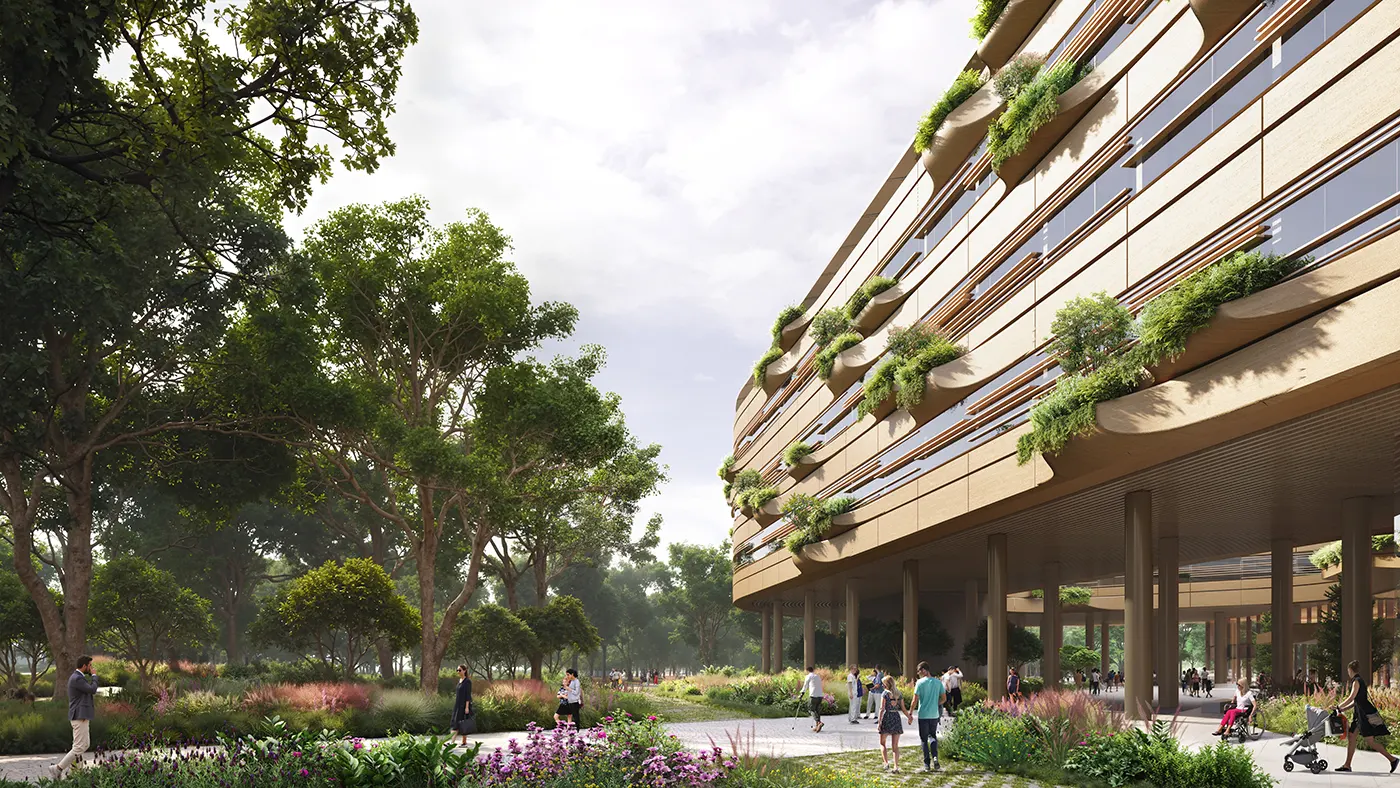
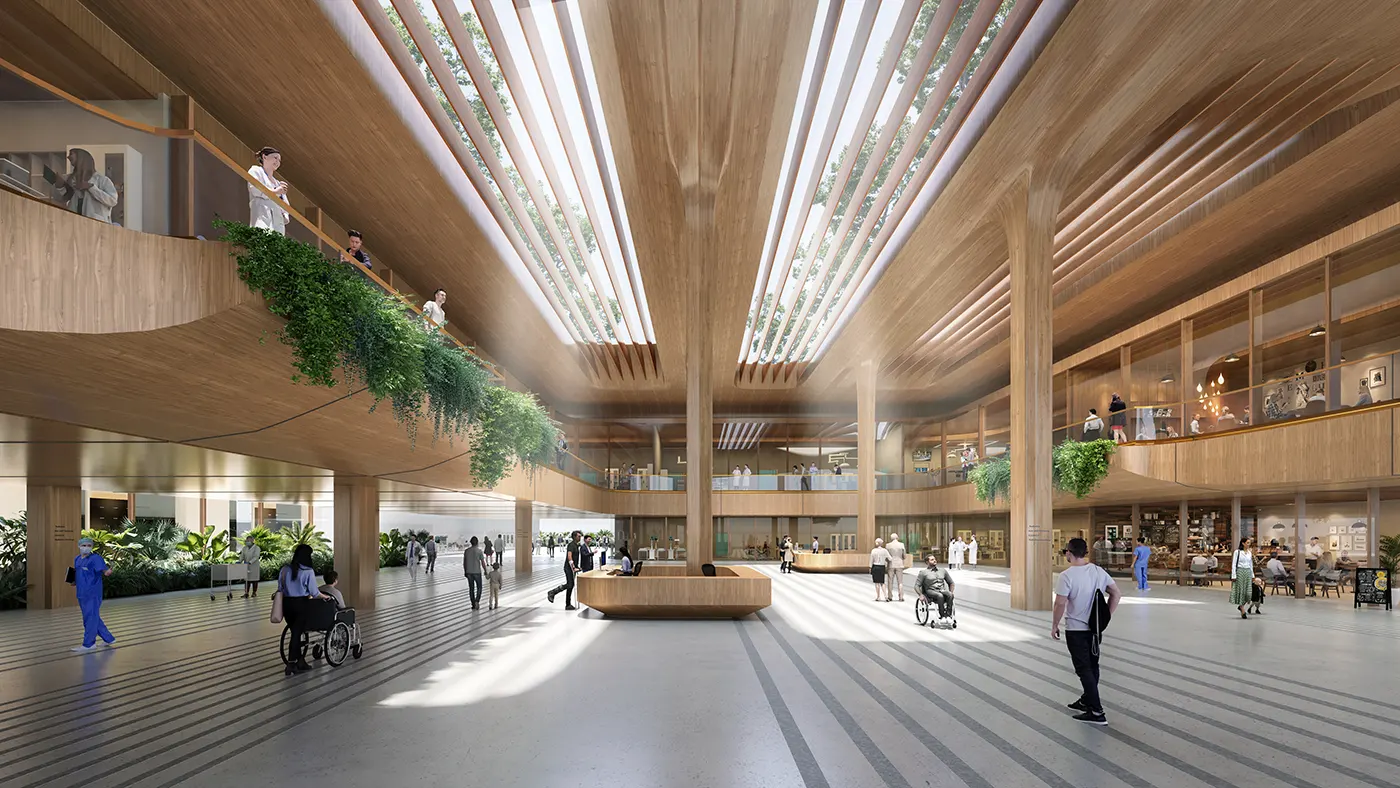
Central to the project is the creation of a “Main Street” at ground level, linking the entrance plaza with landscaped public areas. This axis reinforces accessibility and community engagement. The design prioritizes privacy and comfort, providing respite zones for patients and staff, optimizing natural light and acoustic conditions, and creating a therapeutic environment with gardens, courtyards, and rooftop terraces.
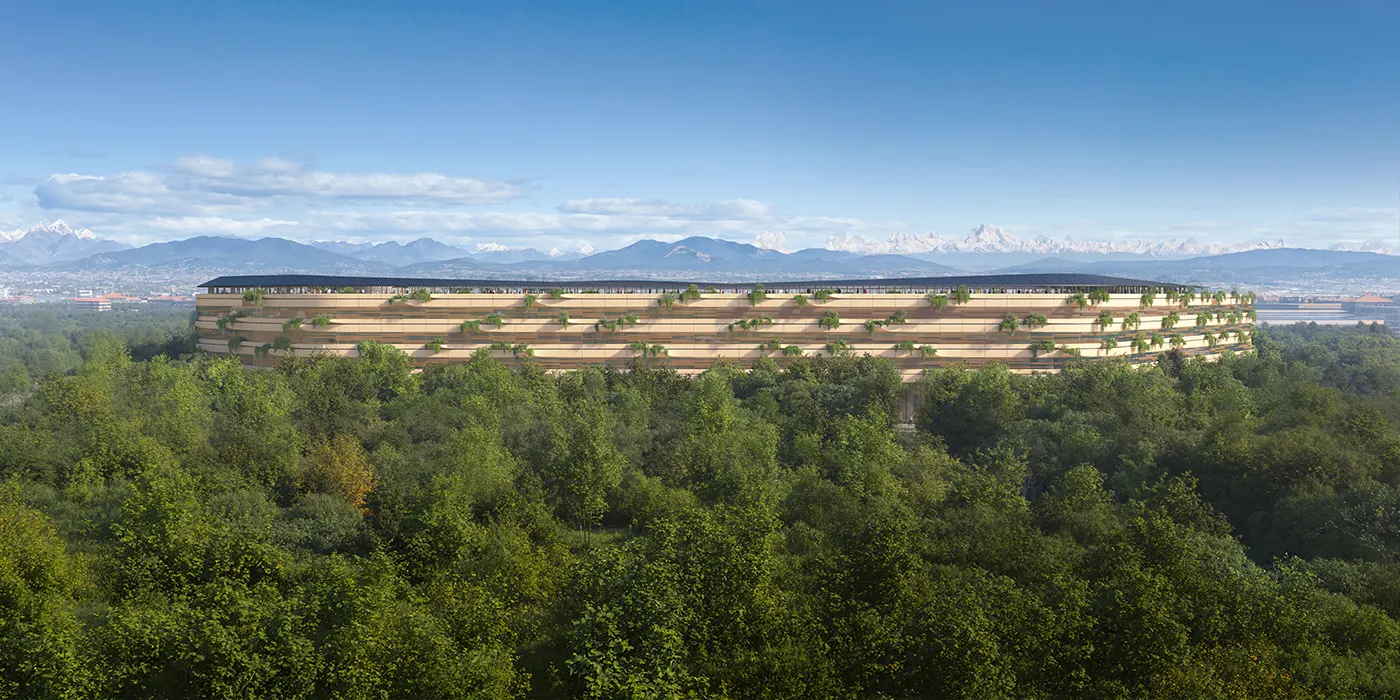
Materials such as wood and textiles contribute to a sense of calm and security. Universal design principles include tactile maps, multilingual signage, and barrier-free circulation, ensuring accessibility for all users. Areas for socializing, education, and cultural activities are integrated to strengthen community bonds and support holistic patient care.
Honoring Heritage and Embracing Nature
The site is embedded within forests and agricultural land, part of the Regional Ecological Network and near the Parco Regionale della Valle del Ticino. The landscape strategy preserves these ecosystems, minimizes hydrological impact, and incorporates the historic Cascina dei Poveri, a rural complex dating to the 12th–13th century—into the campus as a new community hub.
Sustainability and Smart Building Technologies
Malpensa Hospital is designed to exceed CAM compliance environmental standards, with the ambition to achieve top sustainability certifications. The building envelope employs modular aluminium rainscreen panels with integrated planters and solar shading, prioritizing durability, recyclability, and low embodied carbon. Interiors feature natural finishes to enhance comfort and well-being.
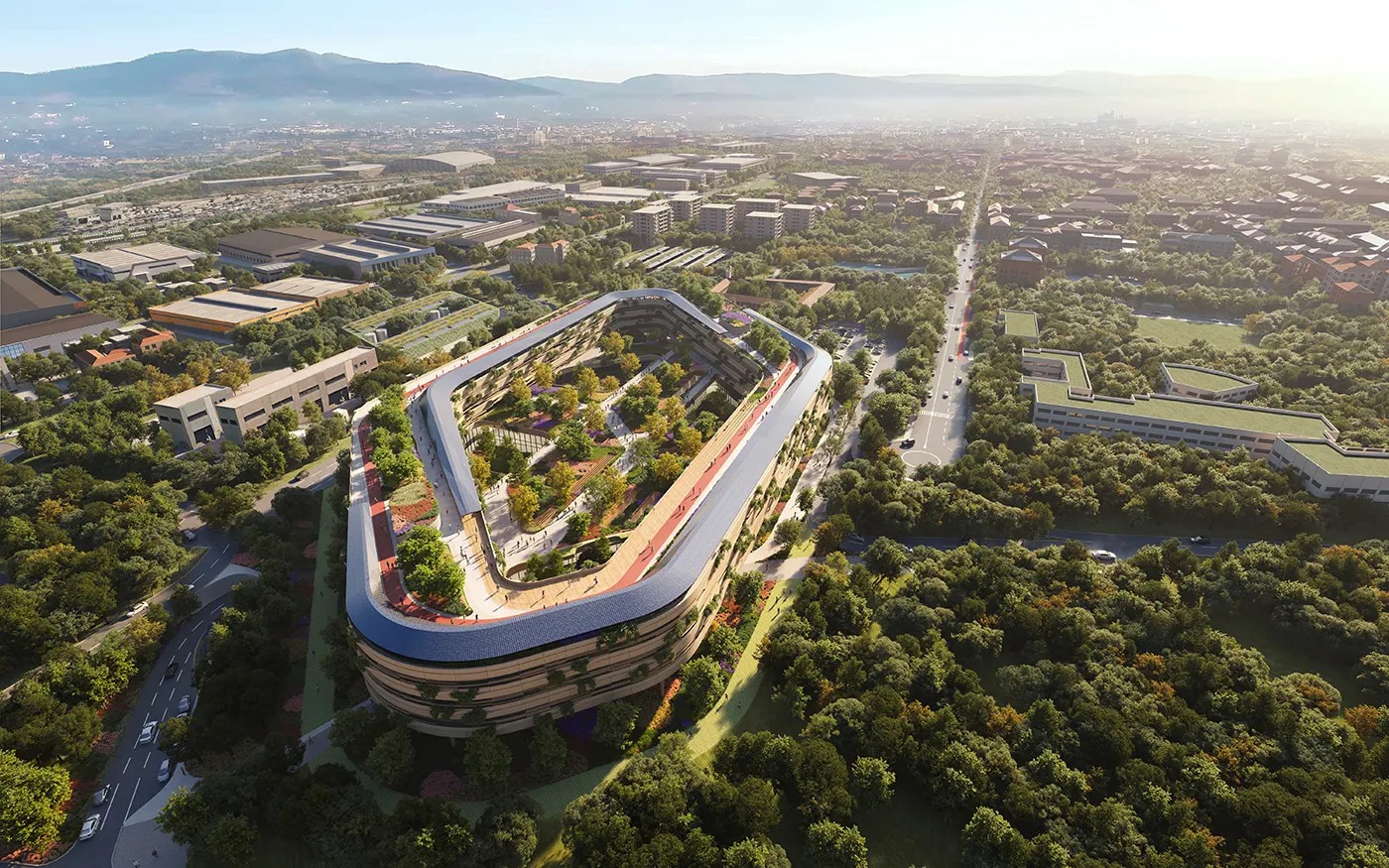
Advanced modular prefabrication reduces waste, costs, and construction time, with all materials selected for low CO₂ footprint and compliance with EPD and LCA standards. A high-performance envelope and solar shading reduce cooling demand by 30%, while a photovoltaic system over 1 MWp will supply about a quarter of the hospital’s energy needs. The hybrid heating system is prepared for future hydrogen integration.
Smart building management systems and digital twin models are planned to enable predictive maintenance and optimize energy performance. The project also preserves existing woodlands, introduces new wetlands and bioswales for stormwater capture, and enhances biodiversity with drought-resistant planting.
Project Team
- Lead Architect: Zaha Hadid Architects
- Team Leader: RINA
- Local Architect: Studio Plicchi
- Sustainability & Landscape: WSP
- MEP & Fire Strategy: STI Engineering
- Quantity Surveyor & Maintenance: BC Building Consulting
For more details, visit Zaha Hadid Architects: www.zaha-hadid.com