
For Bross, Venetian architect and designer Marco Zito has developed a structured and coherent design universe that unfolds across seating systems and interior elements conceived for contract, office, and residential environments. Rather than approaching each piece as an isolated object, Zito works through a programmatic logic, one signature language articulated through multiple collections, materials, and scales.
FURNITURE
At the core of this collaboration is an exploration of comfort and function interpreted through distinct product families. Solid wood in a broad range of finishes, metal structures offered in multiple color options, fabrics, leathers, and cork are treated as complementary components within a shared design framework. The result is a universe that remains grounded in Bross’ material heritage while opening toward contemporary applications and hybrid uses.
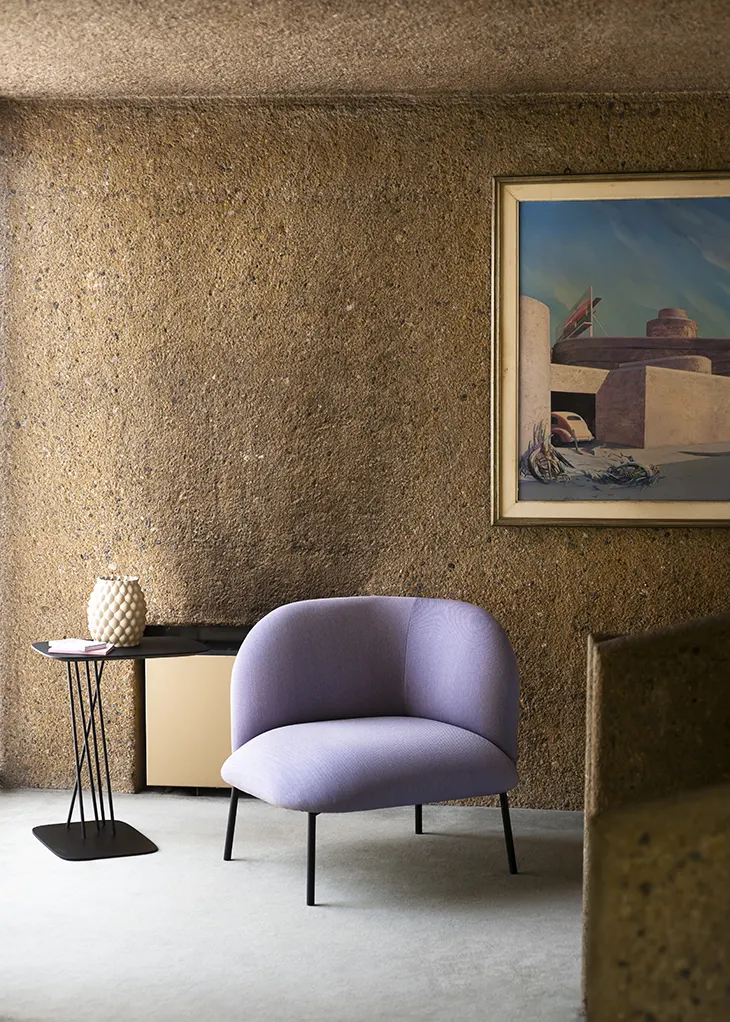
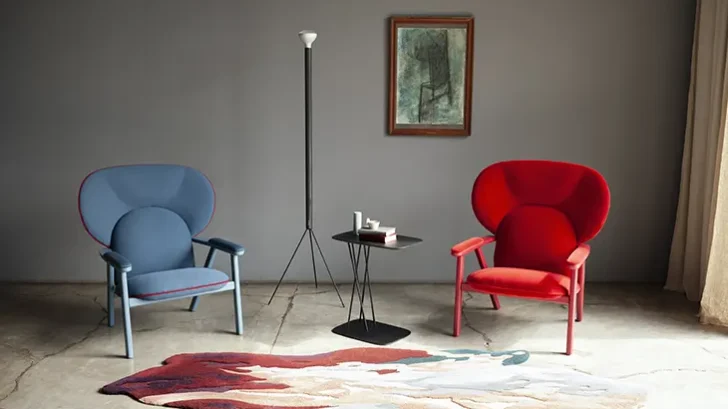
A recurring formal theme runs through Zito’s work for the brand: generous, enveloping volumes set against deliberately light supporting structures. This contrast defines WAM, one of his most recognizable collections for Bross. Conceived as a complete program, WAM includes armchairs, bergères, small sofas, stools, benches, poufs, and coffee tables. The collection originates from an enveloping shell divided into two key elements, the seat and the headrest, encouraging material and color experimentation through tone-on-tone pairings or sharper contrasts. The metal base functions as a graphic element, available in black, brushed bronze, or custom RAL finishes.
The exploration of volume reaches its most expressive form in the WAM bergère, a contemporary reinterpretation of the 18th-century “à oreillettes” armchair. Enlarged to a macro scale, the high backrest and enveloping headrest create a defined zone for relaxation and privacy, enhanced by the chair’s acoustic absorption properties. The historical reference reappears in the Peggy collection, where the classic silhouette is reworked into a more open, oval headrest that widens outward, drawing inspiration from 1950s design. Peggy is supported by a trestle-style wooden base in natural, stained, or matte lacquered finishes, paired with an upholstered shell shaped through varying thicknesses and armrests partially finished in leather or fabric.
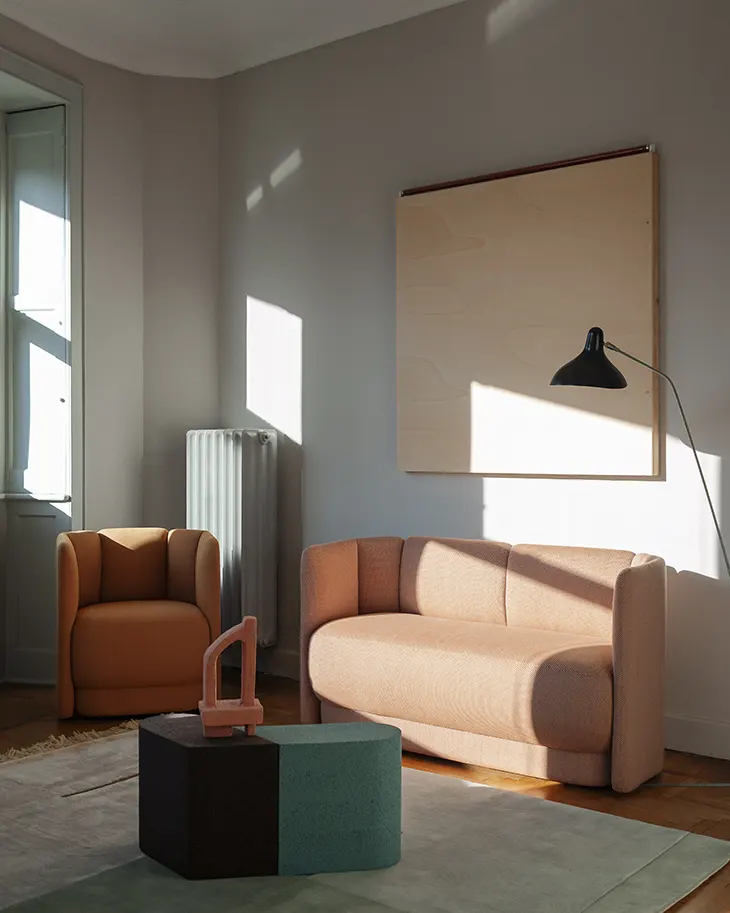
The aesthetic principles established in WAM continue in SIT, a collection that preserves the visual lightness of metal while supporting a deliberately wide shell. Available as a lounge chair and chaise longue, SIT is also offered in an outdoor version with removable, performance-specific fabrics. Its curved, enveloping profiles feature one open side, allowing flexible seating positions and easy pairing with side tables or poufs.
Metal structures also define the Baltea family, where the supporting frame evolves from a structural necessity into a visible design detail. In the dining armchair, the metal frame becomes the armrest itself, tracing the sinuous outline of the shell. Wood, a central material in Bross’ identity, returns in the Baia armchair collection. Here, a solid wood base composed of four vertical legs embraces the shell along its full height. These vertical lines continue into the stitching, shaping the upholstery into a refined, rhythmic pattern.
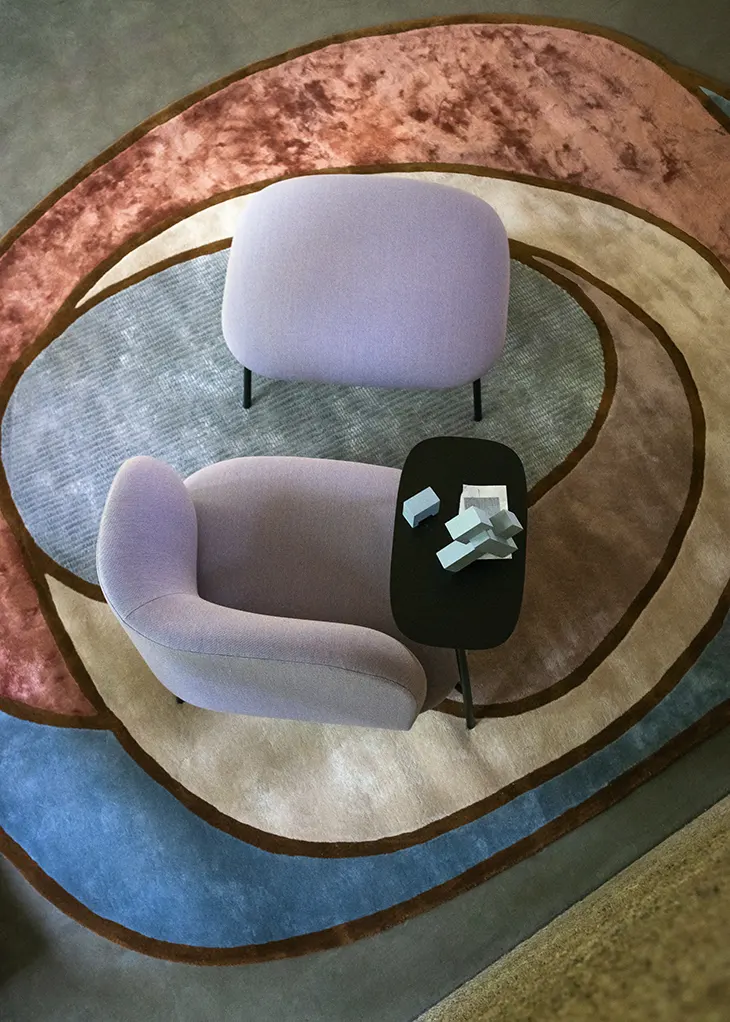
Graphic identity through stitching takes center stage in Velia, a family that includes a tub armchair, small sofa, and pouf. Deep vertical stitching runs across both front and back surfaces, following the folds that define the shell. The result is a compact seating system with a petal-like silhouette that opens inward while maintaining a strong visual coherence.
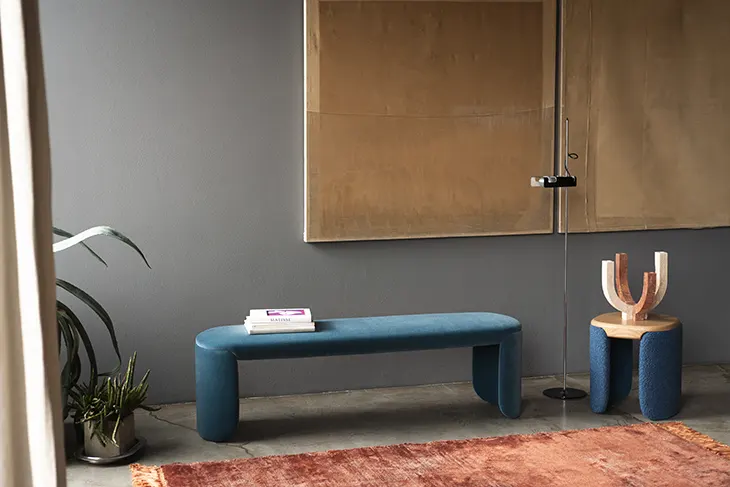
This attention to detail extends to smaller-scale elements. Petal introduces a fully upholstered bench and a versatile piece that can function as a coffee table or stool. Its inward-curving sides and rounded corners support either a seat or an ashwood top, creating a continuous surface that defines the identity of the collection. Cosmo addresses hospitality, office, and kitchen environments through stools built from primary geometric forms, featuring height-adjustable central columns, swivel seats, and carefully proportioned footrests.
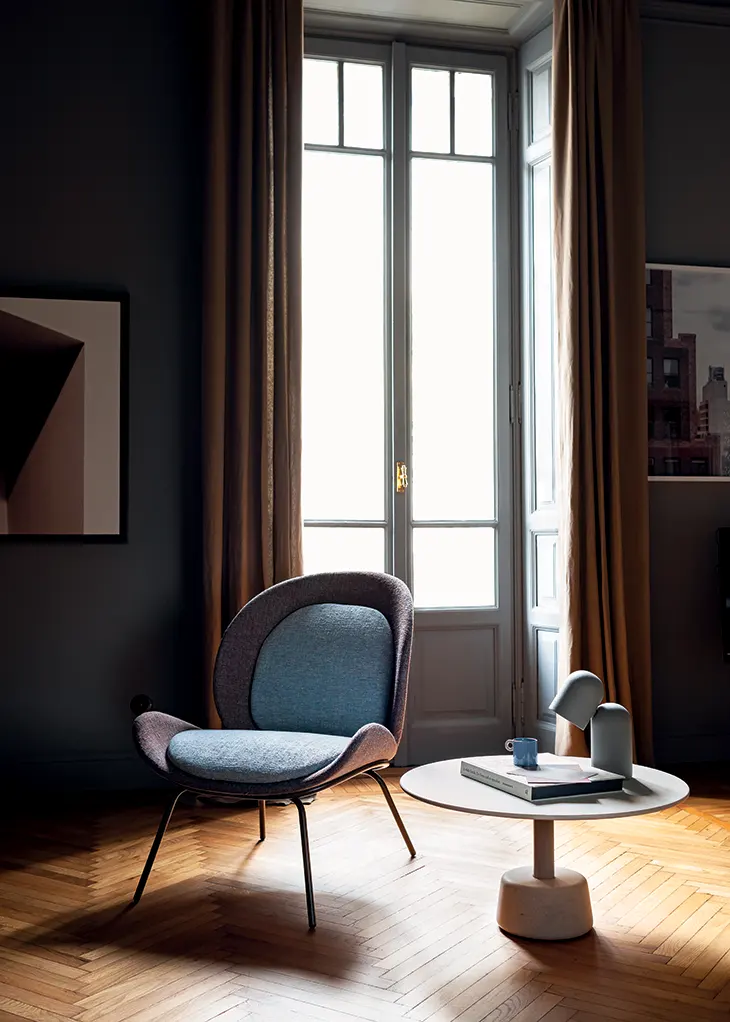
Design freedom becomes explicit in Slice, a cork-based modular element usable as a stool, side table, or coffee table in both indoor and outdoor contexts. Offered in multiple heights and finishes, Slice encourages open-ended configurations and customization. The collection is completed by Rohe, a modular desk with an ashwood top and tubular metal frame, configurable with drawers and textile edging on one, two, or three sides.