
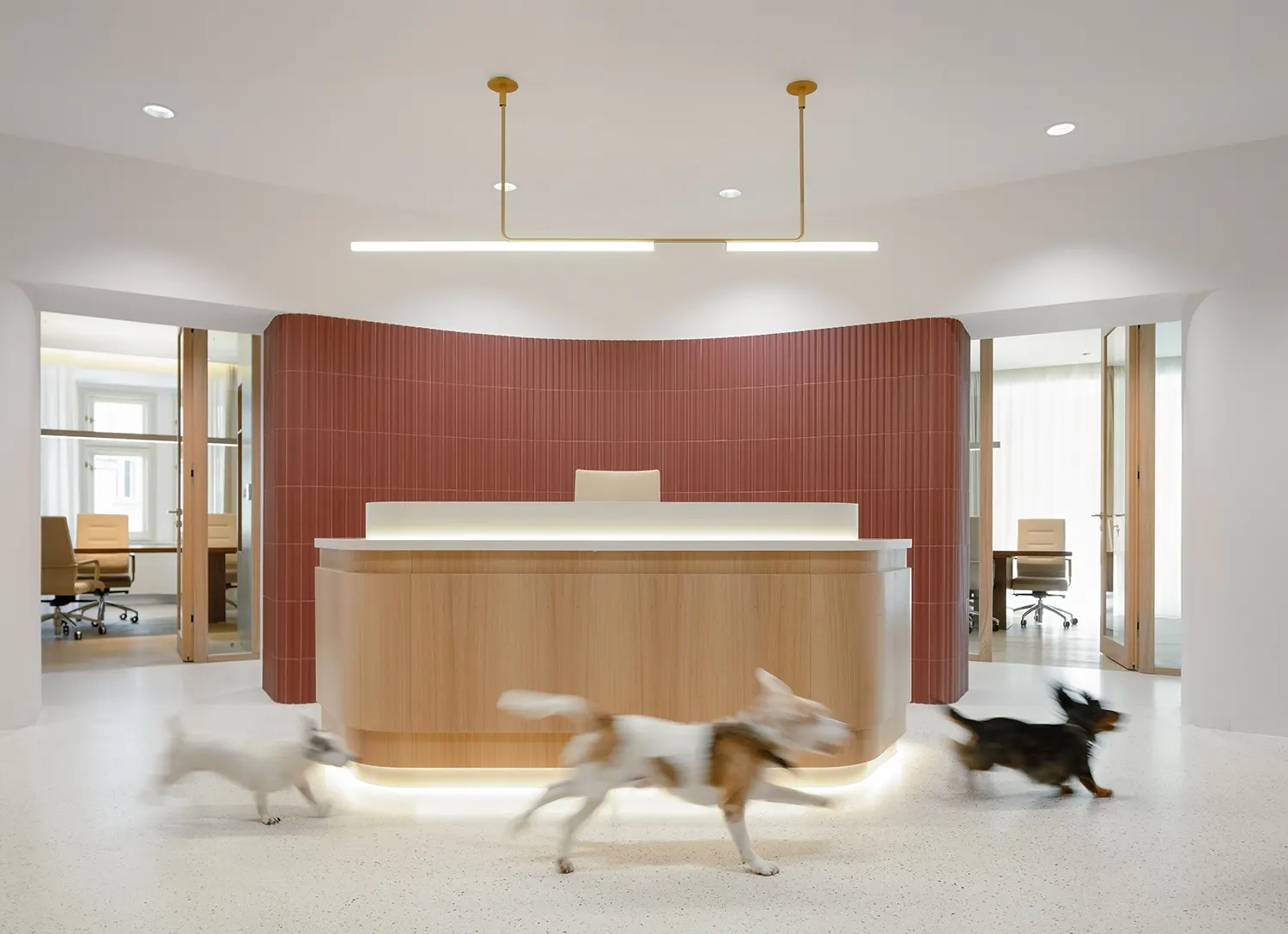
Located in Prague’s Žižkov district, the historic Palác Akropolis has long served as a center for the city’s cultural and artistic life. The latest transformation of its 470 m² floor, led by Marco Maio Architects, reimagines a previously enclosed and fragmented space as a contemporary shared workspace. The project responds to the building’s layered history, particularly the 1990s intervention by artist František Skála, whose influence established a distinctive cultural character within the interior. Rather than replicating Skála’s language, the renovation translates its presence into a calm, legible, and easy-to-use environment designed for the demands of modern work.
Central Hub and Spatial Continuity
The design’s focal point is a generous hub that serves as both the social core and the circulation spine of the workspace. This central area brings visual and spatial continuity across the entire floor, unifying previously separated zones. Natural light enters from both façades, defining the main axis through the hub and reception areas and lending the interior a sense of depth and openness. This approach not only maximizes daylight but also strengthens the connection between the workspace and the building’s historic context.
Material Palette and Signature Details
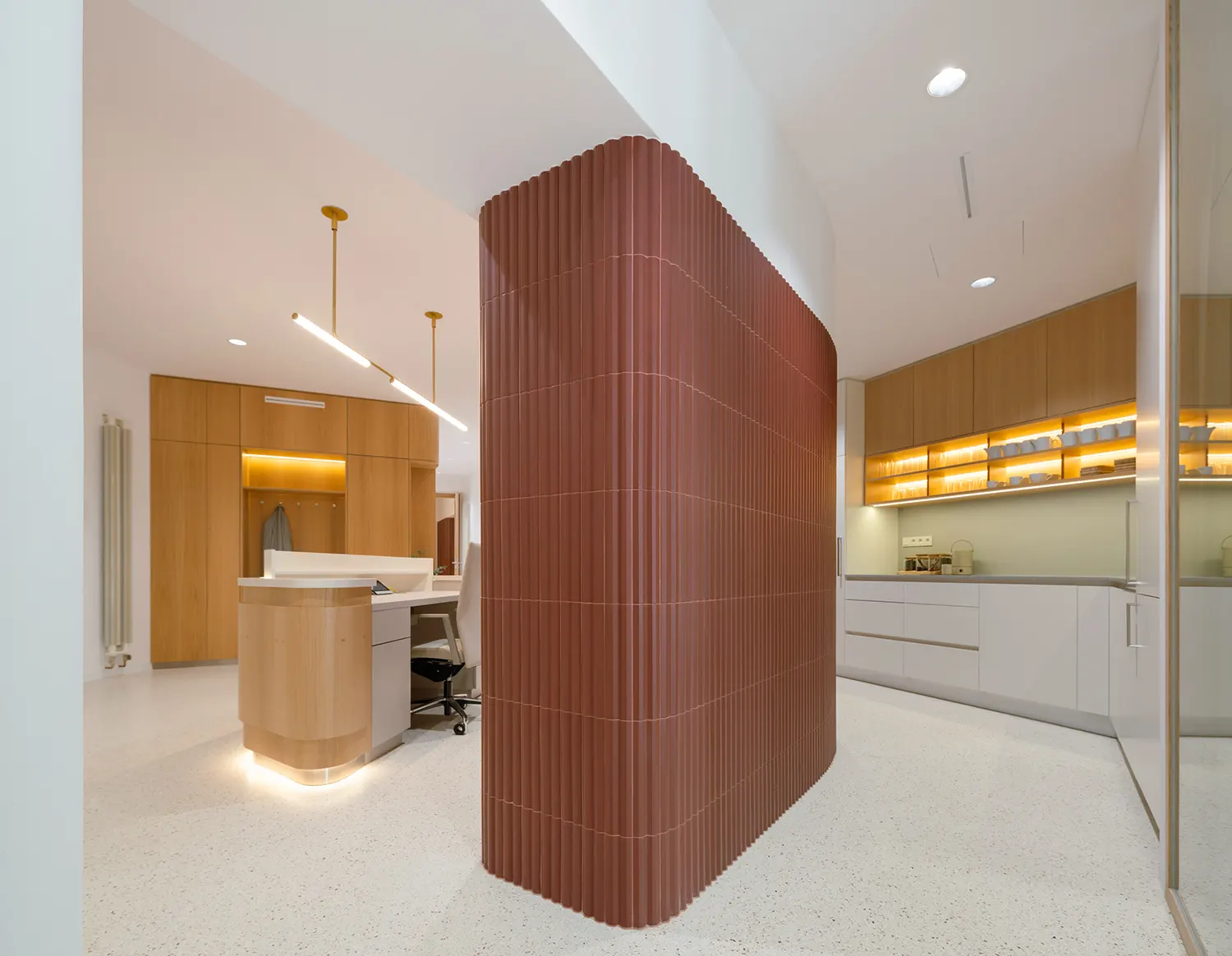
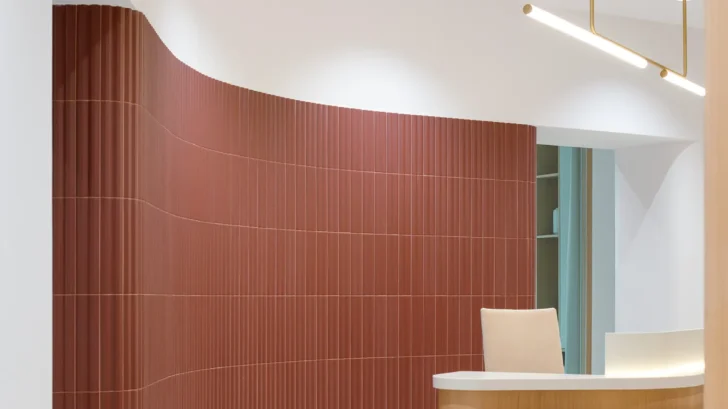
A defining feature of the renovation is its thoughtful material palette. The design team reimagined formerly dark corridors as softly curved passages clad in red ceramic tiles. These tiles have become a signature element, providing a bold yet harmonious visual identity. In the restrooms, the ceramic surface appears in lighter tones, softening the palette and establishing a quiet continuity across the floor. The ceramics are balanced by natural oak flooring, custom furniture, and window frames, which bring warmth and a grounded feel to the interior. Custom walnut meeting tables in the shared areas introduce a tactile contrast, reflecting a focus on durability and craftsmanship.
Lighting and Atmosphere
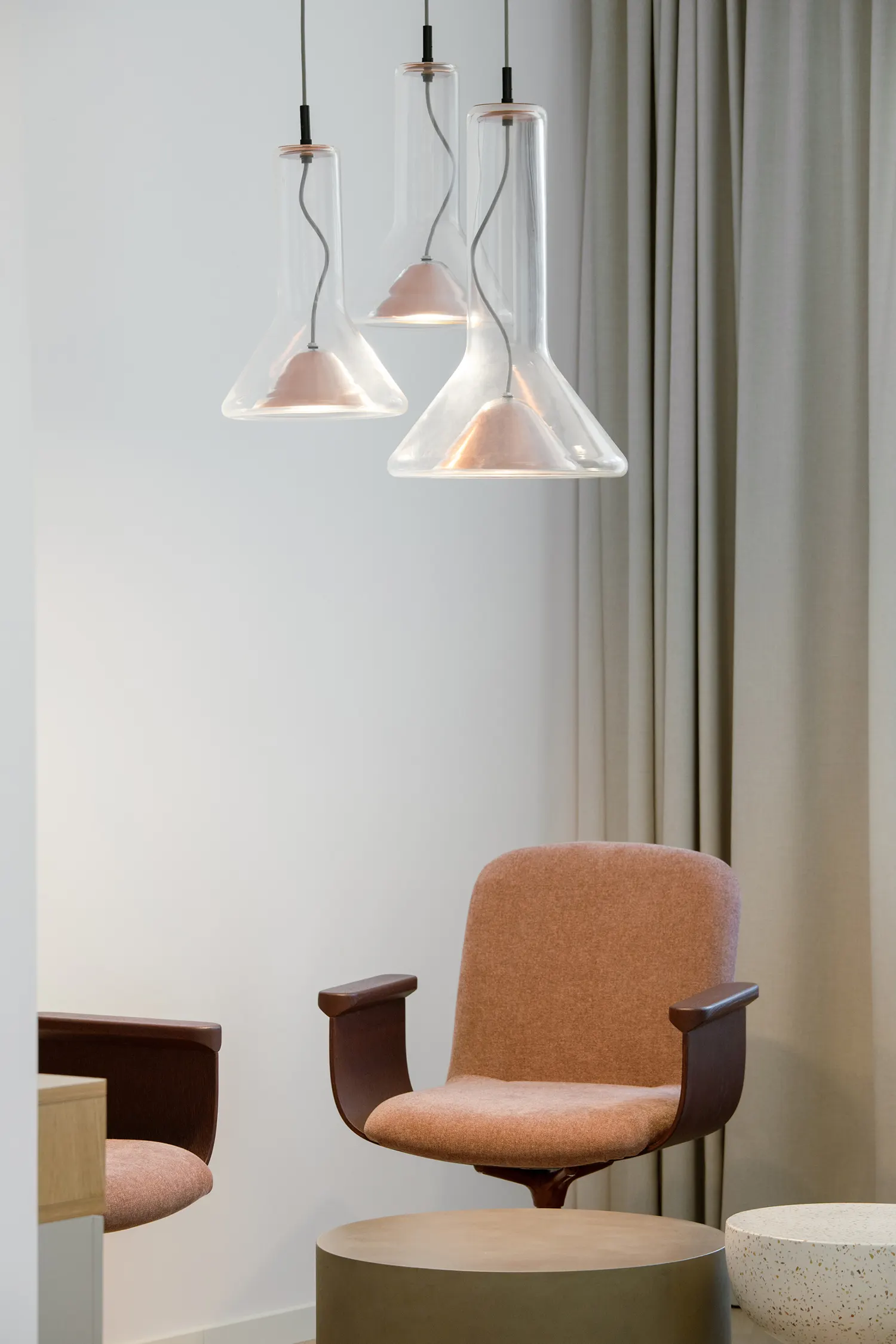
Lighting plays a crucial role in the new workspace. Carefully positioned fixtures highlight the curved forms and surface textures, guiding movement through the space in a subtle and unobtrusive way. This approach to lighting enhances the architectural details while supporting a comfortable and productive environment for users.
Flexible Workspaces and Collaboration
The layout brings together a variety of workrooms and meeting spaces, each offering different levels of openness. The teams sharing this floor work around common themes of space, property, and decision-making, requiring both collaborative and focused individual work. To address these needs, the design alternates between communal areas that encourage encounter and quieter rooms that support concentration. Glass partitions are used to provide acoustic comfort without sacrificing visual continuity, resulting in a cohesive and composed atmosphere throughout the workspace.
Contemporary Spirit with Historic Roots
The renovation of Palác Akropolis does not treat history as a decorative motif, but as a quiet layer that accompanies the experience of space. The cultural spirit of the building is present, but never overwhelming. Instead, the design emphasizes clarity, ease of use, and a sense of calm that supports both productivity and well-being. The result is a workspace that feels warm, understated, and enduring, qualities that reflect both the legacy of Palác Akropolis and the contemporary needs of its users.
Attention to Detail and Noted Design Brands
Attention to detail is evident throughout the project, from the selection of materials to the integration of furniture and lighting. The use of high-quality suppliers and brands, such as Arte Brotto, Kave Home, Brokis, and Laufen, further elevates the environment. Each element contributes to a unified whole, supporting a work culture that values both collaboration and individual focus.
Adaptive Reuse in Czech Architecture
The new offices at Palác Akropolis stand as an example of adaptive reuse in contemporary Czech architecture. By respecting the building’s past while addressing current demands, Marco Maio Architects have created a space that is both rooted in history and forward-looking. The renovation offers a model for how historic interiors can be reinterpreted to meet the evolving needs of today’s workplaces, combining tradition, innovation, and a deep understanding of spatial experience.
Discover the complete project in our gallery:
Studio: Marco Maio Architects
Author: Marco Maio
Website: www.marcomaio.com
Co-author: Kadir Sönmez
Design Team: David Pesek Muller, Mylana Sydorenko, Kateřina Zapletalová
Client: Realitní Fond Praha, Advokacie Praha, 2OPF
Project Location: Kubelíkova 1548/27, 130 00 Prague, Czech Republic
Completion Year: 2025
Built-up Area: 470 m²
Photographer: Alex Shoots Buildings
Location: Prague, Czech Republic
Collaborators & Suppliers:
– General Contractor: Eterno plus
– Carpentry Works: Bétrojka
– Lighting Supplier: Light Works
– Ceramic Tiles Supplier: Archtiles
– Terrazzo Flooring: OMEGA 99
– Electrical Installation: Filip Leixner
Featured Brands: Arte Brotto, Kave Home, Arco Interier, Brokis, Formdesign, Laufen, Marset, Martin Foret, Valen&Masar, Vekra, Verti, WOW Tiles