
Moncler Grenoble‘s Fall Winter 2026 presentation in Aspen, Colorado required four months of construction to transform a natural mogul field into one of fashion’s most ambitious outdoor venues. The set design merged land art installation with functional runway infrastructure, creating an environment where the Rocky Mountains became both backdrop and participant.
The Light Installation
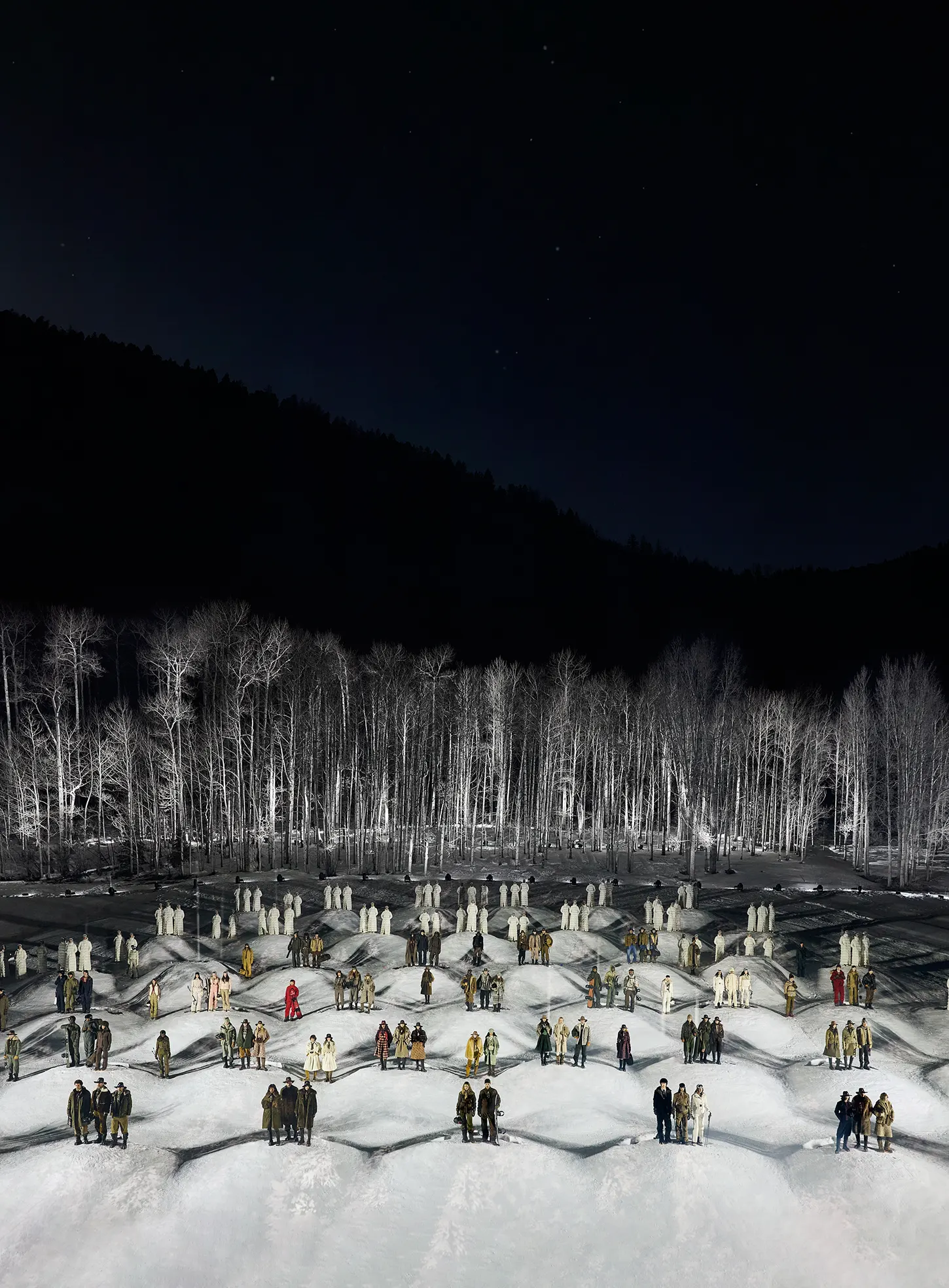
Vertical light beams pierced the snow-covered terrain, their luminous columns rising against a grove of bare aspen trees and the forested mountainside beyond. The installation echoed the verticality of the surrounding woodland, artificial light mimicking the pale trunks of the aspens that define Colorado’s high-altitude landscapes. At dusk, the beams created a dialogue between natural and constructed elements, the engineered geometry of the lights playing against the organic randomness of the forest edge.
MORE SET DESIGN STORIES ON ARCHISCENE
The effect was neither purely theatrical nor strictly functional. The lights served as wayfinding elements for models navigating the mogul field while simultaneously operating as sculptural objects in their own right. Light projections of alpine trees danced across the surrounding woodland during the presentation, extending the installation’s reach beyond its physical footprint and blurring the boundary between stage and setting.
The Seating Architecture
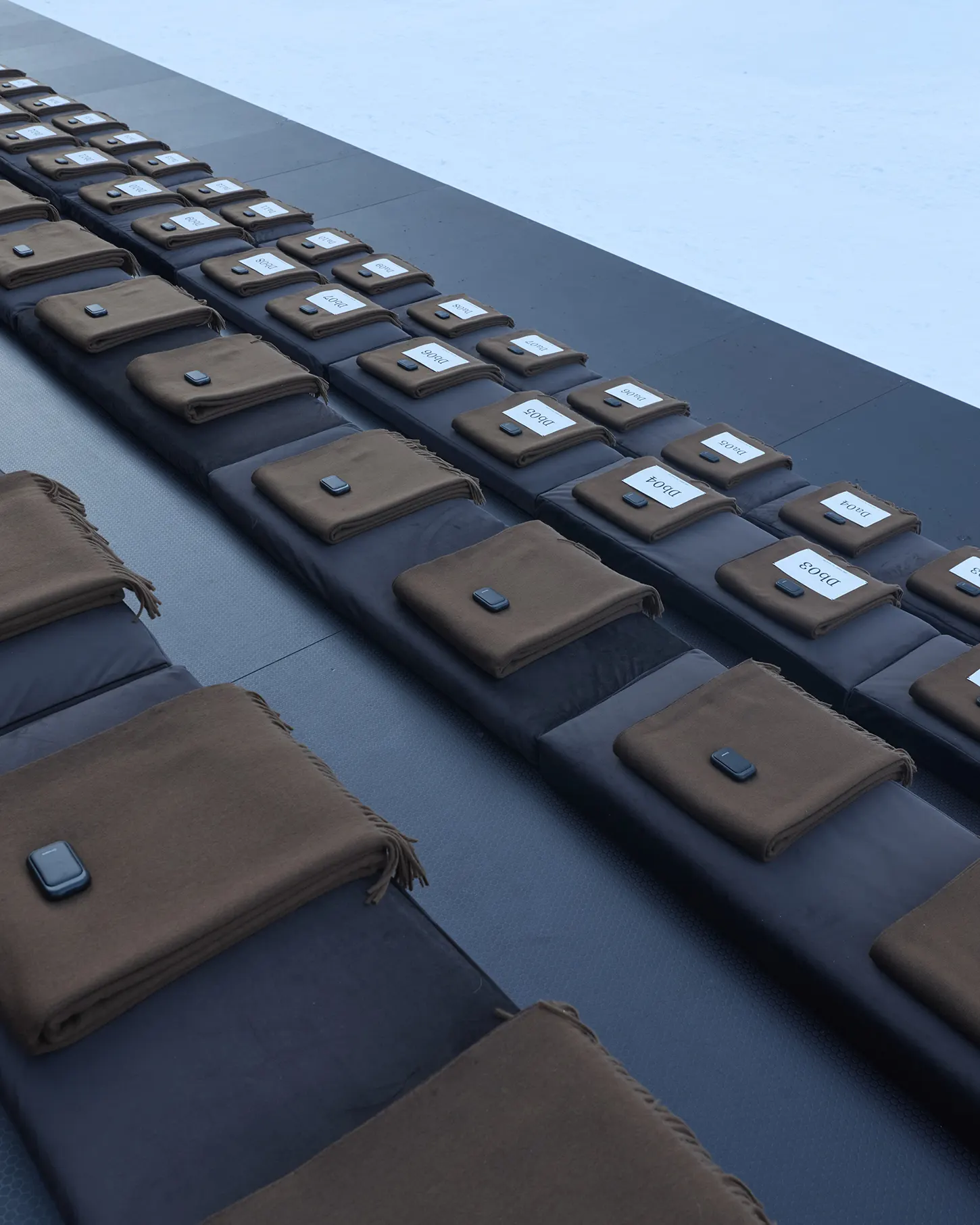
Guest seating took the form of tiered stadium-style benches, their dark steel frames and charcoal cushions providing visual restraint against the white expanse of snow. Each seat received a camel-colored fringed blanket, folded with precision and marked with seat assignments. The uniformity of the arrangement, rows of identical blankets receding up the hillside, transformed practical cold-weather provisions into a graphic element.
The seating structure climbed the natural grade of the terrain, working with rather than against the topography. Dark materiality grounded the temporary architecture, preventing it from competing with either the snow or the light installation. The result was infrastructure that read as considered design rather than event logistics.
Landscape as Runway
The mogul field itself functioned as the primary design gesture. Rather than constructing a flat runway, the presentation embraced the terrain’s natural undulation. Models emerged from a grove of bone-white aspen trees at the top of the rise, descending through the moguls before taking positions on individual mounds for the finale tableau.
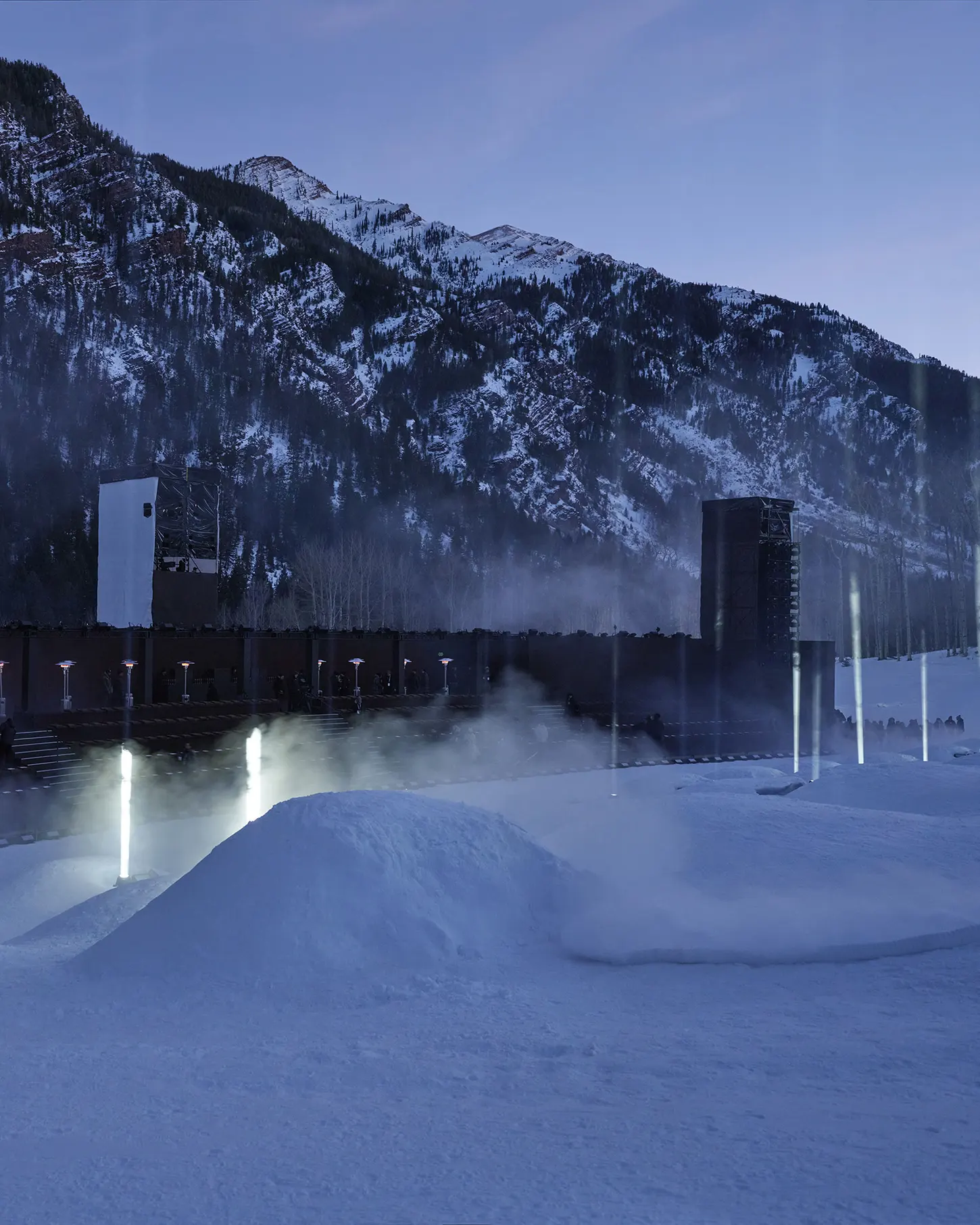
This approach required clothing engineered for actual mountain conditions rather than controlled indoor environments. The set design and the collection existed in mutual dependency: garments had to perform on challenging terrain, while the terrain validated the collection’s technical credentials. The moguls were not decoration but proof of concept.
Construction Timeline and Scale
Production began in October 2025, a four-month build for a single evening’s presentation. The timeline reflects both the technical complexity of installing infrastructure in a mountain environment and the logistical challenges of working with snow, elevation, and weather variables. Coordination with local Aspen authorities and Aspen One, acknowledged in the brand’s communications, suggests the project required significant municipal collaboration.
The scale positions the Moncler Grenoble set design within a lineage of fashion spectacles that treat location as medium: Chanel’s supermarket, Dior’s circus tent, Louis Vuitton’s architectural commissions. Moncler Grenoble’s contribution to this tradition is site-specificity pushed to its logical extreme. The set could exist nowhere else; the collection makes sense nowhere else.
Material Choices
The palette remained deliberately restrained: dark steel, charcoal textiles, camel wool, white snow, pale tree bark, blue twilight. Color came from the collection itself, saturated reds and greens and mustards moving through the neutral environment. The set design functioned as frame rather than competition, allowing garments to register against the controlled backdrop.
The fringed blankets distributed to guests echoed textile details within the collection, laser-cut fringe and woven textures appearing across outerwear and accessories. This continuity between guest experience and runway content collapsed the distinction between audience and presentation, everyone wrapped in the same material language.
The Aspen Context
Moncler’s choice of location carried architectural resonance beyond the immediate spectacle. Aspen’s development as a ski destination coincided with mid-century modernist experimentation, the town attracting architects and designers alongside athletes and cultural figures. The presentation’s minimal material vocabulary and integration of landscape recalls that heritage, even as the light installation introduced contemporary technological intervention.
The set design ultimately argued for fashion presentation as environmental practice, temporary architecture that responds to rather than dominates its context. Four months of construction yielded an evening of use, the ratio suggesting either extravagance or commitment depending on one’s perspective. What remains is documentation and the precedent: proof that runway can mean mountain, that set design can mean land art, that fashion’s theatrical ambitions need not stop at the warehouse door. More of the Moncler Grenoble set design in our gallery:
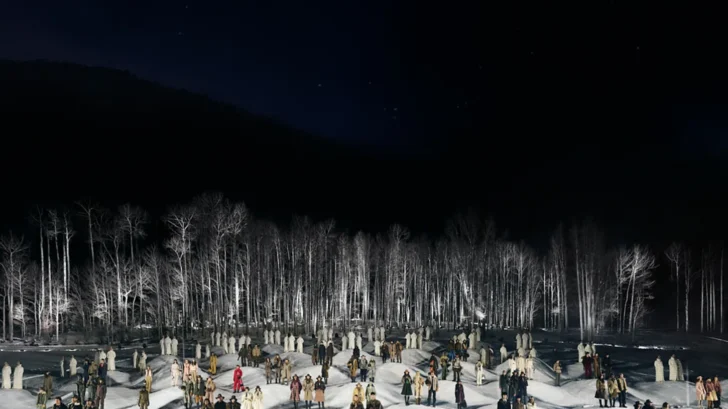
Moncler Grenoble Fall Winter 2026 was presented in Aspen, Colorado on February 1, 2026. Discover the full Moncler Grenoble Fall Winter 2026 runway collection on DSCENE Magazine.