
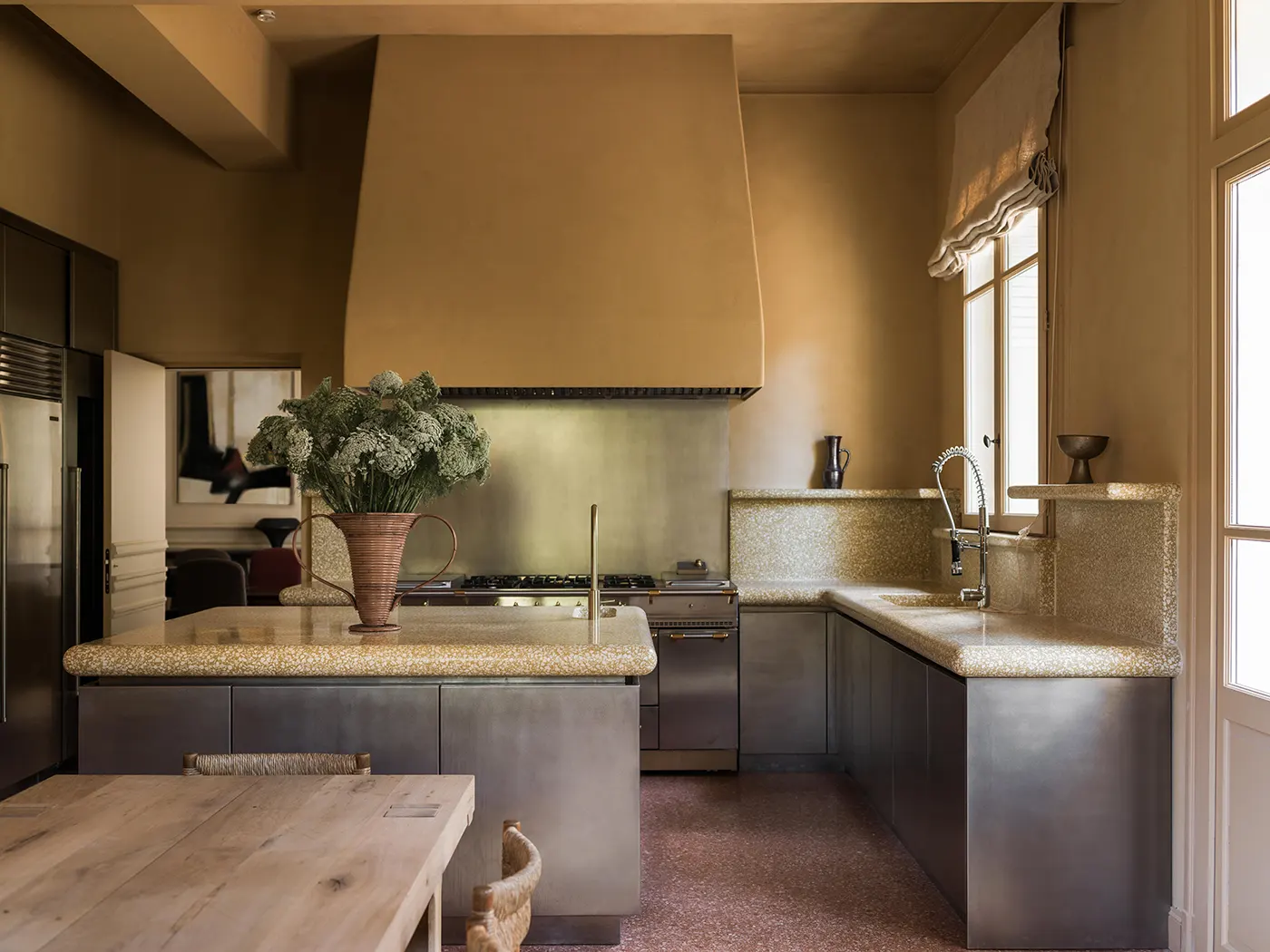
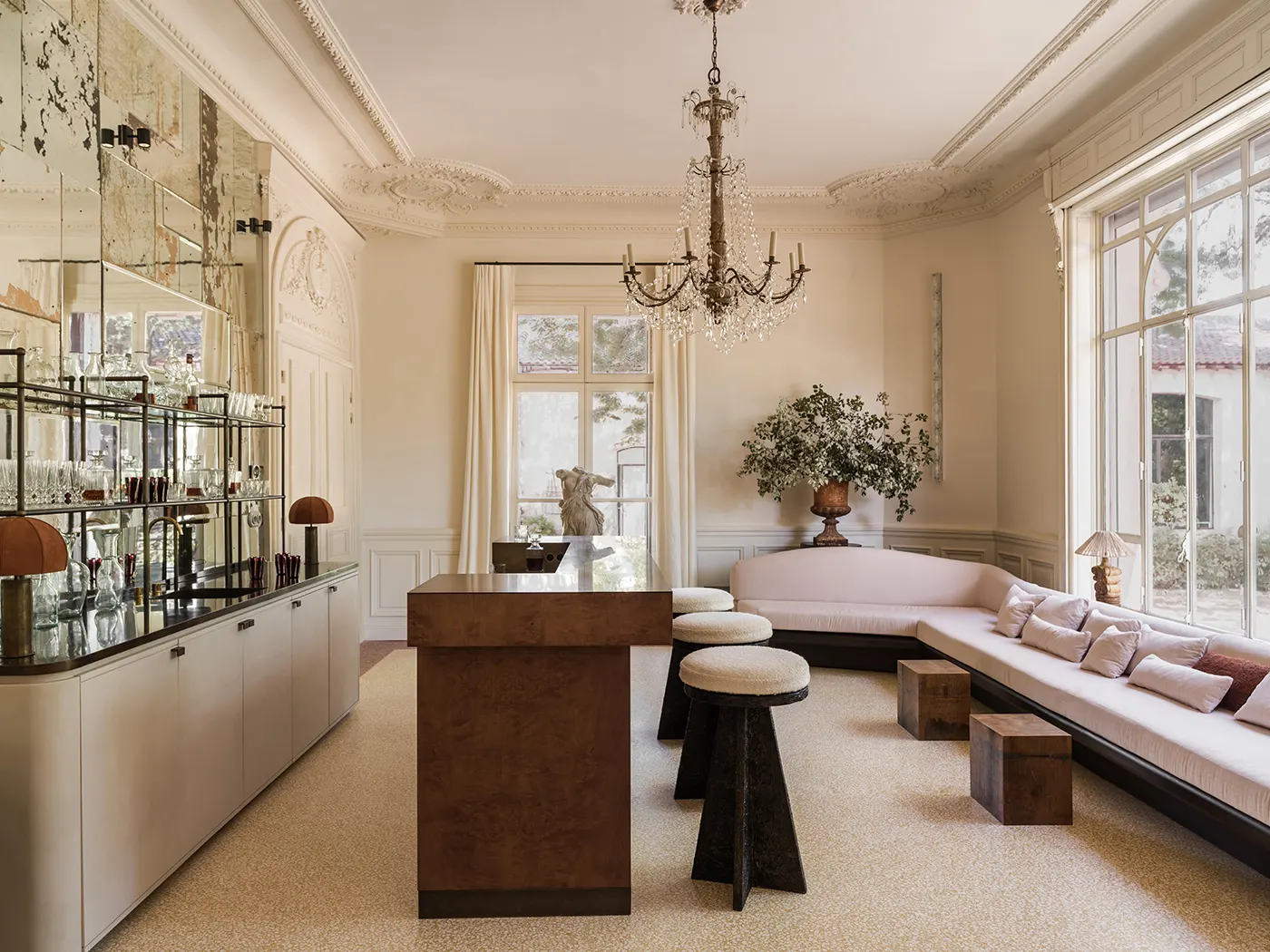
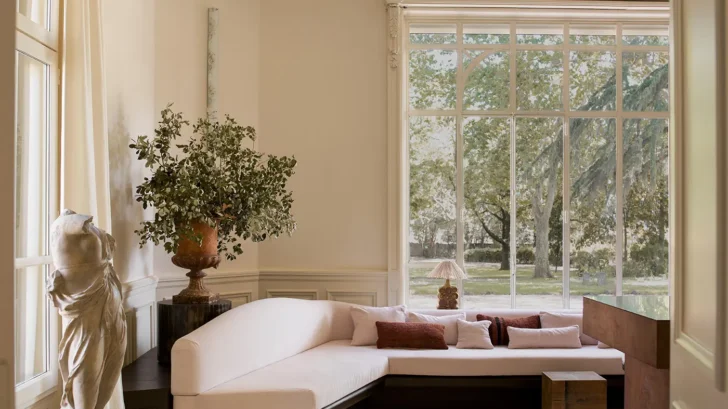
Chateau La Banquière stands quietly amid the vineyards and ancient oaks just outside Montpellier, France, its 18th-century silhouette softened by the gentle Mediterranean sun. The estate’s rebirth as a hospitality destination got a design revamped by Marianne Tiegen Interiors and the dedication to every detail is immediately apparent upon arrival. Guests enter a world where architecture, landscape, and interior design engage in a subtle conversation, each element enhancing the other. The parkland, with its centuries-old trees and rows of vines, frames the property, creating a serene backdrop that sets the tone for the stay.
Design Philosophy: Light, Landscape, and Textile
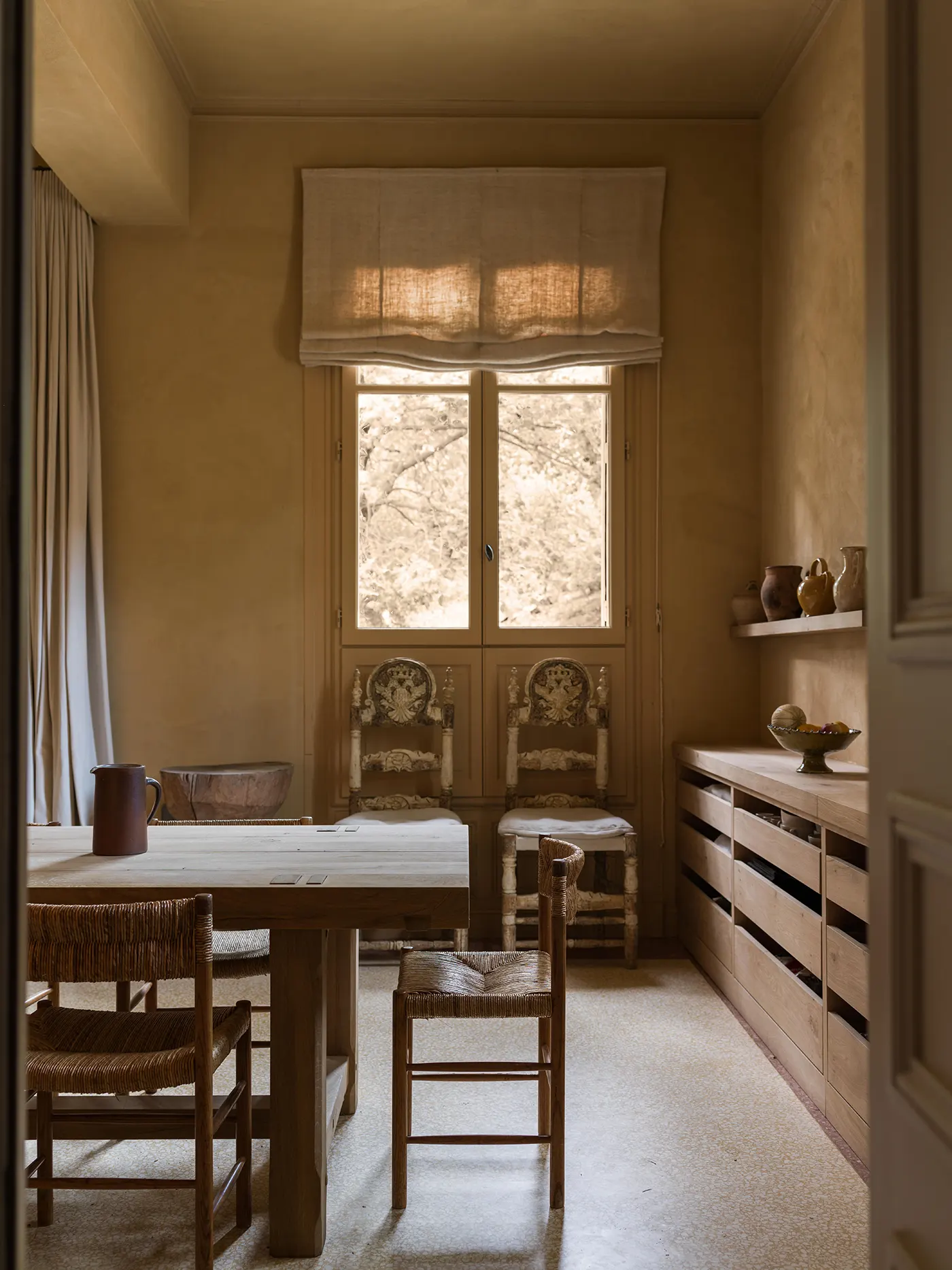
The design approach at La Banquière centers on a harmonious dialogue with the natural environment. Every room is conceived as a stage for light to play across stone, wood, and fabric. This interplay animates the interiors throughout the day, ensuring that each space feels alive and responsive to its surroundings. Textiles are not mere decorative accents here, they are foundational. Fabrics define the boundaries of rooms, soften acoustics, and frame the views, lending a tactile warmth more often found in private homes than in hotels.
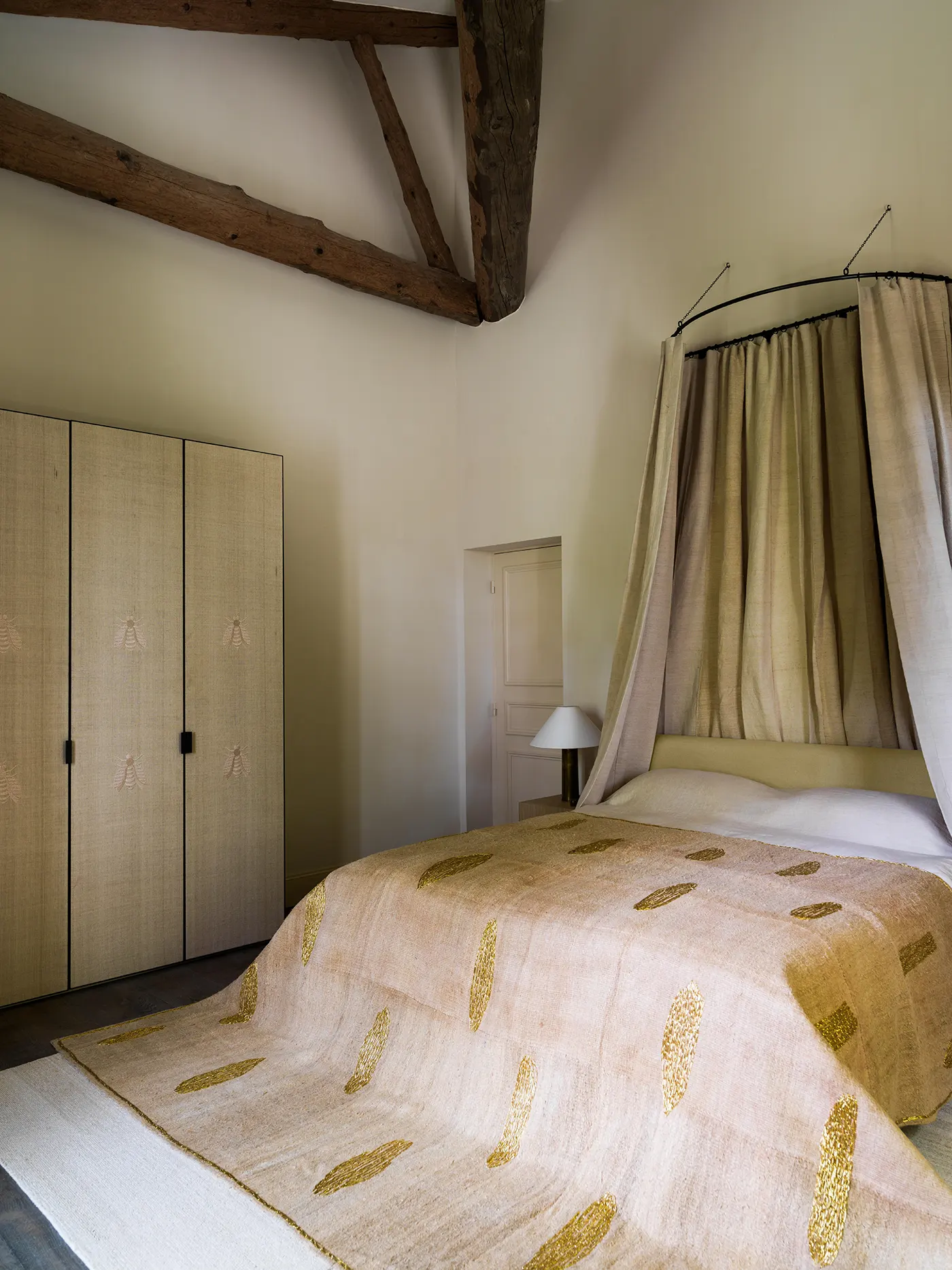
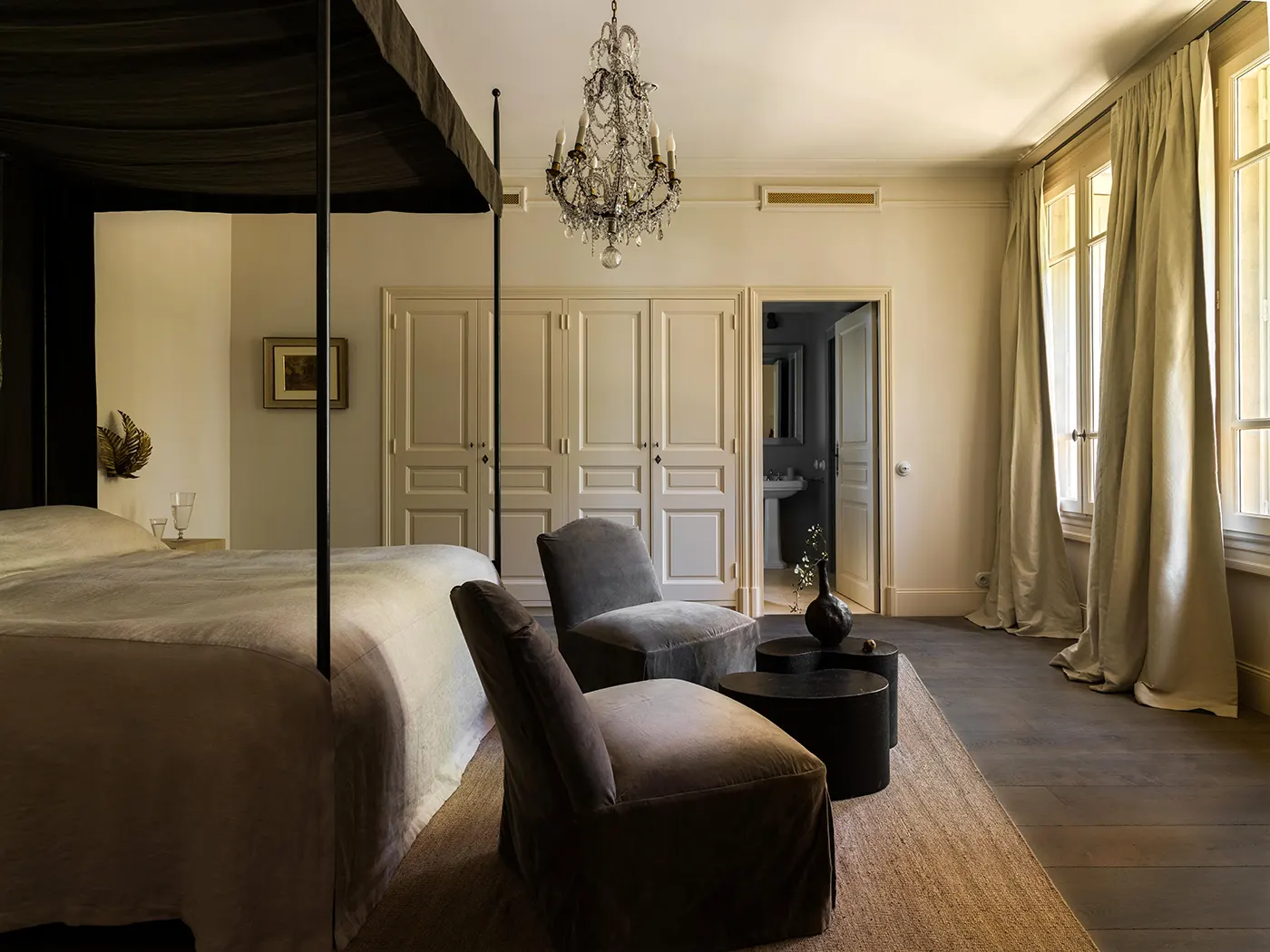
Marianne Tiegen Interiors deploys textiles with intention, using canopies, privacy screens, bed throws, and wall panels to create intimacy without overwhelming the château’s classical bones. The result is a sense of comfort and belonging, where guests can experience both grandeur and the subtlety of fine craft.
RELATED: INSPIRING HOTELS TO VISIT
Sourcing and Craft: A Mediterranean Palette
The textile palette is deeply rooted in the Mediterranean context. Collaborating with botanical dyers and local artisans, the design team developed hues such as “Blush,” derived from grape seeds grown on the estate, and warm corals and apricots from madder root. Soft blues and greys, achieved with pastel (woad), echo the estate’s romantic history. Antique textiles, Provençal damasks, Venetian block-prints, and couture-surplus fabrics, are thoughtfully incorporated, sourced through a network of collectors and dealers.
In many suites, the discovery of a singular antique fabric determined the entire design direction. Where materials were delicate, they were restored or backed with cotton, celebrating their imperfections and history rather than concealing them. This philosophy, reminiscent of textile kintsugi, imbues the hotel with a sense of narrative and authenticity.
Artisanship and Adaptability
La Banquière serves as a showcase for European artisanship, traditionally reserved for couture ateliers. Woven Belgian linens, hand-printed serigraphies from Lyon, and Venetian block-prints are complemented by embroidered panels using haute couture techniques. The bee motif, rendered in Pont de Beauvais stitch, recurs throughout, symbolizing the estate’s biodiversity and the project’s regenerative ethos.
Practicality is woven into the design. Bed canopies and screens are anchored in metal frames or removable structures, allowing for easy cleaning, repair, or redyeing. Upholstery features removable covers, and cabinetry can be restored or replaced. This approach ensures that the hotel is not only beautiful but also built for longevity, evolving gracefully as it ages.
Guest Experience: Living Luxury
Staying at Chateau La Banquière is a sensorial experience. The textures, colors, and craftsmanship invite touch and contemplation. Every detail, from the naturally dyed linens to the antique damasks, tells a story of place and patience. The hotel’s commitment to sustainability does not translate to austerity; instead, it is expressed through the careful selection of materials and the preservation of craft traditions.
Marianne Tiegen’s vision challenges conventional notions of luxury. “Luxury today faces an identity crisis. Its renewal lies in craftsmanship, authenticity, and rarity. With La Banquière, we show that sustainability can be a form of true luxury, rooted in nature, in history, in care,” she explains.
Sustainability and Circular Design
The circular design philosophy is evident throughout the hotel. Materials are chosen for their ability to age with dignity and to be restored rather than replaced. The use of reclaimed and antique textiles, alongside new plant-dyed fabrics, contributes to a regenerative design economy. This approach not only minimizes waste but also creates interiors that grow richer with time, carrying the memory of past guests and the evolving landscape.
Technical Details
- Project Name: Chateau La Banquière
- Location: Montpellier, France
- Project Type: Hotel
- Design Lead: Marianne Tiegen
- Photography: Jeremy Wilson
- Design Approach: Circular design, reuse of reclaimed and antique materials
About Marianne Tiegen Interiors
With offices in Switzerland, France, and California, Marianne Tiegen Interiors brings over two decades of expertise to projects ranging from residential to hospitality. The firm is recognized for infusing art and nature into every space, collaborating with skilled artisans to create environments that are soulful and sensorially rich.
Discover more in our gallery:
For more projects by Marianne Tiegen team visit mariannetiegen.com.
Chateau La Banquière
Address: Chem. du Pâtissier, 34130 Mauguio, France
Phone 0681069045
For reservations and more information visit chateau-la-banquiere.com.