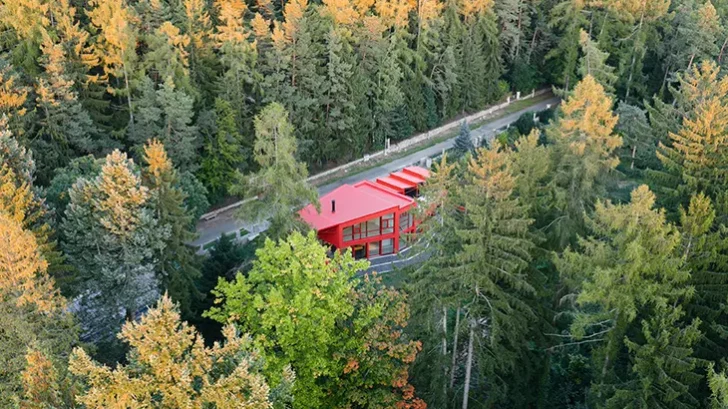

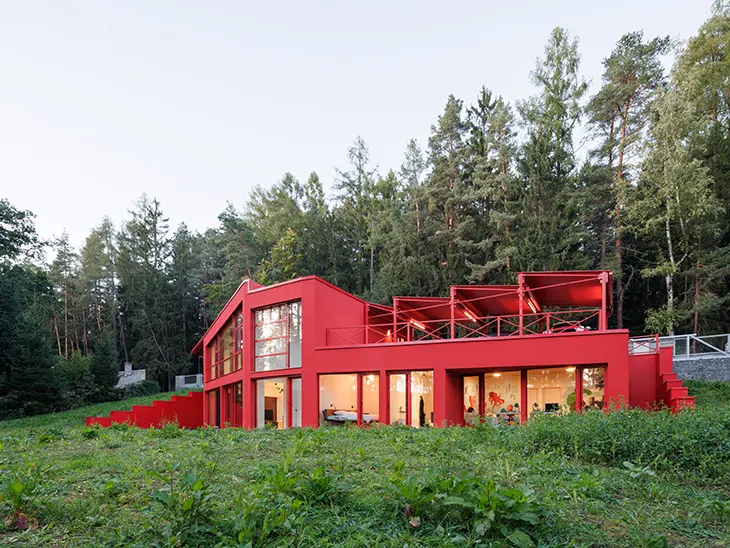
Jevany Villa sits within a dense spruce forest, where the terrain drops from the access road toward a landscape of ponds and mature trees. The project builds its logic directly from this condition. The house presents itself as a single-storey volume from the street, while the garden side reveals a taller, open structure. This dual reading defines the entire spatial experience. The design follows the slope with precision, using it to organize movement, views, and program.
HOUSING
Architektura places the house carefully within the plot, responding to both topography and the remains of a previous structure. A pit left behind creates a height difference of roughly 3.6 meters, which becomes a key spatial driver. The building steps down with the terrain, creating a sequence that begins at the roof level and descends toward the forest. This descent forms the main spatial idea, where architecture directs attention outward, aligning interior movement with the surrounding landscape.
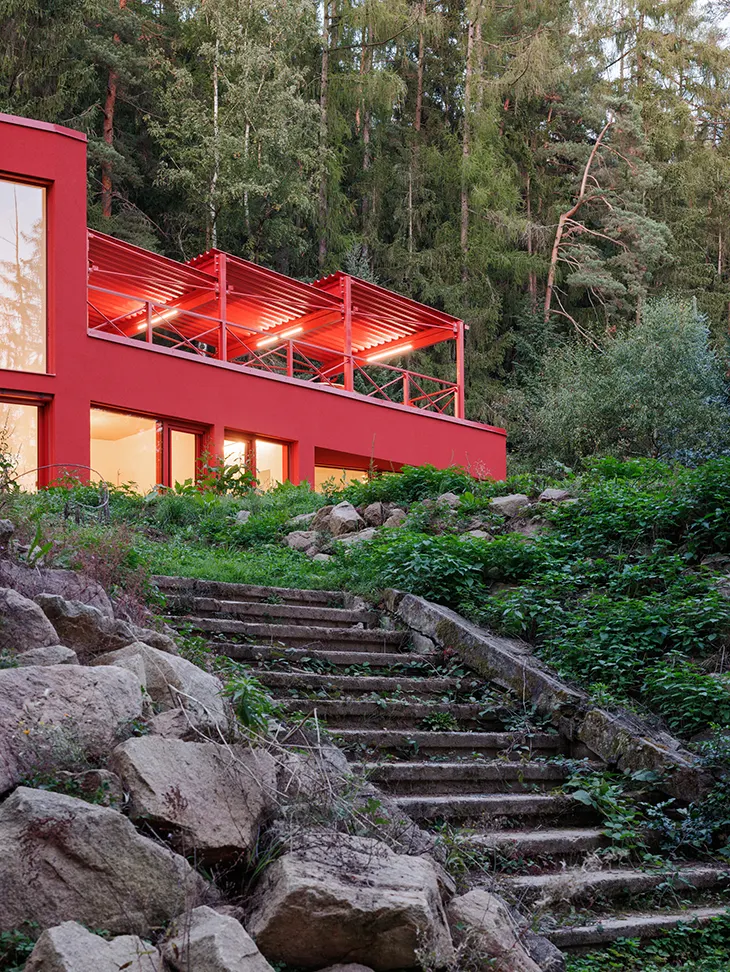
The roof functions as an active surface. Cars park directly above the house, under a sawtooth structure made of raw red steel. Three segments define parking spaces, while one marks the entrance. This arrangement introduces an industrial tone that continues throughout the project. The presence of cars adds variation to the composition, shifting the visual reading each time.
Entry begins at this upper level. The house immediately opens toward the forest, where tall trunks and changing light shape the view. A central staircase organizes circulation. This vertical element connects the western and eastern wings, which hold the day and night zones. The staircase operates as a core, linking all levels while maintaining a clear spatial hierarchy.
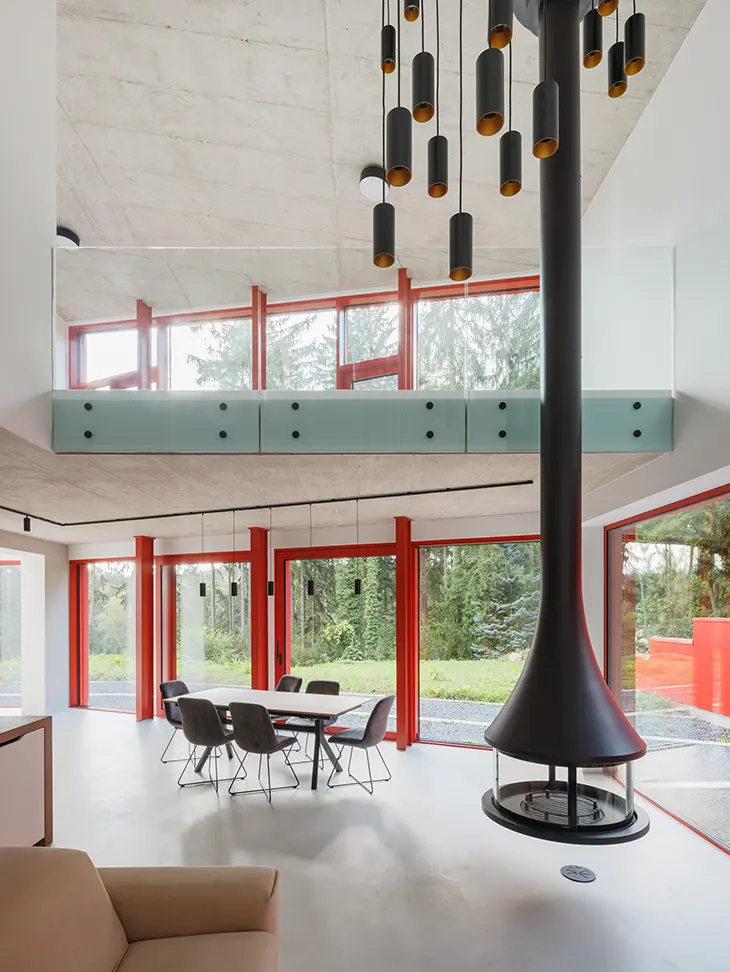
The interior organizes into five operational levels. At street level, the entrance, parking, and a flexible study establish the upper program. A few steps below, the house transitions toward the main living area. This central space combines living, cooking, and relaxation into one continuous zone. Large openings connect the interior with the forest, while red steel window frames introduce a strong visual contrast against the greenery.
The living area extends across two levels, exposing raw concrete ceilings marked by formwork imprints. Suspended black lighting elements reinforce the industrial language. A curved wall guides movement from the staircase into the main space, introducing a softer gesture within the otherwise angular composition.
A long corridor leads toward the private areas. Built-in white cabinetry lines one side, while bedrooms open toward the forest. The parents’ suite includes a walk-in closet and bathroom, while children’s rooms maintain direct access to views and exterior connections. The corridor ends at the garden, where a secondary entrance offers flexibility for future use.
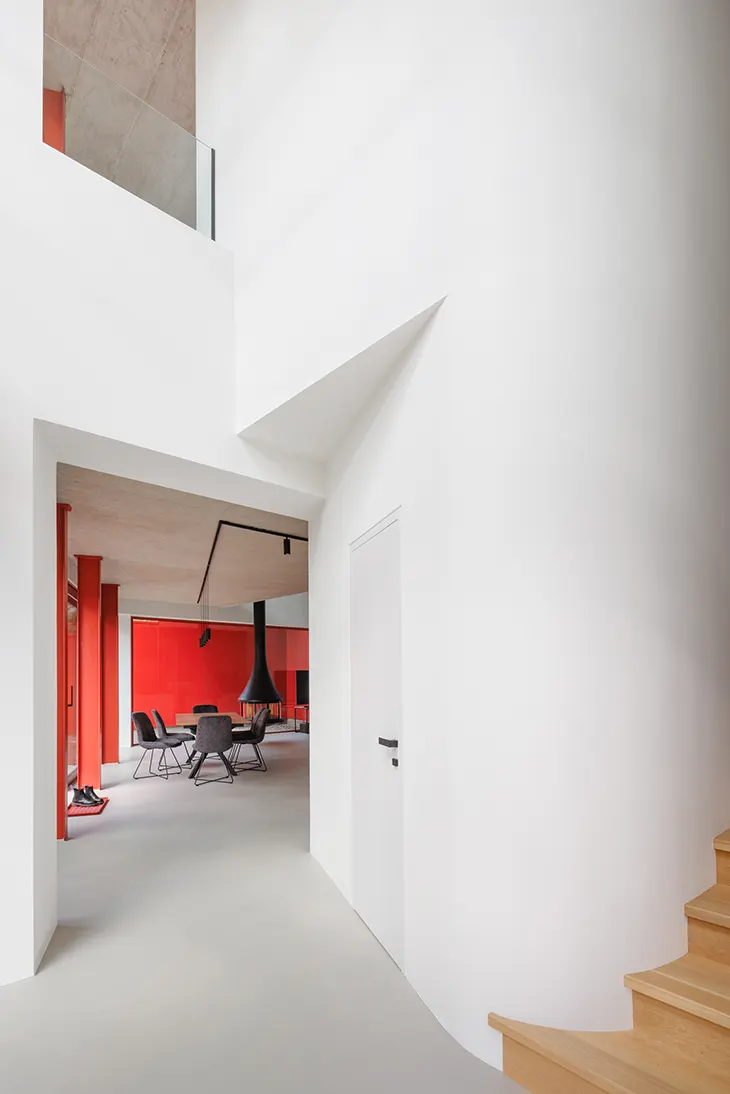
Material choices remain direct and controlled. Red steel structures define key elements, while white walls and black accents maintain clarity. The kitchen introduces additional color through stone surfaces that interact with steel and cabinetry. Jan Waltr developed the interior in close collaboration with the architect, ensuring consistency across spatial and material decisions.
The surrounding landscape requires minimal intervention. Existing trees frame the house and maintain privacy. Large stones uncovered during demolition remain on site, placed near the structure as part of the environment. The forest sets the primary condition for living, where movement, light, and seasonal change define daily experience.
Jevany Villa operates as a precise response to site conditions. The project uses slope, orientation, and structure to create a sequence that aligns architecture with its surroundings, allowing the forest to remain central to the experience of the house.