
Set within the dense forests along the Maskinongé River in the Outaouais, La Maraude approaches residential architecture with restraint and clarity. Nathalie Thibodeau builds the project around a precise understanding of place, choosing to pull the house away from the river and anchor it deeper into the wooded site. This decision defines the entire project. The house does not seek spectacle. It settles into the landscape and constructs a quieter relationship with its surroundings.
HOUSING
The project extends beyond a single structure. It operates as a base within a larger spatial strategy that distributes smaller retreats across the property. Each intervention introduces a personal scale of inhabitation, allowing different rhythms of use and occupation. The main house establishes the foundation for this network, setting both the architectural language and the pace of experience across the site.
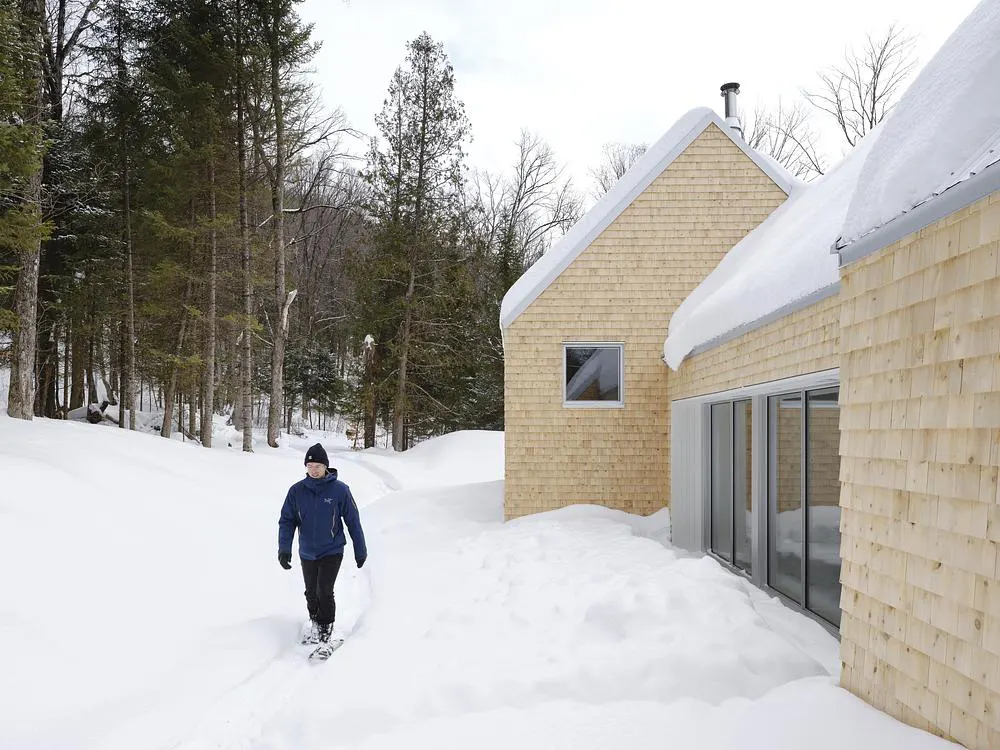
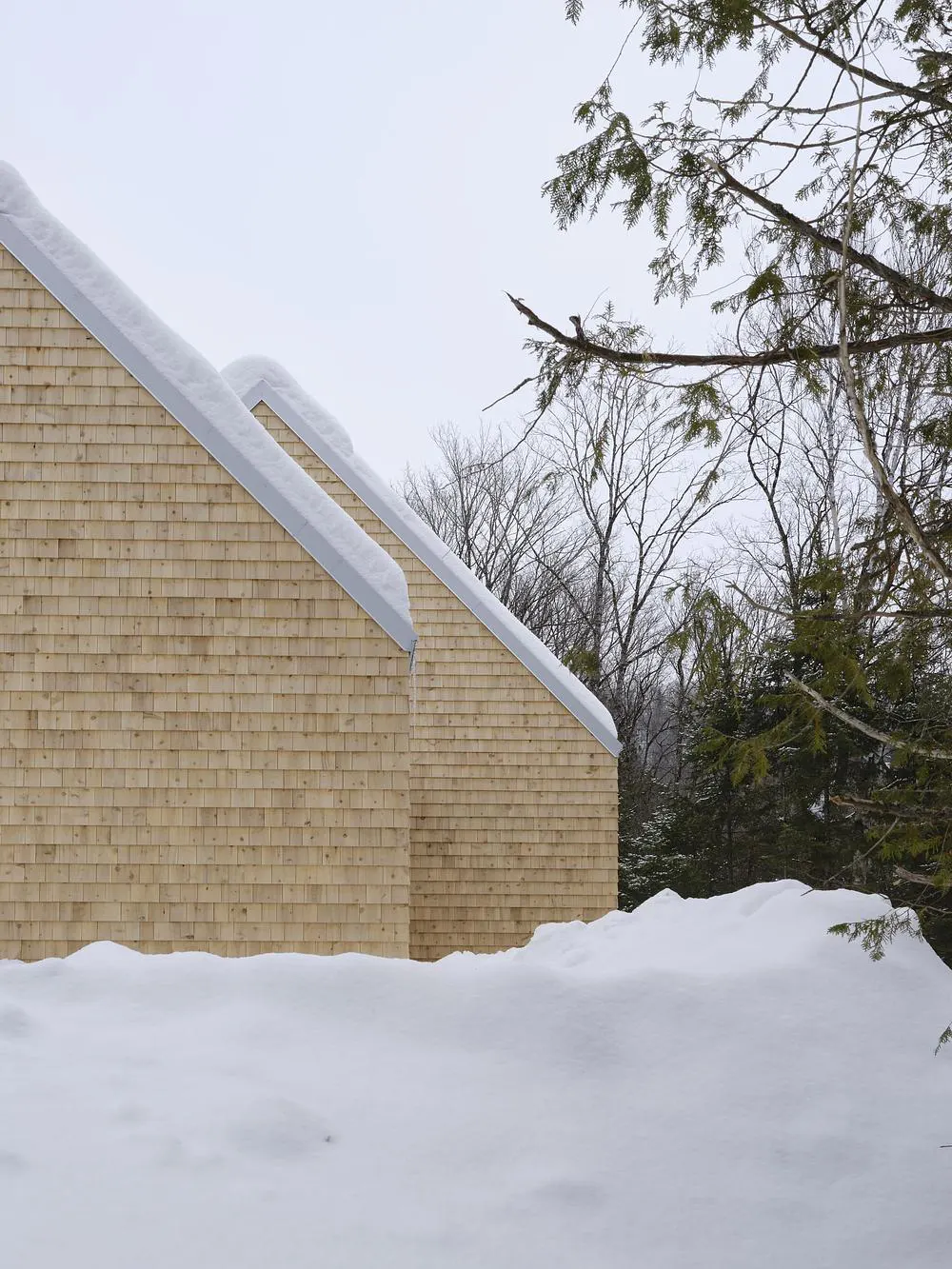
Formally, La Maraude draws directly from Quebec vernacular traditions. Rectangular volumes, steep gable roofs, and a composition that recalls the incremental logic of rural outbuildings define the structure. These references remain controlled and deliberate. Cedar shingles wrap the exterior with a tactile surface that will evolve over time, while the metal roof reinforces durability and climatic response. The material palette stays grounded in function, avoiding decorative excess while maintaining a clear architectural identity.
The house unfolds through three distinct volumes, each calibrated to a different level of privacy. The entrance pavilion compresses space, organizing service functions within a compact footprint. Openings remain measured, directing attention toward specific views and establishing a controlled arrival sequence. This compression prepares the transition into the central volume, where the architecture expands.
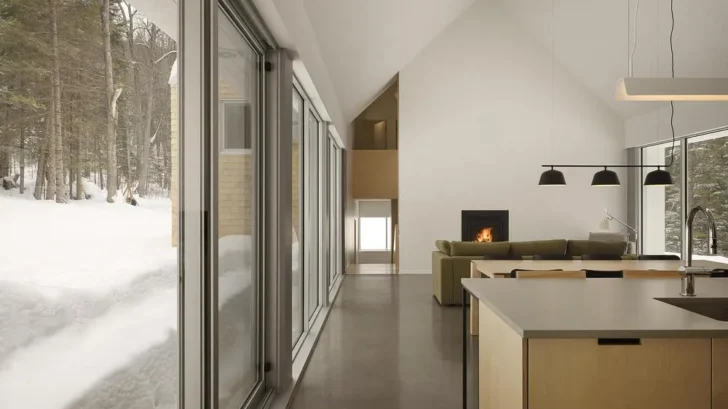
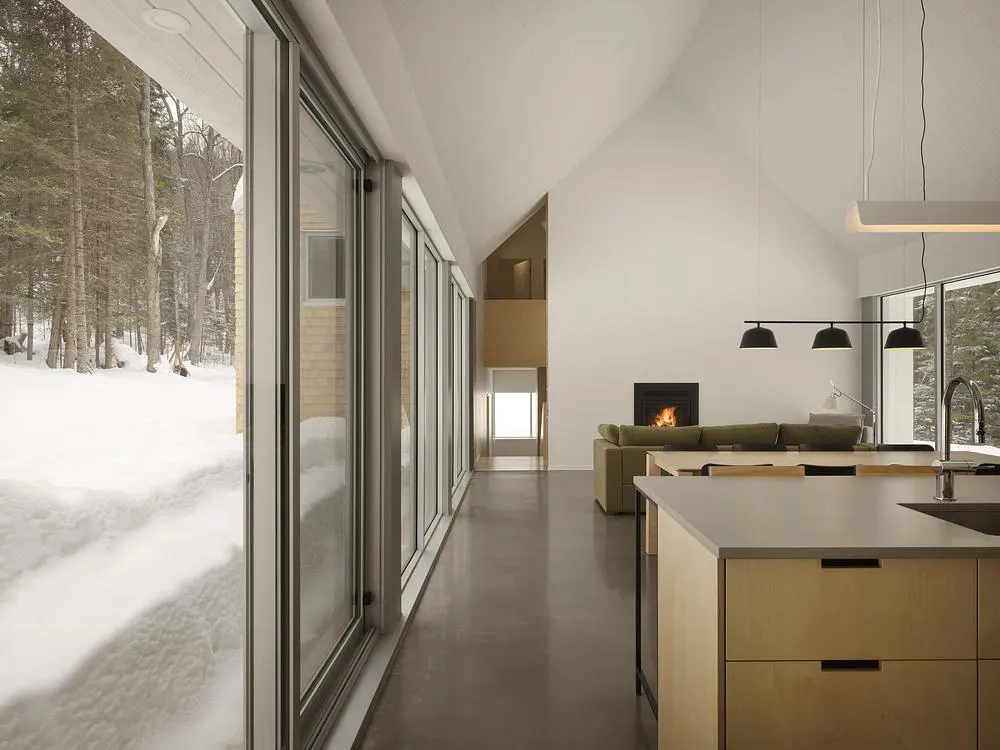
The main living pavilion introduces height and transparency. Large glazed surfaces extend sightlines into the forest, while natural light moves freely across the interior throughout the day. The space maintains continuity with the exterior, allowing seasonal shifts to register directly within the house. The architecture does not frame nature as a distant view. It keeps it present, continuous, and active.
Terraces extend this relationship outward. A north-facing platform creates a more enclosed, introspective setting oriented toward the mountain, while a southern terrace opens toward the descending landscape and the river beyond. These two exterior spaces introduce contrast in light, exposure, and atmosphere, expanding how the house engages with its environment.
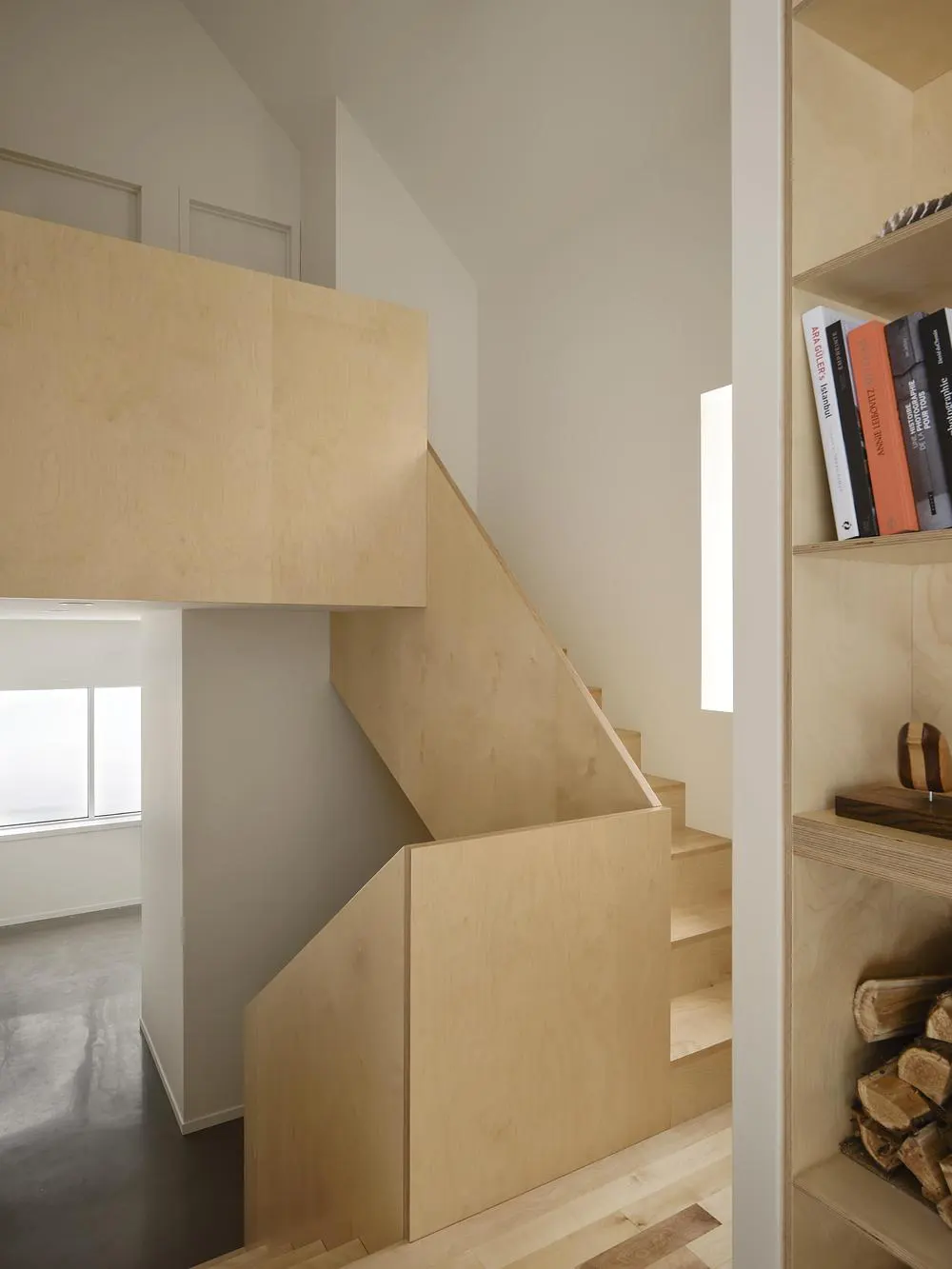
The final pavilion shifts back toward intimacy. The bedroom volume, arranged over two levels due to the site’s topography, reduces its openings and refines its views. Windows frame fragments of the forest rather than broad panoramas, producing a sequence of controlled perspectives that change with the seasons. This restraint reinforces the sense of retreat and separation from the more open communal spaces.
La Maraude succeeds through precision and discipline. It interprets Quebec’s architectural language without nostalgia and translates it into a contemporary structure that responds directly to climate, site, and use. The project avoids excess and focuses on proportion, material, and placement. Within this framework, the house achieves a strong spatial presence while maintaining a quiet, consistent relationship with the forest that surrounds it.