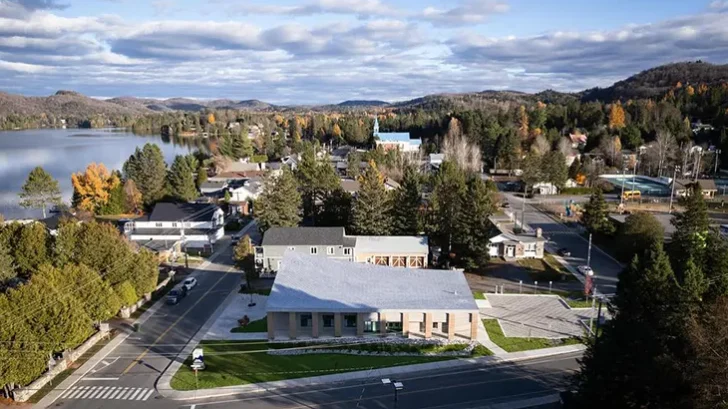

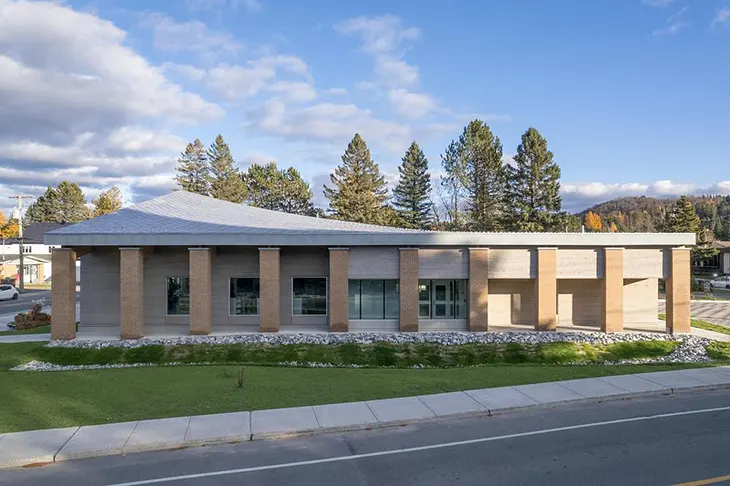
Perrault Architecture has completed the Monica C. Gratton Library in Saint-Adolphe-d’Howard, Canada, introducing a new civic space that strengthens cultural life in the municipality. Designed as a modern public institution, the LEED Gold project responds to environmental challenges while improving access to cultural services for residents and visitors. The building also addresses flooding issues previously associated with the site, while establishing a welcoming public destination that encourages learning, gathering, and exchange.
INSTITUTIONAL ARCHITECTURE
Named after Monica C. Gratton, a respected figure in the cultural and community life of Saint-Adolphe-d’Howard, the library functions as what urban planners often describe as a “third place.” Beyond home and workplace, the building offers a shared environment where citizens meet, study, attend events, and participate in local cultural activities. Its presence also contributes to the revitalization of the municipality’s downtown area, strengthening connections between civic life, education, and everyday public use.
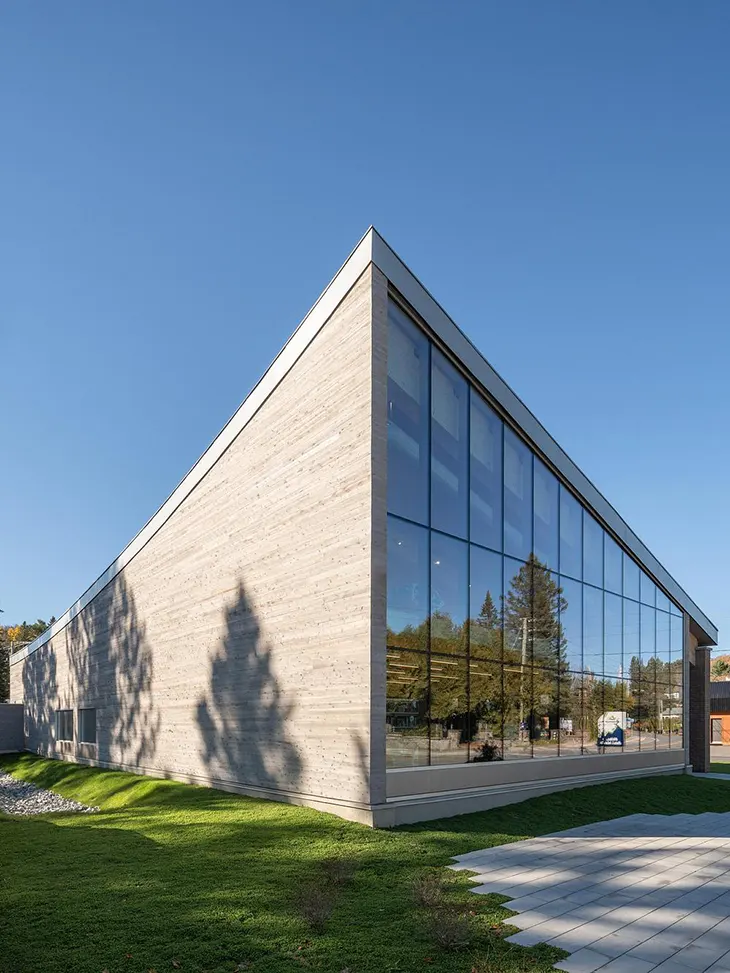
Perrault Architecture approached the project with the intention of creating a living institution capable of adapting over time. The architects developed a flexible spatial framework that allows the building to evolve as community needs change. Instead of presenting the library as a highly expressive architectural object, the design anchors the building firmly within its surroundings. The project emphasizes continuity with the landscape and the rhythms of the village.
The surrounding natural environment guided the architectural concept. The Laurentian landscape of mountains, lakes, and dense forests shaped both the geometry and spatial character of the building. Two distinct formal gestures organize the architecture. A sloping roof references regional construction traditions commonly found in Quebec villages. A curved volume introduces a second movement that reflects the fluid contours of nearby mountain ridges and lake edges. Together these forms generate a building that changes perception depending on the viewing angle.
The library occupies a visible position at the northern entrance to Saint-Adolphe-d’Howard. The building sits perpendicular to the main road, creating a forecourt that functions as an outdoor civic space. This open area allows the municipality to host public gatherings and seasonal village activities. A secondary entrance along the side elevation introduces a colonnade that guides visitors into the building while providing a sheltered path for students arriving from a nearby school.
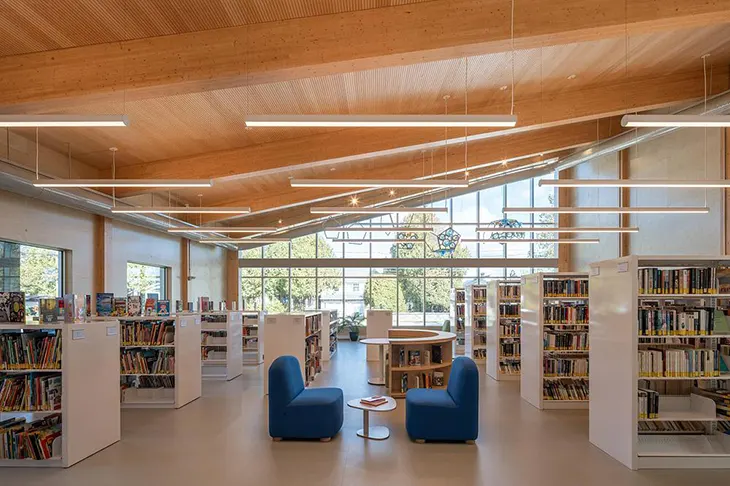
Large windows establish a constant relationship between interior spaces and the surrounding landscape. Views of the forest and seasonal shifts in light shape the atmosphere inside the reading areas. Within the main interior space, a wooden canopy structure defines the central zone for reading and study. The timber framework introduces warmth and a sense of shelter while maintaining openness within the public floor plan.
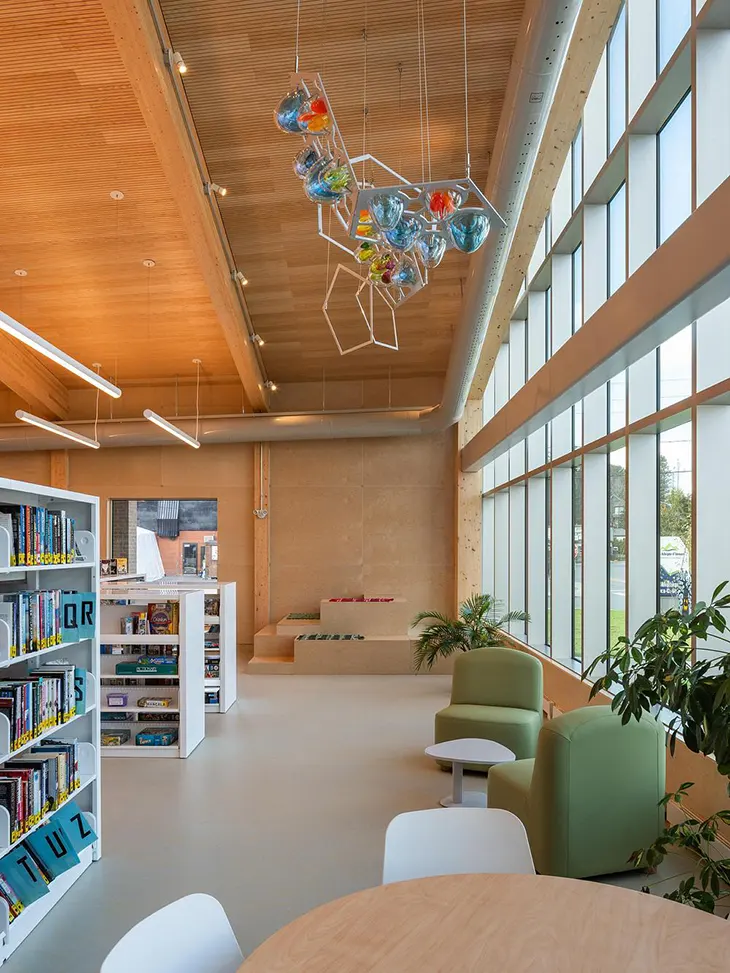
Environmental performance played a key role in the development of the project. The architects kept the building volume compact to support energy efficiency and reduce heat loss during the long Canadian winter. The roof form contributes to this strategy while also shaping the building’s visual identity. From certain viewpoints the roof appears sharply sloped, reflecting regional architecture along the village road. From other perspectives the structure reveals a continuous curved profile.
The parabolic roof begins at a higher point and gradually descends toward the ground. A solid wood structure supports the form and carries a surface of tin plated copper. Craftspeople installed the metal following a traditional Canadian roofing pattern, allowing the material to trace the curved geometry with precision. The roof surface changes appearance with weather and daylight, giving the building a subtle visual presence within the landscape.
Through its careful relationship to the site and its focus on civic accessibility, the Monica C. Gratton Library strengthens the social infrastructure of Saint-Adolphe-d’Howard. The project introduces a contemporary public building that supports cultural activity while maintaining a strong connection to the natural environment that defines the region.