
In a Park is a residential renovation by L Architects that begins with a quiet but pointed observation. Designed for a horticulturist client in northeast Singapore, the project responds to a simple realization voiced early in the design process: despite a deep love for plants, the client did not “wake up to them.” The existing three-bedroom apartment, like many homes shaped by conventional layouts, treated greenery as an afterthought rather than a central presence.
INTERIOR DESIGN
The project takes shape against a broader cultural backdrop. During the pandemic, gardening became a widespread domestic ritual, though many homes were never spatially equipped to support it long term. While this interest faded for some, for others it evolved into a sustained way of living. In a Park addresses this mismatch directly, reframing the apartment as a setting where plants are embedded into daily routines rather than accommodated at the margins.
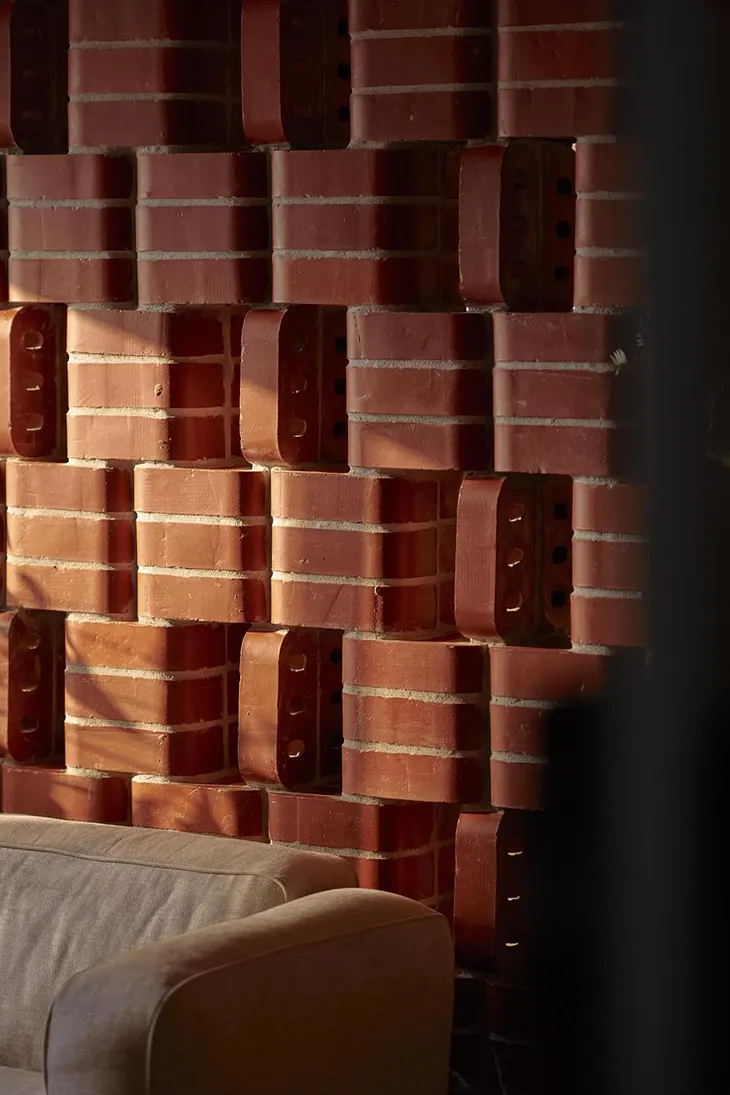
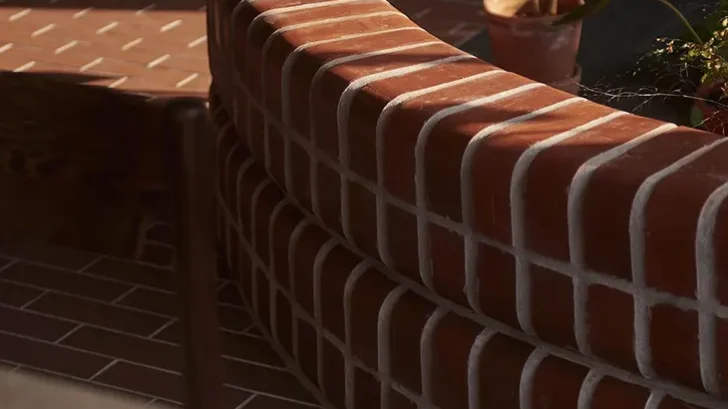
Rather than relying on spectacle or complex architectural gestures, L Architects approached the brief through abstraction. The idea of a park within the home emerged as a guiding concept: a space where movement, rest, and vegetation coexist fluidly. This led the studio to examine older public parks across Singapore, searching for material cues that carried collective memory without nostalgia. One element stood out for its quiet familiarity, the double-bullnose brick.
Historically used in outdoor benches, planter edges, and walkways, the double-bullnose brick once formed part of the everyday language of Singapore’s parks. Over time, it slipped out of use, replaced by more contemporary materials. During sourcing, the design team discovered that local production had ceased entirely, with only 571 bricks remaining in inventory. The supplier offered the full batch to the client, transforming the material into both a constraint and a catalyst.
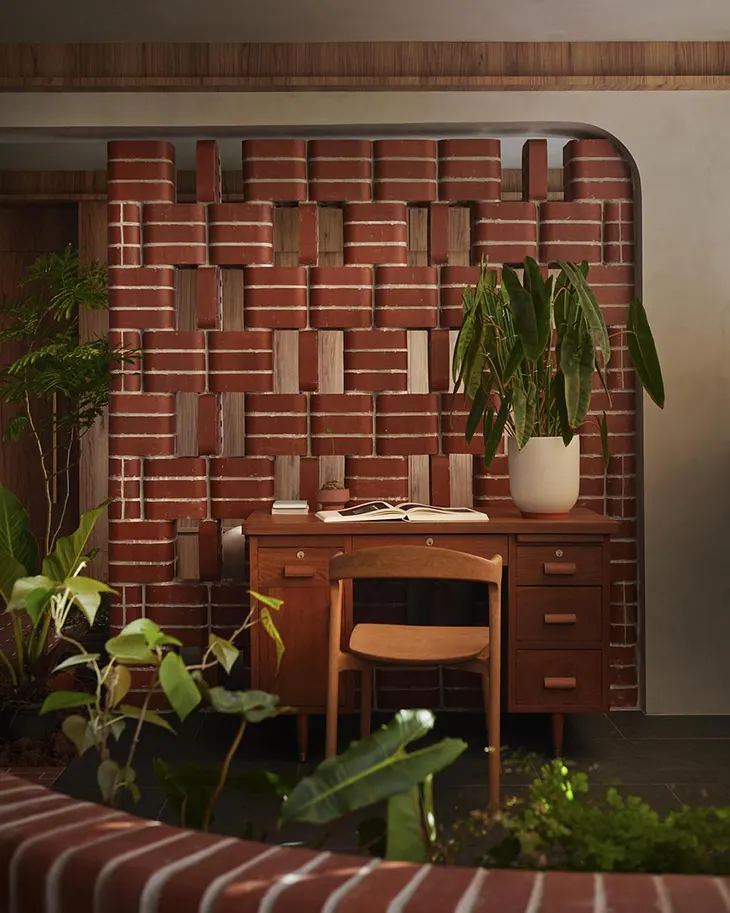
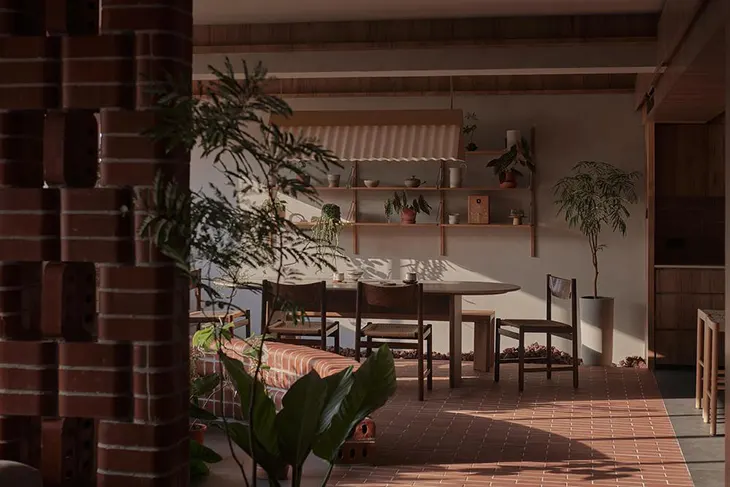
Within the apartment, the brick’s rounded profile becomes an instrument for shaping space. Its softened edges allow walls, benches, and thresholds to curve gently, countering the rigidity of the original layout. A freestanding brick wall subtly separates the study from the living area, creating division without enclosure. Between the study and dining spaces, the bricks form a curved bench that can be occupied from either side, acting as a shared zone rather than a boundary. These gestures encourage lingering, pause, and interaction, qualities more commonly associated with outdoor environments.
Plants weave through these interventions naturally. Instead of being placed along perimeters or balconies alone, greenery inhabits the interior as a constant presence. The spatial sequence feels open and continuous, with sightlines that allow plants to register from multiple rooms. The effect is not one of simulation but of translation: the atmosphere of a park distilled into domestic scale.
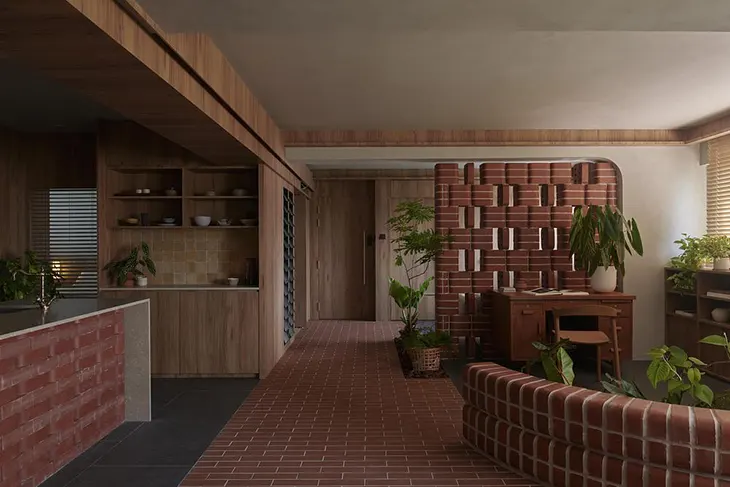
What gives In a Park its clarity is restraint. The project does not attempt to dramatize its concept. Materials remain limited, details are deliberate, and the architecture resists excess. By reintroducing an overlooked brick and allowing it to structure both form and experience, the project argues for a different understanding of innovation, one rooted in care, memory, and material intelligence rather than novelty.
This approach aligns closely with the ethos of L Architects. Founded in 2016 by principal architect Lim Shing Hui, the Singapore-based studio has built a practice around human-centred design, emphasizing atmosphere, tactility, and emotional resonance. Their work often draws from ordinary elements, revealing value through context and composition. In a Park reflects this philosophy with precision, blurring distinctions between interior, architecture, and landscape without forcing the gesture.