
House 117 in Toronto presents a residential project shaped through careful material choices, controlled daylight, and precise spatial organization. Designed by Izen Architecture in collaboration with DS Interiors, the home integrates architecture and interior design into a cohesive composition that extends from the exterior envelope to the smallest interior detail. The project introduces a disciplined material palette and a clear architectural structure that defines both the character of the façade and the atmosphere of the interior spaces.
INTERIOR DESIGN
The house sits quietly within its residential streetscape, where its composed brick façade establishes a strong yet restrained presence. The exterior uses grey bricks that measure twice the length of conventional units, creating a stretched horizontal rhythm across the building. This elongated proportion gives the façade a distinctive scale while maintaining a sense of calm order. At the base of the volume, the brick rotates into a vertical orientation, altering the surface pattern and subtly emphasizing the raised floor plan. Deeply recessed windows, edged with refined metal detailing, punctuate the brick surface and reinforce the building’s deliberate geometry.
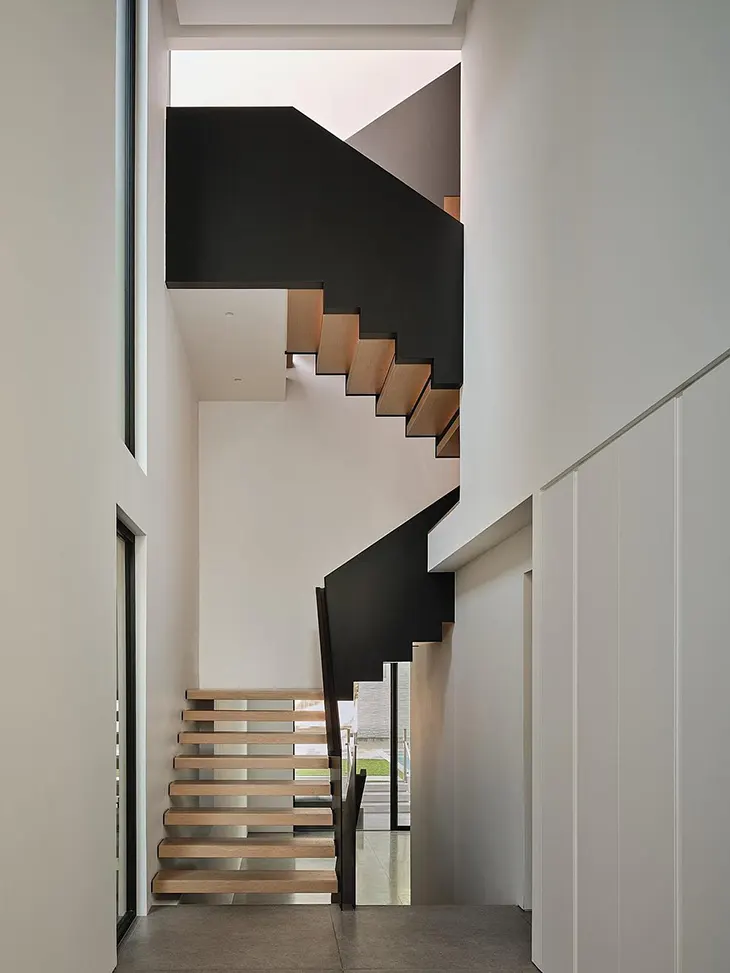
Inside, the house organizes itself around a central stair that connects all levels visually and spatially. This stair operates as the interior spine of the building, guiding movement while drawing daylight downward through carefully positioned openings. Although the main living level sits above grade, the entry occurs directly at street level, creating an accessible and measured arrival. Light enters the interior through a series of cuts in the building envelope, shifting across surfaces throughout the day and shaping the atmosphere of each space.
A projecting element along the stair introduces light from the side, allowing it to wash across the landings and illuminate the vertical circulation. In the primary bathroom, a skylight sits directly above the shower, introducing daylight into the bathing space and transforming a routine moment into a carefully composed architectural experience.
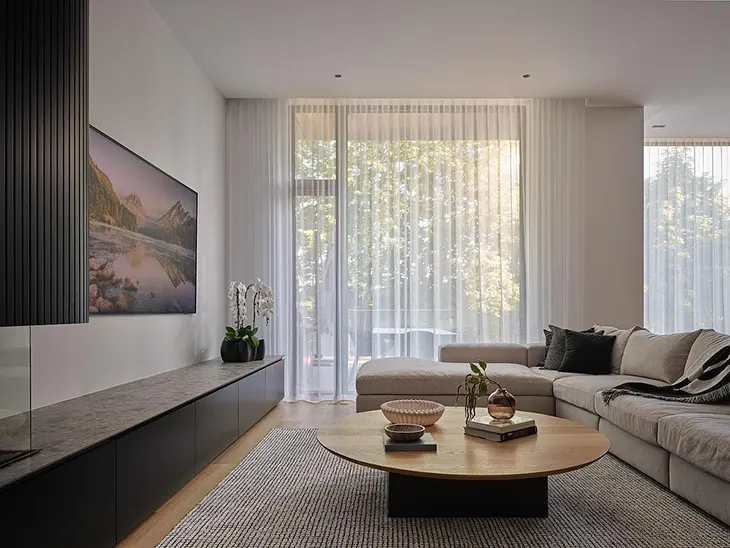
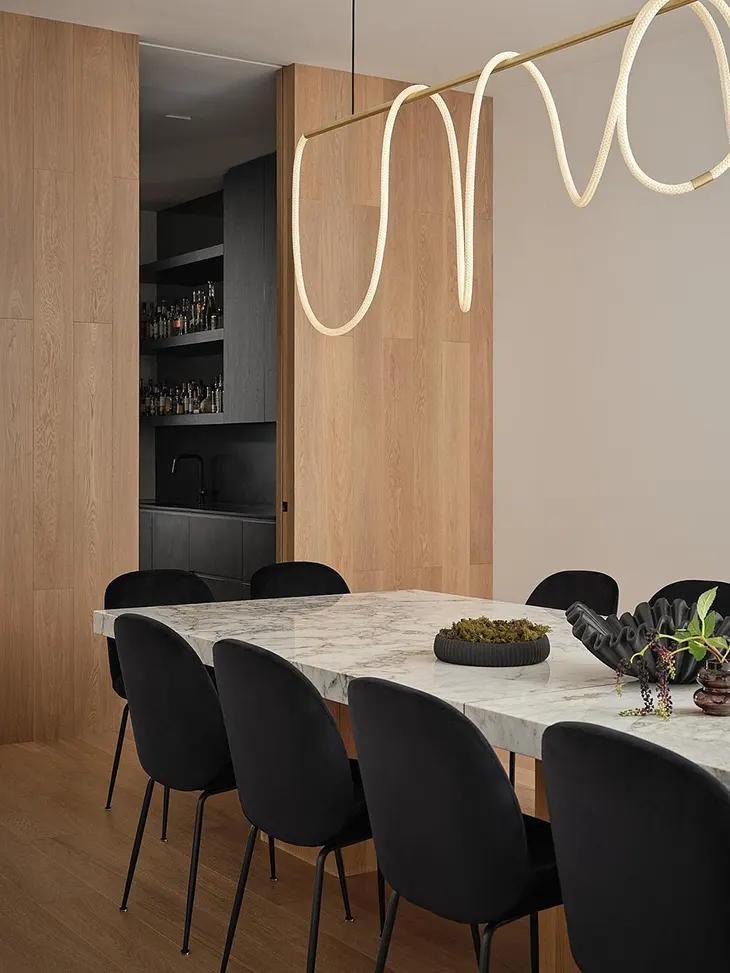
The interior design continues the project’s material discipline. Wood flooring extends throughout the house and introduces warmth that balances the more restrained architectural surfaces. On the main floor, the wood wraps vertically around the central core, creating a subtle spatial divider within the open plan. This gesture defines different zones without interrupting the visual continuity of the space.
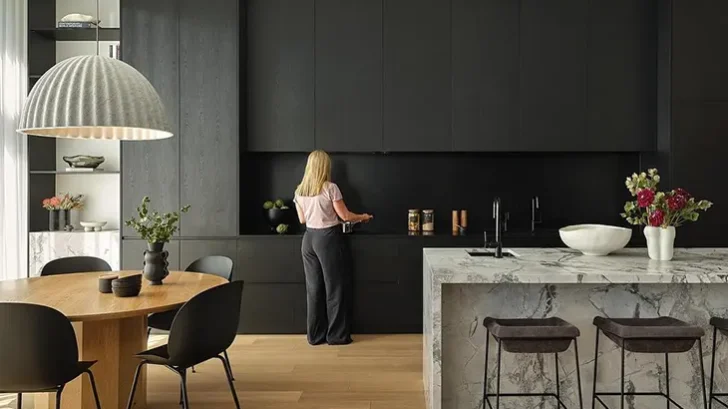
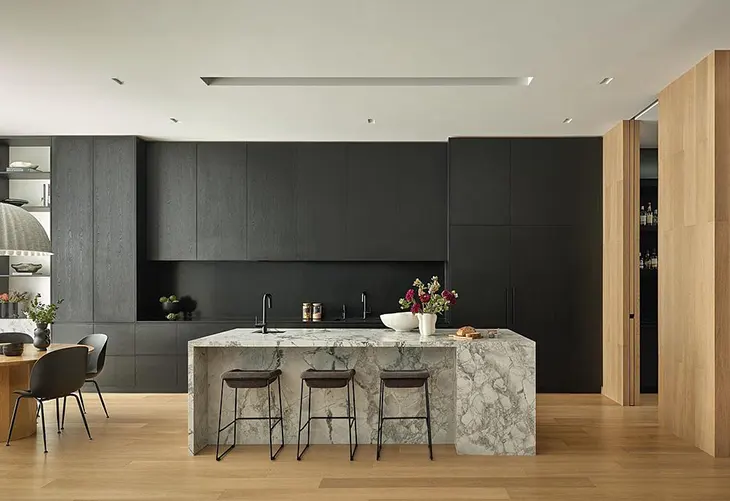
The kitchen centers on a darker palette, where black veneer cabinetry, black granite countertops, and integrated fixtures establish a focused material composition. A natural stone island introduces expressive veining that softens the darker surfaces. Large floor-to-ceiling glazing brings abundant daylight into the room, ensuring the space remains bright and inviting.
Elsewhere, precise detailing reinforces the home’s cohesive language. Minimal reveals replace traditional baseboards, lighting fixtures integrate directly into the ceilings, and consistent materials appear across bathrooms, living areas, and circulation spaces. Through these carefully coordinated decisions, House 117 achieves a refined residential environment where architecture, interiors, and material choices operate as a unified whole.