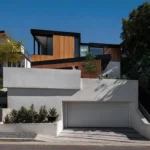

Lousinha Arquitectos completes Assembleia da Granja, a project that re-establishes a historic building within the centre of Praia da Granja while adapting it to contemporary living. Originally built in the late 19th century, the Assembleia formed part of the town’s social structure, attracting figures such as King Carlos I, Queen Amélia, and writers including Eça de Queirós and Sophia de Mello Breyner. After more than four decades of abandonment, the structure reached a critical state, requiring a complete reconstruction.
RESIDENTIAL
Led by Paulo Lousinha, the project follows a clear direction: retain the memory associated with the original building while reintroducing it as a functional residential block. The intervention reconstructs the building using the same scale, volume, and architectural language, allowing it to maintain its presence within the urban fabric.
A defining moment of the project lies in the treatment of the eastern pediment. The original stone elements were dismantled, catalogued, and reassembled in their original configuration. This precise process preserves material continuity while placing it within a new structural framework that supports current standards.
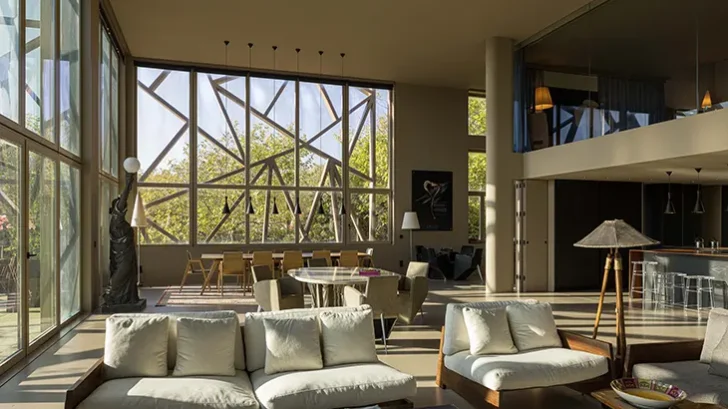
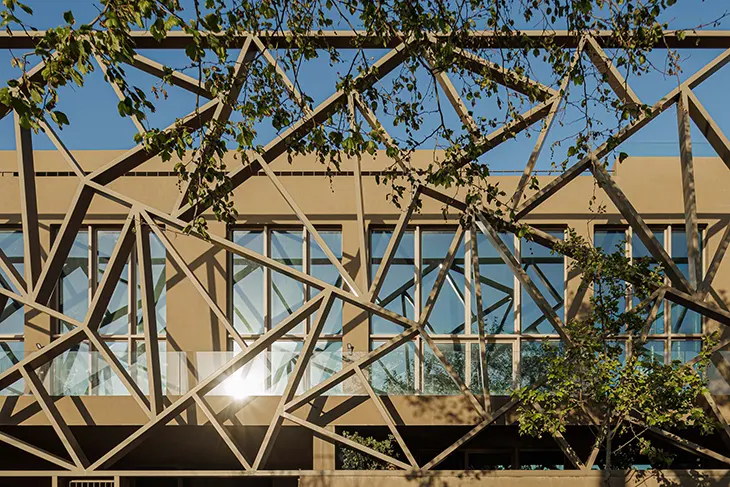
The project introduces a contemporary extension on the western side, marked by a sculptural brise-soleil. This element establishes a distinct identity through its abstract vertical rhythm, referencing the surrounding trees without direct imitation. The contrast between restored and new volumes creates a dialogue that acknowledges time while maintaining cohesion across the block.
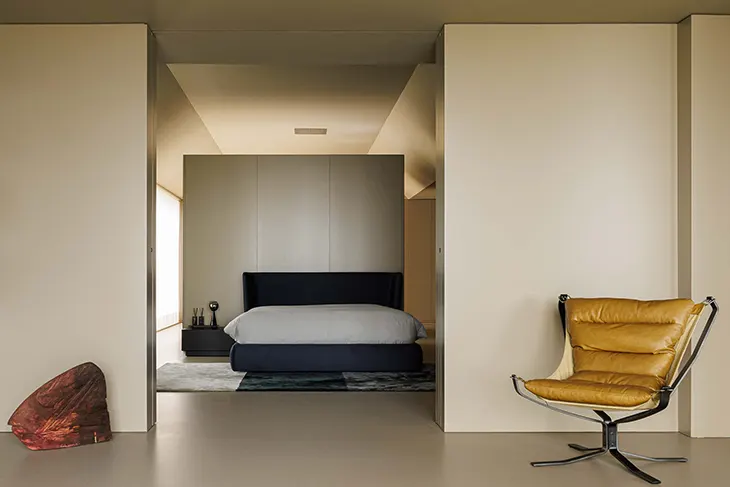
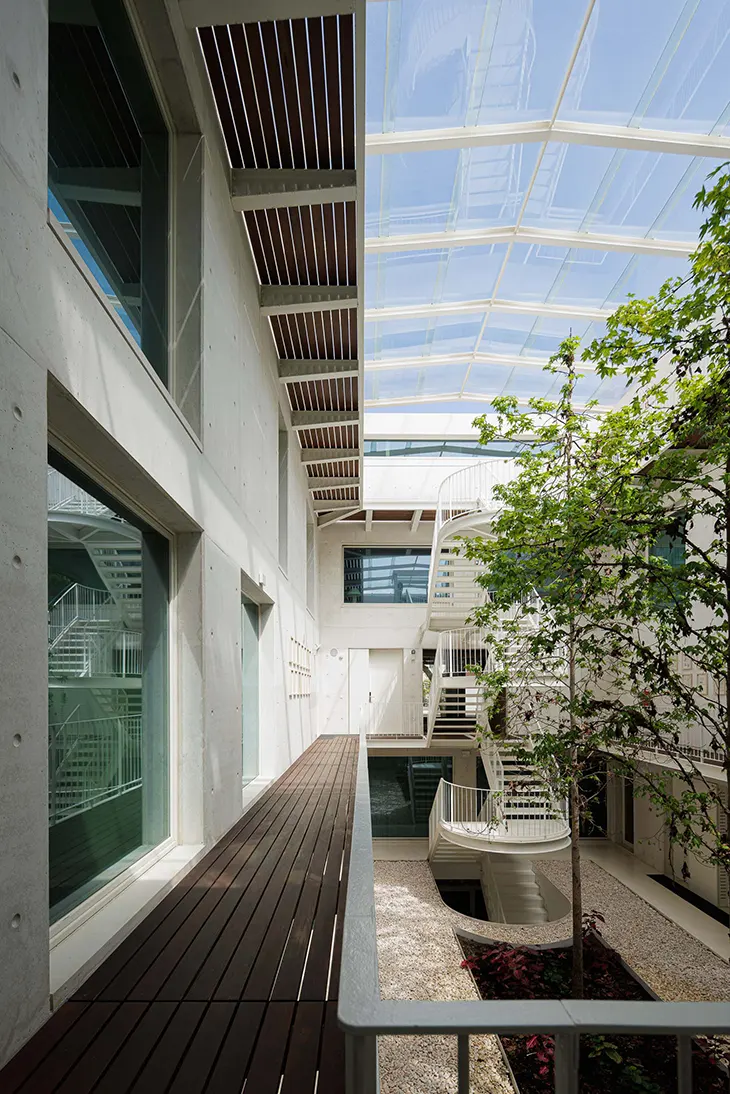
An east–west axis organizes movement through the project, guiding access and circulation. At its centre, an inner courtyard functions as a cloister-like space, bringing natural light and ventilation into shared areas and residential units. This internal void shifts the experience of the block inward, offering a spatial pause that becomes fully apparent only once inside.
The programme includes fourteen residential units and two spaces allocated for retail or services. The apartments range from compact layouts to larger configurations with mezzanines, double-height living areas, and west-facing terraces. Several units engage directly with the light of the Atlantic, particularly during late afternoon hours.
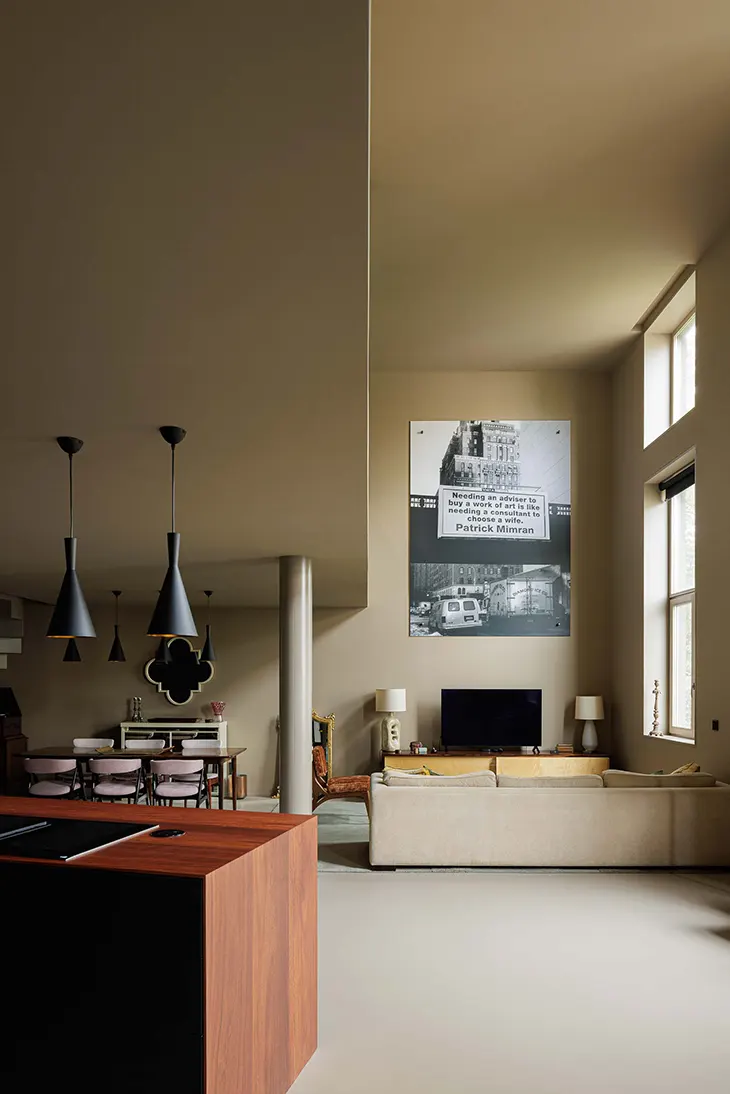
A basement level extends beneath most of the site, receiving daylight and ventilation through roof lanterns and transparent access points. This approach ensures that even the lowest level remains connected to natural light, reinforcing the environmental quality of the building.
Assembleia da Granja restores continuity to a key urban frontage in Praia da Granja while introducing new residential life and public-facing spaces. The project reactivates a site long defined by absence, re-establishing its role within the town’s daily rhythm.