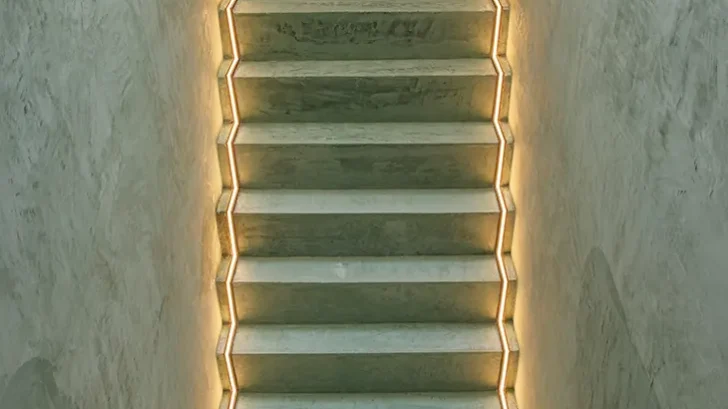

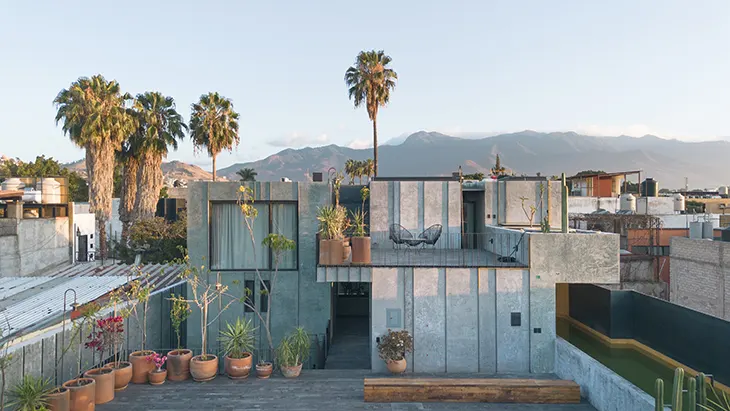
Casa Nayaá, designed by RootStudio in Oaxaca’s Historic Center, approaches residential architecture through restraint and clarity. Set behind a five-meter-high façade, the project begins with absence, an empty lot that transforms into a carefully composed structure shaped by local material logic and spatial discipline. The architects position the house as a continuation of its surroundings, maintaining the scale and rhythm of the neighborhood while introducing a more deliberate interior order. The result avoids excess and instead focuses on how space supports daily life.
HOUSING
The organization of the house follows a clear sequence. Entry remains intentionally understated, leading into a semi-covered courtyard that anchors the entire plan. This central space establishes the rhythm of movement, where water, shade, and filtered light define transitions toward the main living areas. The open-plan layout extends outward rather than expanding indiscriminately, connecting interior functions with terraces and balconies that maintain a close relationship with the city. Built-in furniture plays a key role here, reducing visual noise and reinforcing the sense of continuity between structure and use.
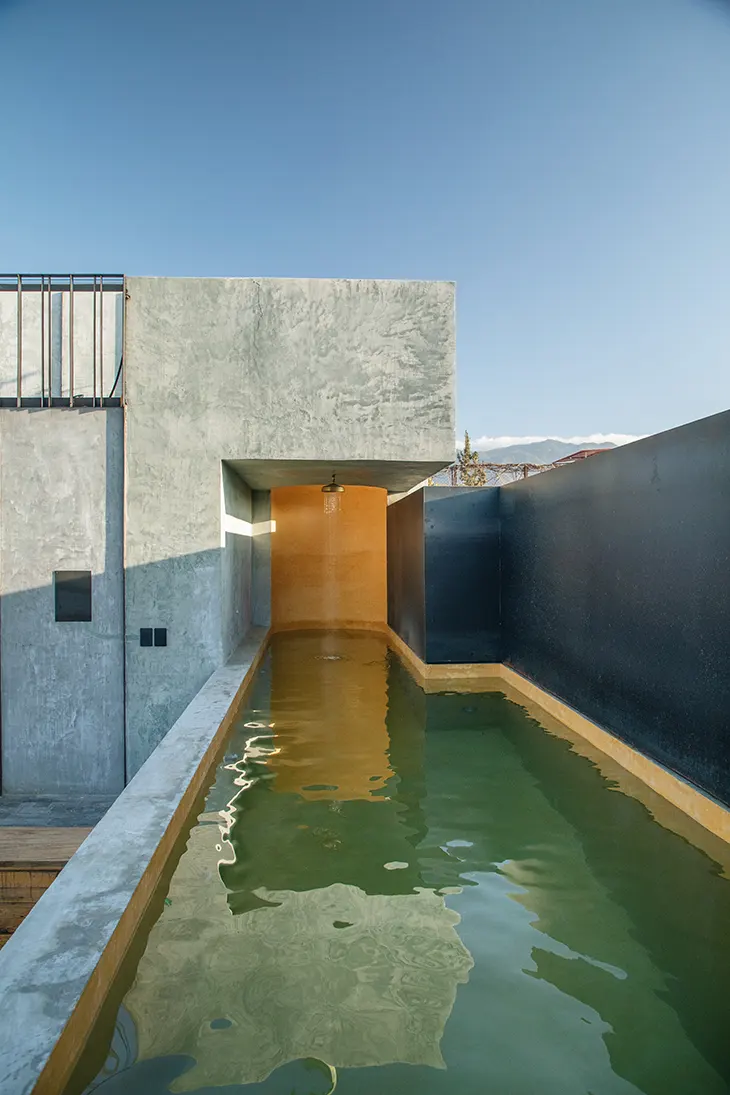
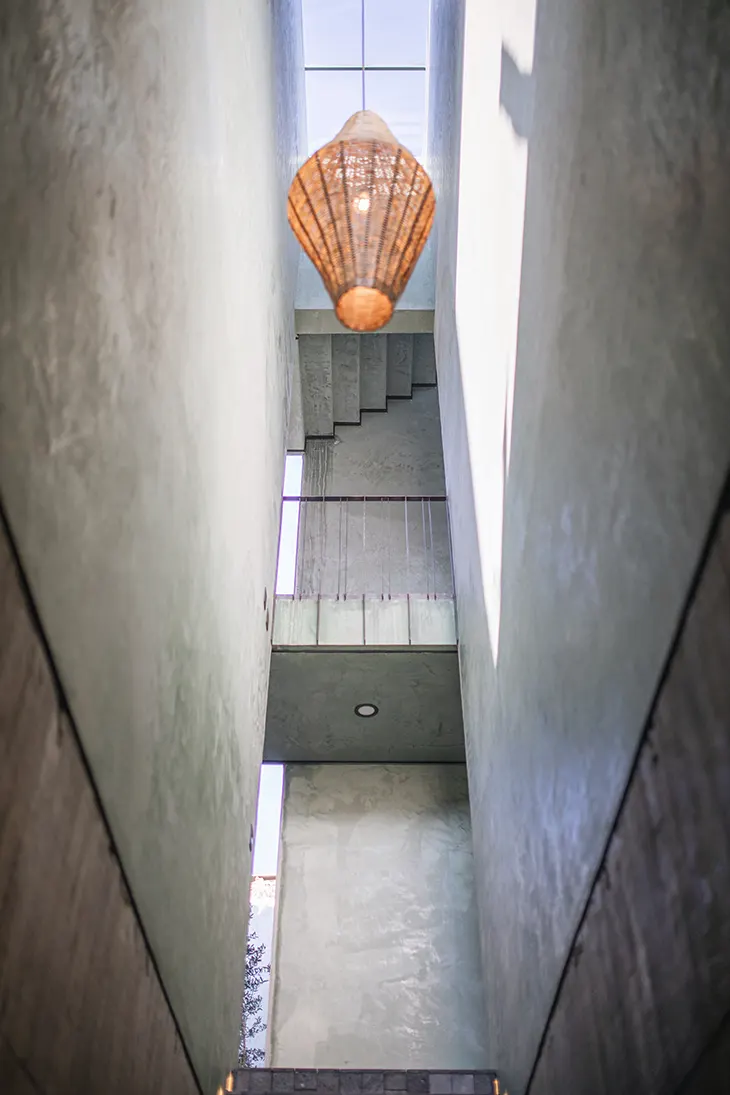
The program introduces variation without breaking coherence. Seven rooms explore different spatial conditions, some rising vertically with double-height volumes, others remaining more compact, with lofted elements that extend their footprint without losing intimacy. A pigmented pool, placed beneath a skylight, introduces a controlled moment of contrast, where light and temperature shift the atmosphere of the interior. Each room reflects a consistent approach to material and construction, with carpentry and metalwork produced by local workshops, ensuring that details remain aligned with the broader architectural language.
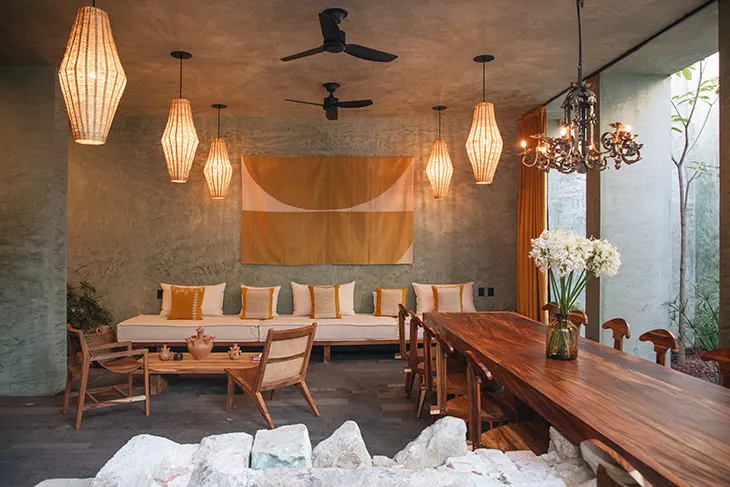
Material choices reinforce this direction. Polished cement in green tones, lime plaster, regional stone, and untreated wood define the surfaces, creating a palette that responds to climate and aging rather than visual effect. Passive environmental strategies structure the experience of the house, with thermal mass, orientation, and cross ventilation regulating comfort without reliance on complex systems. Light enters in controlled ways, shifting throughout the day and activating surfaces that remain otherwise quiet.
Casa Nayaá maintains a close dialogue with its context without resorting to imitation. Views toward the Ethnobotanical Garden and Santo Domingo integrate the surrounding city into the interior experience, framed through openings that remain measured in scale. The project treats the house as a system where architecture, furniture, and atmosphere operate together, shaped by use and time. Each element contributes to a clear intention, to structure daily life through space that supports stillness, interaction, and continuity.