
The commission for CASA TORNO AL ÁRBOL began with a vision: a home where exteriors shift with the seasons and domestic landscapes are visible from every room. The client, Pablo, when working with Otro Estudio imagined a sensory-rich living experience, sunlight, fresh air, water sounds, birdsong, rustling leaves, and the scent of flowers. The chosen site, a garden suburb in Rafaela, stood out for its cluster of mature trees, remnants of a once-vibrant courtyard. These trees shaped the project’s core identity. Photographer Ramiro Sosa shares with us the striking images of the project.
Embracing the Acacia
Central to the design is a mature acacia (Acacia caven), whose umbrella-shaped, fragrant canopy became the organizing element. The architecture frames this tree, structuring the home around its shadow and presence. The acacia’s seasonal transformation marks time and anchors the house in its landscape, elevating it from generic greenery to a singular, sacred element of daily life.
Spatial Organization and Flow
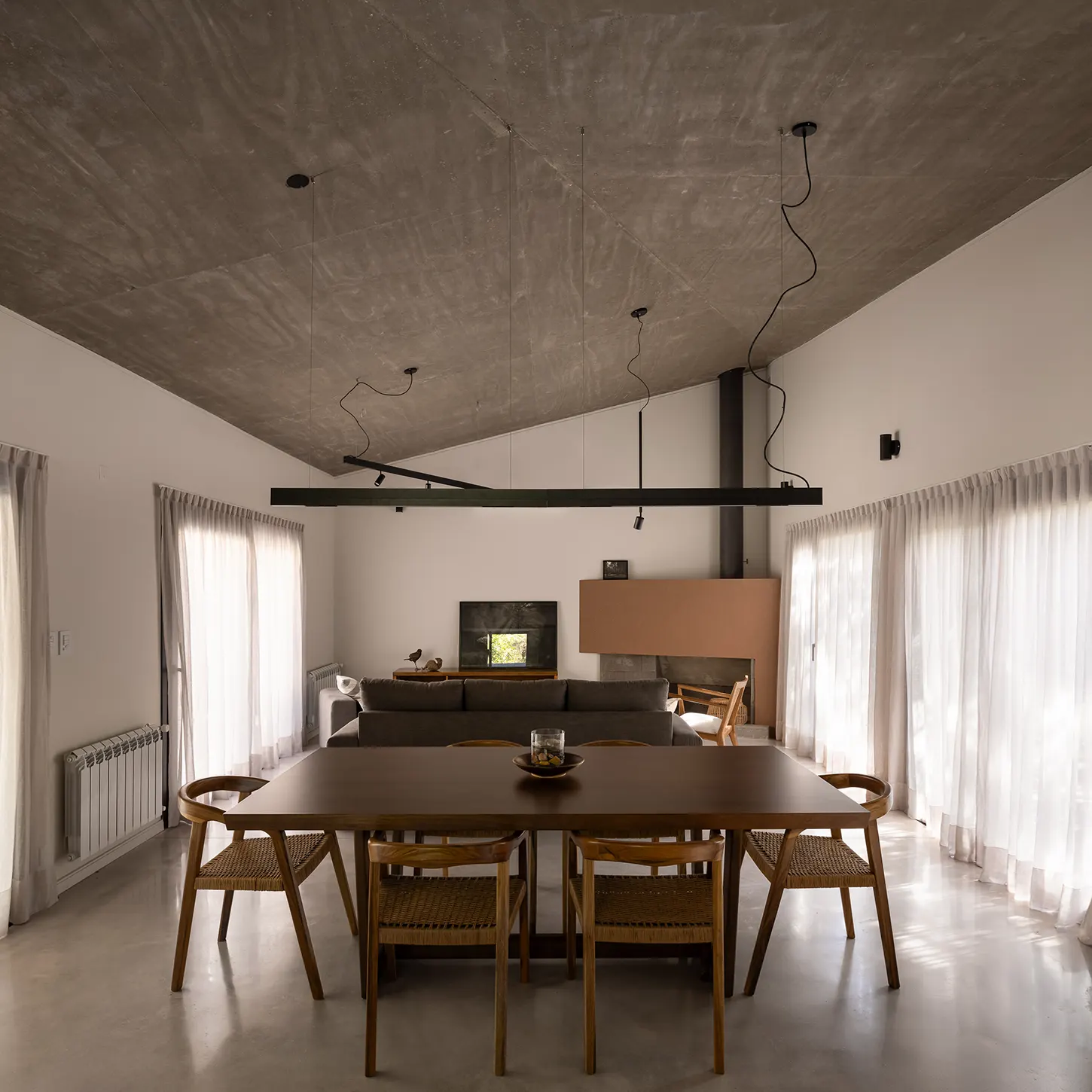
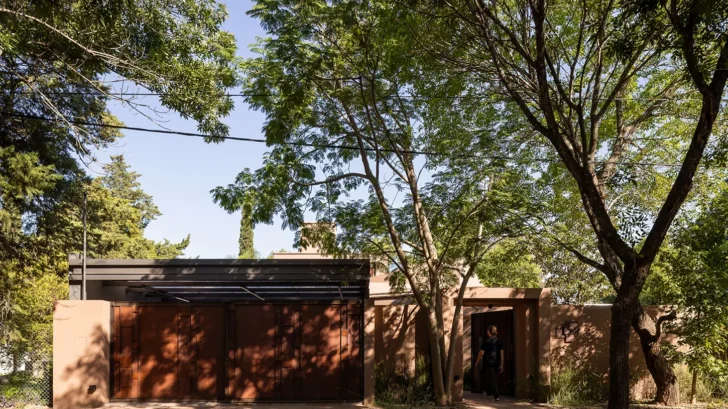
CASA [EN] TORNO AL ÁRBOL unfolds in a sequence of spaces articulated around the acacia. The social area, a two-story service wing, and private rooms are arranged to maximize views and interaction with the surrounding vegetation. The site’s dual street frontage is reflected in two distinct patios: one opening onto a linear public park, creating a ceremonial entrance promenade; the other connecting directly to a quieter neighborhood street, linking the social core to the community.
FIND MORE RESIDENTIAL PROJECTS
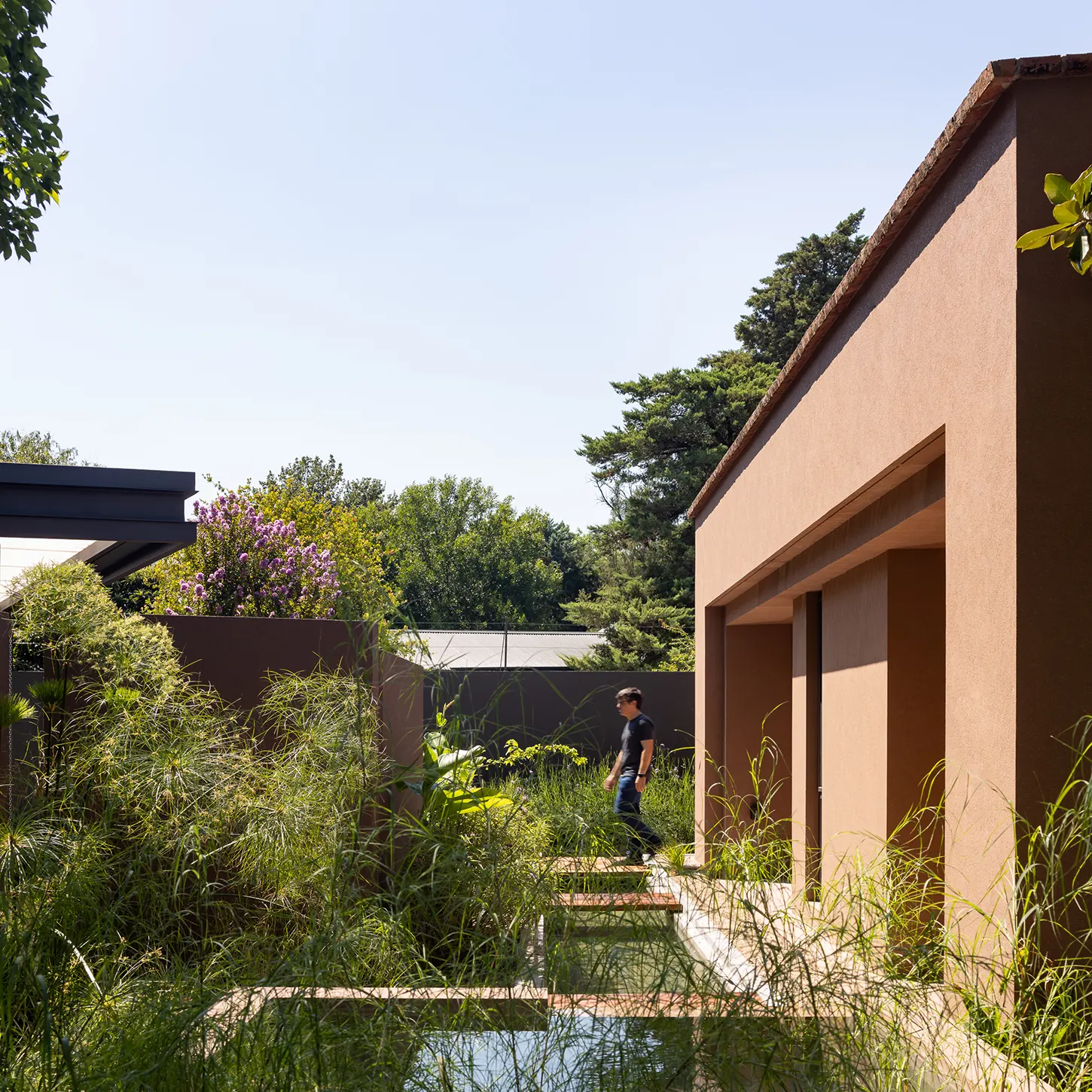
A triangular reflecting pool, positioned between the canopies of a carob (Neltuma alba) and a ceibo (Erythrina crista-galli), amplifies the depth of the patio and doubles the visual presence of the landscape.
Material Palette and Construction
The material strategy draws from regional traditions, reinforced concrete for structure, masonry walls, exposed brick for roof overhangs and floors, and metal elements for openings and exterior transitions. This restrained palette expresses the inherent qualities and durability of each material, ensuring a timeless, honest finish.
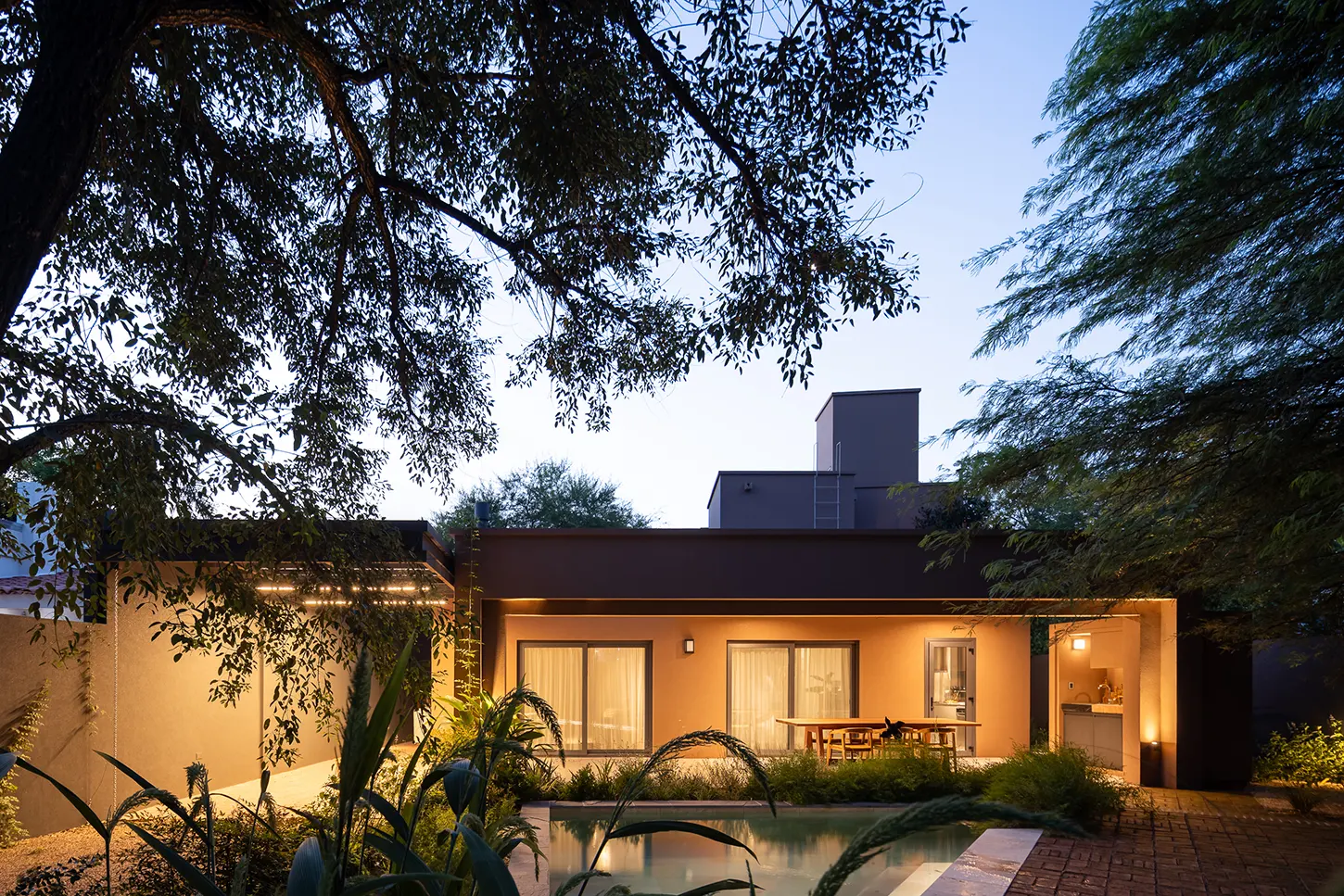
The design reflects on the interplay of human activity and ecological continuity, basically the client ends up with a project coexisting with nature. Trees are valued not only for their age or form but also for their role as living witnesses to organic cycles. The architecture integrates these natural elements, blurring boundaries between inside and outside, and creating a fluid, domesticated landscape that reconnects inhabitants with nature’s rhythms.
Suppliers and Partners
- Main Contractor: Cemento Base Constructora
- Concrete/Construction Materials: Menara Corralón S.A
- Metalwork: Acerma S.A
- Openings: AD Aberturas
- Furnishings: Johnson Acero – Hábitat Amoblamientos, Dante Culzoni Amoblamientos
- Sanitary Installations: Industrias Saladillo S.A (Awaduct, Hidro 3)
- Gas Installations: Grupo Dema (Sigas Thermofusion)
- Paints/Coatings: Alba S.A, Deckar Revestimientos Acrílicos, Pablo Culzoni – Soluciones para obras
- Taps: FV S.A
- Sanitaryware: FERRUM S.A, ROCA S.A
- Floors: ILVA S.A
- Marble: Firenze Mármoles, Hábitat Amoblamientos
- Lighting: SIRC Iluminación y Electricidad
- Floor, Covering, Sanitary and Faucet Supplier: Colomé S.A
Discover more of the project in our gallery:
Location: M. Obligado 66, Rafaela, Santa Fe, Argentina
Architecture: [oficina de arquitectos]
Principal Architects: Arq. Pedro Frund, Arq. Cristian Perret, Arq. Mauro Williner
Collaborators: Arq. Tomás Sola (Visualization), Ing. Hernán Paravano (Structural), Ing. Agrónoma Lucia Chiappero (Landscaping), Juan Carlos Piccione (Lighting)
Photography: Ramiro Sosa – @ramirososafotografia
Built Area: 209.40 m²
Site Area: 701.55 m²
Design Year: 2022
Completion: 2023–2024
Typology: Residential House
Client: Private
Status: Built
Text Editor: Mgter. Arq. Beatriz Ojeda
Artworks: Sebastián Bona, Miranda Sarkis, Julia Romano, Germán González Holc, Sofía Culzoni (Courtesy LUOGO gallery)