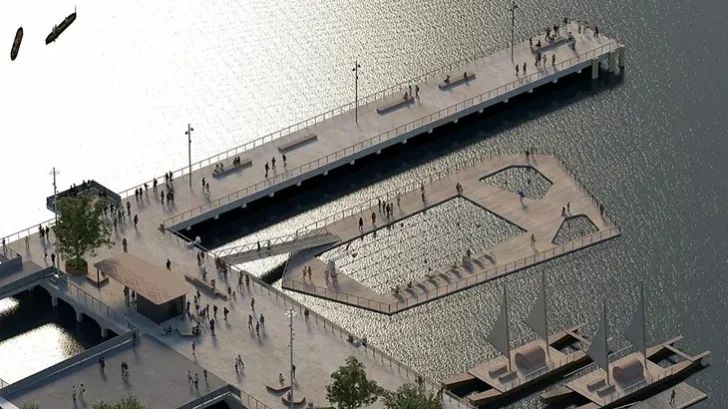

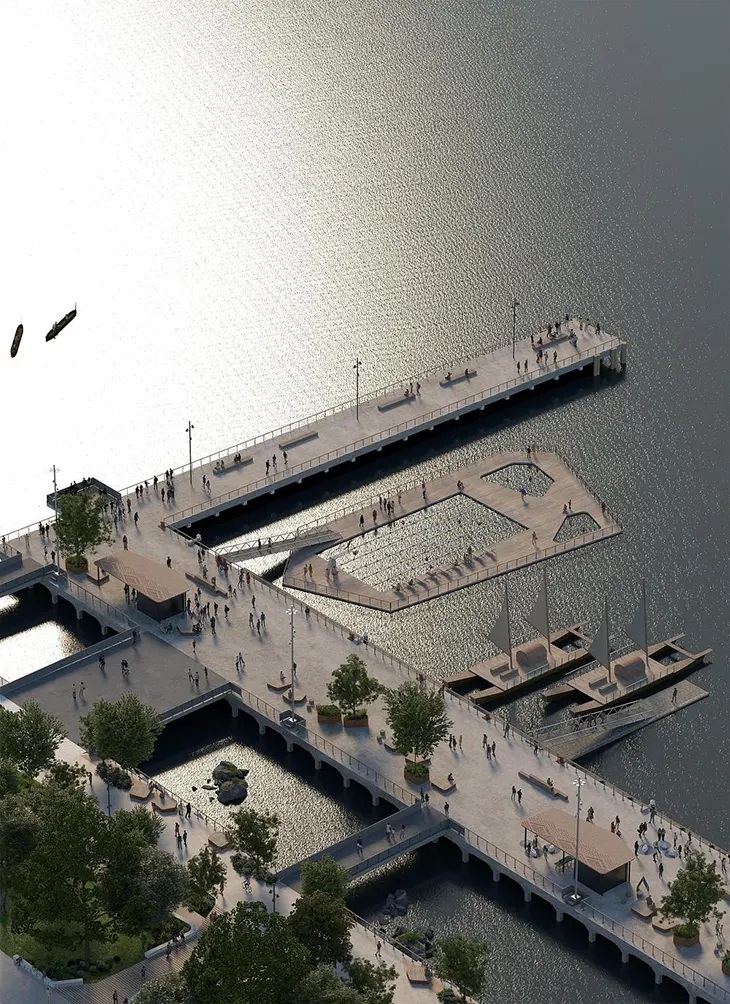
Te Ara Tukutuku is a landmark proposal for a new headland open space in Auckland, reimagining a 5-hectare site on Te Waitematā Harbour through a process grounded in co-design and indigenous leadership. Developed by LandLAB in collaboration with SCAPE, the project transforms a former petro-chemical site into a living coastal landscape shaped by cultural knowledge, ecological repair, and long-term stewardship.
URBAN PLANNING
At its core, Te Ara Tukutuku operates as both place and proposition. Its name refers to a waka metaphor that binds land and sea, framing the project as a connective structure between Tangaroa, the ocean, Tāwhirimātea, the atmosphere, and Papatūānuku, Mother Earth. This conceptual framework moves beyond symbolism. It directly informs how the site is shaped, programmed, and inhabited, positioning landscape as a mediator between environmental systems and daily human experience.
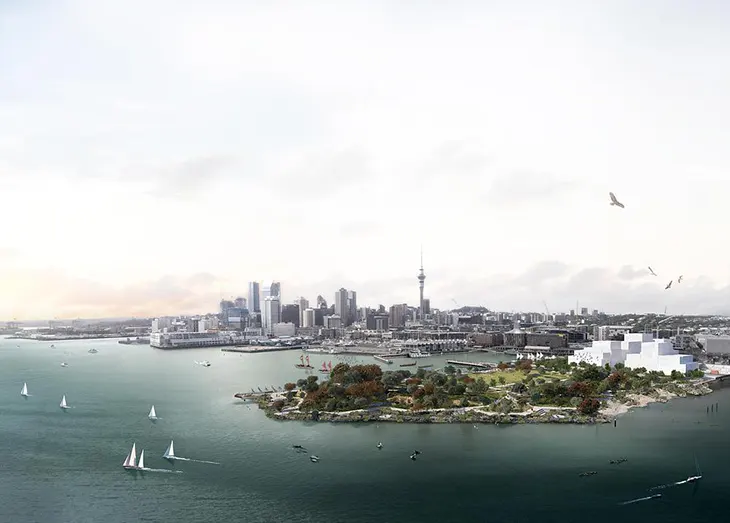
The project sets out to reconnect people with the water while restoring ecological relationships disrupted by decades of industrial use. Rather than imposing a fixed vision of public space, Te Ara Tukutuku is designed to emerge over time through Mana Whenua–led initiatives that integrate mātauranga Māori, contemporary science, infrastructure, and place-making. This layered approach allows the landscape to evolve as a living system rather than a finished object.
Te Ara Tukutuku will become the largest new open space in Auckland’s city centre in over a century, yet it intentionally departs from conventional models of urban parks. The proposal includes a ngahere, or forest, outdoor classrooms, a whare waka and waka ramp for the storage and launching of traditional canoes, spaces for marine restoration, and areas dedicated to learning, gathering, and quiet reflection. Elevated headlands and carefully shaped coastal edges offer vantage points over the harbour, while more intimate zones invite pause and immersion.
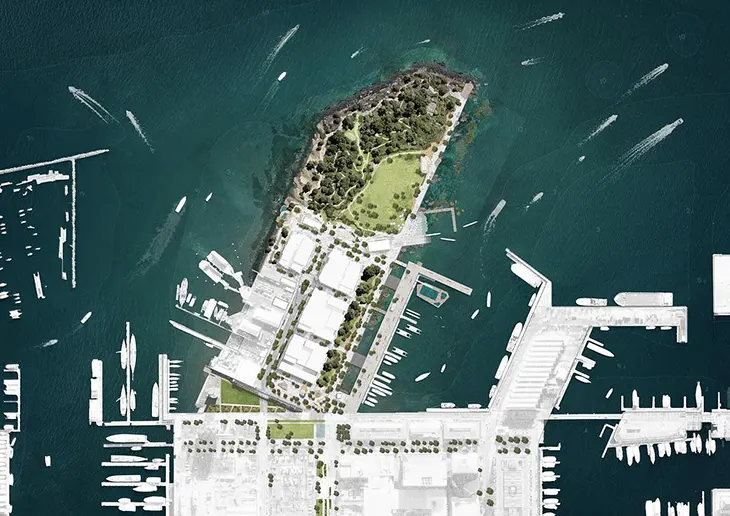
The design draws inspiration from the original waterfront terrain, reconstructing a coastal landscape of headlands and bays through a refined topography. This approach creates a diversity of spatial experiences and ecological niches, supporting resilience while reflecting the site’s layered past and future potential. The coastal edge becomes both a habitat and a threshold, where land and water meet through carefully calibrated transitions.
Regenerative practice underpins every aspect of the project. LandLAB’s work on Te Ara Tukutuku adopts a holistic understanding of wellbeing, addressing the interconnected health of whenua, moana, wai, and tāngata. The guiding principle of mauri tu, mauri ora frames regeneration as a collective process, where land, water, and community recover together. Sustainability strategies include carbon-conscious design, integrated energy and water systems, material reuse, and local, Red List–free sourcing.
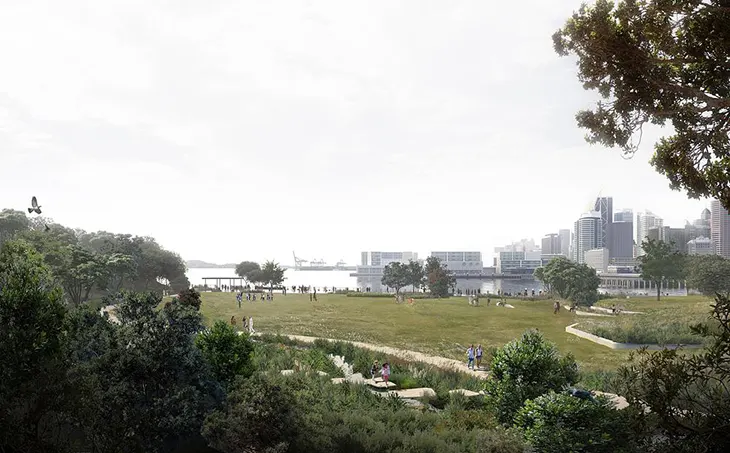
Beyond its physical transformation, Te Ara Tukutuku positions itself as a cultural and educational landscape. Interactive and learning-based activations allow the site to function as a living classroom, embedding ecological care and cultural continuity into everyday use. Through this approach, the project establishes a new benchmark for regenerative landscape design, demonstrating how indigenous leadership can reshape urban environments with depth, meaning, and shared responsibility.
Te Ara Tukutuku proposes a future where public space becomes a site of repair, learning, and connection. It reframes the waterfront as a place not only to occupy, but to understand, care for, and grow alongside.