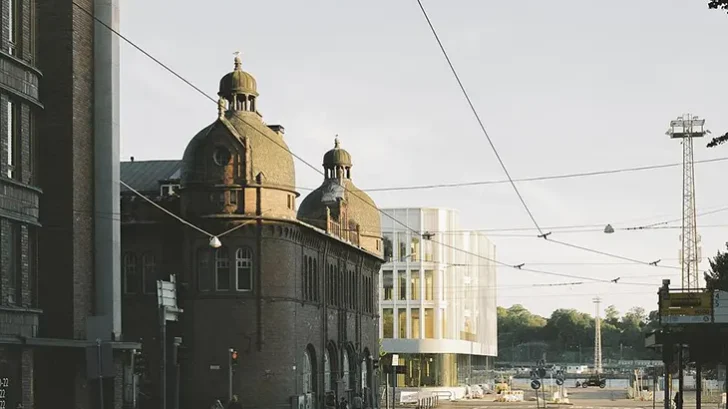

Katajanokan Laituri, designed by Anttinen Oiva Architects, marks a significant shift in the evolution of Helsinki’s Katajanokka waterfront. As the first new building on this formerly industrial embankment to directly address the city’s maritime silhouette, the project establishes a new model for how contemporary architecture can extend historic urban language while opening previously closed areas to public life.
OFFICES
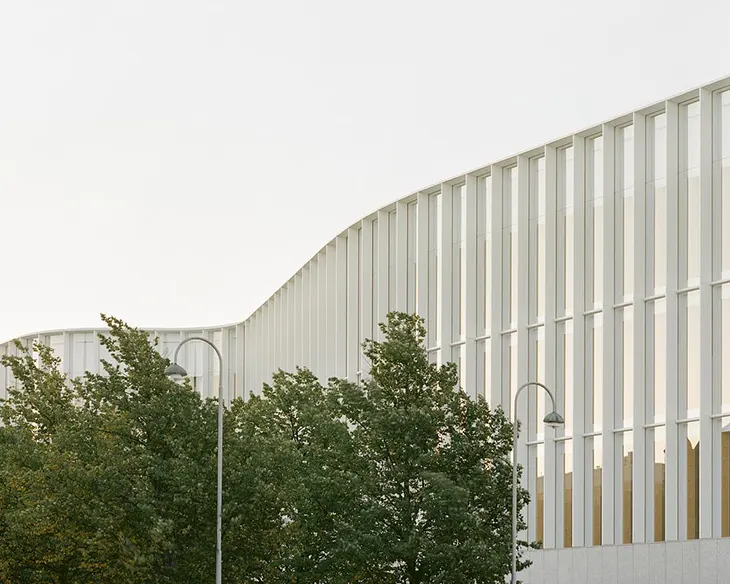
Conceived as a solid wood office and hotel building, Katajanokan Laituri demonstrates the architectural and structural potential of timber construction at an urban scale. The building continues the neo-classical rhythm of Helsinki’s southern waterfront through its overall massing, while its gently meandering façade breaks down scale and connects to the layered character of the Katajanokka peninsula. This balance allows the project to assert presence without overwhelming its context.
A defining feature of the building is its double-layer façade system. An outer skin of glass, aluminum, and granite protects the exposed timber structure from harsh maritime conditions, while also giving the building a shifting visual character that responds to light, weather, and season. The granite used both outside and within the building further anchors the project to Helsinki’s material identity, extending the public realm seamlessly across thresholds.
The building accommodates four above-ground floors, a publicly accessible green rooftop terrace, and a basement housing technical facilities and parking. Originally designed as the new headquarters for Stora Enso, the building also integrates a hotel operated by Sokos Hotels, bringing together workplace, hospitality, and public functions under one roof. At street level, a shared foyer, restaurant, café, and conference facilities activate the ground plane and connect the building to the city on both sides.
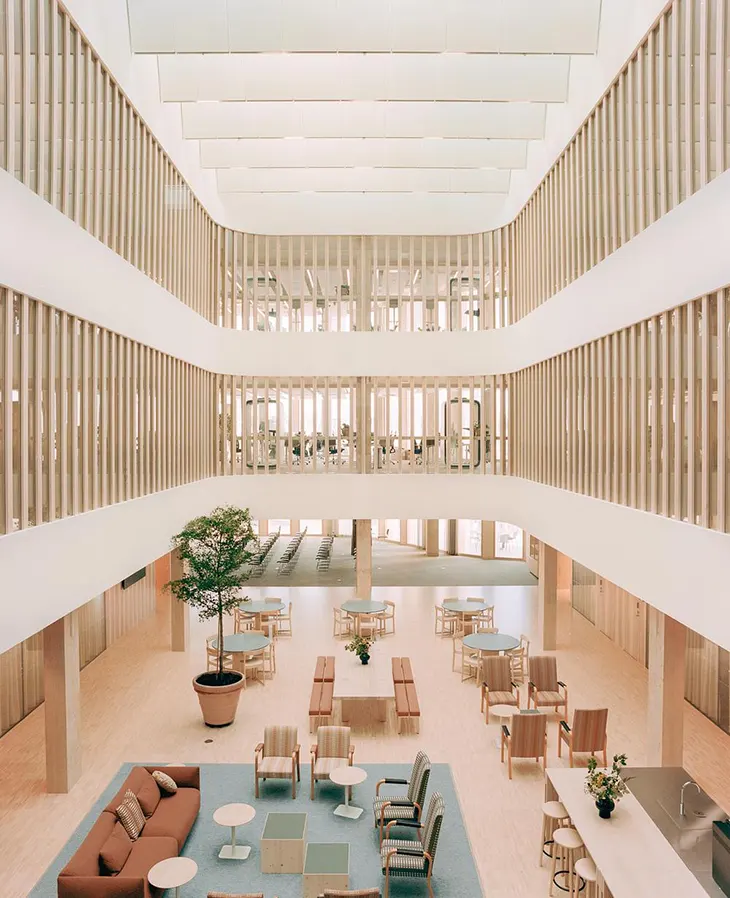
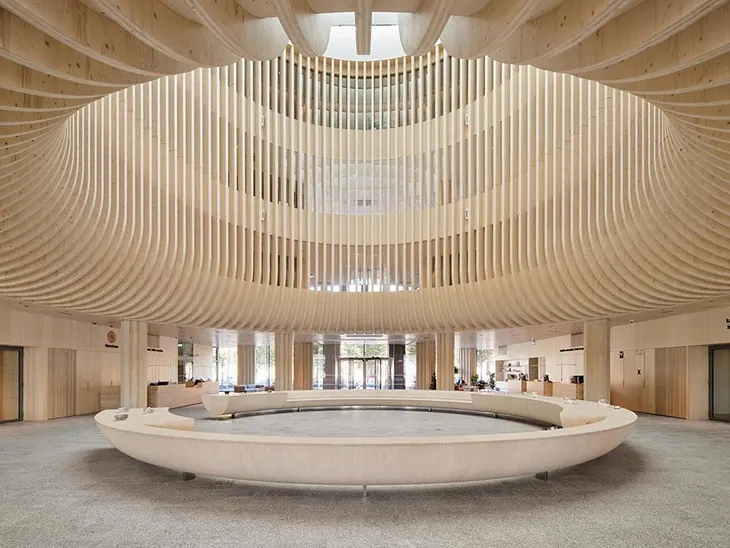
Inside, exposed spruce structures and refined spruce and ash detailing highlight the expressive range of wood as a primary material. Interior spaces prioritize adaptability, allowing layouts to change over time without compromising the building’s integrity. The design emphasizes materials that age naturally, reinforcing the project’s long-term perspective.
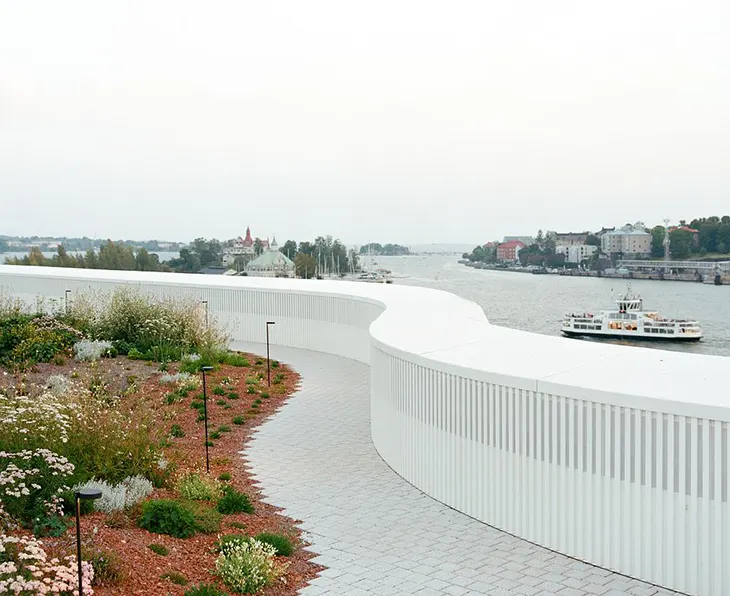
Environmental performance sits at the core of the project. The structure relies on prefabricated massive wood elements, including LVL and CLT produced in Finland and Sweden, forming a frame composed of over 7,600 cubic meters of spruce. Flood protection strategies respond directly to the building’s proximity to the sea, positioning Katajanokan Laituri as a catalyst for the broader transformation of the waterfront into a continuous public embankment.
Katajanokan Laituri is a composed and forward-looking intervention, one that aligns sustainability, architectural clarity, and civic responsibility while reshaping Helsinki’s relationship with its shoreline.