
Zaha Hadid Architects continues its collaboration with Neutra through the Erosion Collection, presented during Salone del Mobile 2026. The project builds on a clear premise established in earlier iterations, where geological processes informed both form and structure. The latest presentation does not shift direction. It sharpens and extends the same line of inquiry, moving from a focus on mass and carving toward a broader material and spatial exploration.
FURNITURE
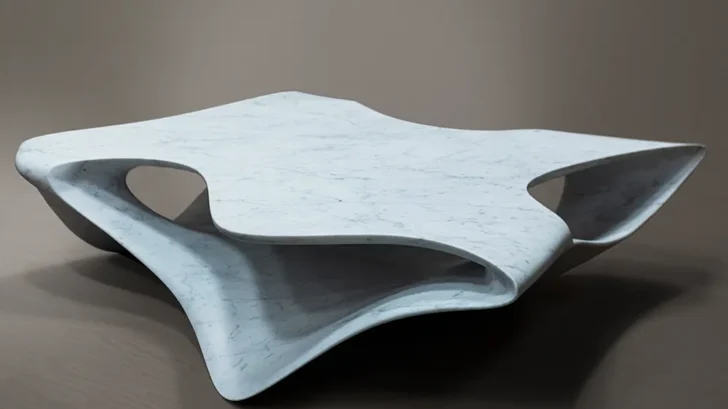
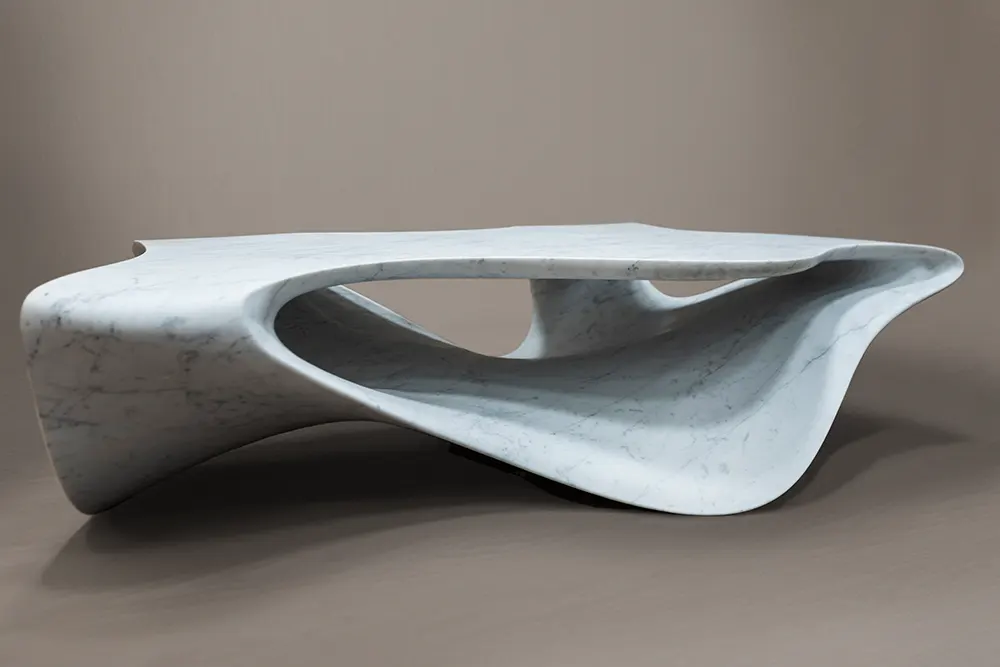
The initial pieces, the MINERA Table and BRANCH Console, set a defined language in 2024 through carved Carrara marble. Their forms referenced erosion not as decoration, but as a process embedded in the making of the objects. Surfaces appeared shaped by time, with edges and volumes suggesting gradual transformation. That logic remains central in the 2026 presentation, yet the collection now moves beyond stone as its sole medium.
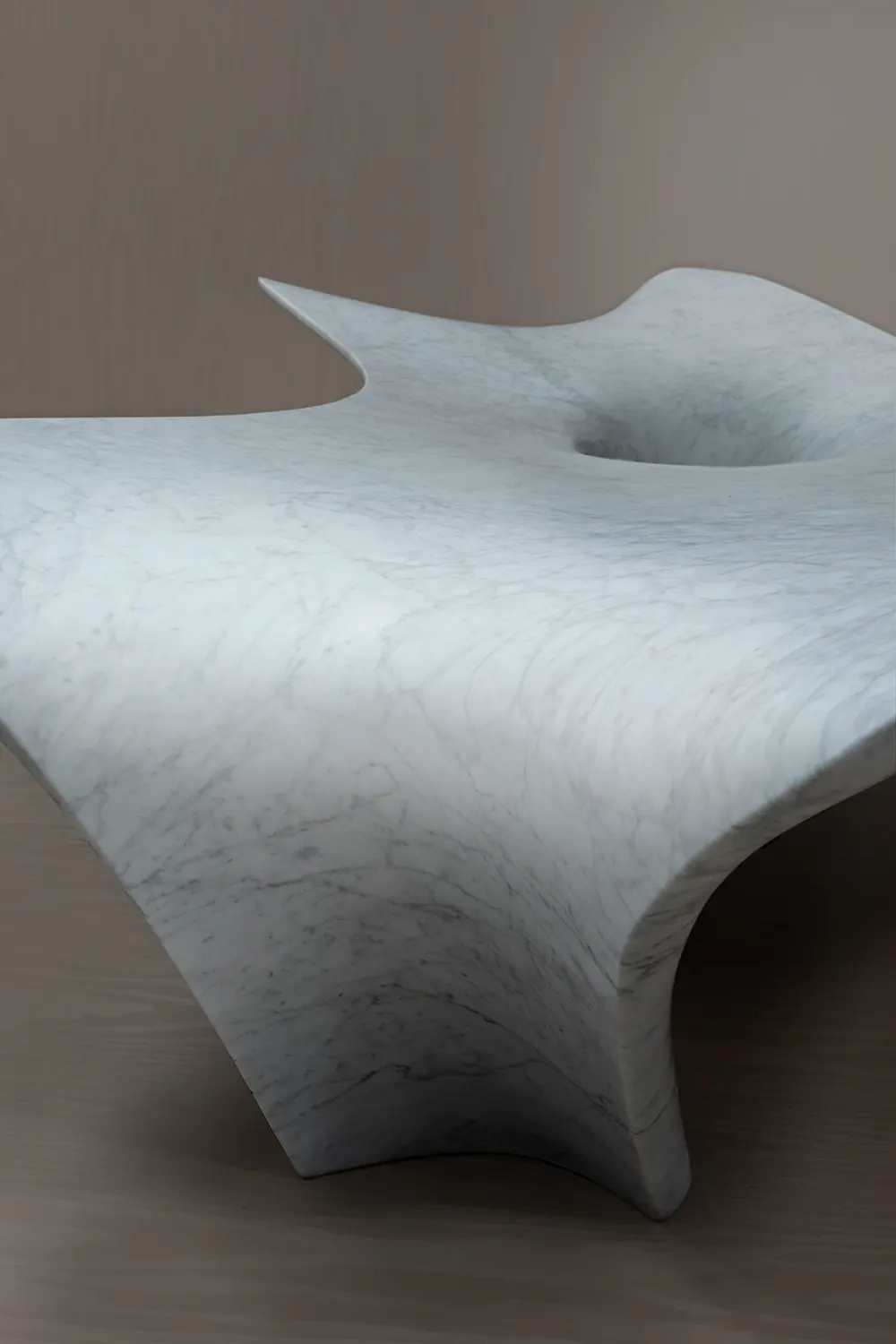
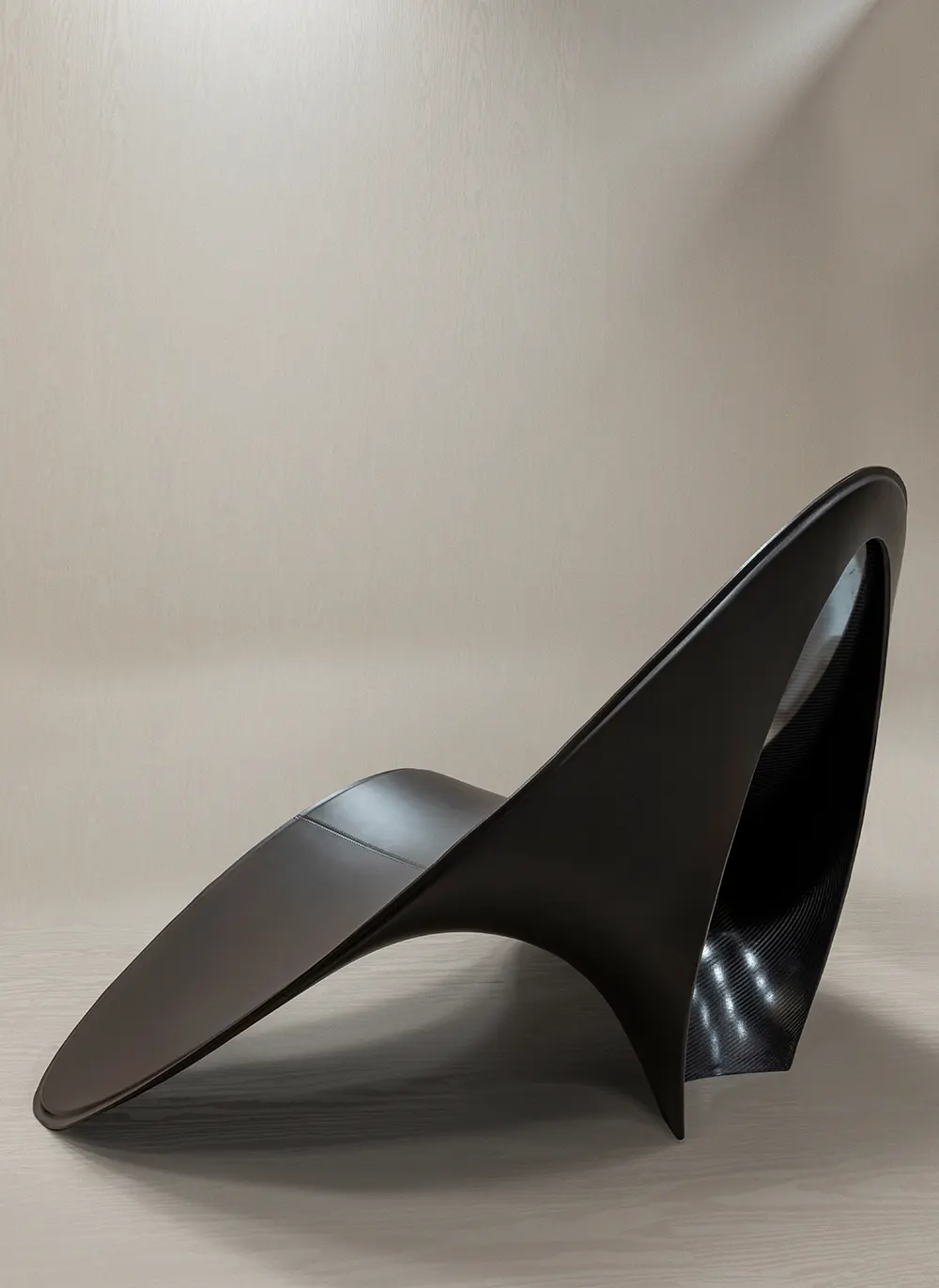
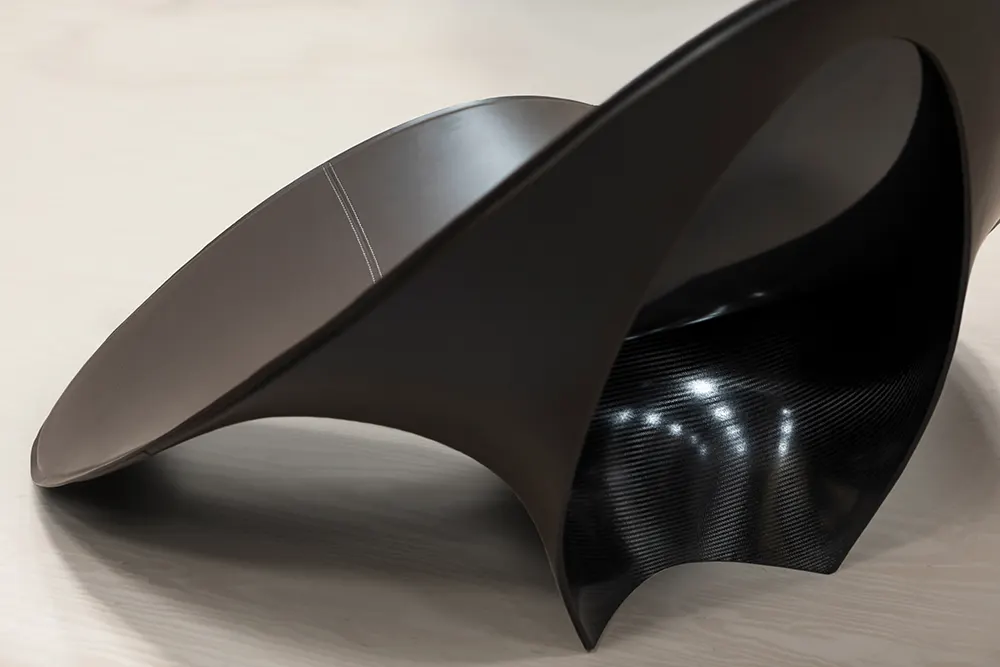
New additions introduce a wider material range. The STRATA Bench and DELTA Coffee Table continue the investigation of marble, maintaining the sense of weight and permanence established earlier. Alongside them, the AER Low Chair, LEDGE Low Table, VEIL Carpet, and DRIFT Tableware expand the collection’s vocabulary. Carbon fibre, leather, and textiles enter the series, shifting attention from density toward flexibility and surface interaction. This transition changes how the pieces operate in space. Instead of relying solely on mass, the collection begins to engage with layering, tension, and lightness.
This expansion does not dilute the concept. It reframes it. Erosion, as interpreted by ZHA, becomes less about subtraction from a solid block and more about the continuous transformation of materials over time. The AER Low Chair, for example, introduces curvature and structural precision through carbon fibre, where form reads as tension rather than weight. The VEIL Carpet translates the same logic into a horizontal plane, using textile to suggest gradual shifts in surface and depth.
Across the collection, the relationship between object and environment becomes more fluid. The pieces resist classification as strictly furniture or sculpture. They operate between both, with scale and proportion allowing them to define space while remaining functional. The STRATA Bench extends horizontally with a presence that anchors a room, while the DELTA Coffee Table introduces a more dispersed geometry, opening space around it rather than occupying it fully.
The project team at Zaha Hadid Architects, led by Michele Pasca di Magliano alongside Sebastian Andia, Clemens Lindner, Martina Rosati, Yutong Xia, and Stefano Paiocchi, maintains a consistent design approach across all pieces. Each object follows a controlled process where geometry, material behavior, and fabrication techniques align. The result avoids excess. Every curve and surface appears resolved through a clear internal logic tied to the initial concept.
The presentation at Salone extends across both Fiera Milano Rho and Palazzo Visconti, placing the collection in different spatial contexts. This dual setting reinforces the adaptability of the pieces. In both environments, the work maintains its focus on form and material, without relying on scenography to define its impact.
Erosion Collection 2026 presents a controlled evolution. ZHA does not introduce new ideas for the sake of expansion. The studio refines an existing concept and extends it across materials and scales. The result is a coherent body of work where each addition strengthens the central premise, maintaining a clear relationship between process, form, and function.