
Set in the Ora Mountains, the project by No Architects confronts a landscape shaped by absence. Once inhabited almost exclusively by German-speaking communities, the region emptied after 1945, leaving behind a scattered terrain of abandoned villages and isolated structures. The intervention takes one such surviving building as its starting point, treating it not as a relic to preserve, but as a framework to reactivate.
HOSPITALITY
For decades, the structure endured improvised adaptations. Additions accumulated without order, infrastructure attached itself pragmatically, and the building shifted through uses that gradually diluted its spatial clarity. A small recreational cluster eventually formed around it, including a ski club that sustained local memory. Yet, despite these efforts, the building reached a point where both its physical condition and cultural role had collapsed.
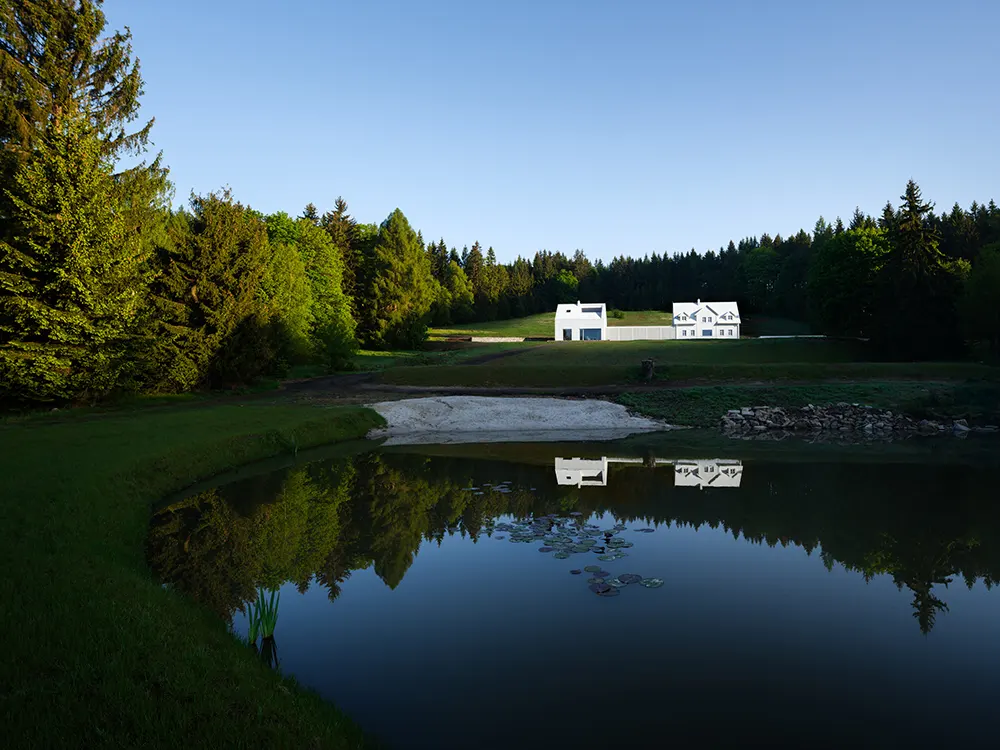
No Architects approach this condition without sentimentality. The project rejects the familiar narrative of decline that often defines post-Sudetenland architecture. Instead of reinforcing the image of abandonment, the design proposes a direct break. The aim centers on reinstating habitation through contemporary means, reintroducing activity in a way that acknowledges current needs rather than reconstructing a lost past.
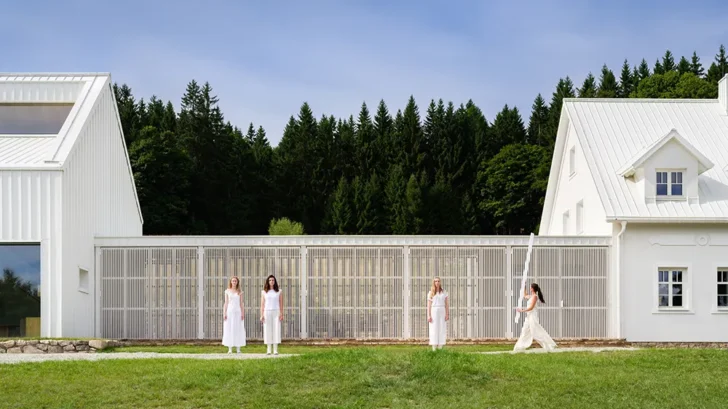
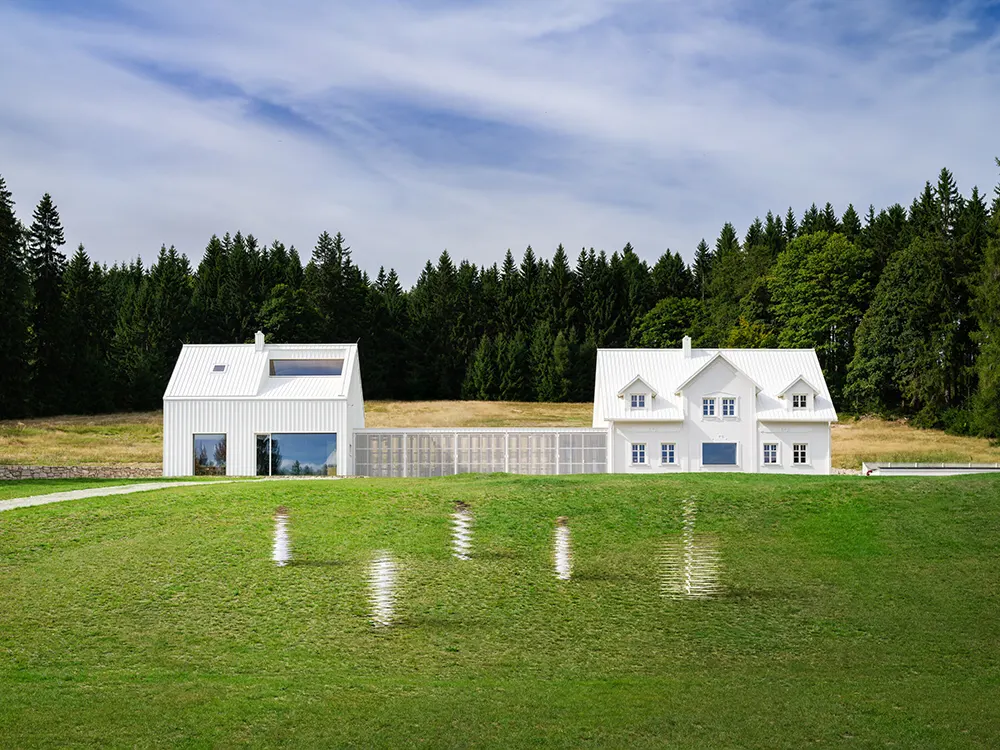
The intervention begins with removal. All secondary structures that emerged after the building’s decline disappear from the site. The architects salvage usable stone, then consolidate the program into a single composition. The result reads as one farmstead rather than a dispersed cluster, formed by the connection between the original house and a new volume. A covered terrace binds the two, while a continuous roof establishes a unified envelope capable of resisting the region’s extreme conditions.
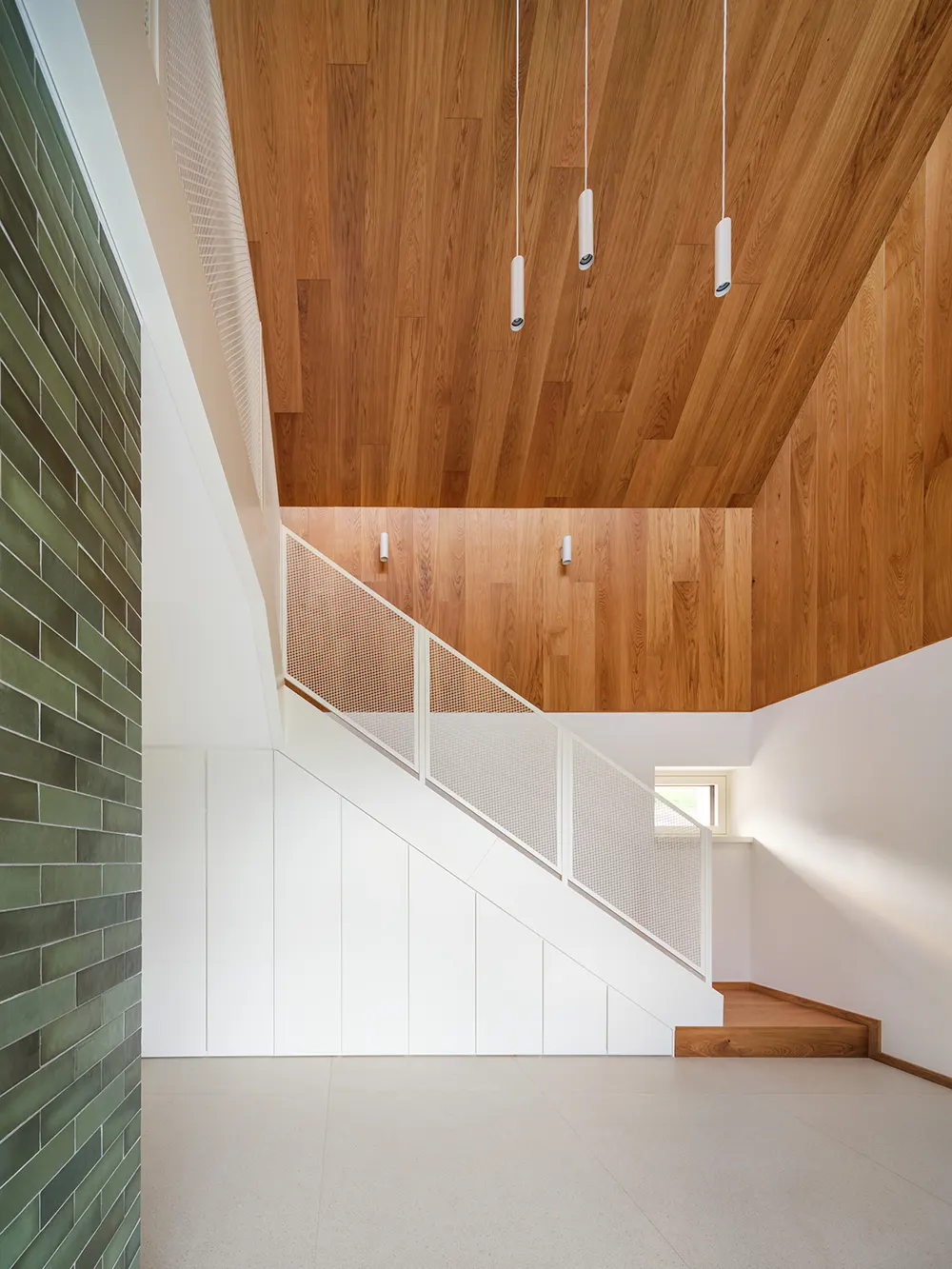
Material strategy defines the project’s visual and structural identity. A white steel cap crowns the original building and extends across the new addition, creating a continuous outer layer. The use of white extends beyond the architecture itself, reaching the gravel paths and surrounding surfaces, setting a deliberate contrast against the terrain. This choice does not seek neutrality; it asserts presence. The buildings sit on a base of local stone, anchoring the composition in the material residue of the site’s earlier state.
The formal clarity responds directly to environmental pressures. The Ora Mountains present a demanding climate, with prolonged winters, frequent fog, high precipitation, and unstable ground conditions. The architecture addresses these constraints through both form and systems. The compact massing reduces exposure, while the roof structure ensures durability under snow and wind loads. The project positions itself as a functioning organism within these conditions, not as an isolated object.
Technical infrastructure operates as an integrated system. A ground collector beneath the meadow supplies heating energy, supported by a photovoltaic installation on the roof of the embedded service building. Water comes from a newly drilled well and feeds into a root-based treatment system. All operational components connect through a centralized control network, accessible remotely via satellite. These decisions prioritize long-term autonomy and stability, essential in a location without immediate urban support.
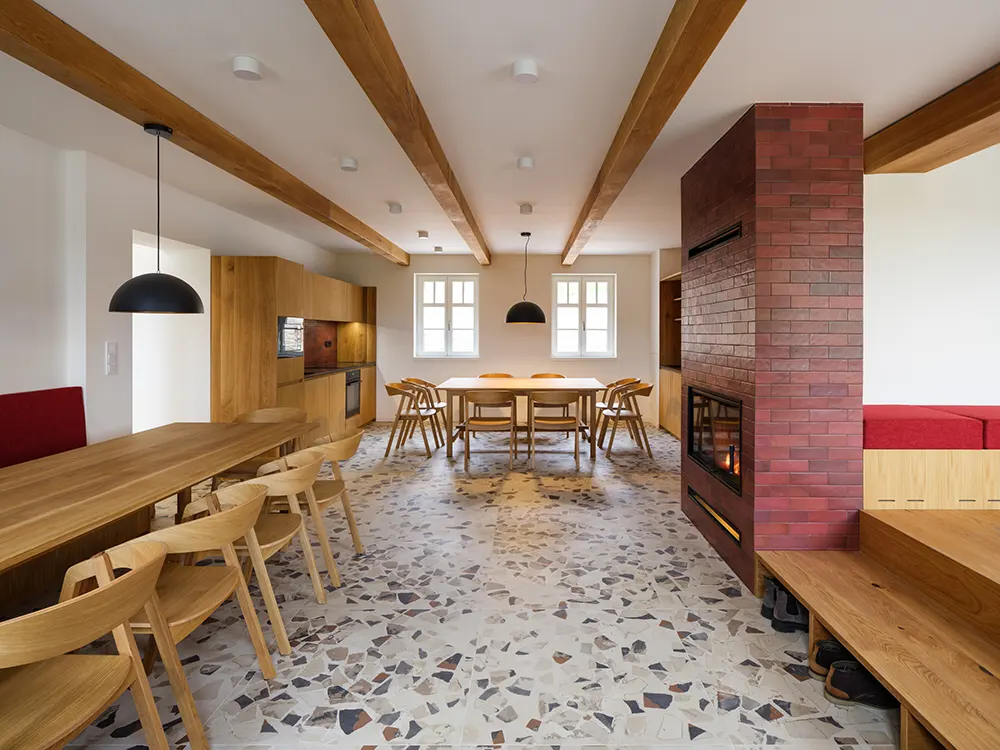
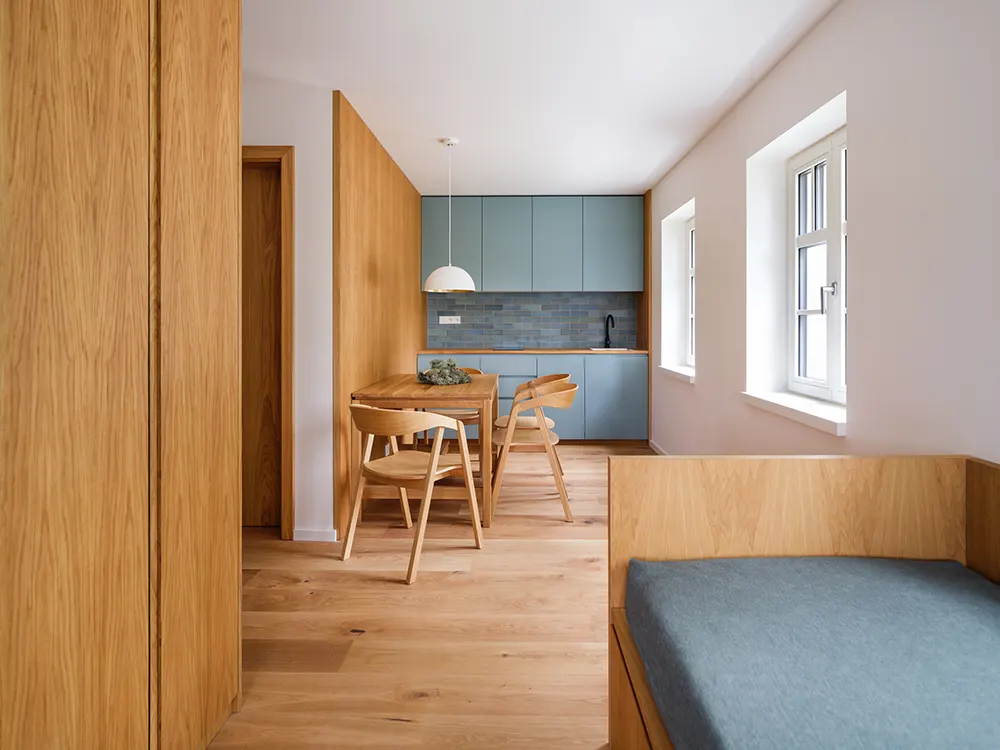
Interior spaces follow the same logic of durability and direct use. Apartments and caretaker areas maintain a restrained approach, focusing on materials and configurations that can withstand intensive occupation. The design anticipates continuous use by families and children, allowing wear to register as part of the building’s ongoing life rather than as deterioration.
The project reframes the site’s narrative through occupation. It does not reconstruct what disappeared, nor does it rely on symbolic gestures. Instead, it establishes a new continuity, grounded in present conditions and sustained through use.