
Studio Clara Crous Arquitectura presents La Fusteria, a project that transforms a former carpentry workshop into a contemporary residence. Located in a small village in Alt Empordà, the building retains key elements of its original structure while adapting to new uses. The intervention follows a clear direction: preserve the existing framework, improve comfort, and adjust the layout to support domestic life.
RESIDENTIAL
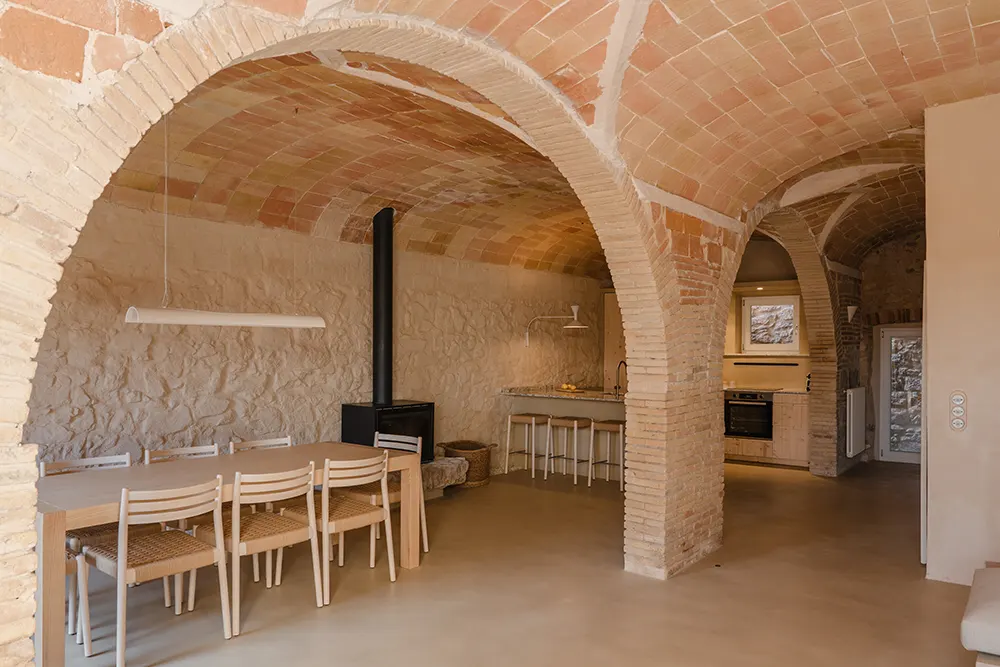
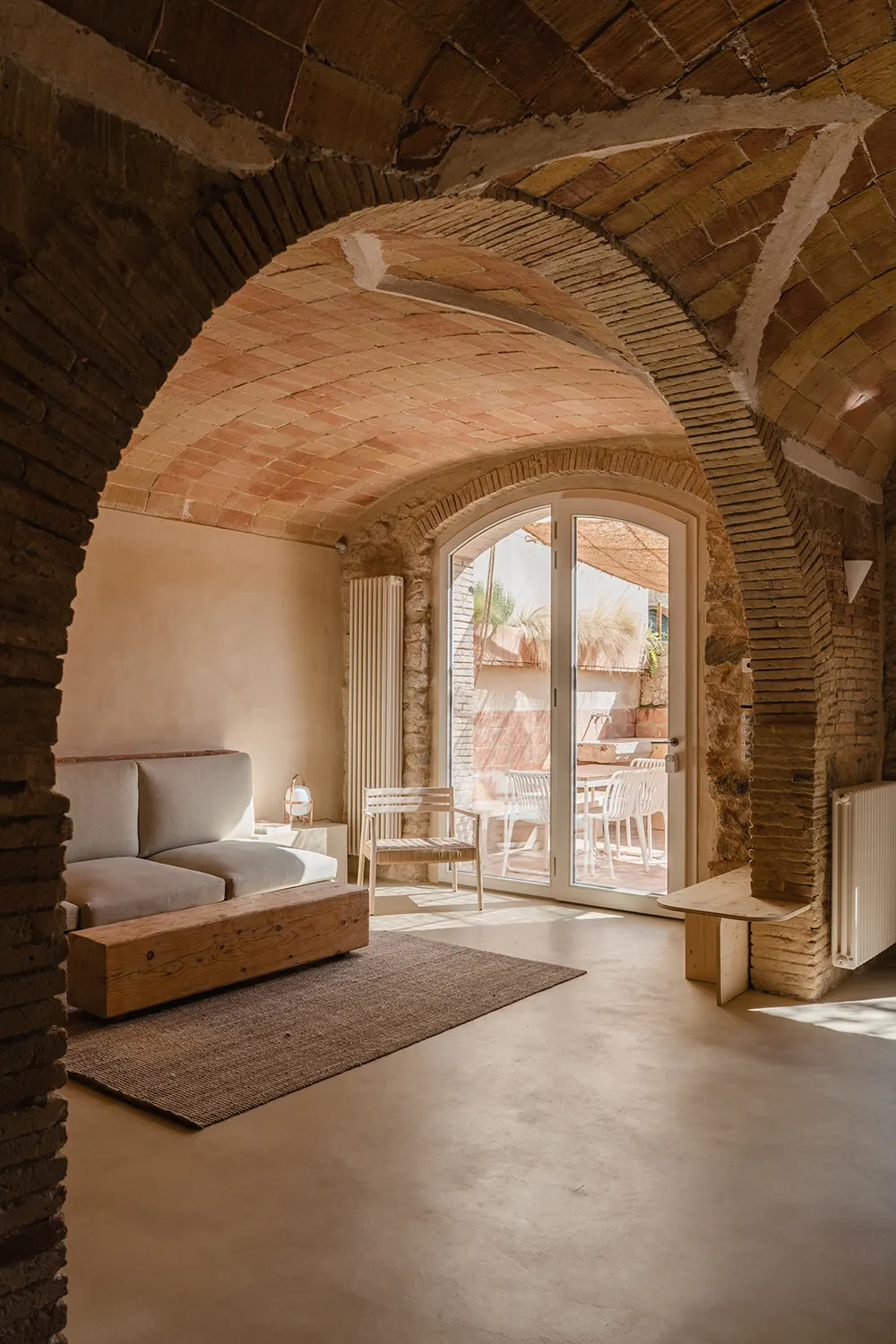
The ground floor defines the spatial character of the house through two Catalan vaults that remain intact. These vaulted structures hold the memory of the workshop that occupied the space for decades and guide the overall organization of the project. Rather than altering these elements, the design positions them as the central feature around which the new program develops.
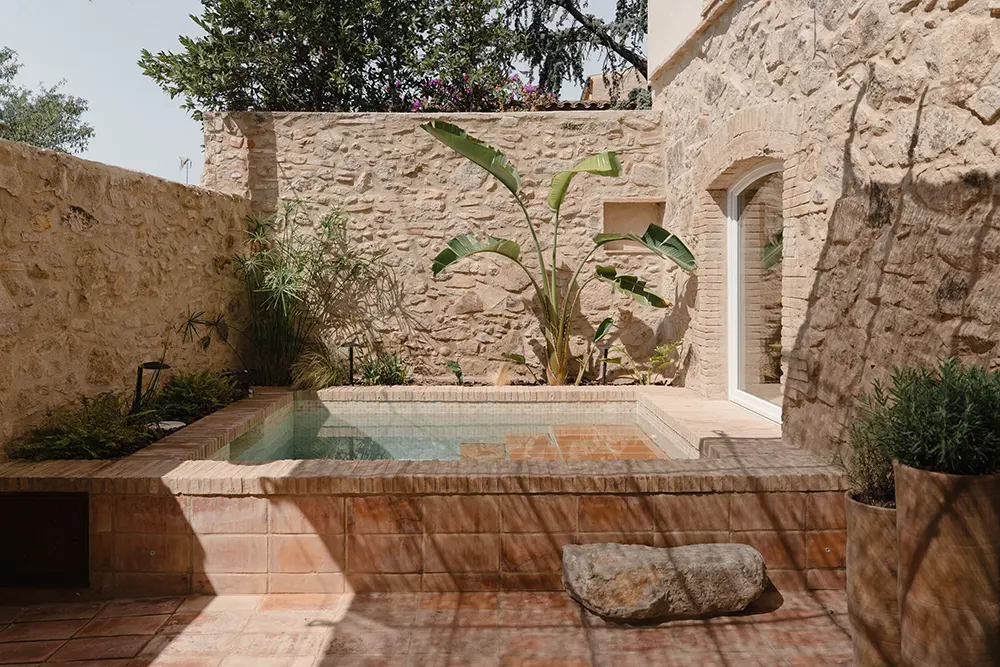
The owners, who have long lived in the village, acquired the property to accommodate visiting family members, especially during the winter months. The house also operates as a vacation rental, introducing a dual function that informs the design strategy. The project addresses these needs through careful spatial planning and attention to comfort, ensuring that the house supports both short stays and extended visits.
The project concentrates daytime living on the ground floor, where the kitchen now sits next to the main living area. This arrangement creates an open environment that engages directly with the vaults, allowing daily activities to unfold within this architectural frame. The upper floors shift toward private use, housing bedrooms and quieter areas that separate rest from shared spaces.
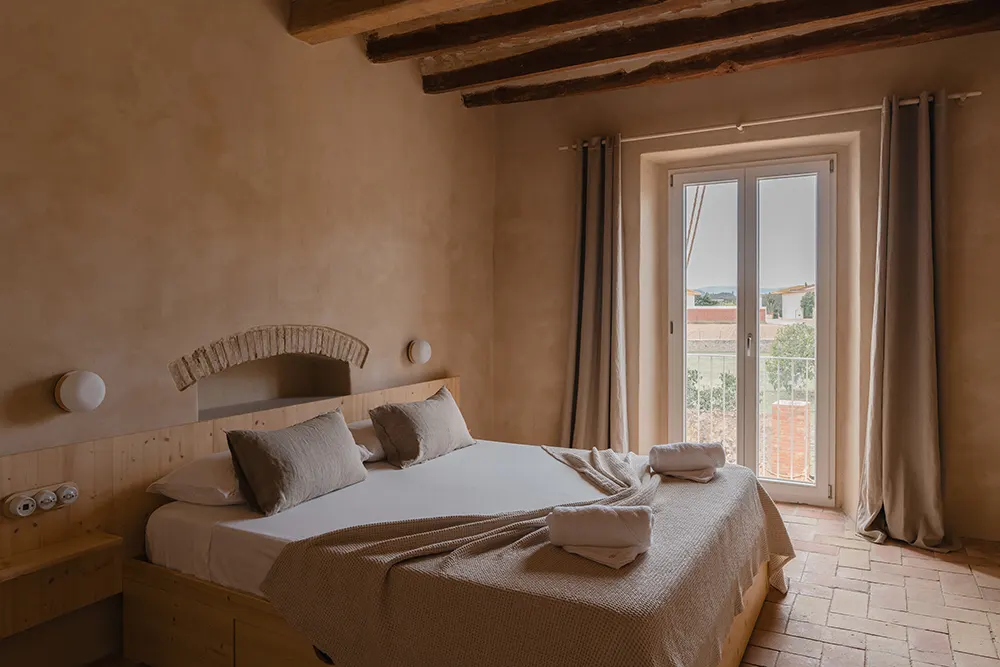
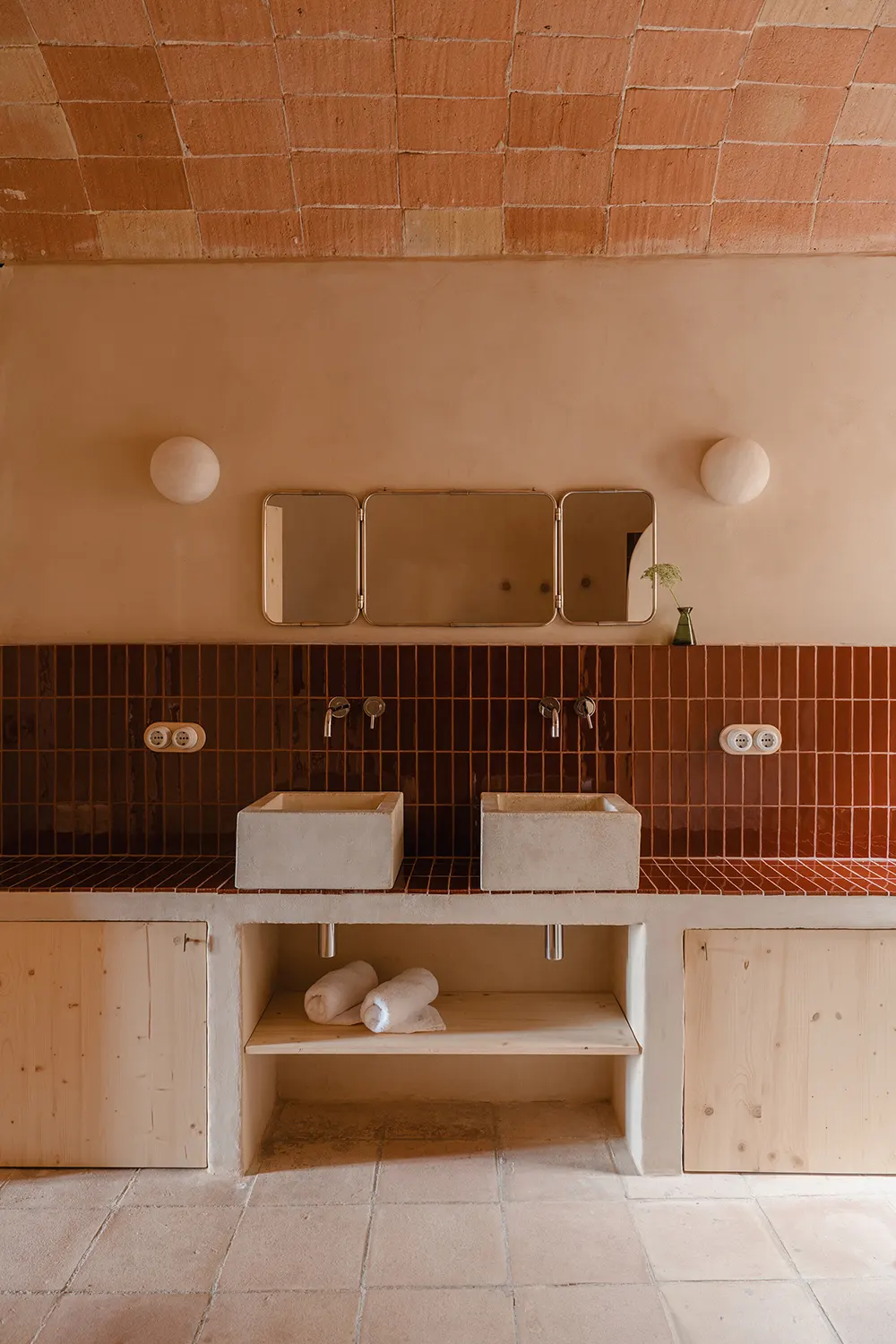
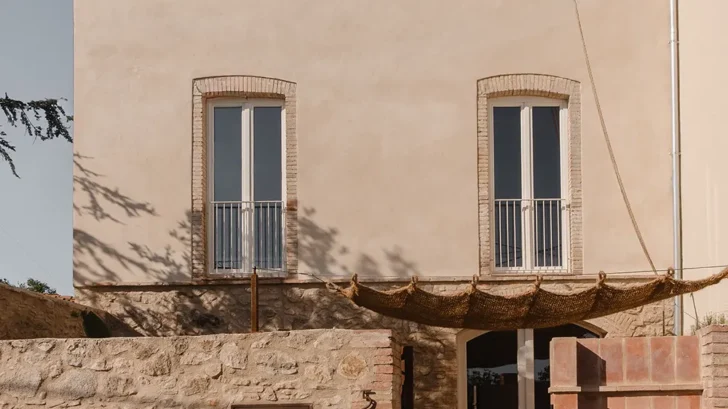
The intervention improves functionality and environmental performance through updated installations and exterior joinery. These changes support thermal comfort and strengthen the relationship between interior and exterior spaces. The front courtyard regains its role as a transitional zone, mediating between the street and the interior while extending the living space outward. Custom-designed railings integrate safety within the overall architectural language.
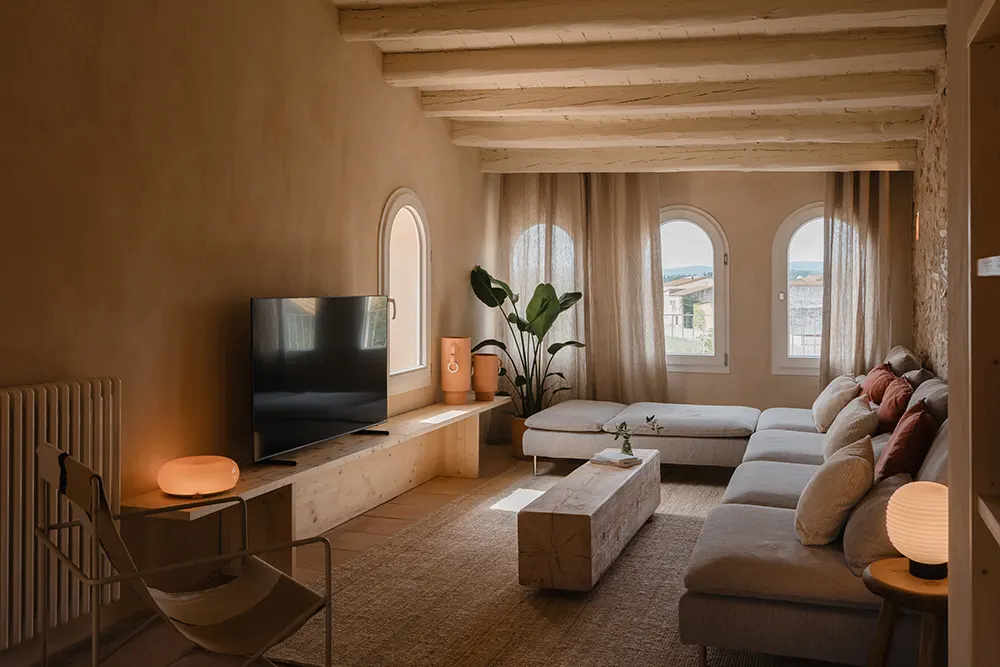
The project removes added finishes to reveal the original structure beneath. Walls return to lime mortars and plasters, allowing the masonry to breathe while introducing texture and light across surfaces. The restoration of handmade toba floors and artisanal tiles strengthens the connection to traditional building methods.
La Fusteria presents a careful approach to adapting existing architecture. The project extends the life of the building through measured changes that respect its origins while supporting contemporary living.
Studio: Clara Crous Arquitectura
Author: Clara Crous Fort
Design team: Jordi Collell Puig, Amanda Soler Vela
Location: Vilamacolum, Spain
Project year: 2023-2025
Completion year: 2025
Gross floor area: 232 m²
Usable floor area: 184 m²
Plot size: 116 m²
Client: Ca-liu
Photographer: Montse Capdevila
Collaborators and suppliers
Contractor: Manolo Martínez
Carpentry: Deco Fusta Pey
Metalwork: Moragas Salvans
Kitchen design and installation: 7VETES
Microcement: Ingremic