
The Memorial Brumadinho, opened to the public in 2025, is a spatial response to one of Brazil’s most devastating humanitarian and environmental tragedies. Located in Brumadinho, Minas Gerais, the memorial commemorates the 272 lives lost following the collapse of the Córrego do Feijão Mine dam on January 25, 2019, owned by Vale S.A.. Six years after the release of 12 million cubic meters of mining waste mud that affected 26 municipalities, the site asserts memory as an ethical obligation rather than a symbolic gesture.
LIGHTING DESIGN
Lighting plays a central role in shaping this responsibility. Developed by Atiaîa Lighting Design, the project received the Architectural Lighting Design of the Year 2025 at the LIT Awards, recognizing its sensitive and rigorous approach to illumination as a spatial language of remembrance. Rather than dramatizing loss, the lighting design establishes a restrained atmosphere that supports reflection, presence, and collective acknowledgment.
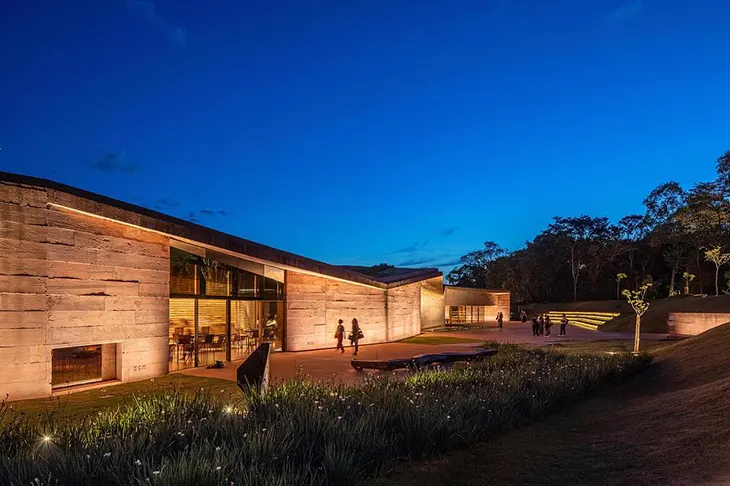
The memorial is a sequence of carefully choreographed spaces, including an entrance pavilion, a grove, outdoor living areas, pathways leading to a sculpture-monument, a reflecting pool, and dedicated Memory and Testimony exhibition rooms. A protected space for the dignified storage of the victims’ corporeal segments anchors the project in respect and gravity. Architecture and interiors were developed by Gustavo Penna Arquiteto e Associados, with landscape design by Medra Paisagismo.
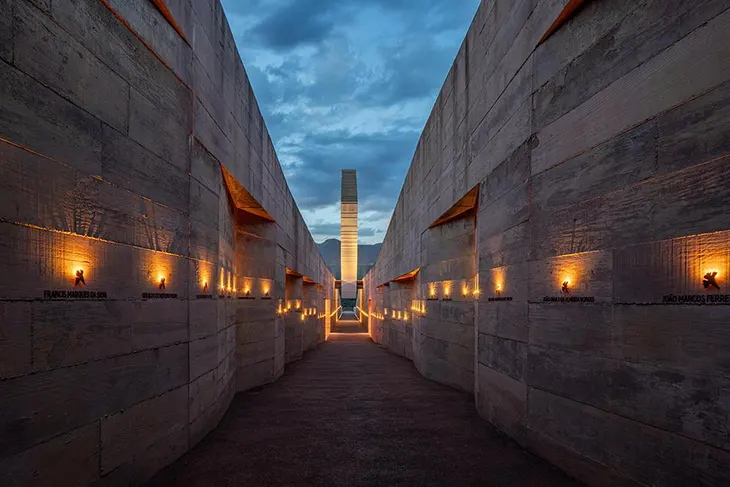
Within this framework, light operates as both guide and narrator. It illuminates poems, symbols, and architectural surfaces while allowing darkness to remain present where needed. Visitors encounter 272 ipê flowers, 272 stars reflected in the lake, described as lost “jewels,” a crystal cluster, and a sculpture that appears to weep over concrete walls infused with pigment derived from mining waste. Each element receives measured illumination that avoids spectacle, allowing meaning to surface through proximity and duration.
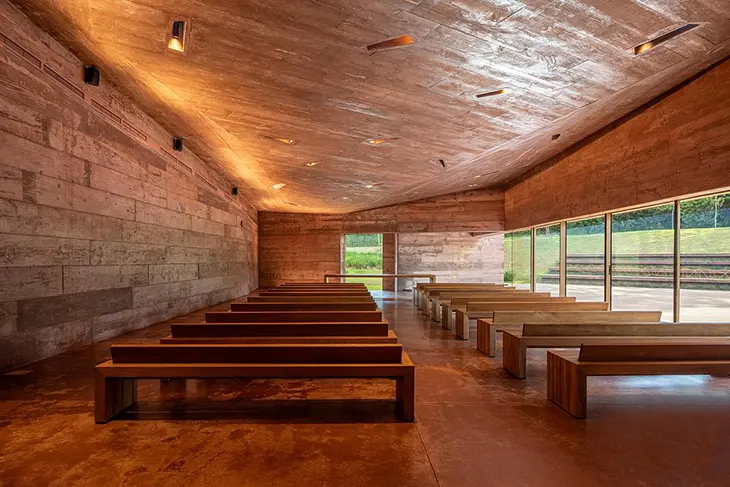
The lighting design team, led by Mariana Novaes, approached the project as an immersive experience shaped by rhythm, contrast, and restraint. Light defines planes, establishes pauses, and structures transitions between brightness and shadow. It supports visitors as they move, stop, and reflect, shaping an environment that encourages emotional processing without instruction.
Beyond visibility, light becomes an instrument that acknowledges those who enter the memorial. It frames moments of stillness and directs attention without hierarchy, reinforcing the idea that memory here belongs to many voices. Specialized installations, including quartz crystals with fiber optics by Demian Quincke, further extend the relationship between material, light, and meaning.
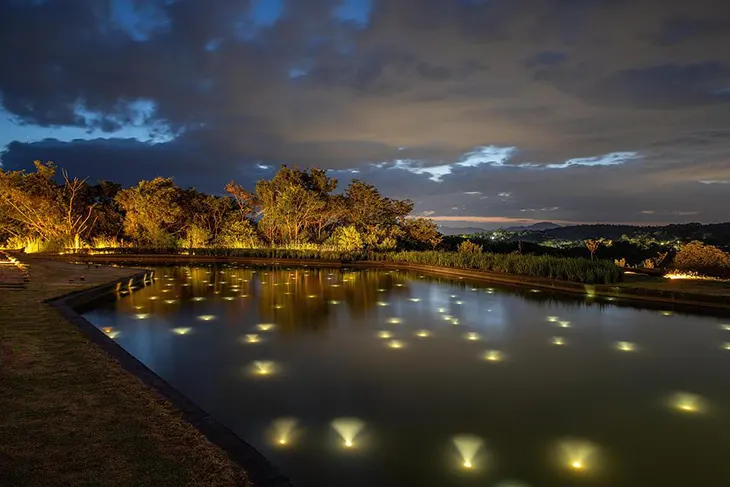
Memorial Brumadinho positions itself as an act of resistance against oblivion. Through architecture, landscape, and an award-winning lighting strategy, the project insists on remembrance as an ongoing responsibility, one that confronts violence against people and environment while holding space for collective reflection, dignity, and accountability.