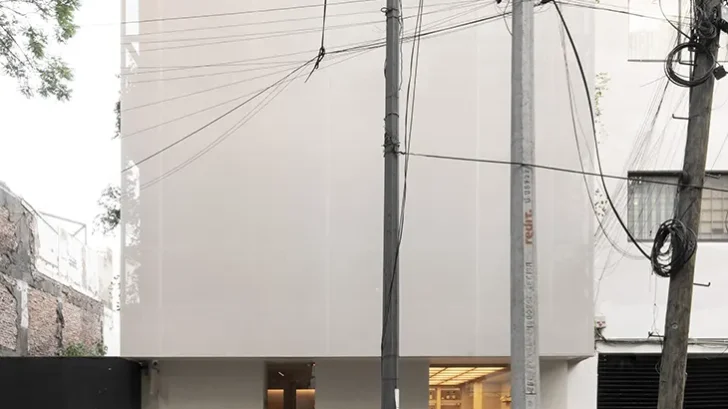

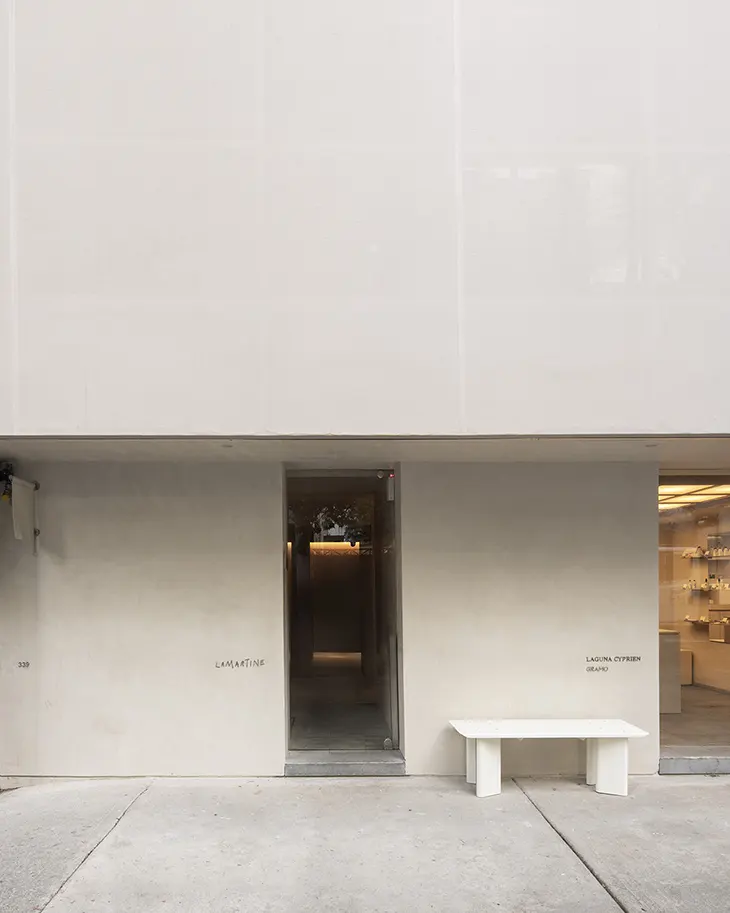
Located in Polanco, one of Mexico City’s most active districts, LAMARTINE hotel by PPAA approaches hospitality architecture through spatial precision and environmental awareness. Built on a narrow-front lot, the project accommodates ten rooms within a compact footprint. Each room reflects a clear emphasis on functionality, proportion, and material control. The design addresses the density of its surroundings without retreating from the street, shaping a building that engages its context while maintaining interior calm.
HOTELS
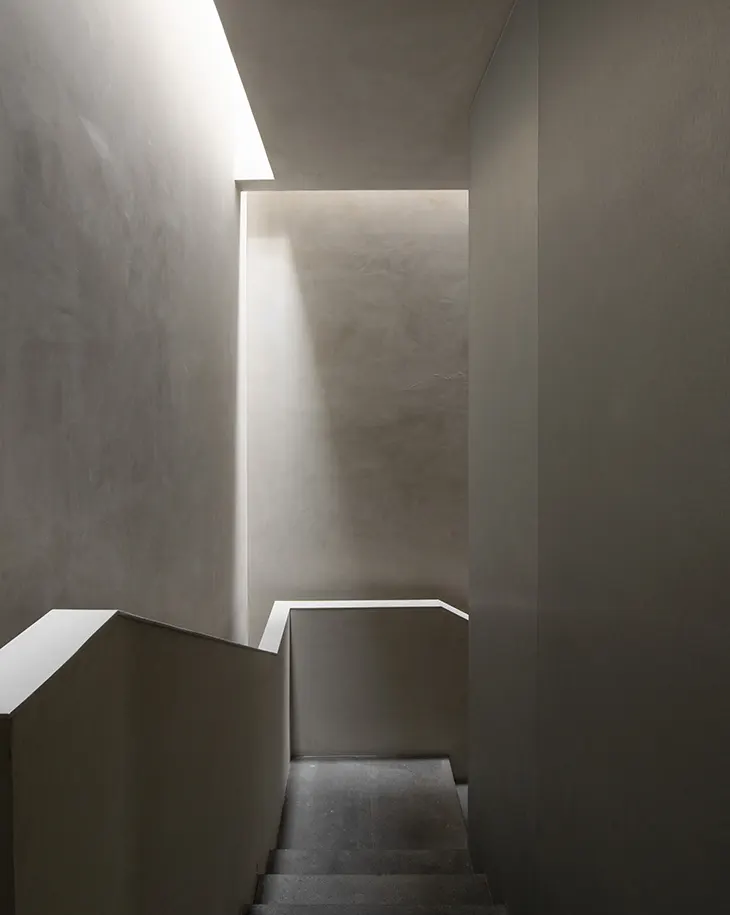
From the outset, natural light defined the primary architectural challenge. Limited frontage and neighboring structures constrained lateral openings, demanding an alternative strategy. The solution rises vertically: a central skylight that channels daylight from above into the depth of the plan. A metal-clad staircase aligns with this opening, forming a luminous shaft that distributes light across multiple levels. This intervention organizes circulation, defines spatial hierarchy, and anchors the building’s identity. Rather than functioning as a secondary service core, the stair becomes the project’s structural and experiential center.
The façade negotiates exposure and privacy with measured restraint. Street-facing rooms feature balconies screened by a semi-transparent metal mesh. This layer allows outward visibility for guests while filtering views from the exterior. The mesh also plays a climatic role. By creating a buffer zone between the interior and direct sunlight, it moderates heat gain and improves thermal comfort. The façade therefore operates as both environmental device and urban interface, contributing to a microclimate that supports passive performance.
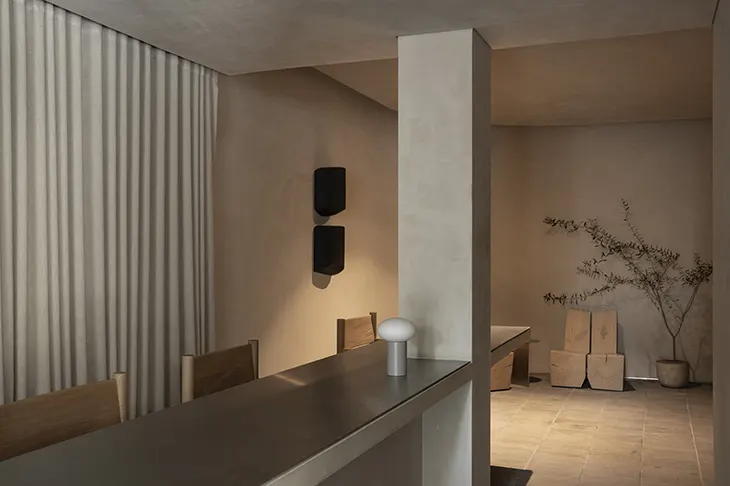
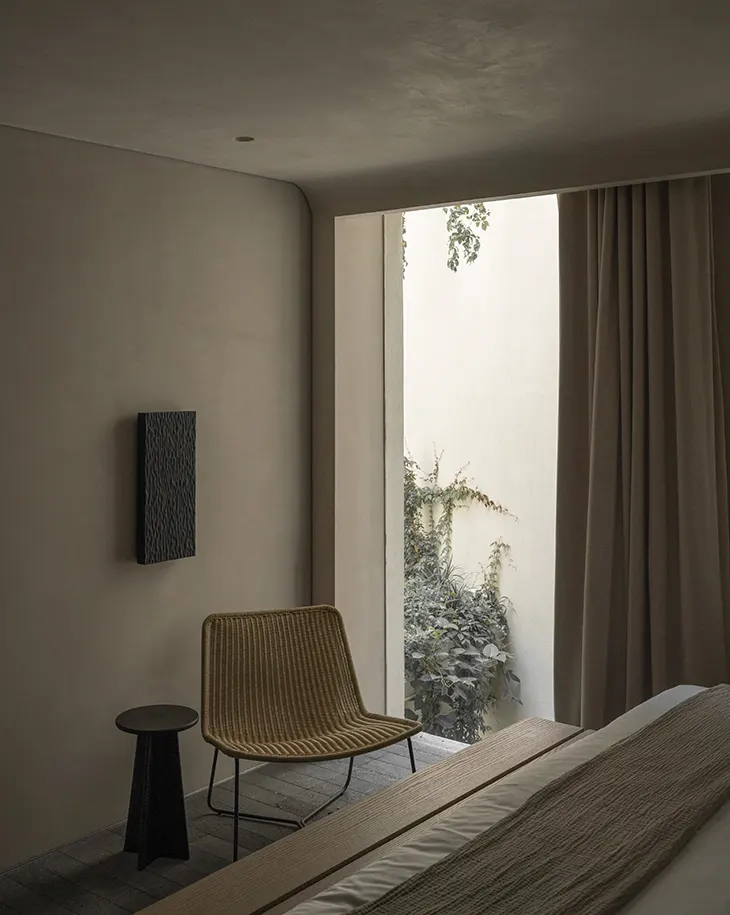
Inside, the emphasis on spatial sensitivity continues. Circulation flows around the central void, maintaining visual connections to the skylight. Natural light reaches deep into corridors and shared spaces, reducing dependence on artificial illumination during the day. The material palette reinforces clarity and order, allowing light and shadow to define surfaces. Each room balances compact dimensions with openness, relying on proportion and daylight to expand perception.
Beyond the envelope, LAMARTINE incorporates sustainable urban strategies. A rainwater harvesting system reduces reliance on municipal supply and responds to the city’s environmental pressures. At the rear of the site, green areas introduce vegetation and open garden spaces that soften the density of the block. These planted zones enhance passive cooling and contribute to a more temperate microclimate within the property. The project acknowledges its urban position while carving out pockets of environmental relief.
Within Polanco’s layered architectural fabric, LAMARTINE maintains a restrained yet confident presence. Its façade expresses discipline and composure, allowing environmental performance and spatial intelligence to define its impact. Through the integration of daylight, thermal strategy, and urban sensitivity, the building transforms a constrained site into an intimate hospitality environment shaped by clarity and control.