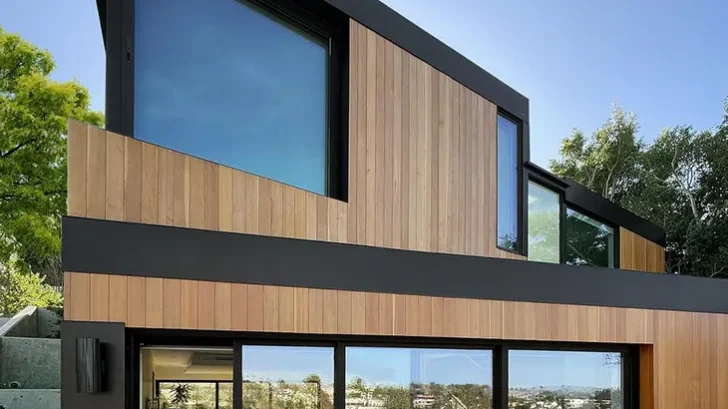

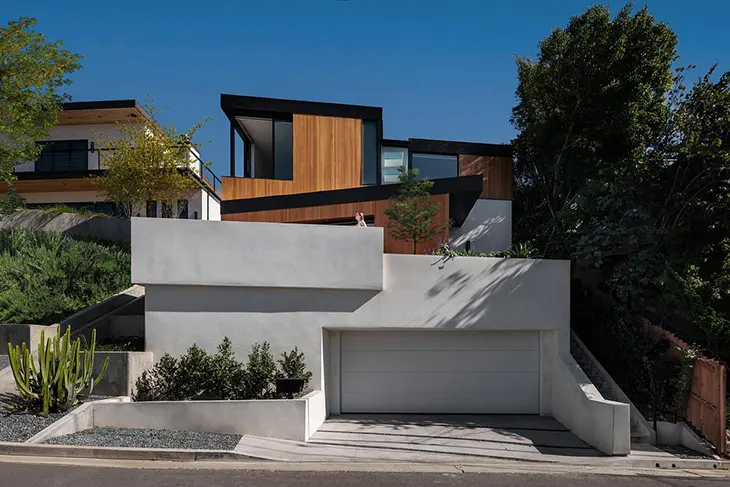
Aaron Neubert Architects completes Slot House, a 2,400-square-foot residence positioned on a steep up-slope site in Los Angeles. Overlooking the Silver Lake hills and reservoir, the project approaches the terrain as a constraint that defines both form and sequence, resulting in a tightly stacked volume that integrates directly into the hillside.
HOUSING
The design begins with a clear structural move. The garage anchors the base, recessed into the slope, allowing two levels of living space to rise above it. This decision stabilizes the building while reducing its visual impact from the street. Retaining walls shape the rear of the site, forming a protected terrace that reads as an outdoor room. This space introduces a quieter condition, shielded from the city and defined by the surrounding earth.
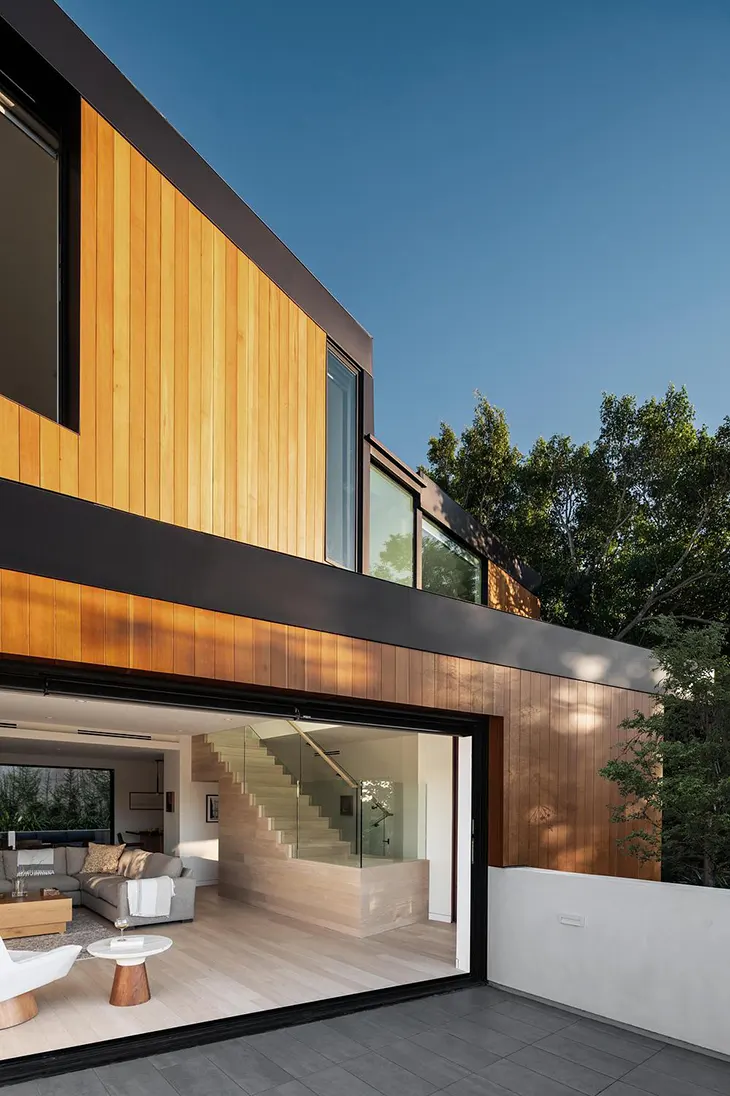
Circulation operates as a continuous link between architecture and landscape. A bridge extends from the second level to the upper portion of the site, creating a direct connection between interior spaces and the natural grade. This gesture integrates movement into the terrain itself, allowing the house to function as part of the hillside rather than an object placed upon it.
Light defines the interior experience. A linear skylight runs through the core of the house, aligned with key moments including the stair, hallway, and bridge. This opening introduces daylight deep into the plan, establishing a visual axis that connects the entry porch to the rear terrace. The result is a clear spatial sequence that draws the eye through the house while reinforcing its vertical organization.
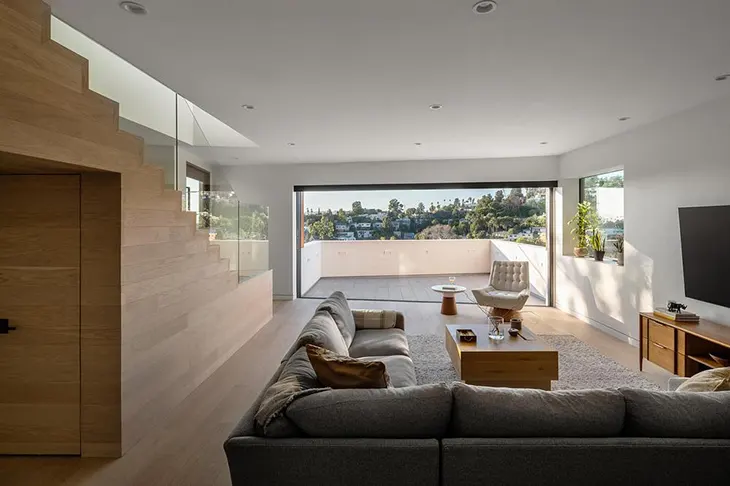
The primary living areas maintain an open arrangement, supporting fluid movement between zones. Views extend across the interior, linking the entry, living, and dining spaces with the terrace beyond. Glazing frames the surrounding landscape with precision, directing attention toward the reservoir and hills while maintaining a controlled level of privacy from adjacent properties.
Slot House operates within a limited footprint yet delivers a layered spatial experience. Through a balance of excavation, structure, and light, the project resolves the complexity of its site with clarity. The residence positions itself as both a continuation of the hillside and a constructed sequence of spaces, where each level responds directly to the conditions that shape it.