
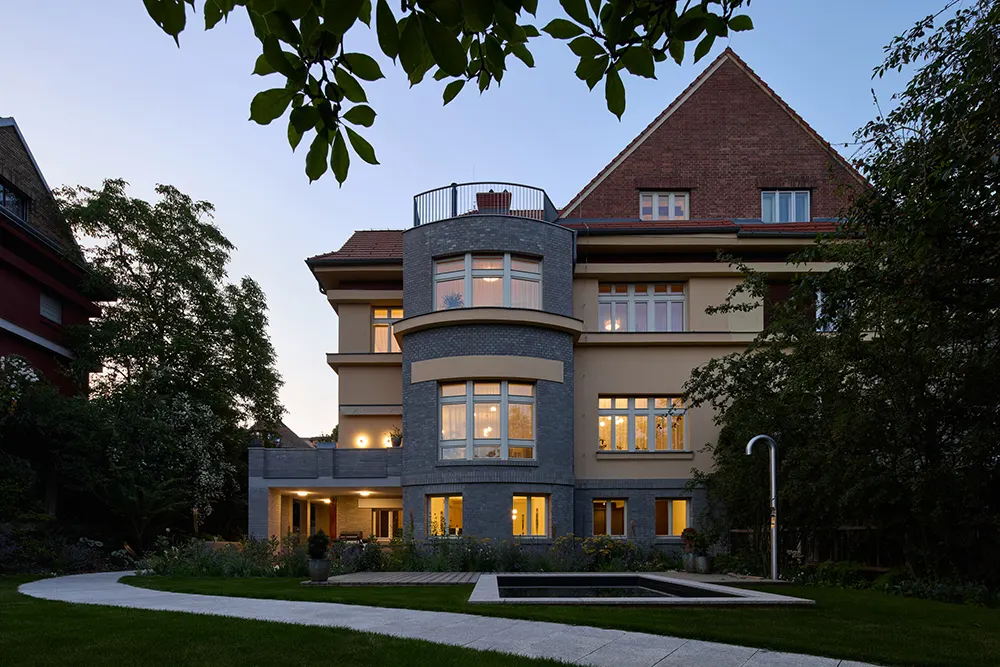
In 2019, Atelier Hajný began work on the reconstruction of a Writers’ Colony Villa, a semi-detached house located at a prominent address in Prague. The building stood in extremely poor condition and no longer met present-day expectations for layout, comfort, or technical performance. The client sought a high standard for everyday living, which required a comprehensive reconstruction rather than surface repair. From the outset, the project demanded careful decision-making, as the house forms part of a protected residential ensemble with clear architectural value.
HOUSING
The villa belongs to a writers’ and journalists’ colony founded in 1912 by the Building Cooperative of Prague Journalists and Writers. Architects Tomáš Pražák and Pavel Moravec designed the house, which received final approval in the 1930s. The current intervention addressed one half of the semi-detached structure within a designated historical preservation zone. The renovation respected this context while introducing necessary structural, spatial, and technical upgrades that allowed the house to function as a contemporary residence.
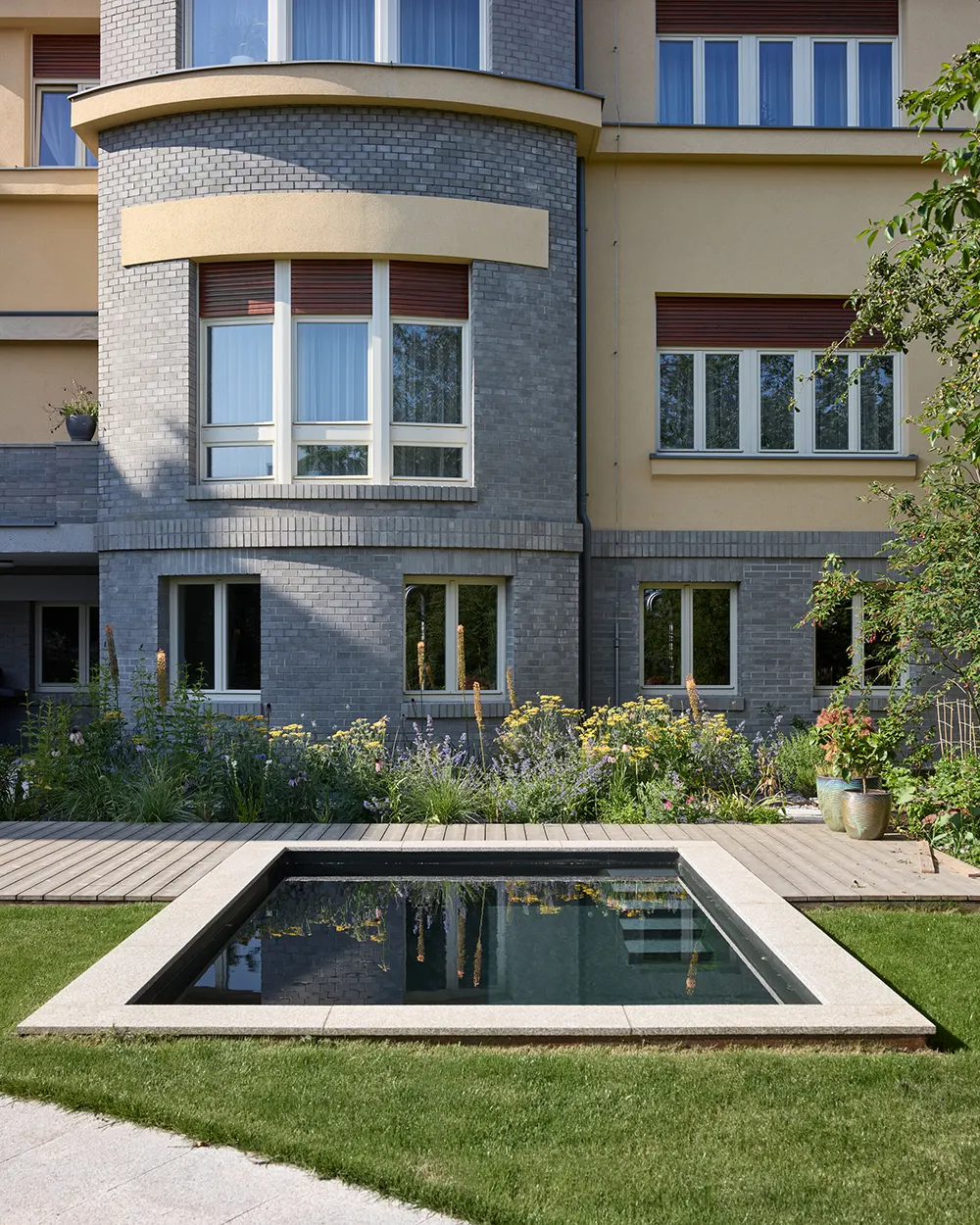
The property connects to the city on two levels, with vehicular access from Benešovská Street below and a pedestrian entrance from Bratří Čapků Street above. The original garage, embedded in the southern slope, proved structurally inadequate and undersized. Atelier Hajný replaced it with a larger reinforced concrete structure that now supports the garden above. An elevator links the garage to the garden level, improving accessibility. Exposed concrete brick surfaces define the exterior character of the new garage.
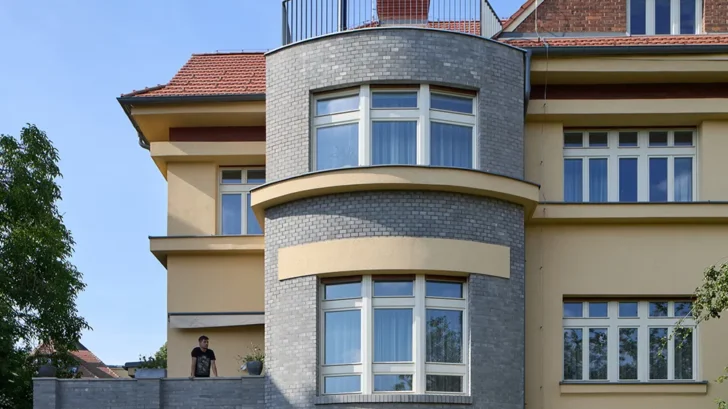
The villa’s original brick facade suffered extensive damage from past surface treatments, which ruled out direct restoration. After consultation with conservation authorities, the team applied a new layer of brick slips cut on site from full concrete bricks, achieving continuity with the original appearance. Rough ochre plaster and traditional beaver-tail roof tiles reinforce this approach. Newly manufactured windows replicate the historic pane divisions while incorporating insulating glass, and copies of the original wooden exterior blinds return to the southern facade. An extension above the former terrace introduced additional living space, designed with restraint through details such as the absence of a cornice and a recessed roof access at attic level.
Internally, the villa originally housed a single family across four floors of roughly 120 square meters each. The basement contained service spaces, the ground and first floors formed the main apartment, and the attic saw minimal use. The new program introduced separate apartments in both the basement and attic. Since the original wooden staircase only served the main floors, a new stair was added in the northeastern corner to access the attic independently. Natural light now reaches the basement apartment through a new window well and inserted windows, with direct access from the garden.
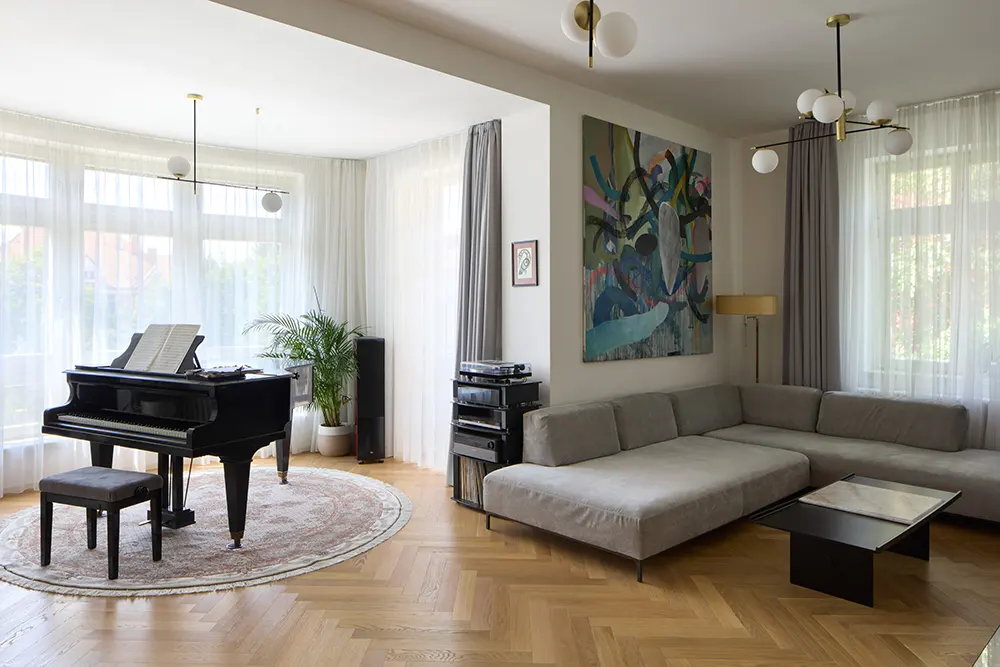
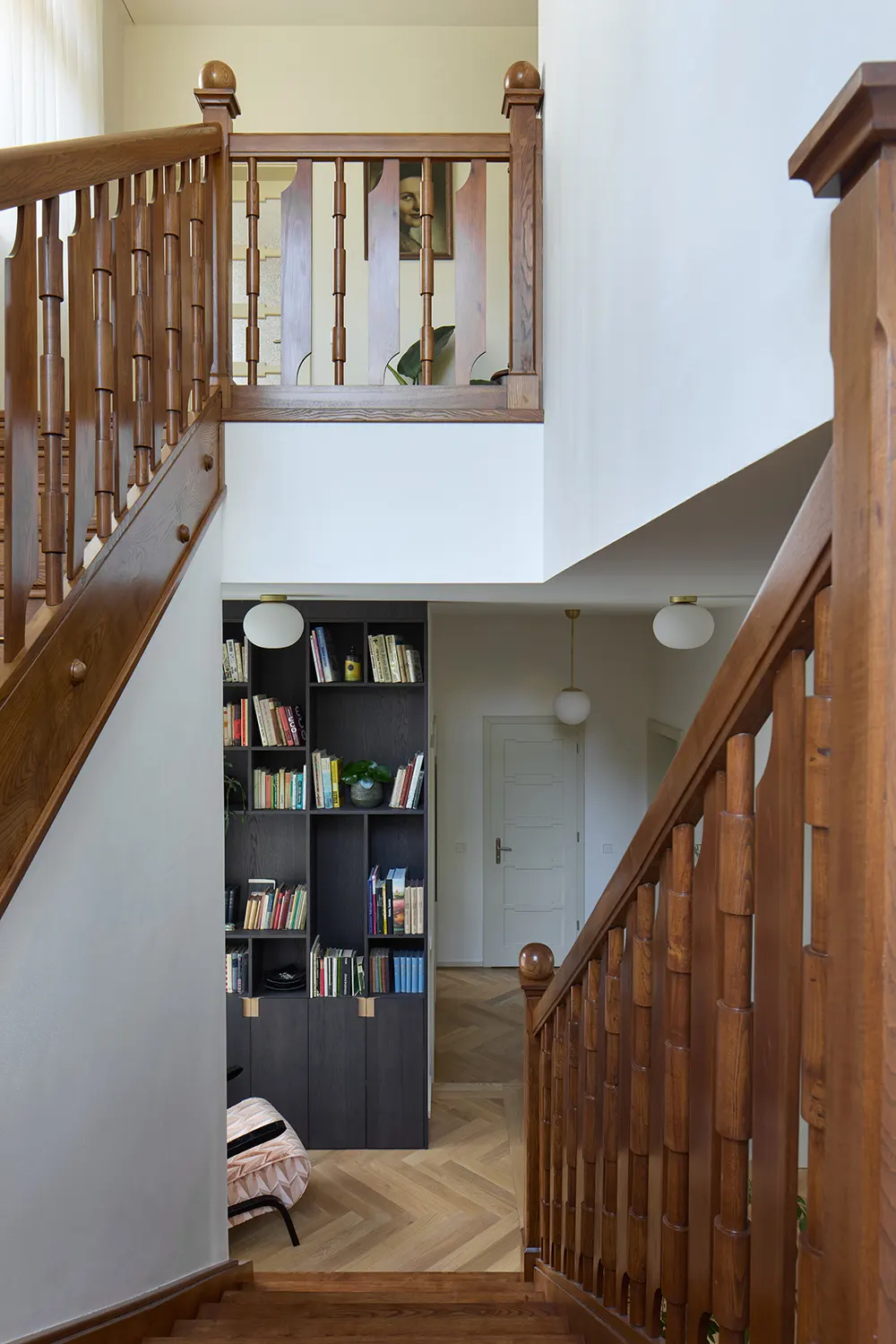
While the basement and attic required substantial reconfiguration, the main living floors retained much of their original spatial structure, supplemented by added bathrooms and utility rooms. A partition with original sliding doors between the kitchen and living room survived intact and underwent full renovation, along with a built-in display cabinet. Where restoration proved impossible, exact replicas replaced internal doors. The original staircase of the main apartment received treatment for dry rot and remains positioned beside a two-storey garden-facing window that brings western light deep into the interior.
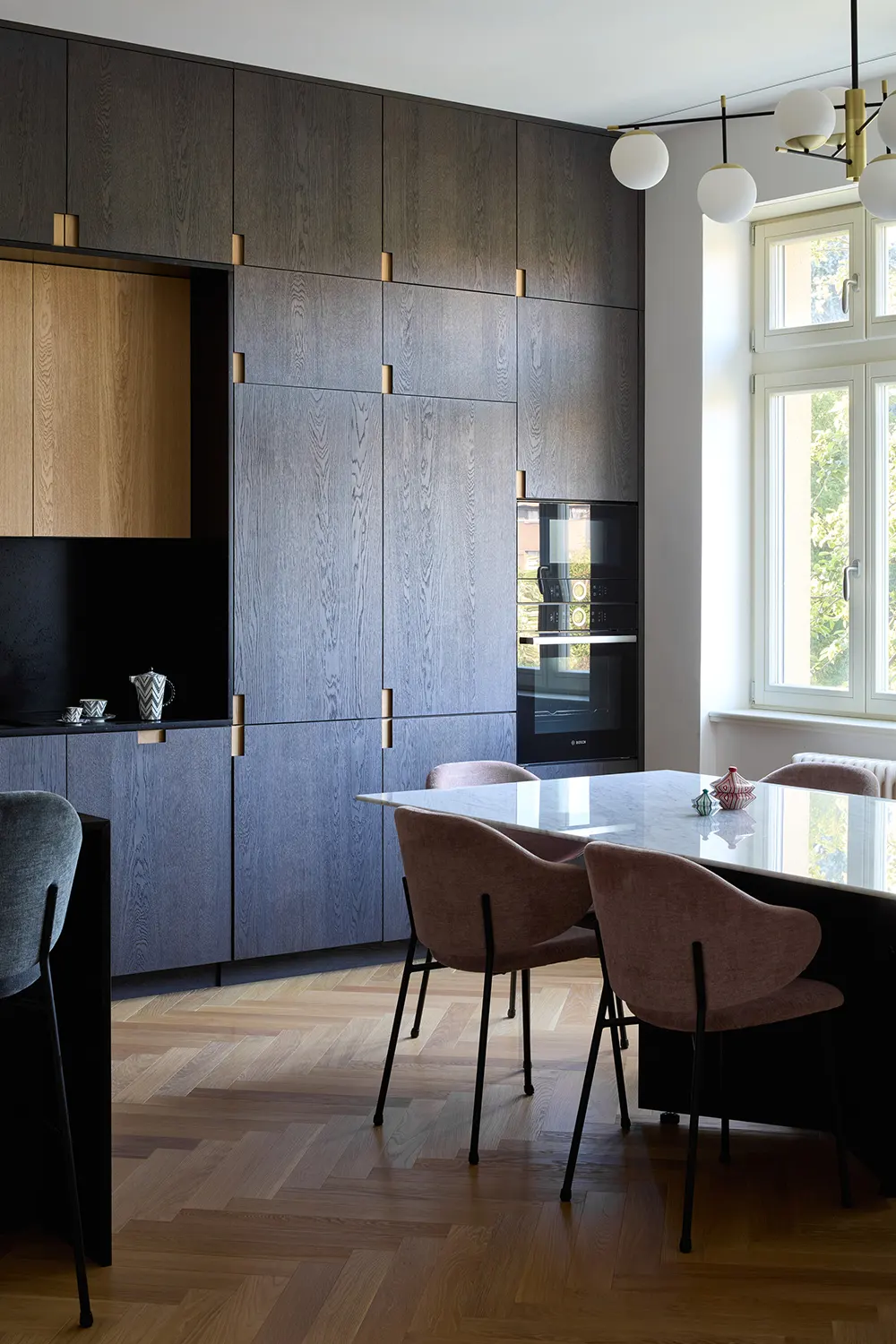
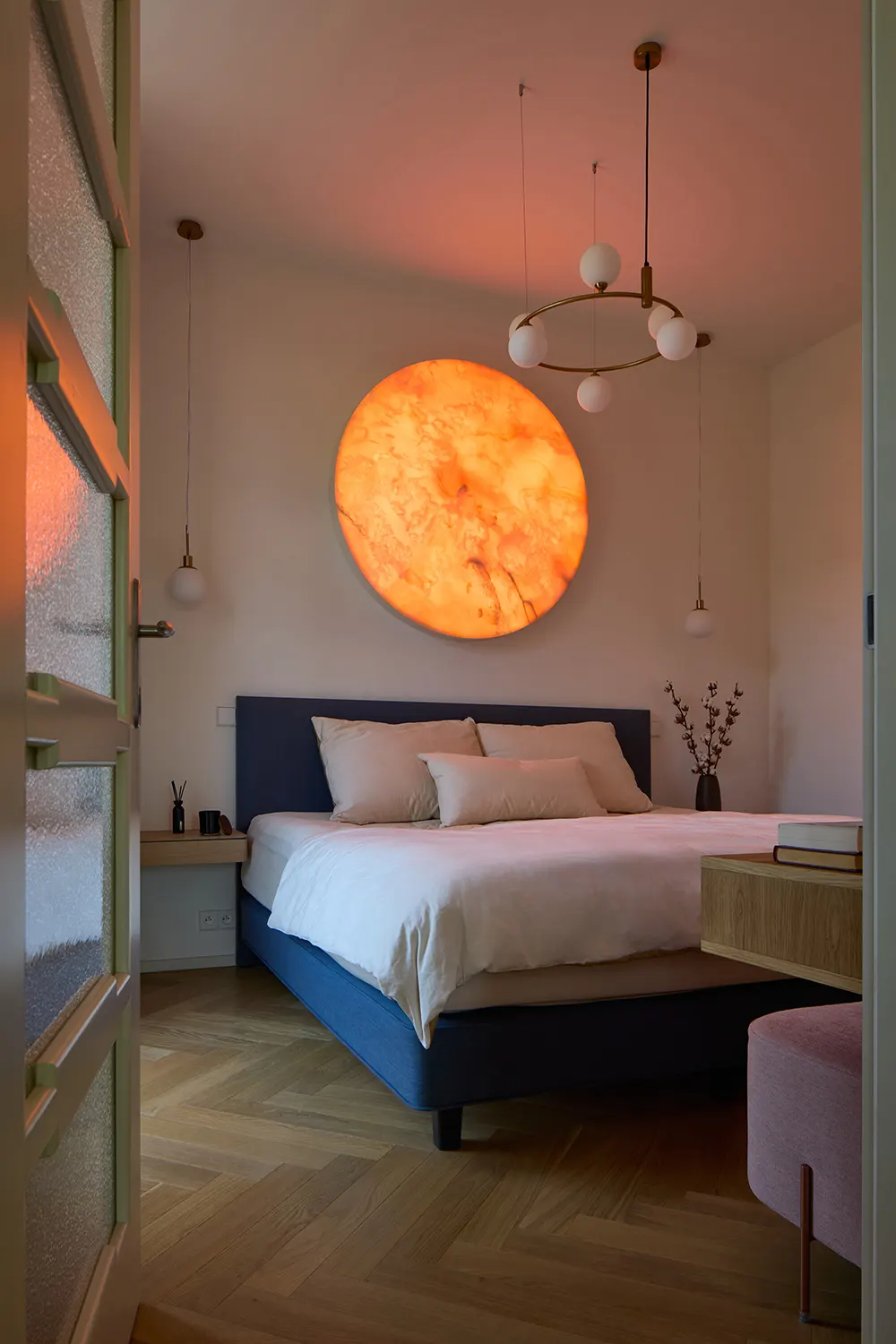
Only a limited number of historic interior elements survived demolition, which allowed new insertions to play a clear architectural role. Atelier Hajný designed all built-in furniture for the project, using stained oak veneer and solid oak handles finished by hand. Material decisions extend through parquet flooring, window profiles, and integrated underfloor heating connected to a geothermal heat pump system located beneath the garage. Freestanding furniture from Modernista, alongside selected contemporary pieces, completes the interior without attempting to recreate a period interior. The renovation instead frames a clear relationship between preserved structure and present-day use, allowing both to remain legible within the house.
Studio: Atelier Hajný
Author: Martin Hajný
Co-author: Markéta Šornová
Project location: Prague, Czech Republic
Project year: 2019-2022
Completion year: 2025
Built-up area: 184 m² villa, 99 m² garage
Gross floor area: 680 m² villa
Usable floor area: 480 m² villa
Plot size: 940 m²
Photographer: Radek Úlehla
Collaborators and suppliers
Landscape architects: Steiner a Malíková krajinářští architekti
Furniture supplier: Decoland
Stone elements: Pražský kámen
Light supplier: Aulix