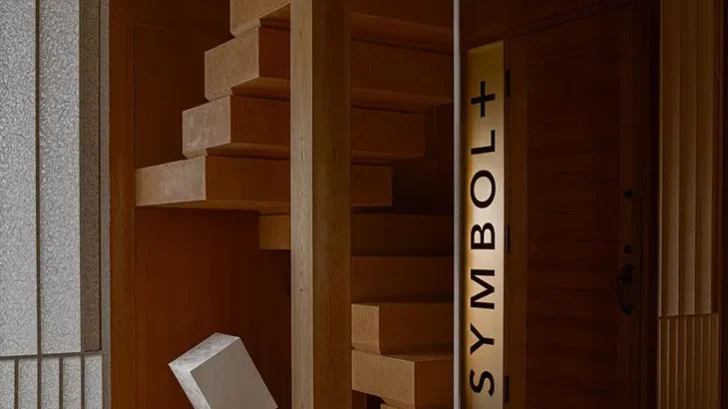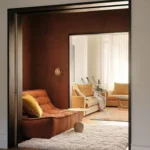

SYMBOLPLUS OFFICE is the renovation of a 76.3-square-meter workspace in Tokyo, designed by SYMBOLPLUS INC. for its own daily use. Set within a timber building owned by architect Akio Hayashi, the project reflects a shared belief in natural materials, architectural continuity, and long-term relevance. Rather than approaching the office as a branding exercise or a visual statement, the studio treats it as a quiet framework for work, shaped by restraint, reuse, and respect for what already exists.
OFFICES
The building’s timber structure became both the constraint and the guide. Hayashi’s long-standing advocacy for natural construction set the tone early, resulting in a clear brief that rejected synthetic materials and unnecessary replacement. The renovation operates through careful calibration rather than transformation. Existing elements were preserved wherever possible, and new interventions were designed to follow the logic of the original structure, its proportions, rhythm, and warmth, so that old and new coexist without visual tension.
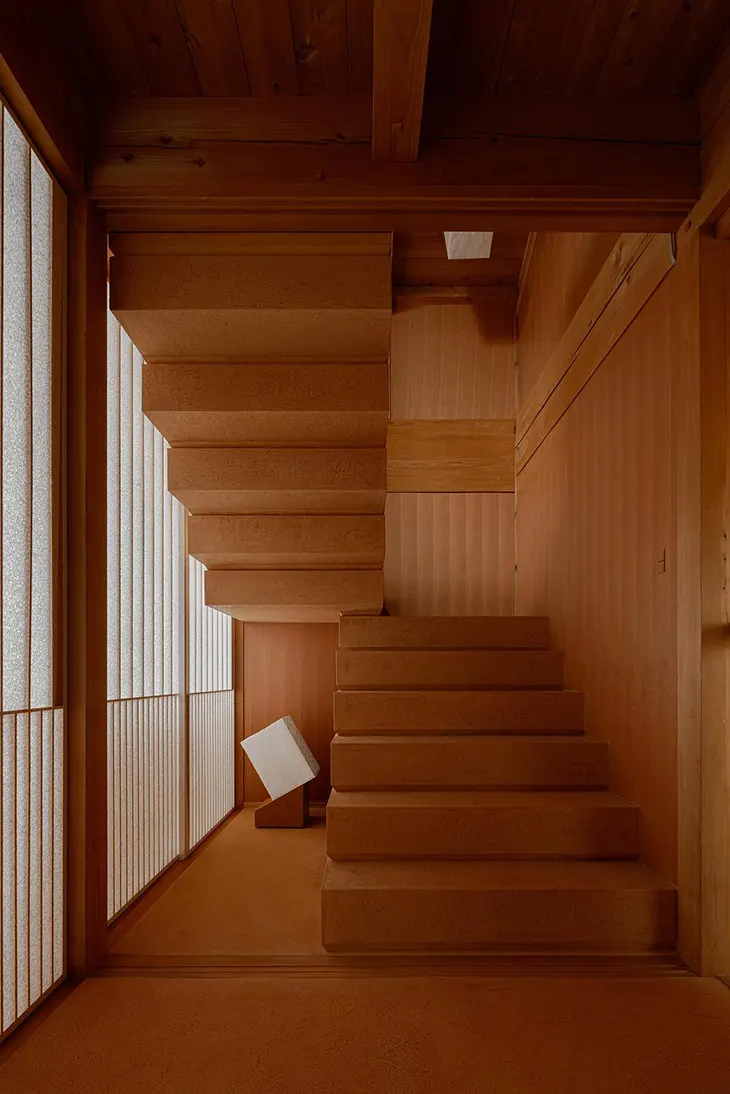
This approach positions architecture as something continuous rather than finite. The office does not present itself as finished or fixed. Instead, it allows work, time, and use to leave their mark. The atmosphere is intentionally understated, enabling daily activity to unfold without distraction. The space supports focus not by isolating its users, but by aligning closely with its architectural context.
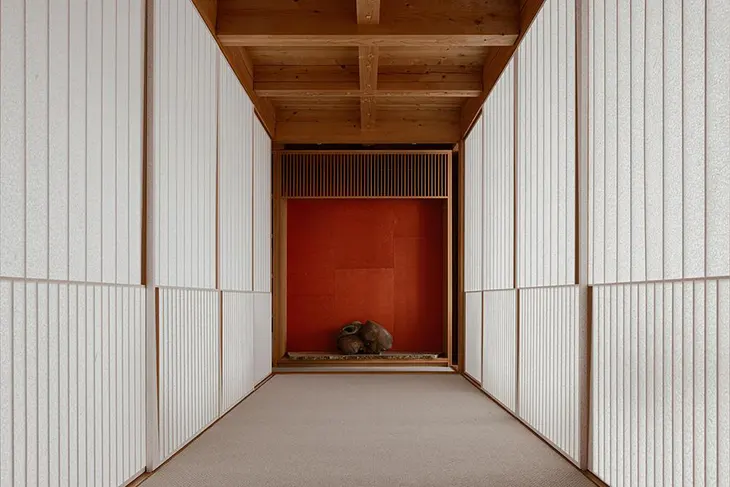
Material selection plays a central role in reinforcing this attitude. Red earth sourced from Ishikawa Prefecture was applied as layered plaster by skilled artisans, with its tone adjusted to harmonize with the surrounding timber. The plaster surface carries both physical and cultural weight, linking the interior to regional craft traditions while grounding the space visually. Its texture and color introduce warmth without ornament, allowing material presence to speak quietly but clearly.
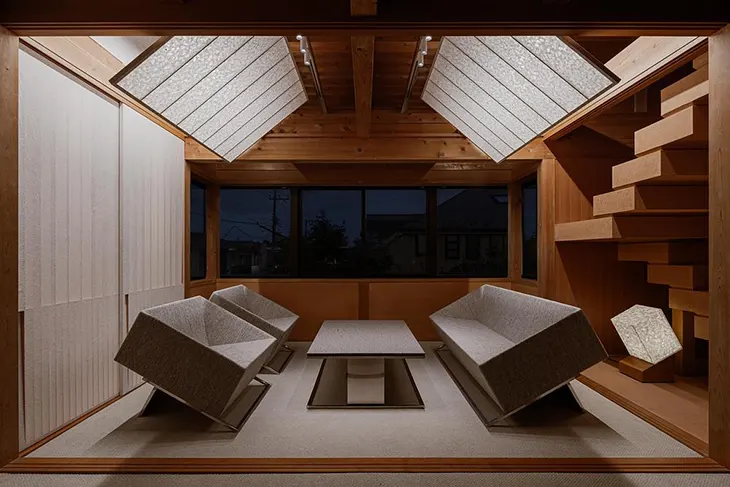
Shoji partitions further articulate the project’s material logic. Made from reclaimed Tosa washi originally destined for disposal, the paper was layered to achieve sufficient durability and translucency. This act of reuse is not symbolic, but practical. The resulting partitions filter light softly while maintaining a sense of openness. They also function as adaptable spatial tools, sliding to divide or connect areas as needed. In meeting zones, the shoji conceal shelving and equipment, preserving visual calm while accommodating everyday work requirements.
Innovation within the project appears through reduction rather than addition. Shoji panels slide without metal fittings, relying instead on traditional carpentry techniques. Rotating ceiling panels conceal lighting fixtures, revealing illumination only when required. These systems reduce visual noise and allow the architecture to remain legible. The gestures are subtle, but they significantly affect how the space is experienced over time.
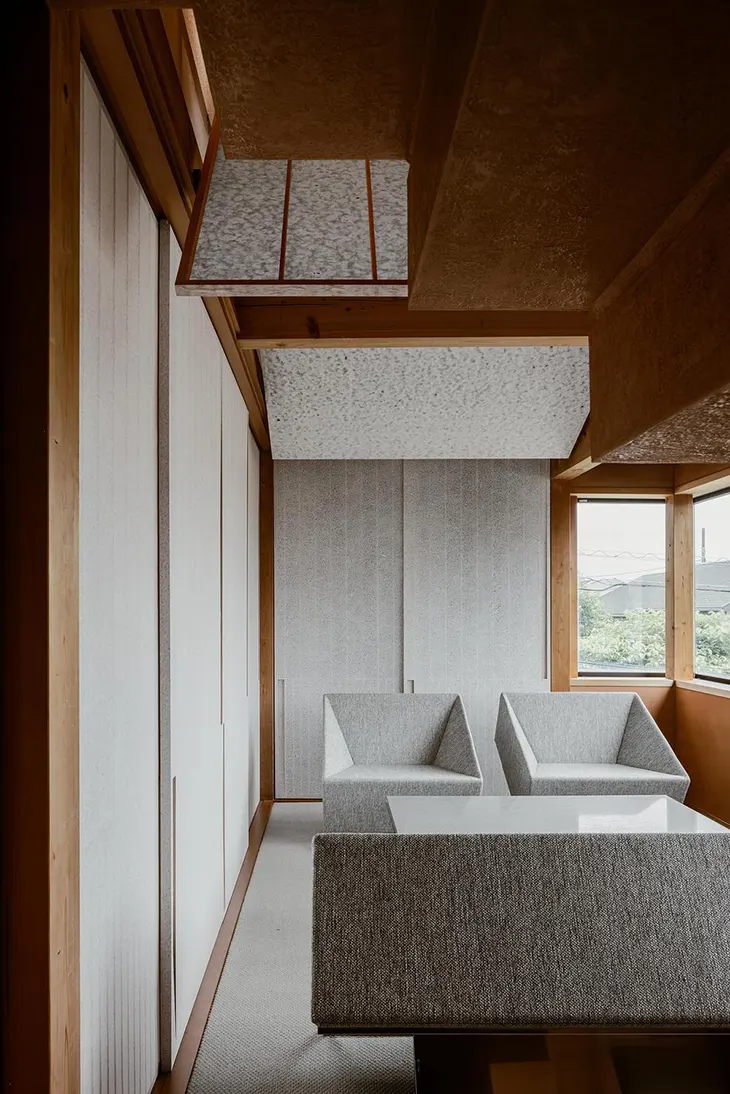
The design avoids fixed hierarchies and rigid layouts, accepting that modes of work will continue to change. Instead of over-prescribing function, the architecture provides a flexible vessel that can respond to shifting needs without losing coherence. Light, movement, and daily occupation become active components of the space, contributing to its evolution.
SYMBOLPLUS OFFICE resists the idea of the workplace as a showcase. There are no overt displays of authorship or branding. The studio’s values, longevity, reuse, and humility toward existing architecture, are embedded in the details rather than announced. By building upon what was already there, the project demonstrates how modest, precise interventions can extend the life of a building while remaining socially and environmentally responsible.