
For years, the commercial property market treated demolition and rebuild as the default. That position is becoming harder to defend. Whole-life carbon, regulatory pressure and basic economics are all tilting in favour of deep refurbishment and adaptive reuse. Especially for large office towers.
Three flagship projects – in Sydney, London and New York – now provide a practical blueprint for what that shift looks like in reality.
01. Quay Quarter Tower, Sydney – the “Upcycled” Skyscraper
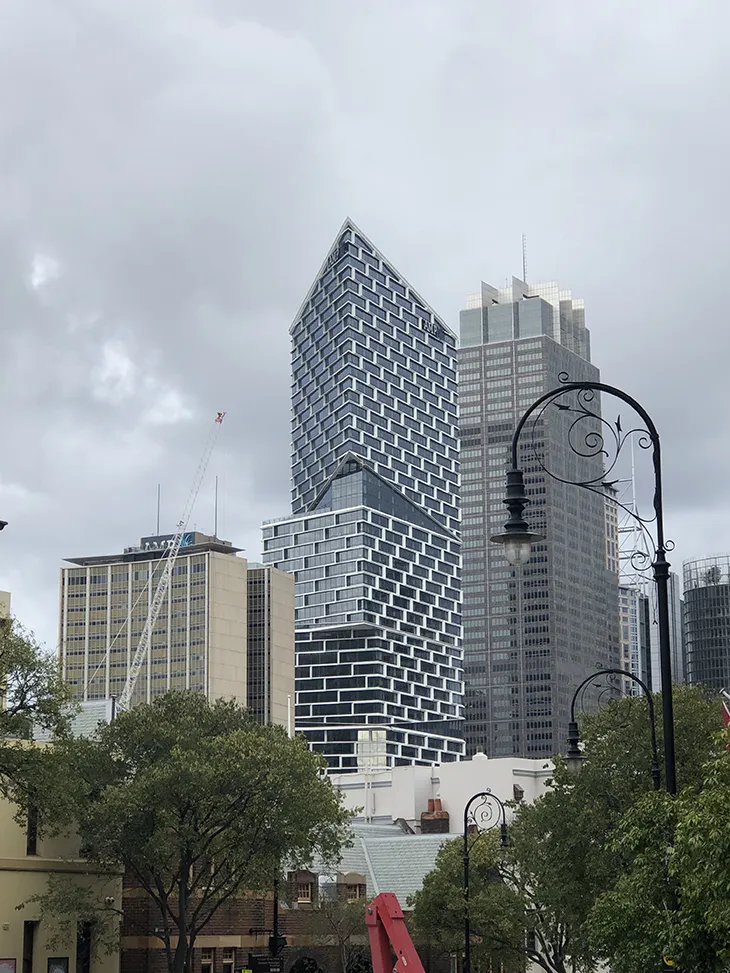
Quay Quarter Tower is widely described as the world’s first fully “upcycled” skyscraper. Rather than raze a dated 1970s office tower on Sydney’s Circular Quay, the team retained the bulk of its existing structure and used it as the armature for a new commercial landmark.
Key moves included:
- retaining around 65% of the original floorplates and structure
- reusing about 98% of the structural walls and core
- reshaping the building into a series of stacked, cantilevered volumes wrapped around daylight-filled atria
That strategy avoided over 12,000 tonnes of embodied CO₂e compared with a full demolition and rebuild and delivered a structural carbon intensity in the mid-200 kg CO₂/m² range, versus 600–700 kg CO₂/m² typically associated with a new commercial tower.
In October 2025, Quay Quarter was recognised as a finalist for The Earthshot Prize in the “Build a Waste-Free World” category, a signal that adaptive reuse at this scale is no longer a niche engineering experiment but a model to be copied globally.
2. 1 Triton Square, London – More Space, Much Less Carbon
If Quay Quarter shows what’s possible with a 1970s tower, 1 Triton Square in London demonstrates that the same logic applies to 1990s commercial stock.
Originally designed by Arup for British Land, the building was substantially reworked to meet current workplace expectations and sustainability standards. Instead of starting from scratch, the project:
- retained the existing superstructure and facades
- added three to four new floors
- doubled the net office area while still achieving a BREEAM Outstanding rating
On the carbon side, the numbers are decisive. A circular-economy approach, maximising retention and reuse of structure and materials, delivered an estimated 56% reduction in embodied carbon versus a typical new build benchmark, avoiding over 27,000 tonnes of CO₂e.
The project effectively saved more carbon in design and construction than the building is expected to emit in use over a 20-year lease period.
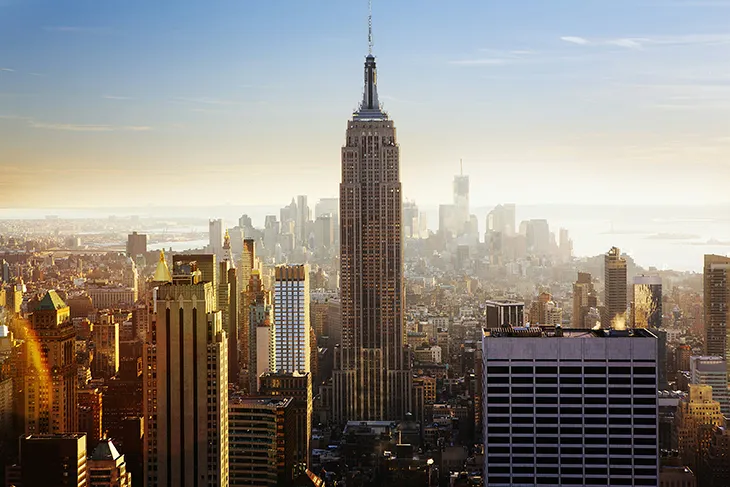
3. Empire State Building, New York – Energy Retrofit at City Scale
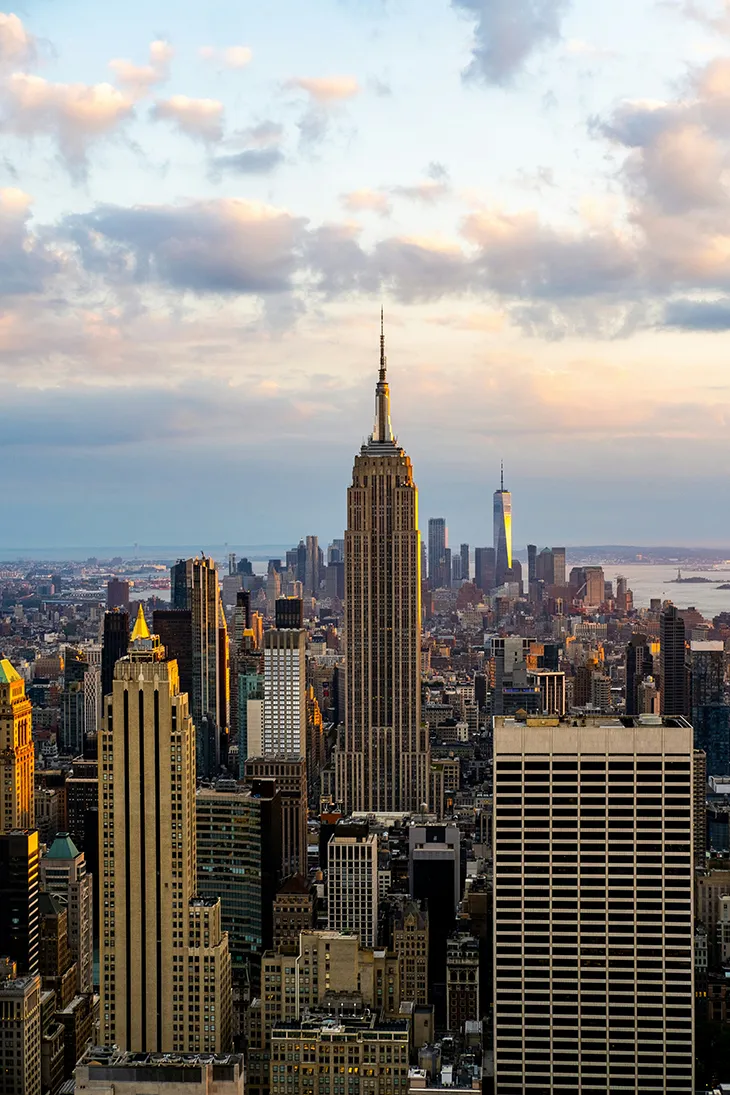
The Empire State Building is a very different asset again: a pre-war icon with millions of square feet of office space and complex historic constraints. Yet the core logic is similar – do not throw away value you already own.
Between 2009 and 2013, the building underwent a comprehensive energy and performance retrofit as part of a wider $550 million capital improvement programme. The works included:
- refurbishing rather than replacing the chiller plant
- upgrading window glazing and adding a radiative barrier
- overhauling air-handling equipment and controls
- supporting tenant-side upgrades and energy management
Engineering models projected a 38% reduction in energy use, several times the savings typically delivered by “light touch” retrofits, with annual energy cost savings of around $4.4 million once tenant spaces are fully upgraded. The programme is expected to cut carbon emissions by roughly 105,000 metric tonnes over 15 years.
Here, the big story is operational carbon rather than embodied carbon, but the conclusion is consistent: it is often more efficient, financially and environmentally, to work with the building you have.
The Importance of Building Facades
Across all three projects, one theme is obvious: the facade is one of the biggest levers for improving a building’s performance without rebuilding from the ground up.
In Sydney, London and New York, new or upgraded envelopes use higher-performance glazing, better shading and tighter detailing to cut unwanted heat gain, reduce glare and lower cooling loads. The result is the same in each case: less energy use, lower operational carbon and better comfort for occupants, all without discarding the underlying structure.
Because facades typically represent a significant share of a building’s lifetime embodied carbon, extending their life rather than replacing them outright has a disproportionate impact. Refurbishment and targeted restoration often come in at a small fraction of the carbon and capital cost of full replacement yet materially improve performance.
On stone or brick, that may mean DOFF Steam Cleaning, conservation-grade repairs and selective component swaps. On more modern envelopes, facade restoration, localised panel upgrades and moisture management would be the ideal solution. The goal is to squeeze more performance and longevity from the existing facade.
Financially, refurbishment typically comes in at a fraction of the capex associated with full replacement, with shorter programmes and less disruption to income. According to facade restoration specialist See Brilliance, refurbishment typically costs around one-twentieth the cost of replacement.
The “carbon cost” and the cash cost often point in the same direction; demolition is frequently the most expensive option in both senses once you account for lost embodied value.
What This Means for Commercial Owners and Managers
Taken together, Quay Quarter Tower, 1 Triton Square and the Empire State Building show that Grade-A outcomes do not require a blank site. Tall and complex buildings can be radically upgraded while keeping most of the structure in place.
Facades and services are long-life assets to be cleaned, repaired and improved, not discarded on a whim.
For commercial building owners, these success stories show that when you approach reuse with ambition, you can deliver buildings that look and perform like new without paying the full carbon and capital price of starting again.