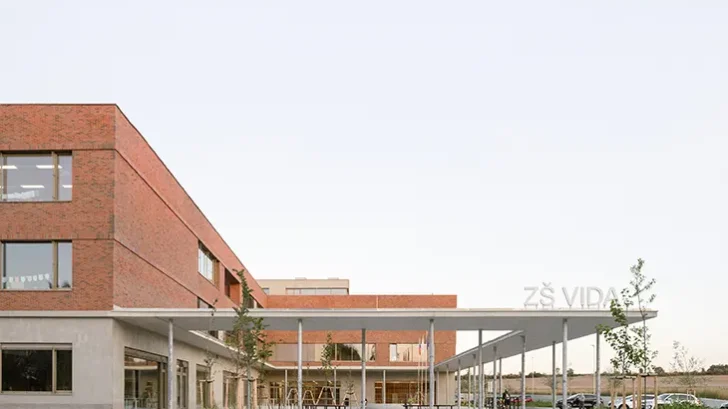

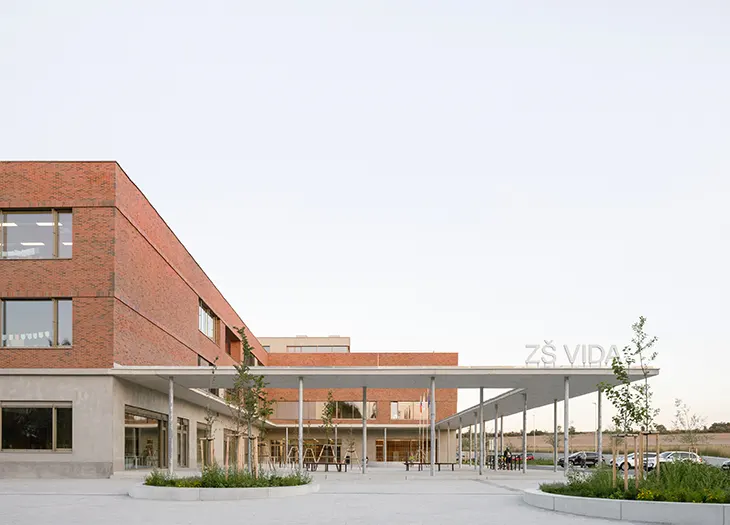
VIDA Elementary School in Chýně proposes a learning environment where space itself becomes an active educational tool. Designed by OVA, the project reflects a contemporary approach to education that extends well beyond the classroom, placing equal value on shared interiors, outdoor areas, and informal learning zones. The result is a school conceived as a layered internal landscape, adaptable to different ages, rhythms, and modes of use throughout the day.
EDUCATIONAL PROJECTS
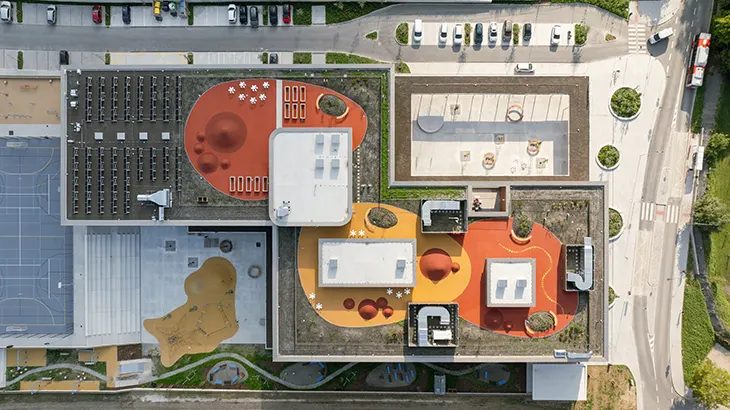
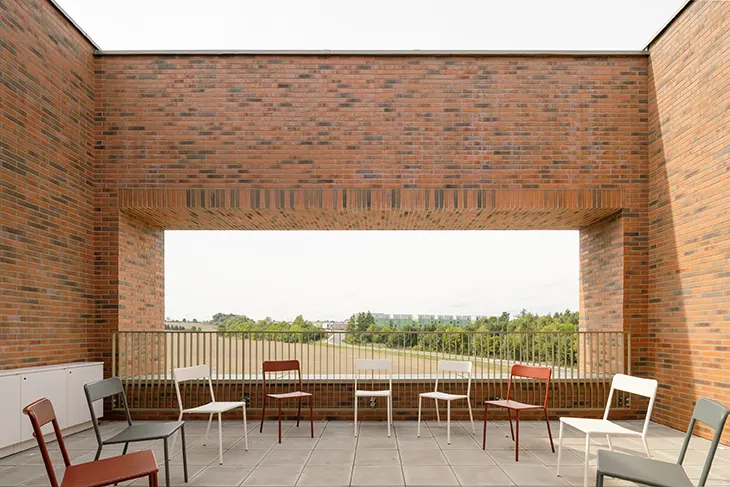
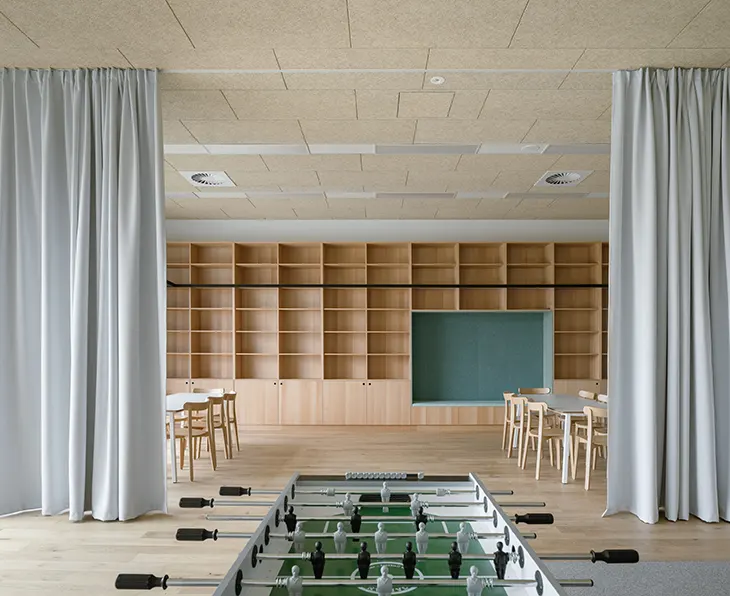
At the core of the design is the idea that learning happens everywhere. Corridors widen into alcoves for spontaneous study, while smaller nooks allow for quiet conversations and moments of retreat. Dedicated study rooms support varied postures and levels of concentration, accommodating both individual focus and group work. Even the roof participates in this expanded educational model, offering spaces for play, outdoor classrooms, and hands-on activities such as gardening. This rich spatial variety allows younger children and teenage students to find environments suited to their needs rather than forcing all activity into standardized rooms.
The school serves a dual role within the community. While it functions as a primary educational facility during the day, it also hosts extracurricular programs for pupils and educational and sports activities for adults in the afternoon and evening. This extended use influenced both the spatial organization and operational logic of the building, enabling it to shift seamlessly between a fully open school and a more selective public venue.
The site plays a critical role in shaping the architecture. Located on an elongated, sloping plot near the center of Chýně, the school currently stands at the edge of a developing residential area. Over time, it will become embedded within a denser urban fabric. OVA’s design addresses both scenarios by establishing a clear and legible public space that works in isolation now while remaining ready for future integration into the town’s structure.
This strategy is expressed through the concept of two courtyards, which define the building’s layout and social hierarchy. The northern zone contains classrooms and the main communal areas, while the southern part houses sports facilities, an auditorium, and supporting spaces. One courtyard is public-facing, welcoming students, visitors, and the wider community, while the second operates as a more protected internal space linked closely to daily school life.
The three-storey building steps with the terrain, creating multiple points of access. Entry is possible from the ground floor when approaching from the town center, from the first floor via the sports complex, and from the upper level through outdoor learning areas. Each floor maintains a direct relationship with the exterior, reinforcing the idea of openness and continuity between inside and outside. The roof extends this principle further, combining terraces, planting beds, and teaching spaces into an active fifth façade.
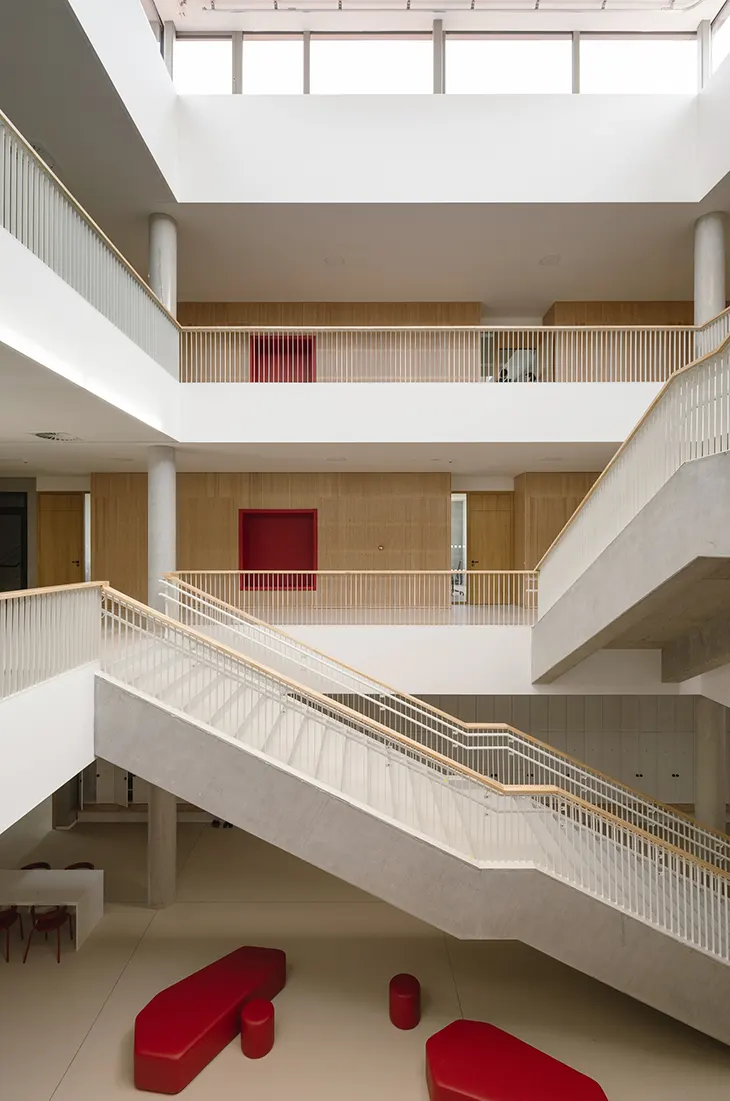
Operational flexibility is central to the project. During school hours, the entire building functions as a single, interconnected environment. In the afternoon, a reduced mode limits public access to selected areas such as the library, gymnasium, multipurpose hall, and club rooms, allowing cultural events and community activities to take place without disrupting the rest of the school.
Outdoor areas are organized across two main height levels. The lower level aligns with the school’s primary floor and its courtyards, while the upper level accommodates the sports complex. This includes an athletic track with an integrated football field, support facilities, an athletic tunnel, and refreshment areas. Spectators can gather along the track or on the roof of the facilities building, which doubles as a grandstand. A secondary training field sits between the school and the track, remaining accessible during school breaks.
Environmental performance is addressed through a combination of technical and architectural measures. The building meets energy performance class A, using heat pumps for heating, mechanical ventilation with the option of natural airflow, and photovoltaic panels on both the school and sports buildings. Reinforced concrete construction with masonry infill provides thermal mass and stability, while ceramic façade cladding, roof canopies, planted “tree nests,” and extensive shading help reduce overheating and mitigate heat island effects.
VIDA Elementary School positions architecture as an educational framework in its own right. Through careful spatial planning, adaptable programming, and a strong relationship to its site, the project demonstrates how schools can operate as civic spaces that support learning, community life, and long-term urban growth.