


Located within the historic Tersane Istanbul complex in Fatih, AINEN by URBANJOBS reinterprets the burger bar as a spatial experience rather than a conventional dining venue. Conceived as an adaptive interior capable of shifting between different modes of use, the project approaches hospitality design through atmosphere, flexibility, and architectural rhythm.
INTERIOR DESIGN
The leased space presented a difficult starting point. With a narrow, elongated footprint and limited width, the interior risked becoming a corridor-like sequence that would disrupt continuity and limit interaction. Instead of attempting to resolve the constraint horizontally, URBANJOBS directed the design strategy upward. The project activates the vertical dimension through a sculptural ceiling intervention that introduces rhythm, movement, and spatial orientation.
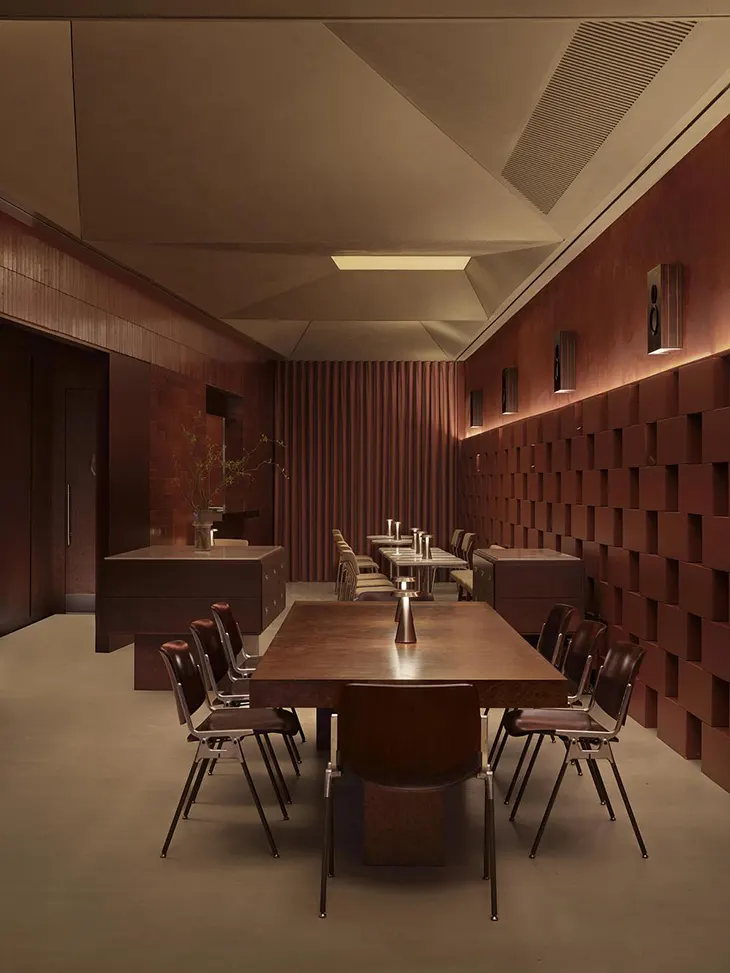
This three-dimensional ceiling structure becomes the defining architectural gesture of the interior. Beyond its visual presence, it organizes the perception of space and subtly guides movement along the room’s central axis. The ceiling transforms the compressed proportions of the volume into a layered spatial experience, turning what might have been a limitation into a defining quality.
The plan maintains a clear and efficient organization that supports both daily operations and evolving atmospheres. The open kitchen and bar occupy opposite sides of the interior, while a central circulation path runs through the space. Along this axis, URBANJOBS introduces a multifunctional island servant that operates as the project’s focal point.
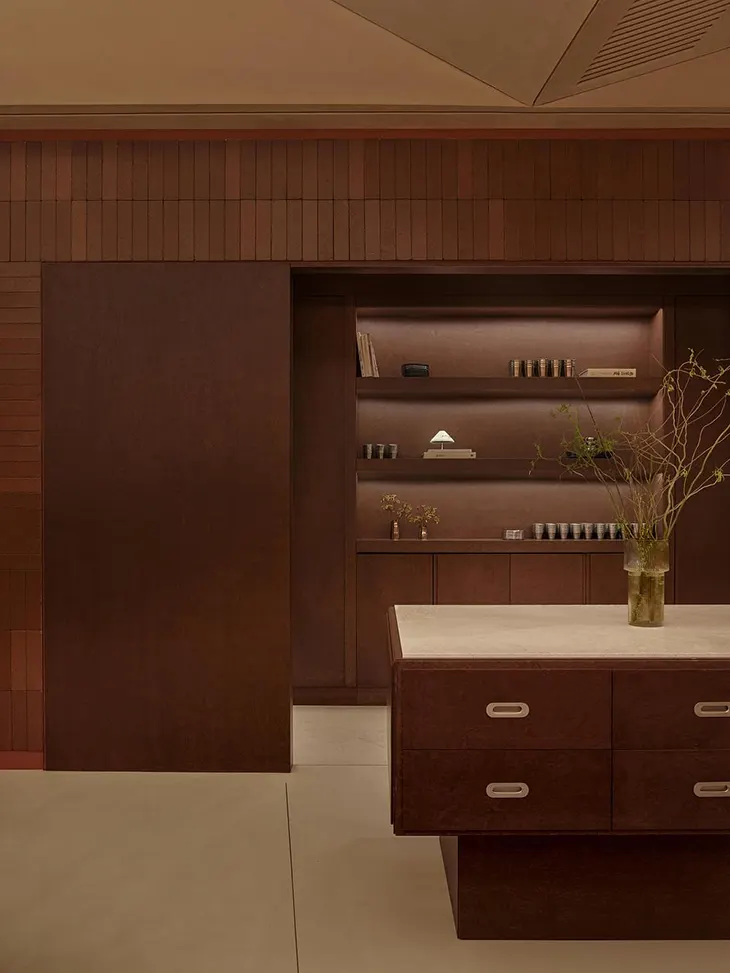
During daytime service, the island functions as a practical service element connected to the kitchen. At night, however, it transforms into a DJ setup, allowing the venue to transition into a music-driven environment. This dual function reinforces the project’s broader ambition to create an adaptable hospitality space that evolves throughout the day.
Flexibility continues in the furniture strategy. All seating and tables are movable, allowing the layout to respond to changing crowd sizes, events, and programming. Rather than fixing the interior into a rigid arrangement, URBANJOBS designed AINEN as a framework that supports continuous reconfiguration.
Lighting plays an equally important role in shaping the atmosphere. Developed in close dialogue with the ceiling geometry and architectural surfaces, the lighting system avoids conventional spot illumination. Instead, layered light sources interact with the spatial structure, intensifying or softening depending on the moment. Through this approach, lighting becomes an active architectural element that defines mood and perception.

Material selections maintain a dialogue with the industrial heritage of the Tersane Istanbul site while introducing contemporary design references. Dark-stained wooden chairs from the Giancarlo Piretti for Cassina series bring a timeless quality to the interior. Their presence connects the project to design history while allowing the furniture to age and develop character over time.
Through its integration of architecture, music, and adaptable design strategies, AINEN positions itself as more than a restaurant interior. URBANJOBS approaches the project as an evolving environment shaped by movement, time, and user interaction—an interior capable of shifting identities while remaining anchored in a clear architectural language.

