
In a 1970s housing complex in Oaxaca City, RootStudio has reworked an existing home into a compact, light-filled residence that prioritizes clarity, efficiency, and daily comfort. The project does not rely on expansion or visual spectacle. Instead, it sharpens the original structure, reorganizing space from within to respond to privacy, ventilation, and light with measured precision.
HOUSING
The intervention begins with a simple but firm premise: to work inward. Rather than opening the house toward the street, the design focuses on internal orientation, allowing the dwelling to regulate its own climate and sense of calm. This inward logic results in a residence that feels protected and generous at once, reinforcing the idea that quality of life emerges from spatial intelligence rather than scale.
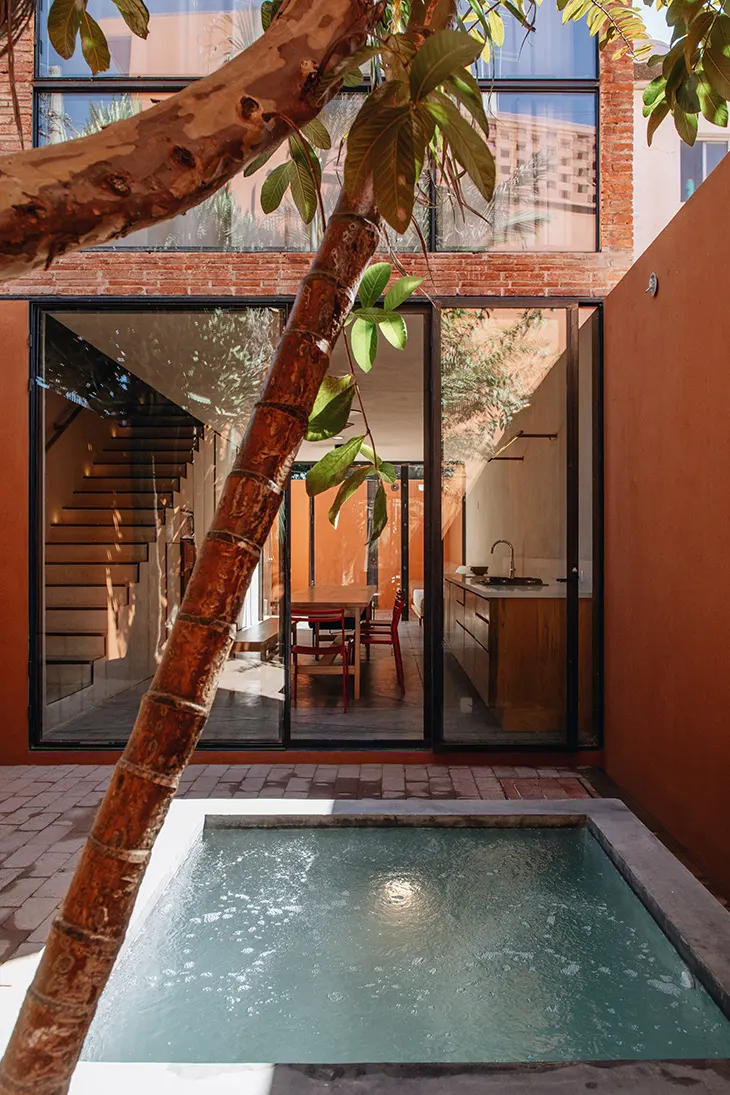
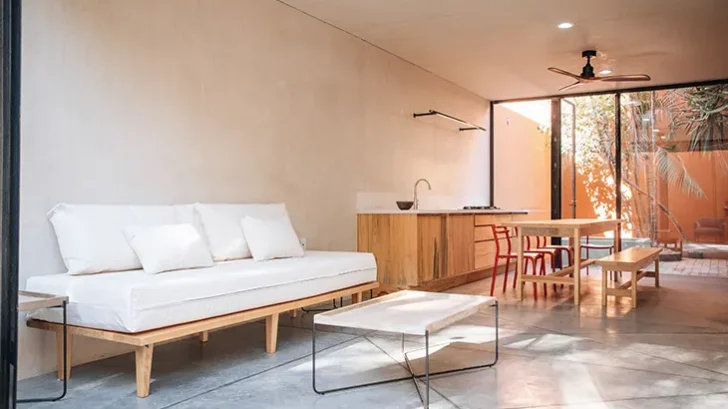
On the ground floor, existing walls were retained and reconfigured to form an open plan that brings together living room, dining area, and kitchen. Glass panels define the perimeter, extending shared space toward two compact gardens positioned at the front and rear. These patios function as environmental regulators, enabling cross-ventilation while maintaining visual continuity across the interior. Social life unfolds on this level, supported by light, air, and an uninterrupted sequence of spaces.
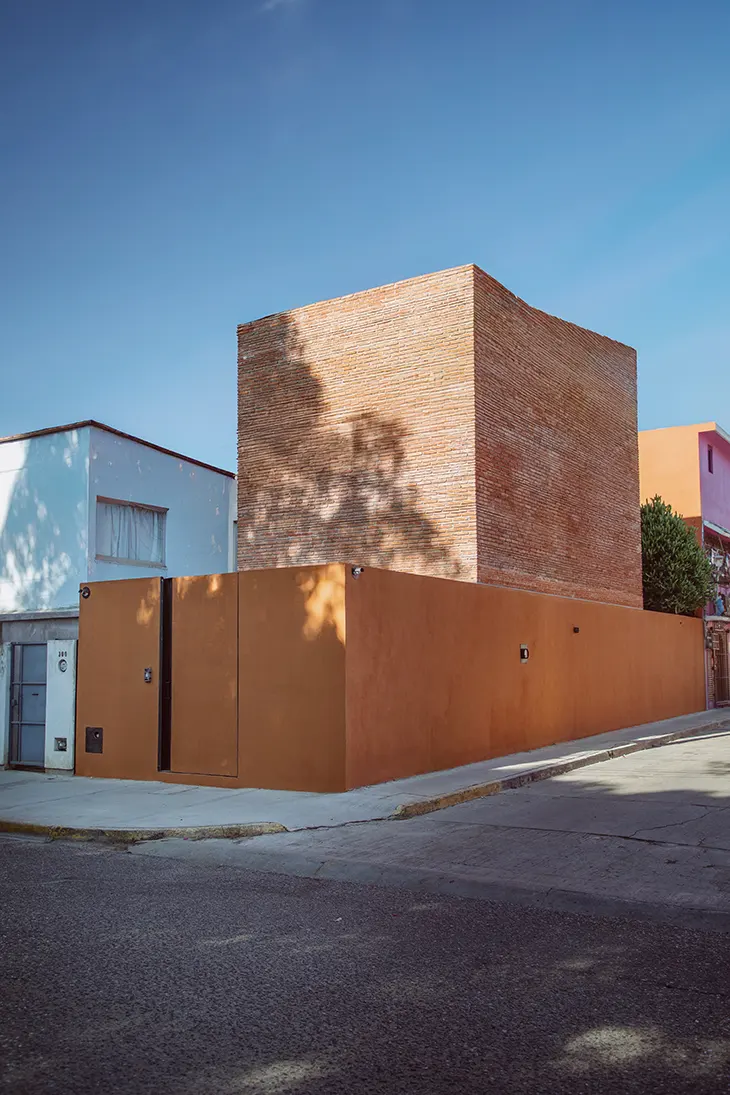
Above, a solid brick volume contains the private program. This upper level concentrates bedrooms and intimate areas, offering thermal protection and reduced exposure to the surrounding context. The domestic order remains legible throughout the house: openness and exchange below, quiet and retreat above. The architecture avoids excess and relies instead on proportion, rhythm, and construction logic to establish character.
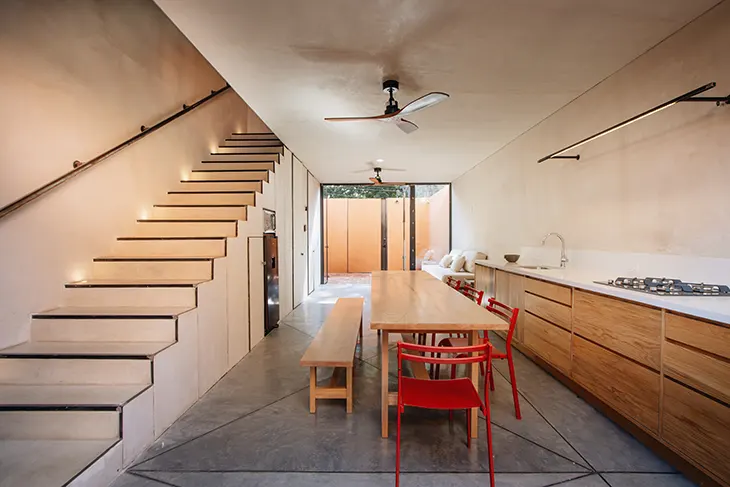
With a footprint of just 32 square meters on a plot of nearly 60 square meters, efficiency guides every decision. Circulation corridors disappear, partitions are minimized, and routes compress into direct, purposeful paths. The program accommodates two bedrooms, including a mezzanine that functions as a secondary room, distributed across two and a half levels. Despite its size, the house reads as expansive due to visual continuity and careful control of natural light.
Material choices remain direct and unpretentious. Brick, concrete, wood, and ironwork form the project’s structural and atmospheric language. Brickwork on the upper level filters sunlight and views. Concrete introduces mass and thermal stability. Wood and iron refine points of contact and daily use. Expressiveness emerges from construction itself, allowing light and shadow to animate surfaces throughout the day. Finishes avoid concealment, favoring materials that mature through use.
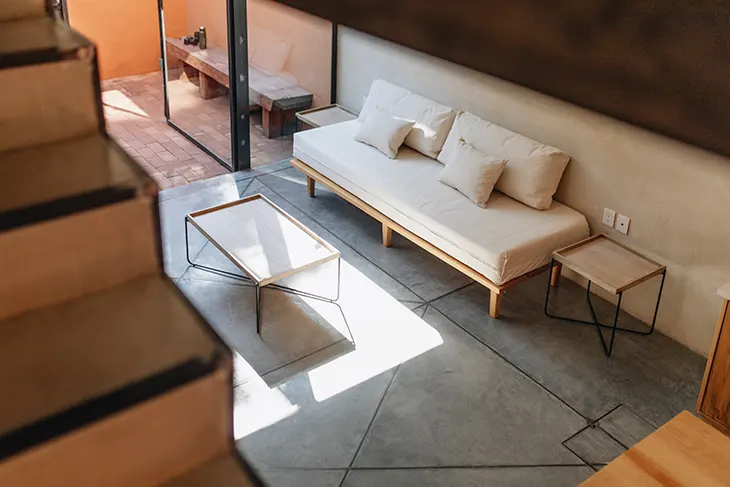
Inside, RootStudio adopts a warm form of minimalism that privileges spatial coherence over objects. Natural light organizes movement and temperature, while artificial lighting remains adjustable and subdued, supporting daily routines without visual dominance. The interior atmosphere feels calm, deliberate, and resilient.
More than a refurbishment, the project offers a clear position on domestic architecture. By working with what already exists and focusing on essential needs, RootStudio presents a replicable approach that demonstrates how careful design decisions can meaningfully improve everyday living, even within tight constraints.