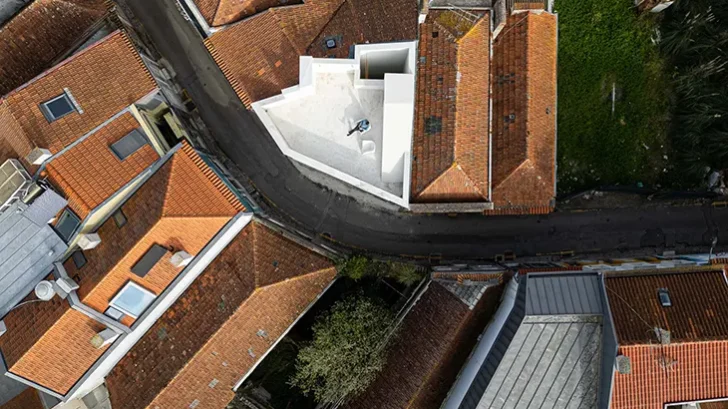

Paulo Martins Arquitectura e Design presents Beira Mar II, a compact house set within the dense fabric of Aveiro’s Beira Mar district. The project begins with constraint. Streets shift, plots compress, and the site resists regular geometry. The design accepts this condition without correction. It builds from it, using the irregular plot as the starting point rather than a problem to resolve.
HOUSING
The house develops through a clear tension between the surrounding urban fabric and a controlled architectural language. The neighbourhood reads as organic and layered, shaped over time. The project responds with precision. Lines remain firm, alignments direct, and geometry legible. This clarity does not detach the building from its context. It establishes a dialogue that reads through proportion, scale, and surface.
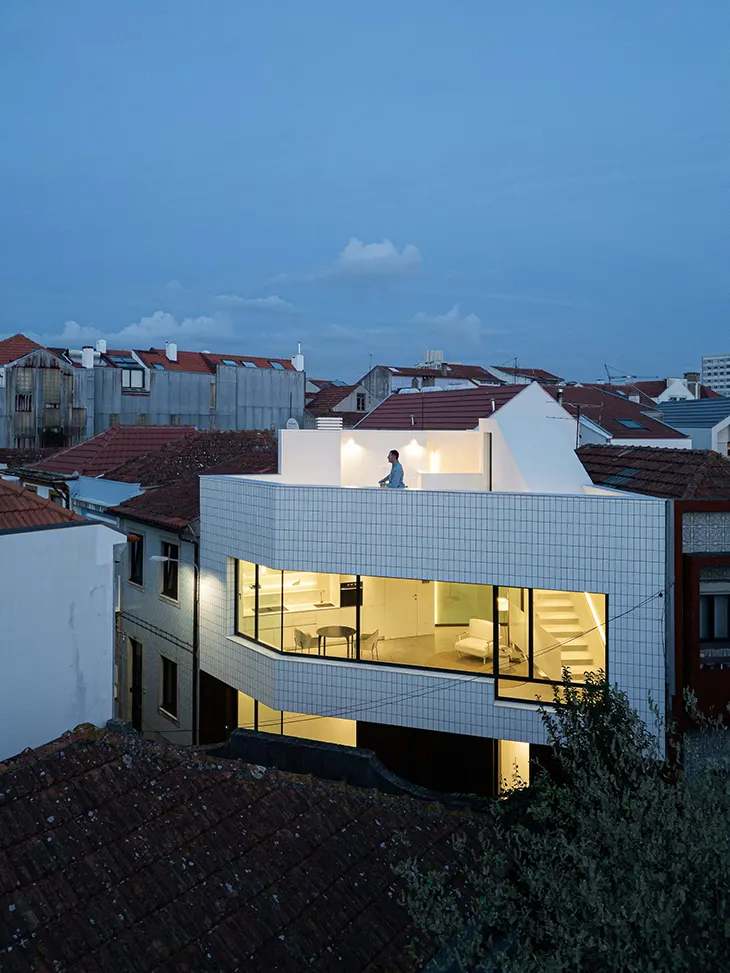
At street level, wood defines the first contact. The material introduces a tactile presence that engages passersby. It avoids distance. Above, the façade shifts into a white ceramic surface that recalls Aveiro’s azulejo tradition without repeating it. The reference stays abstract. The surface holds memory while remaining quiet, almost reduced to a texture of light and reflection.
The internal organisation follows a vertical logic tied to light. Bedrooms occupy the ground floor, contained and stable. The social space rises above, opening toward the west. A large glazed plane extends the interior outward, allowing light to move through the space across the day. The house does not rely on size. It relies on positioning, orientation, and the careful placement of openings.
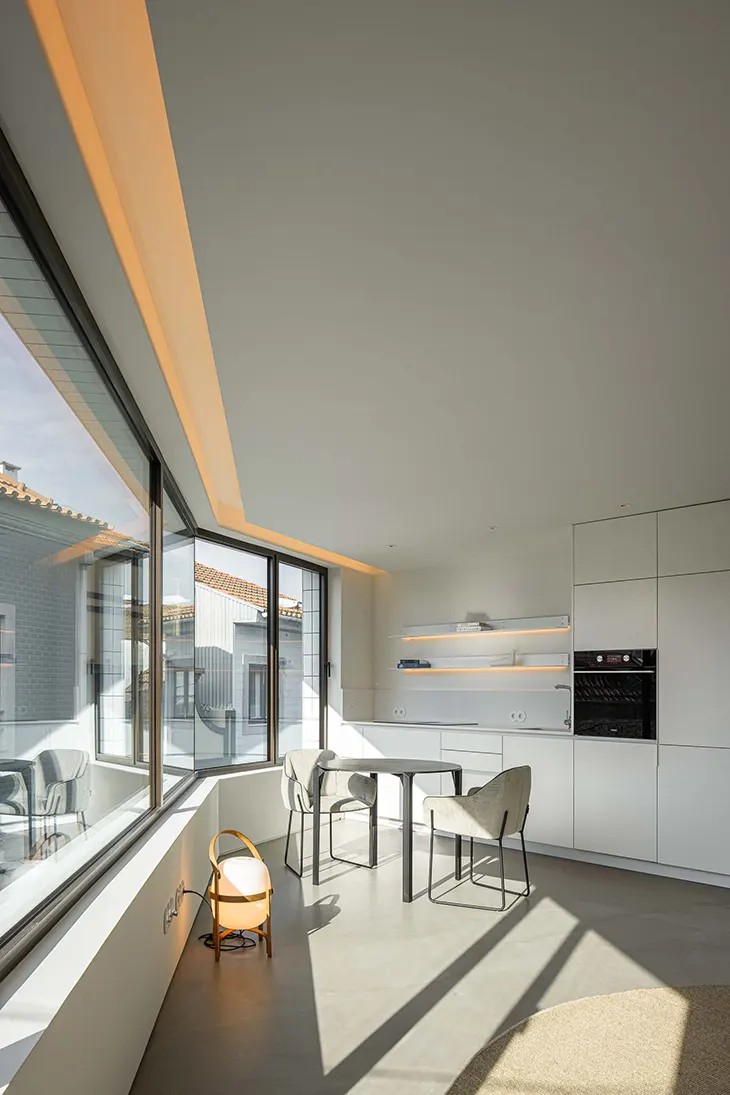
A vertical patio cuts through the depth of the plan. This element draws the sky into the interior, establishing a controlled relationship with light and air. A line of light moves across the space as a spatial device, directing movement and shifting perception. The effect remains subtle yet constant, shaping how the house is experienced rather than how it is described.
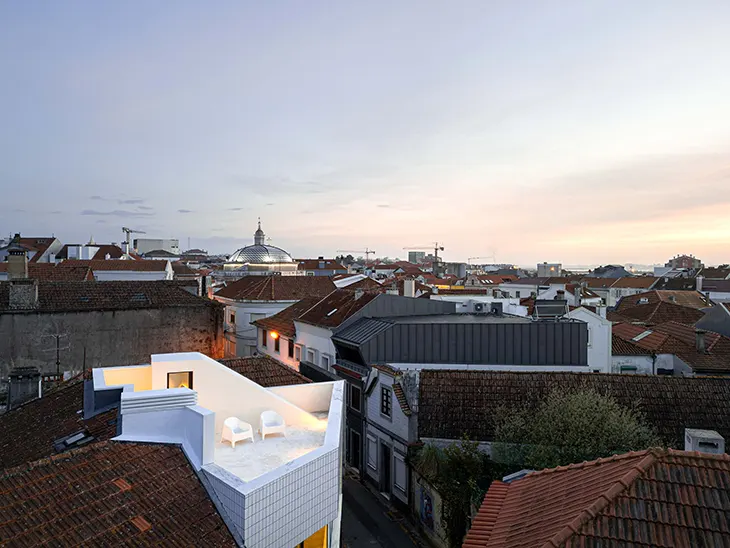
At the top level, the terrace functions as an extension of the interior sequence. It frames the city without isolating it. The dome of São Gonçalinho anchors the horizon, while the distant salt pans reflect the tones of the sunset. This elevated position introduces distance from the street without disconnecting from it. The house holds both proximity and separation within a single structure.
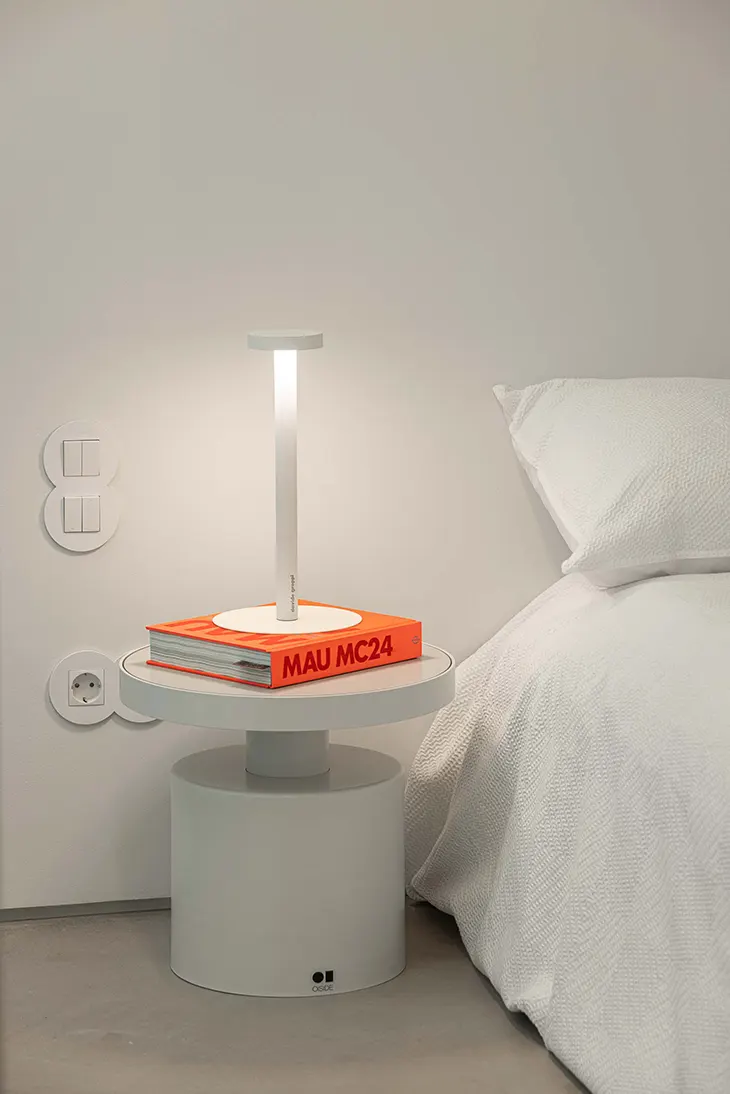
Inside, the material palette stays reduced. Spaces remain open and adaptable, allowing use to shift over time. The project does not rely on accumulation. It focuses on precision. With 98 square metres built on a 51 square metre plot, Beira Mar II demonstrates how constraint can define structure, light, and spatial sequence without excess.