
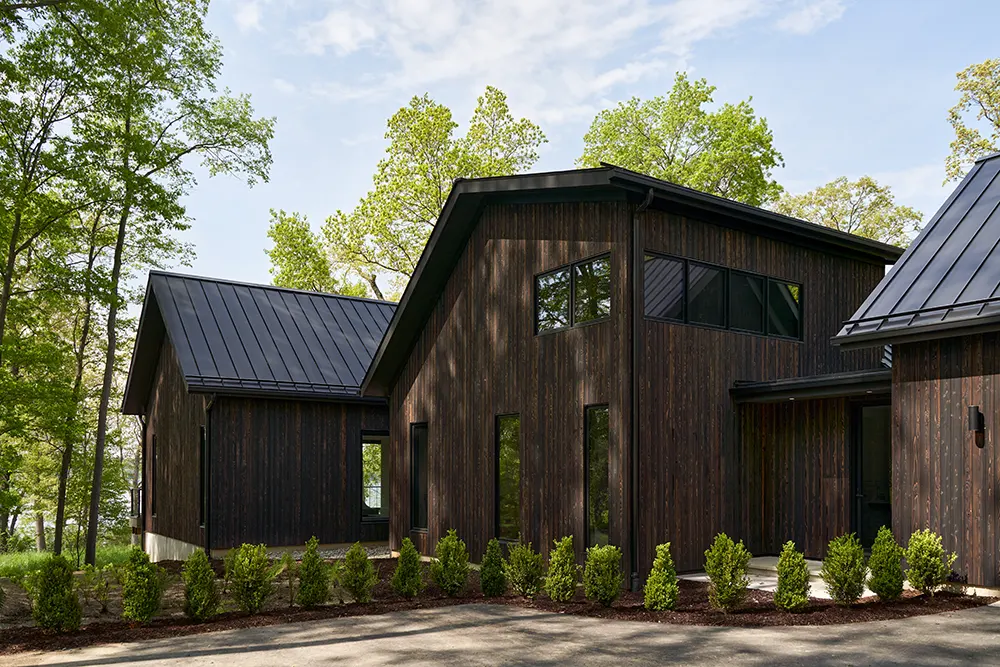
Disbrow Iannuzzi designs Baw Beese House in Hillsdale, Michigan as a lakeside retreat built to support several generations of one family. The project responds to social, familial, community, economic, and health needs through a structure that allows relatives to gather or separate as required. This approach gives each family member the ability to visit for long or short periods without occupying more space than they need.
HOUSING
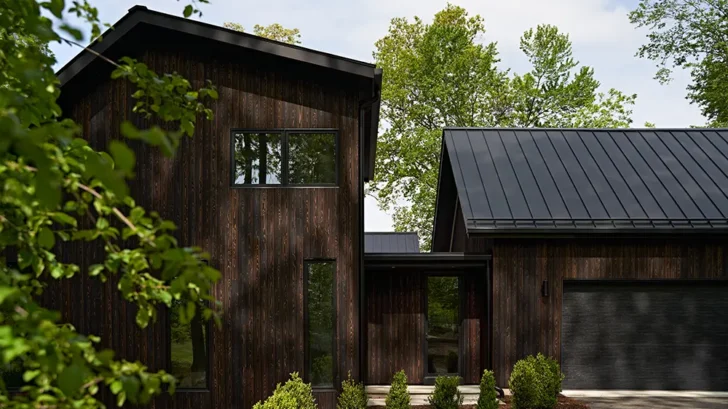
The house divides into four smaller volumes to reduce its visual impact and scale. Aside from the garage, three of the volumes function as individual cabins. Each one operates independently or in combination with the others, depending on which relatives are present. One cabin is dedicated to the family’s matriarch, who often travels alone. Her section includes a compact kitchenette, a sitting area, a bedroom, a bathroom, and storage. It faces Baw Beese Lake and allows her to use the home without opening the rest of the structure.
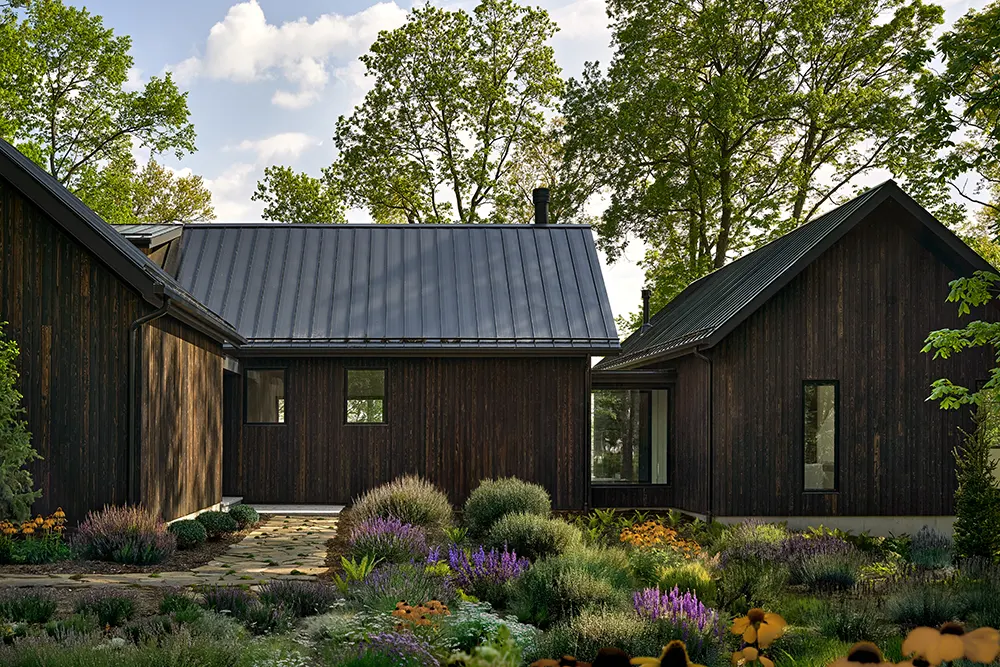
A second cabin serves her daughter’s young family of four. It includes two bedrooms, two bathrooms, dedicated HVAC, and storage. This gives the younger generation a self-contained area that fits their needs while staying close to extended relatives. The third and largest volume holds the main kitchen and living room, a guest suite, and a lofted work space. It functions as a flexible live-work zone for smaller visits and becomes a shared gathering place when the full family arrives with friends for group weekends.
Glass corridors link the volumes and create light-filled passages that support circulation between the cabins. The entire project focuses on aging-in-place principles, which guide the choice to keep a single floor level across all volumes. As the ground drops toward Baw Beese Lake, the house appears to hover above the descending terrain, keeping mobility simple and consistent for all age groups.
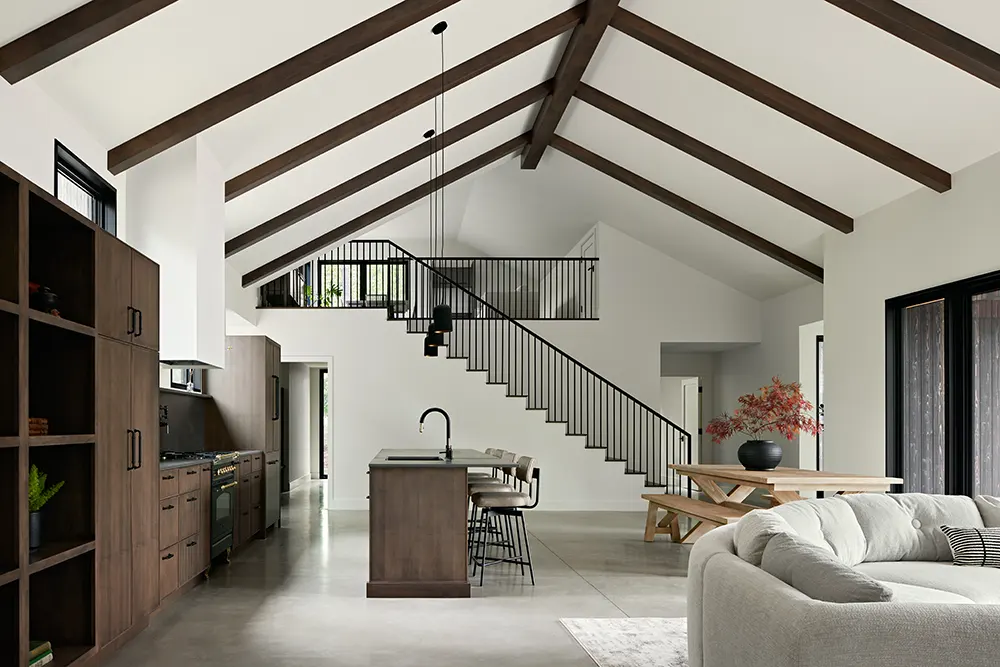
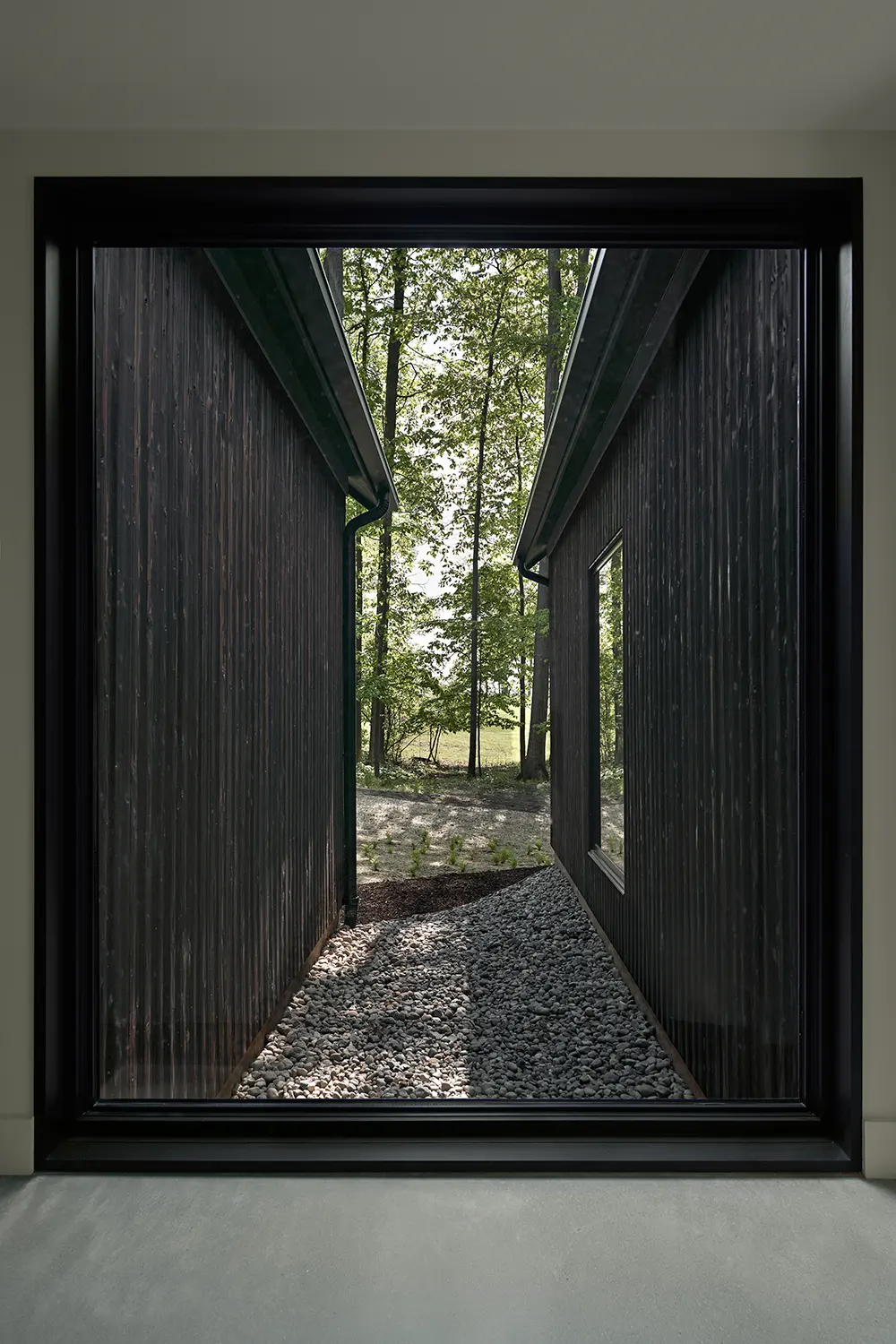
The exterior uses dark shou sugi ban wood, giving the cabins a uniform character that minimizes visual distraction and strengthens a sense of continuity. Inside, oak rafters span tall ceilings and long distances, and these elements stand out against white walls and functional artisan furniture. Concrete floors anchor the interior and connect the home to the sloping glacial site.
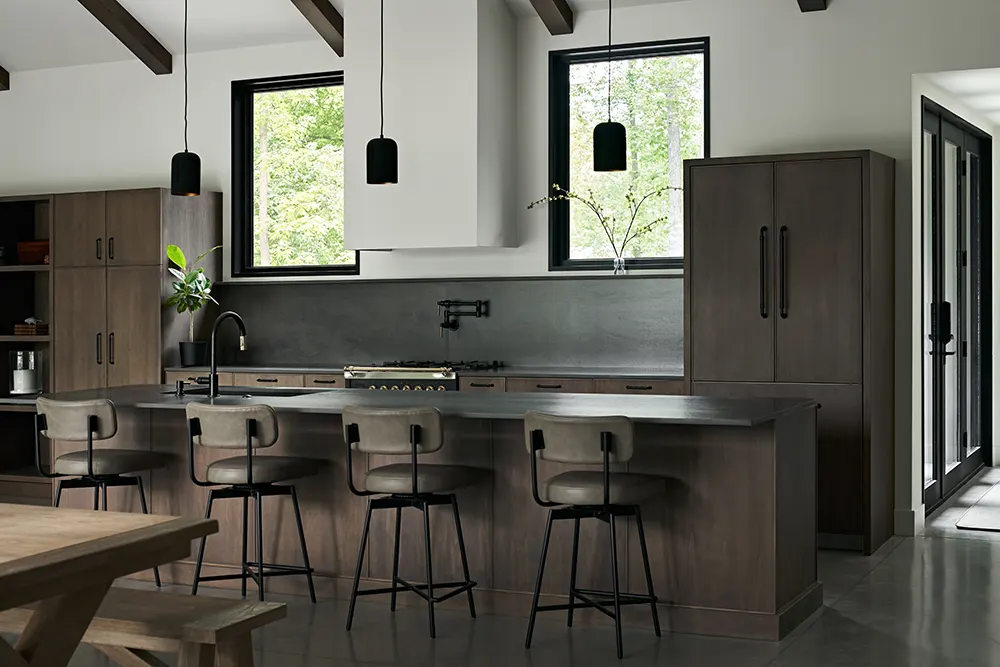
Environmental considerations guide the engineering of the home. The structure sits on the site with limited disturbance, and its construction choices aim to reduce the carbon footprint. Hydronic radiant heat embedded in the concrete floors serves as a thermal battery, removing the need for gas-fired furnaces. The polished concrete floors also reduce clutter and eliminate the need for additional finishes. High-performance wool insulation manages moisture and regulates interior temperature. Responsible sourcing supports the shou sugi ban siding, which performs well in outdoor conditions.
A standing seam steel roof provides a low-maintenance solution suited to a remote location. Luxury high-performance windows complete the building envelope and support energy efficiency. These decisions create a healthy environment with improved air quality and stable comfort year-round.
Project Name: Baw Beese House
Location: Hillsdale, Michigan, USA
Size: 4,300 square feet
Architect: Disbrow Iannuzzi Architects
Status: Completed April 2024
Builder: Giraffe Design Build
Photography: Round Three Photography