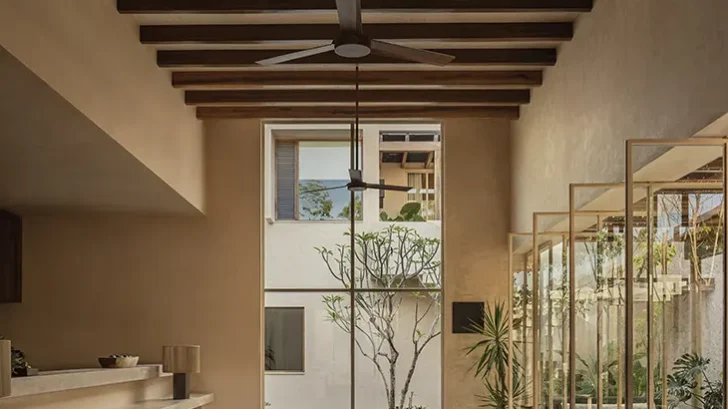

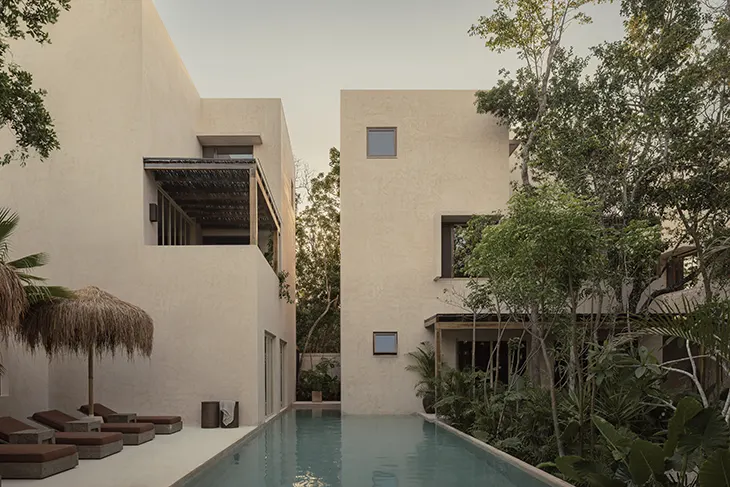
Set within a 2,500-square-meter stretch of jungle, NABOA Tulum presents a compact hospitality project where architecture, interiors, and landscape operate as a single system. Designed by Jaque Studio, with interiors by Studio Wenden and landscape architecture by Hugo Sánchez Paisaje, the 10-suite boutique hotel proposes a quiet retreat shaped by precise volumes, open-air circulation, and a restrained material palette rooted in the Yucatán region.
HOTELS
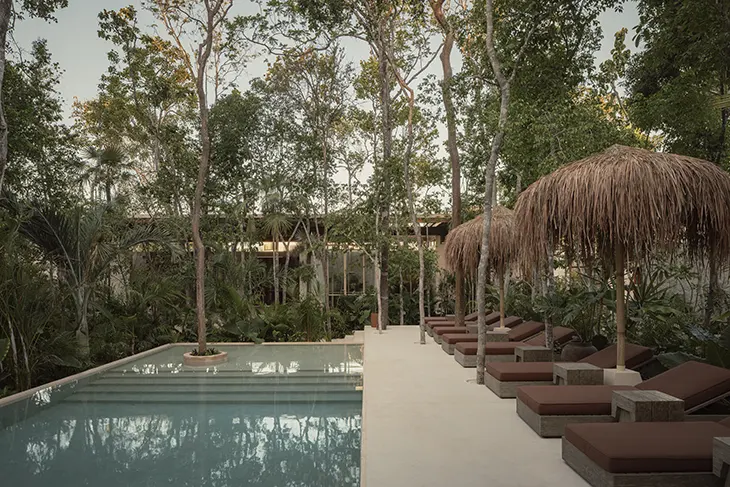
The project is organized around a clear spatial logic. On a square site, the built volumes align along a longitudinal pool and tropical garden that form the central axis of the hotel. This internal courtyard concentrates daily activity while directing all views inward, creating a contained environment that feels protected from the surrounding density of vegetation. The architecture relies on stacked, rectilinear forms that contrast with the irregularity of the jungle canopy, reinforcing the idea of a controlled oasis where movement unfolds through shaded paths, stone walls, and carefully positioned openings.
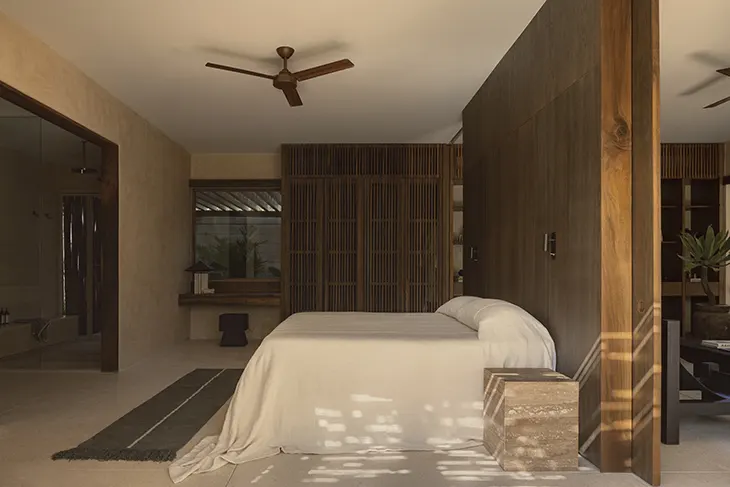
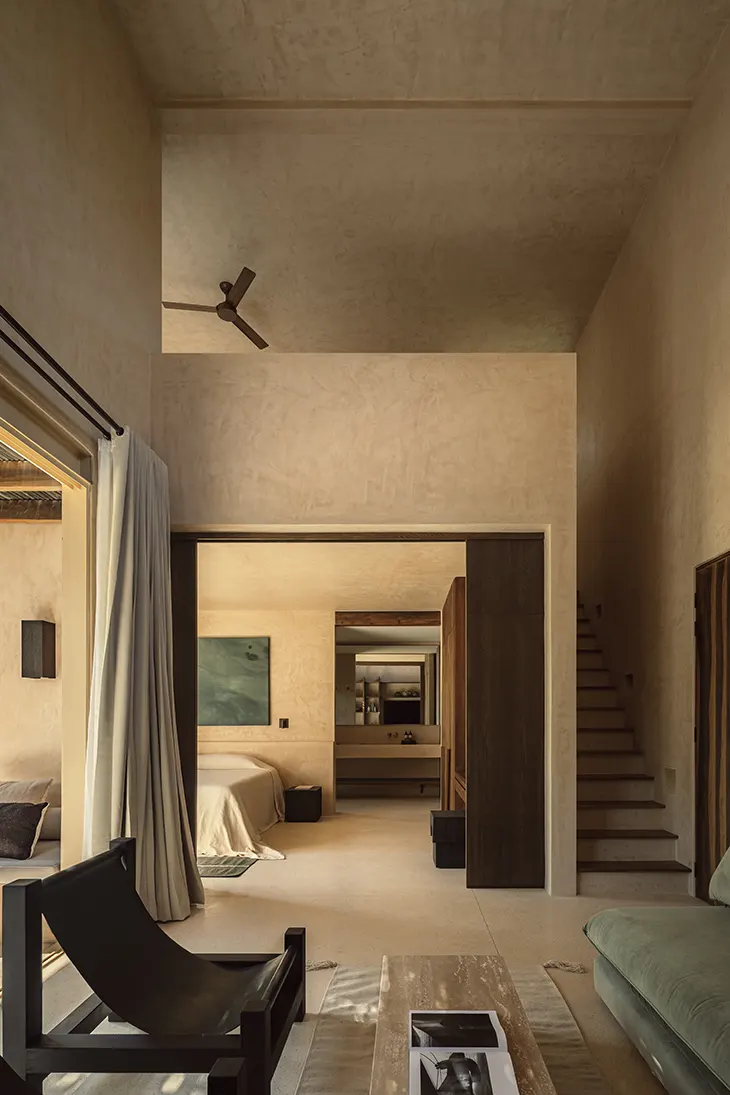
Accommodation is limited to ten suites, allowing the hotel to maintain an intimate scale. Two main typologies structure the layout. On the ground floor, six one-bedroom suites extend horizontally, each with a private terrace and indoor–outdoor bathroom opening directly onto the garden. Above, four suites are arranged around a double-height social space, with a mezzanine level housing two bedrooms and full bathrooms. Among these, the Tropical Suite distinguishes itself through a sculptural bathtub and private pool, elements that strengthen the relationship between interior space and the surrounding landscape.
Environmental comfort is achieved through passive strategies rather than reliance on mechanical systems. Generous ceiling heights, cross ventilation, and the precise orientation of openings support continuous airflow and daylight, responding directly to Tulum’s warm and humid climate. Open-air corridors and shaded areas further reduce heat gain while encouraging a slower, more deliberate rhythm of movement through the site.
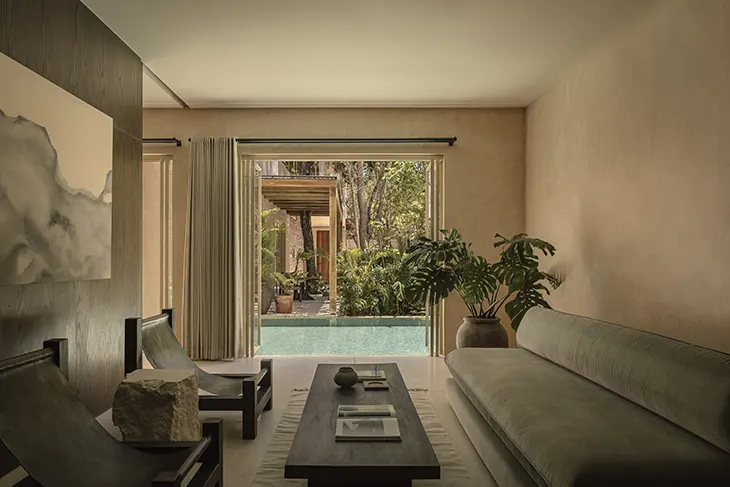
The hotel’s shared spaces are conceived as lightweight structures that define circulation and social life without interrupting the landscape. The lobby appears as a linear volume set on a concrete and chukum base, topped by a wooden roof that seems to hover among the trees, supported by slender columns integrated into the vegetation. The restaurant rises as a double-height space with an open kitchen and an elevated terrace overlooking the pool and garden. These areas are complemented by a yoga studio, outdoor lounges, and walkways that maintain constant visual and physical contact with the natural surroundings.
Material choices play a central role in shaping the atmosphere. Chukum, a traditional Yucatán finish, coats walls and surfaces, giving the architecture a warm, mineral texture. Limestone and travertine appear across floors, steps, and plinths, while wood structures and carpentry introduce rhythm and warmth to ceilings, pergolas, and built-in furniture. Filtered light passing through the treetops animates these surfaces throughout the day, allowing water reflections and vegetation to remain visually dominant.
Studio Wenden’s interior approach extends this sense of calm through a carefully edited selection of furniture and objects. Solid-wood pieces with clean profiles, low seating in muted green and sand tones, and dark tables ground each room. Integrated shelving displays ceramics, books, and restrained artworks, while soft curtains, organic-fiber bedding, and indirect lighting create a gentle transition between day and night. Bathrooms, some featuring sculpted tubs and outdoor showers, are conceived as open yet private spaces where the boundary between inside and outside dissolves gradually.
Sustainability strategies are embedded throughout the project. Preserving existing vegetation improves shading and moderates the microclimate, while compact volumes and open-air circulation support natural ventilation. Solar panels, LED lighting, smart controls, and low-consumption fans reduce energy demand, supported by a comprehensive water filtration and purification system. These elements remain discreet, allowing comfort and environmental awareness to coexist without visual emphasis.
NABOA Tulum emerges as a contemporary retreat defined by clarity, restraint, and attention to context. By aligning architecture, interiors, and landscape around local materials and passive design principles, the project offers an intimate model of hospitality that responds directly to Tulum’s climate and setting. Rather than positioning luxury as excess, NABOA frames it through space, silence, and proximity to nature, creating a place designed for pause, return, and sustained presence.