

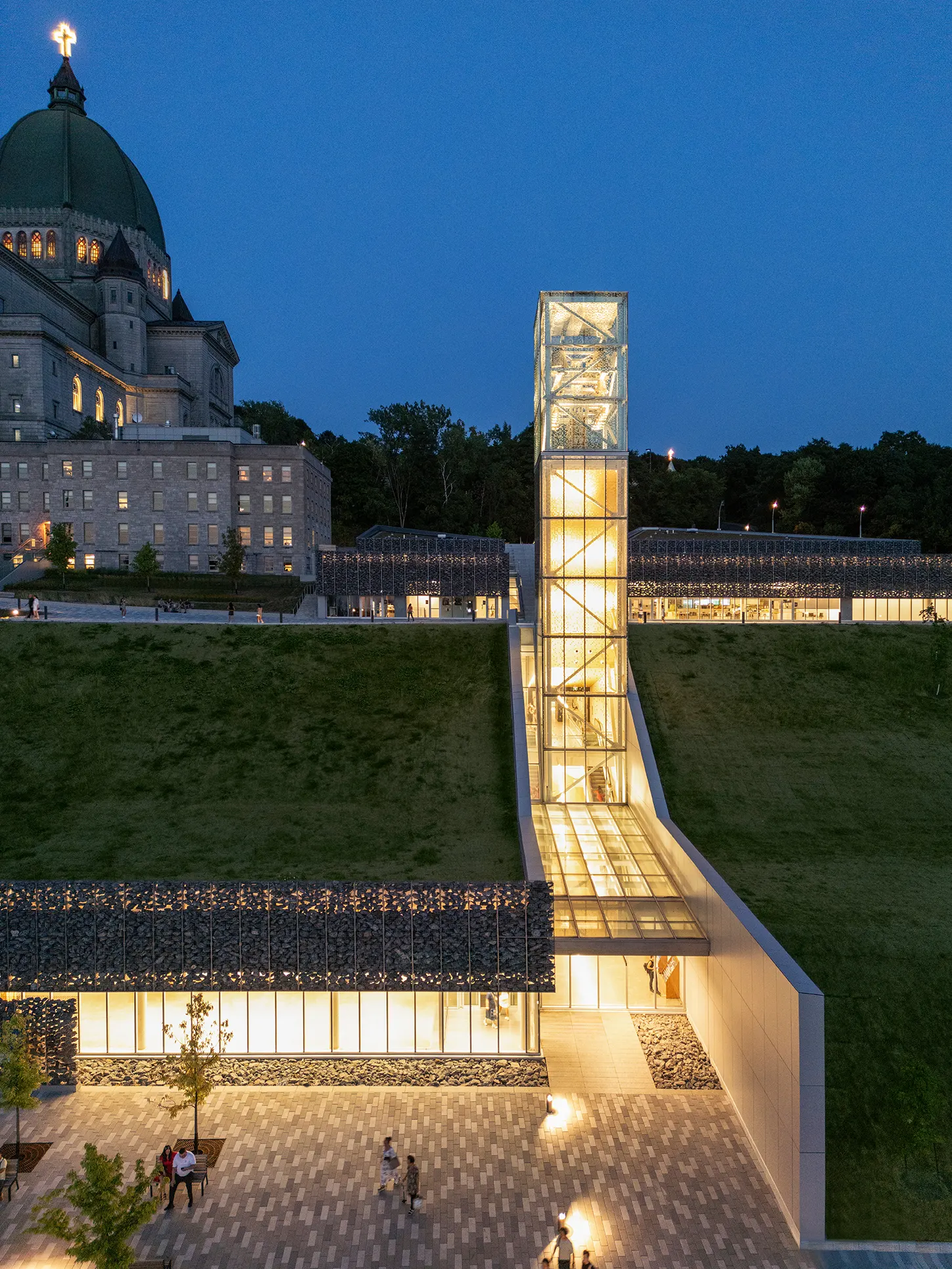
Lemay’s design for the new welcome pavilion at Saint Joseph’s Oratory achieves a delicate balance: it honors the site’s cultural heritage while embracing the needs of contemporary visitors. The pavilion’s luminous architecture, thoughtful material choices, and deep respect for place establish it as both a monument and an open threshold, a gateway that welcomes all who seek contemplation, connection, and discovery in one of Montreal’s most cherished landmarks.
RELATED: Montreal’s first vertical city designed by Lemay
Saint Joseph’s Oratory of Mount Royal, a revered sanctuary and architectural icon in Montreal (Canada), welcomes a transformative addition with the unveiling of its new welcome pavilion designed by Lemay architecture office. As the most visited religious and cultural site in Quebec, the Oratory draws over two million visitors each year, each seeking a space for contemplation, community, and awe. The new pavilion, completed in December 2025, is a luminous four-storey intervention that redefines the experience of arrival, blending heritage with a forward-looking vision.
Seamless Integration with Landscape and Heritage
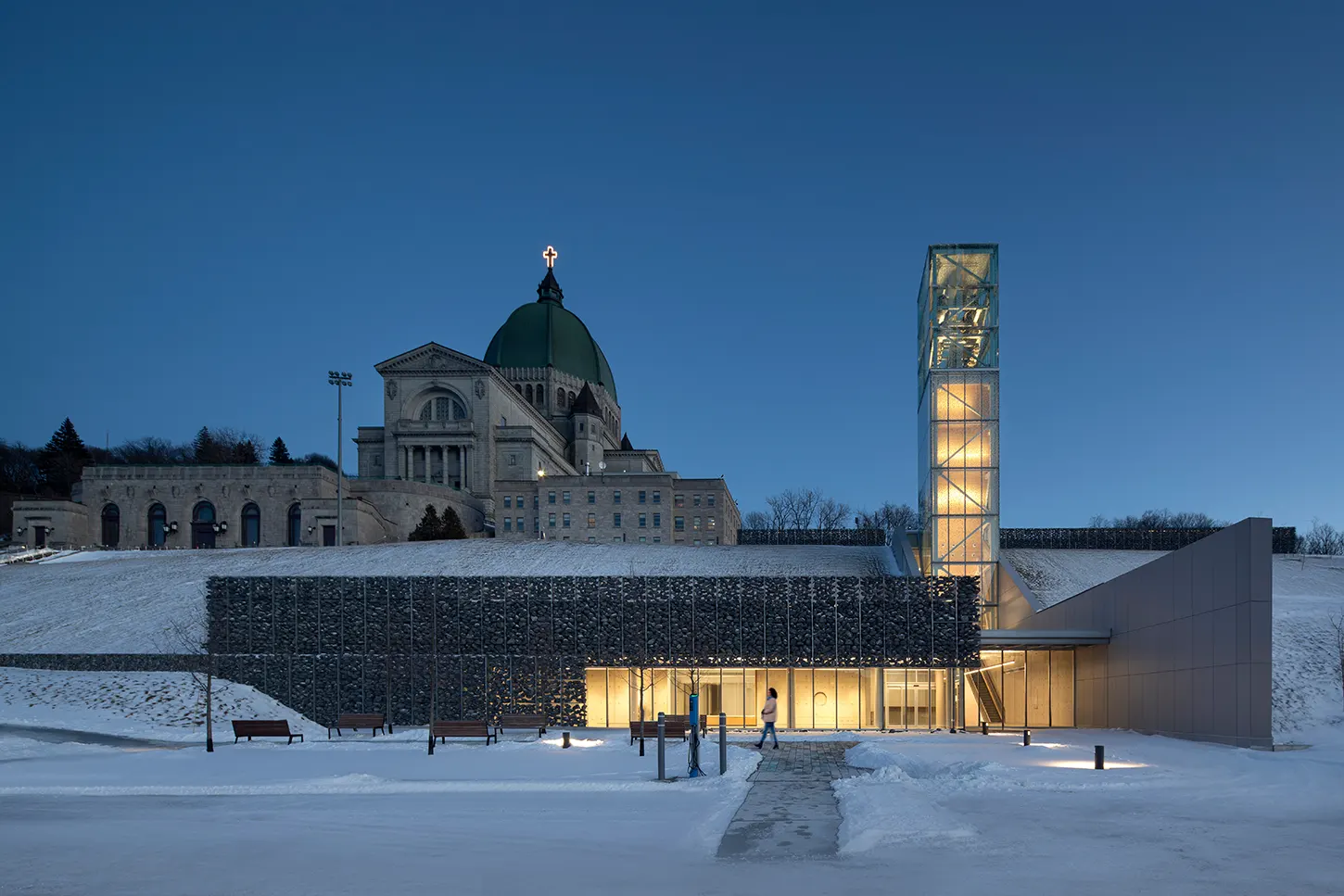
The pavilion’s design is rooted in the natural topography of Mount Royal, forging a seamless connection between built form and landscape. Lemay’s architectural approach extends the site’s master plan, in development since 2000, by choreographing a sequence of spaces that reinterpret the traditional pilgrimage journey. Visitors are guided through a progression that transforms movement into exploration, encouraging both reflection and discovery. The building’s material palette draws directly from the mountain: gabion walls constructed from excavated stone echo the Oratory’s historic foundation, while filtering natural light and evoking the spiritual resonance of stained glass. Terraced rooftops unfold as natural plateaus, framing panoramic views of the city and the monumental dome.
The Bell Tower: A Resonant Symbol
At the core of the pavilion’s identity stands a striking new bell tower, housing a 62-bell carillon. This vertical landmark serves as both an experiential instrument and a symbolic guide, its chimes marking the rhythm of passage for pilgrims and visitors alike. The interplay of sound, light, and materiality deepens the spiritual journey, with the bells’ resonant presence weaving a sensory narrative that connects past and present. The tower’s blend of wood and glass creates an ethereal atmosphere, reflecting both reverence for tradition and a commitment to contemporary design.
Universal Accessibility and Sustainable Design
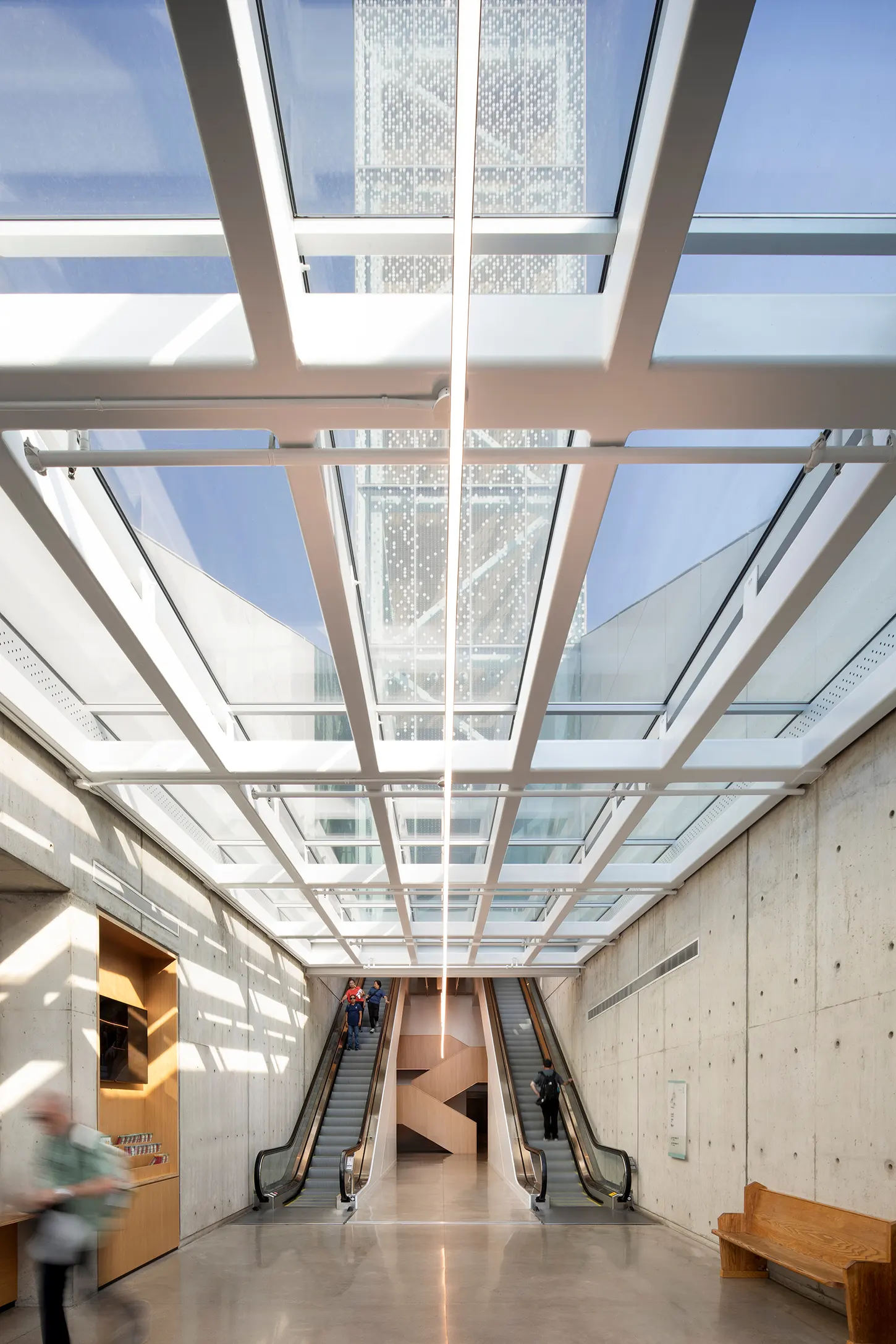
A defining feature of the pavilion is its dedication to universal accessibility. The architectural procession reinforces the ascendant journey of pilgrims while ensuring that all visitors, regardless of mobility, can engage with the site’s full experience. Sustainability is integral to the project’s ethos: the pavilion has achieved LEED Silver certification, with strategies that minimize environmental impact. Paved surfaces have been replaced with green spaces to reduce heat islands and boost biodiversity. High-performance insulation, energy-efficient lighting, and advanced ventilation systems contribute to a reduced carbon footprint, ensuring comfort without compromise.
Spaces for Contemplation, Community, and Wonder
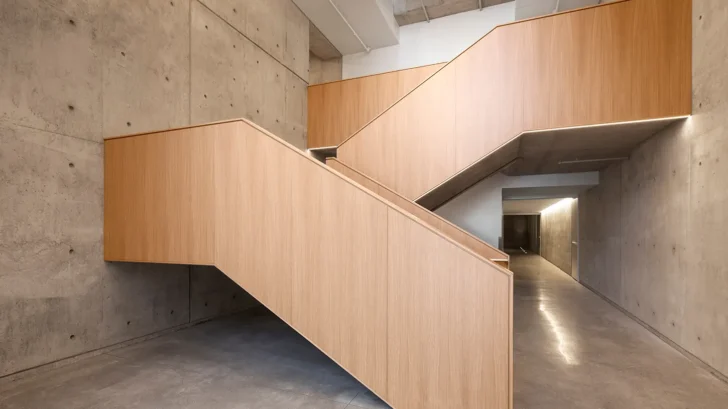
Inside, the pavilion offers a series of curated spaces designed to foster contemplation and engagement. The cafeteria, elevated above the landscape, provides sweeping views that invite moments of pause and appreciation. Newly established public squares and sacred gardens blend seamlessly with the building, encouraging quiet reflection and social connection. Skylights and illuminated ceilings establish a rhythmic flow, subtly guiding visitors and revealing glimpses of the surrounding context. This dynamic interplay between interior and exterior strengthens the building’s connection to its history and environment.
Discover more of the project in our gallery:
Architecture: Lemay – lemay.com
Landscape architecture: Version Paysage
Mechanical and electrical engineering: BPA
Structural engineering: ELEMA experts-conseils
Civil engineering: MHA
Vertical transportation consultant: KJA
Construction manager: Pomerleau
Carillon consultant: Patrick Macoska
Exterior lighting: Ombrages