
SOUR presents PUR on Cunda Island as a project that treats music production as a spatial and social act. The design positions the act of recording within a broader environment shaped by landscape, memory, and human exchange. The project builds on a clear premise: the space where music forms influences the result as much as the instruments or performers. PUR translates that premise into architecture, where every room, surface, and transition contributes to how sound and experience unfold.
HOTELS
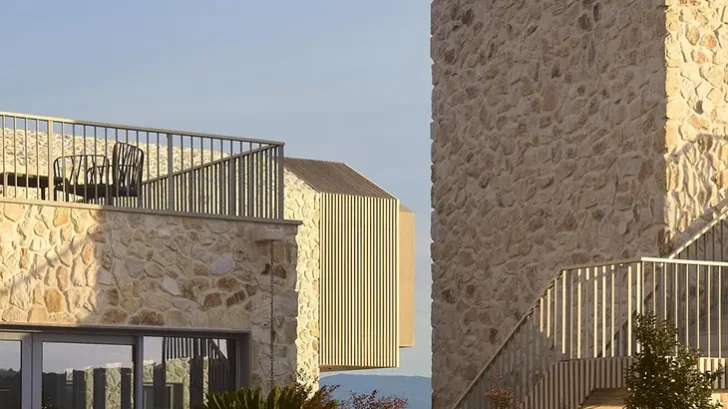
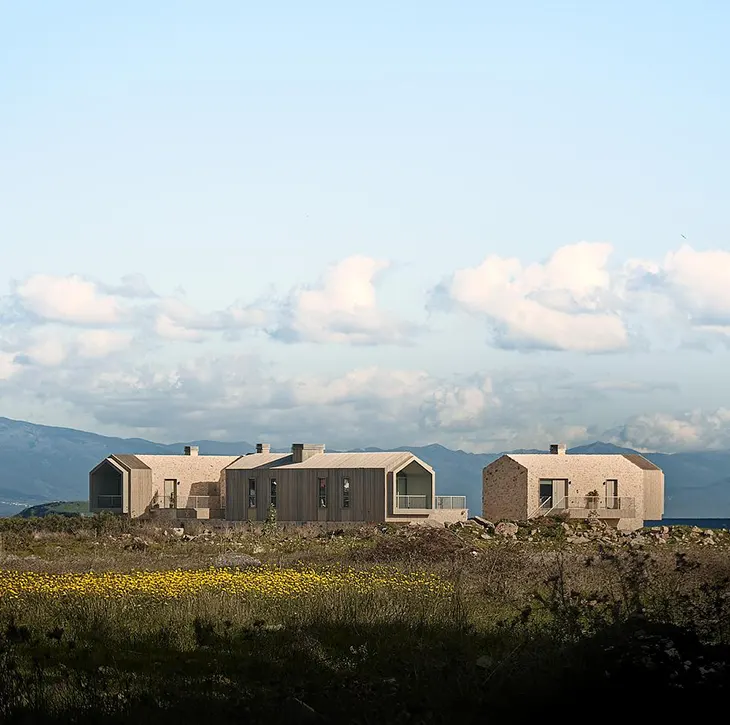
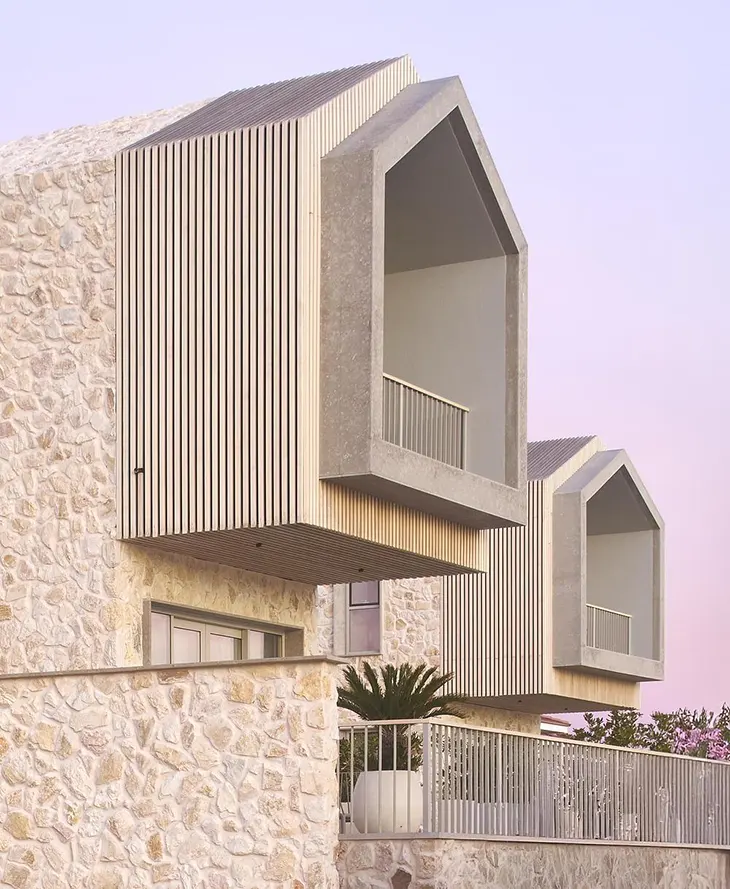
The building adopts a restrained, two-story composition that draws from Cunda’s masonry and timber construction. It respects the island’s architectural language while refining proportions and tectonics for contemporary use. This approach anchors the project in its immediate context, where olive trees, sea air, and wind shape daily life. The exterior maintains a sense of familiarity, while the interior introduces a calibrated sequence of acoustic environments. This contrast sets up a deliberate tension between place and performance.
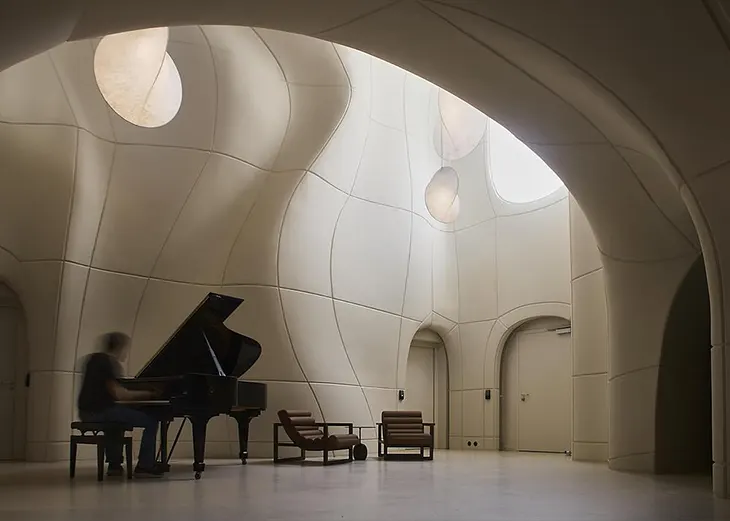
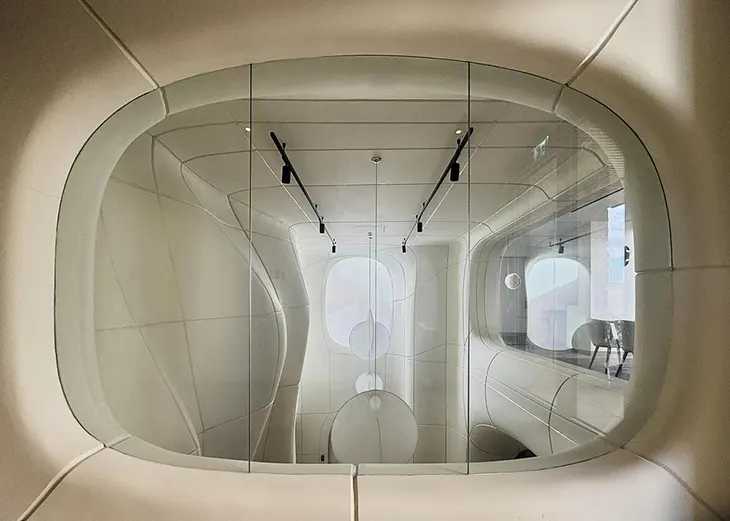
Inside, PUR organizes space as a progression of sound conditions. Each room carries distinct acoustic properties defined by volume, geometry, and material response. Variations in height, width, and surface treatment allow each space to produce a different sonic character. The architecture avoids neutral backdrops and instead acts as an active participant in recording. The GFRC shell marks a key threshold, guiding users from the calm of the island into a controlled acoustic setting. This transition reads as a spatial shift that mirrors how music travels across contexts and time.
The project extends this sequence through a vertical movement that leads to the Musician’s Lounge at a depth of ten meters. The descent introduces a cave-like atmosphere suited to focused work, yet the design maintains visual connections to the levels above. Natural light reaches the lower level, preventing isolation and preserving orientation within the building. The lounge connects directly to social spaces, including the restaurant and terraces, which reinforces the idea that production and gathering belong within the same spatial system.
The recording facilities operate with a high level of technical control. The studio includes live rooms, control room, vocal and percussion rooms, reverb chambers, editing suites, mastering suite, and a Dolby Atmos theater. A box-in-box construction system ensures acoustic isolation, allowing precise sound control. The main live room accommodates large ensembles, including orchestras of up to seventy-five musicians. Adjustable ceiling panels and variable wall systems enable real-time tuning of reverberation and reflection patterns. These elements allow the space to adapt to different recording needs without altering its core structure.
A double-height restaurant anchors the social dimension of the project. It connects interior and exterior zones, linking courts, lounges, terraces, and the shoreline. This arrangement supports continuous movement between work and leisure. The design avoids separating hospitality from production and instead treats both as interdependent. Artists and visitors share the same spatial network, which encourages interaction and exchange.
PUR develops through a co-design process that involves both international and local musicians. The design team translates specific needs into spatial decisions, including access to nature, areas for focused work, and spaces for retreat. These principles shape circulation, program distribution, and material choices. The project positions architecture as a framework for collaboration, where users actively influence the environment they inhabit.
SOUR frames PUR as infrastructure for cultural production. The project integrates local construction methods with advanced acoustic systems, allowing both to operate within the same architectural language. This approach positions the building as a working environment that supports creativity while maintaining a clear connection to its setting. PUR establishes a model where sound, space, and community operate as a unified system, grounded in both technical performance and lived experience.