
A protected garden rarely becomes the starting point of an architectural project in Paris. At 19 ADN, it does. The site contains a Japanese garden listed under local planning regulations, setting strict limits while opening a precise direction for development. DTACC Architectes treat this constraint as a generator, allowing the project to grow from the ground rather than impose itself onto it.
COMMERCIAL ARCHITECTURE
The result takes shape as a vertical extension of the garden. Instead of isolating the landscape at ground level, the design carries its presence upward through the building. This approach establishes a continuous relationship between nature and structure, where movement through the project follows a shift from garden to architecture rather than a clear separation between the two.
On the street side, the building aligns with the discipline of Parisian urban fabric. A restrained limestone façade establishes continuity with neighboring Haussmannian sequences. Horizontal lines define the composition, while recessed openings introduce depth through shadow rather than ornament. The façade maintains control, avoiding unnecessary variation while responding carefully to its context.
This controlled expression continues through a subtle reworking of surface relief. Openings read as carved niches, creating a measured play of light across the elevation. The building avoids excess contrast, relying instead on proportion and alignment to maintain coherence with its surroundings. The effect remains quiet yet precise.
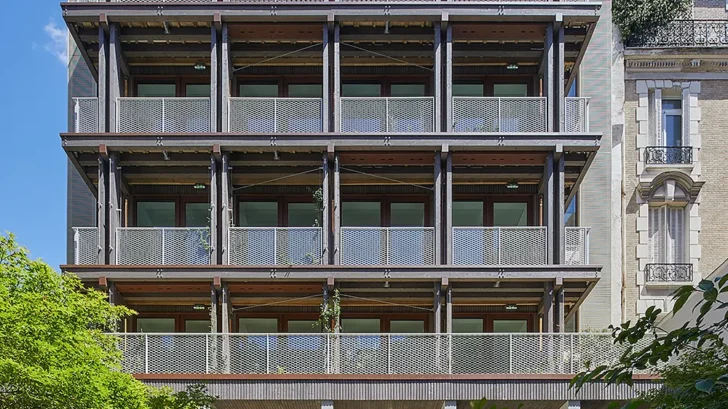
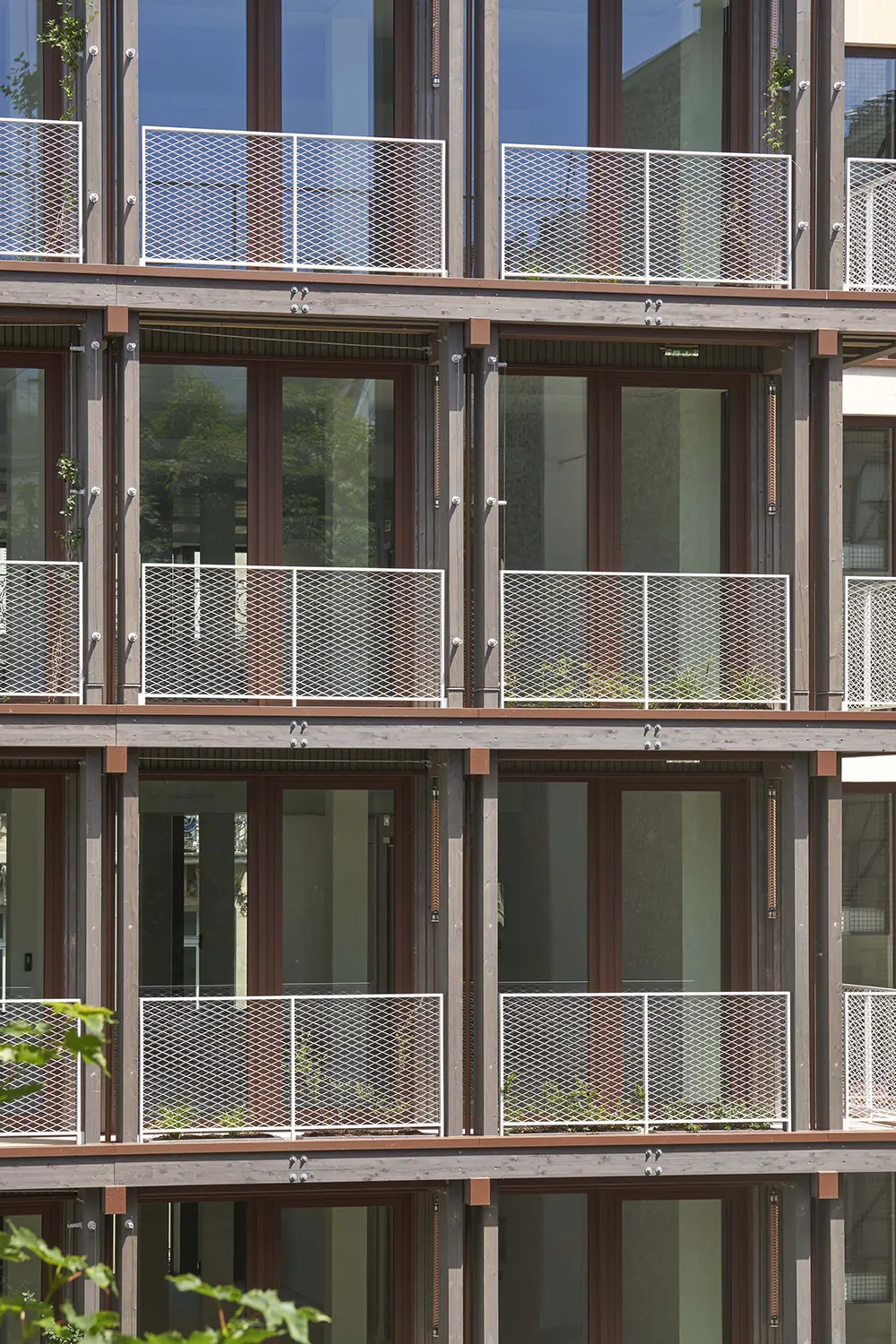
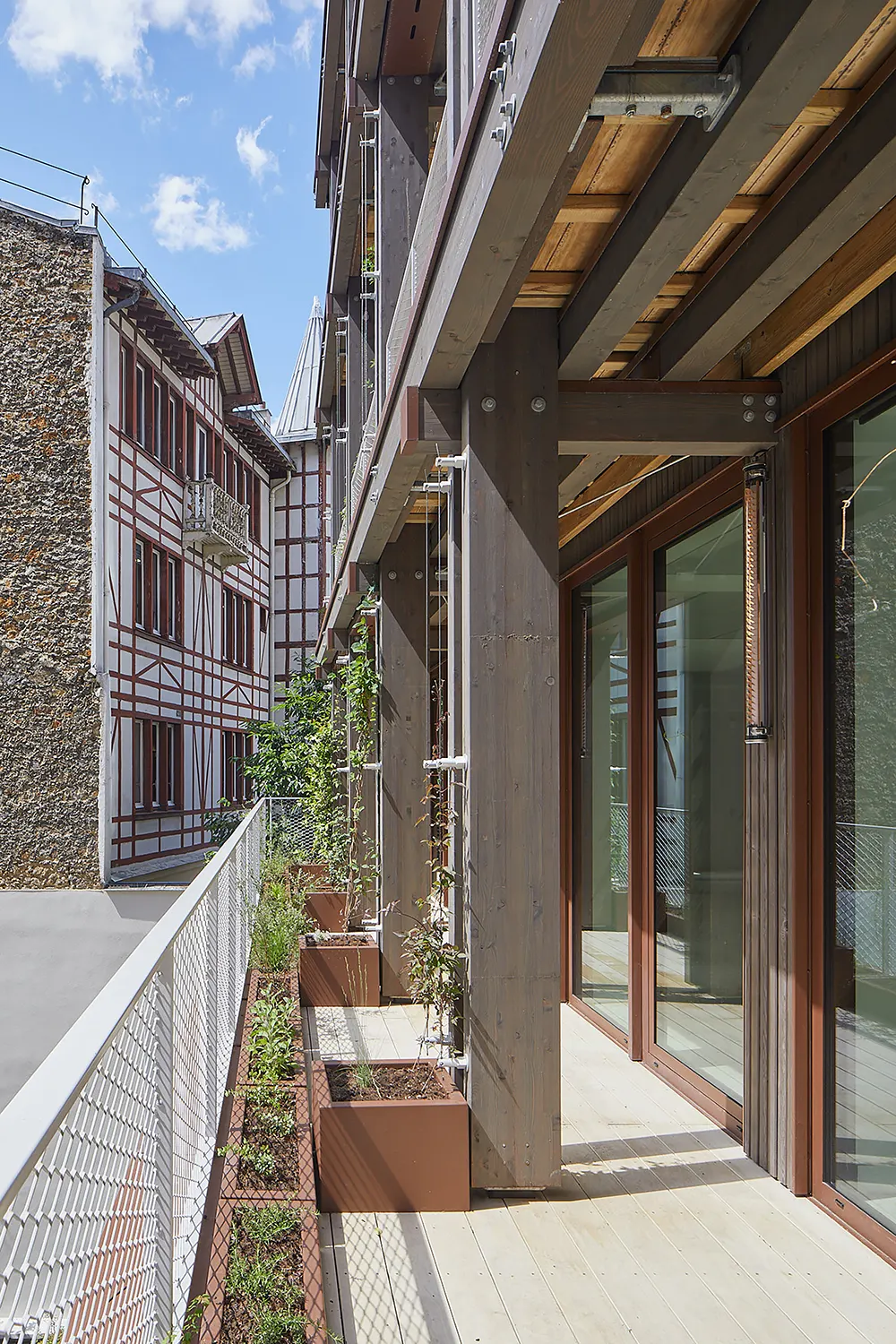
The courtyard façade shifts the architectural language. Here, the project adopts a lightweight wooden structure, drawing directly from Japanese construction principles. Post-and-beam elements define the extension, creating a more open and permeable relationship with the garden. This side of the building operates with greater flexibility, allowing terraces and planted elements to extend outward.
Material contrast reinforces this dual condition. Limestone anchors the street-facing volume, while timber introduces warmth and adaptability toward the interior. Metal elements and integrated planters further articulate the façade, allowing vegetation to become part of the architectural system rather than an applied feature. The palette remains limited, maintaining clarity across both elevations.
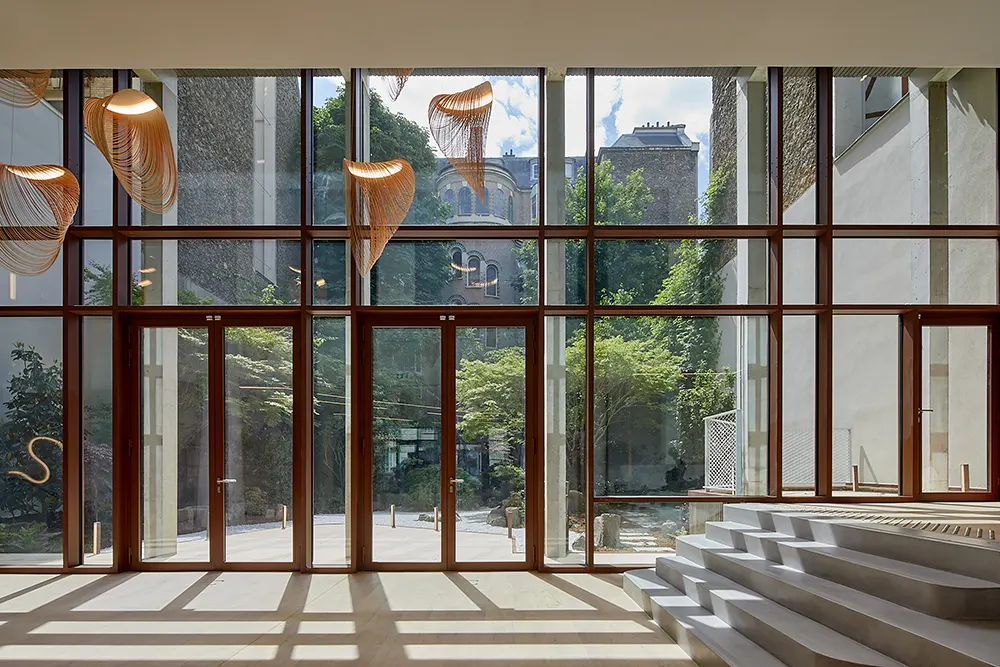
Internally, the project follows the same logic of continuity. Spaces respond to the exterior through controlled transparency, allowing views toward the garden and terraces. Circulation aligns with the vertical movement introduced by the initial concept, linking ground, intermediate levels, and rooftop into a single sequence.
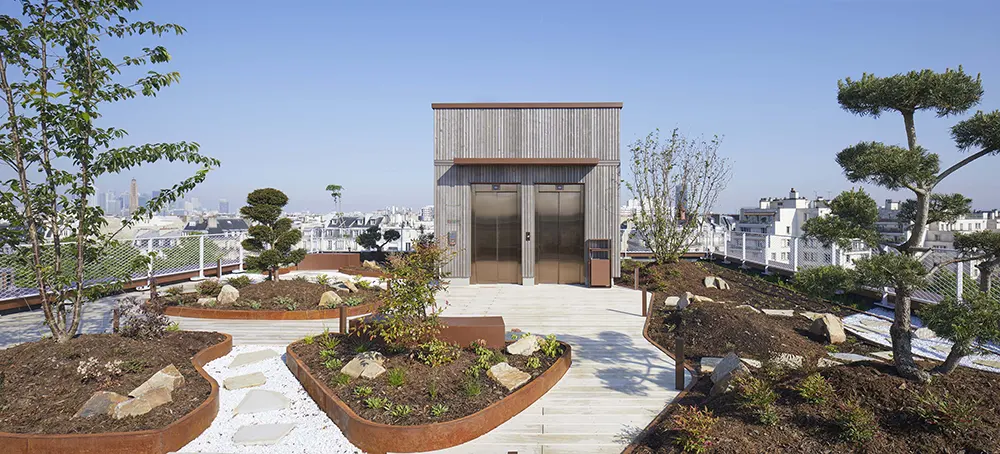
The rooftop extends this idea further. Designed as an event space, it completes the upward trajectory of the garden, offering a final point of connection between built form and open environment. This vertical progression reframes how the site is experienced, turning a ground-level feature into a defining spatial structure.
The project also integrates environmental considerations within its framework. The building achieves a BREEAM Excellent target, supported by its material choices, façade performance, and incorporation of vegetation. These strategies remain embedded within the architecture rather than treated as separate systems.
19 ADN operates through restraint and precision. It builds from a protected condition, limits its gestures, and focuses on continuity between landscape and structure. The project does not attempt to dominate its context. It reorganizes it, allowing a small garden to define an entire building.