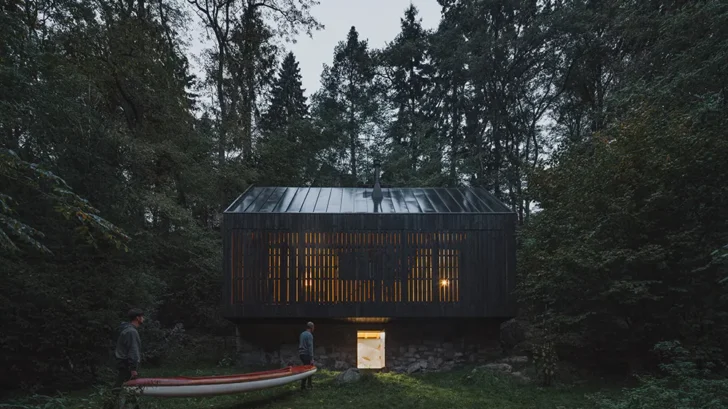

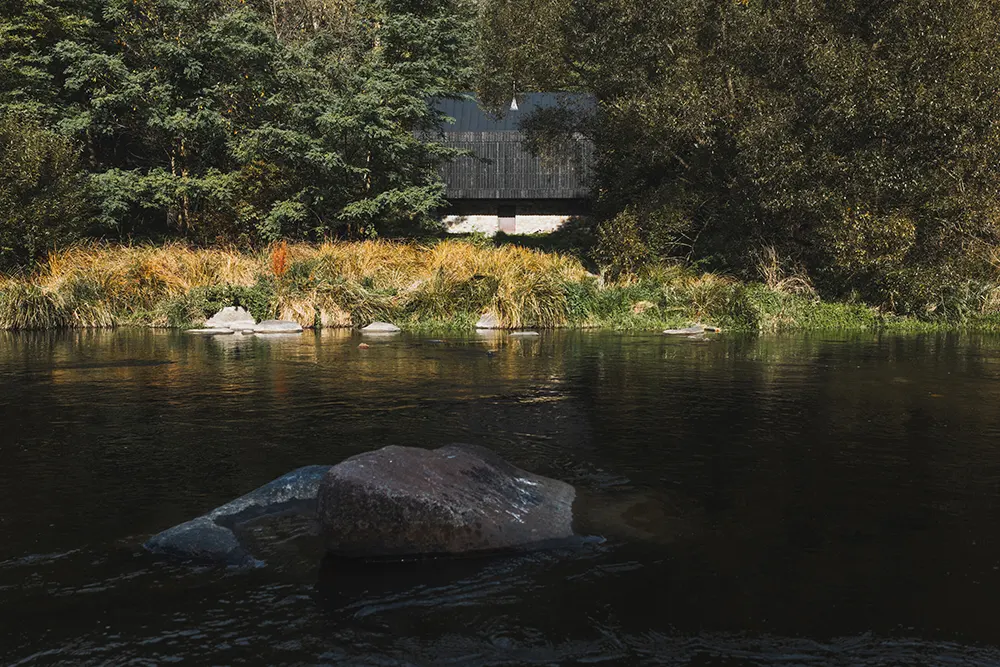
The site carries a clear memory. A previous cabin once stood here, before fire reduced it to a stone plinth. Mimosa Architects approach the project by accepting that condition rather than replacing it. The remaining base becomes the starting point for the new structure, anchoring it physically above the river while setting a measured distance from the landscape. The cabin sits between two forces, water in front and rock behind, and the design holds that tension without trying to resolve it.
HOUSING
This position defines the experience from the outset. The river draws attention outward, with open views and constant movement, while the cliffs behind close the space and establish a sense of enclosure. The cabin does not attempt to compete with either condition. Instead, it frames both directions, allowing the occupant to shift focus between exposure and protection. The project works through this balance, offering a controlled retreat that remains closely tied to its surroundings.
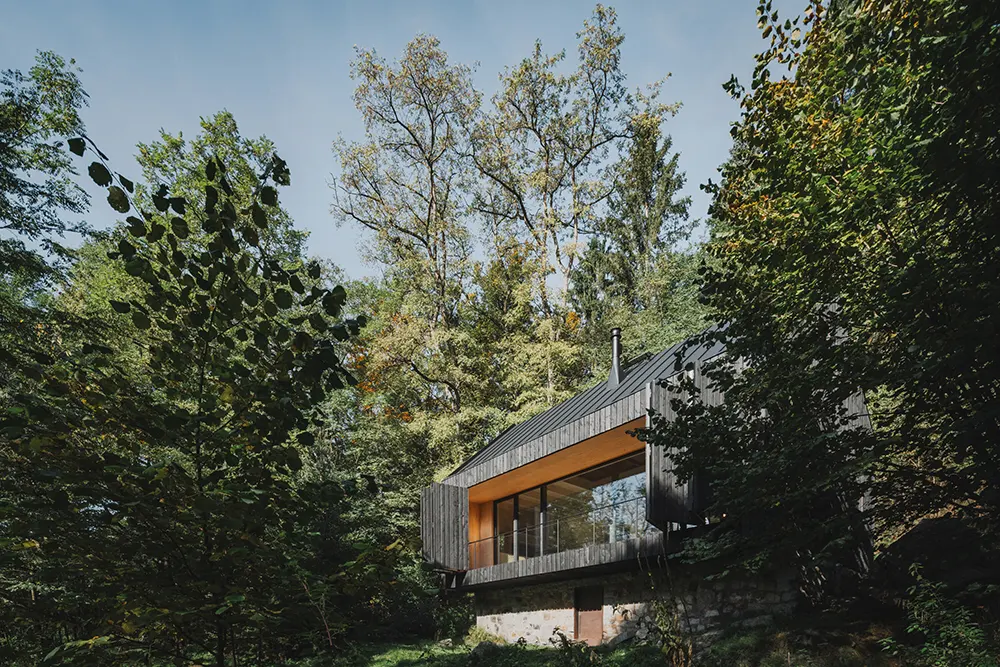
The construction follows a clear material logic. A light timber structure rises from the retained stone plinth, combining a sense of weight and elevation. The base protects against flooding and stabilizes the building, while the wooden volume above introduces a more temporary, responsive layer. This contrast remains legible throughout the project, without unnecessary variation.
Externally, the cabin uses charred larch cladding, a decision that operates on several levels. The treatment increases durability and resistance, while visually connecting the new structure to the memory of fire that shaped the site. Toward the slope, sheet metal protects the building from water runoff, reinforcing the pragmatic approach to exposure and weather. The palette stays limited and direct, avoiding any decorative gestures.
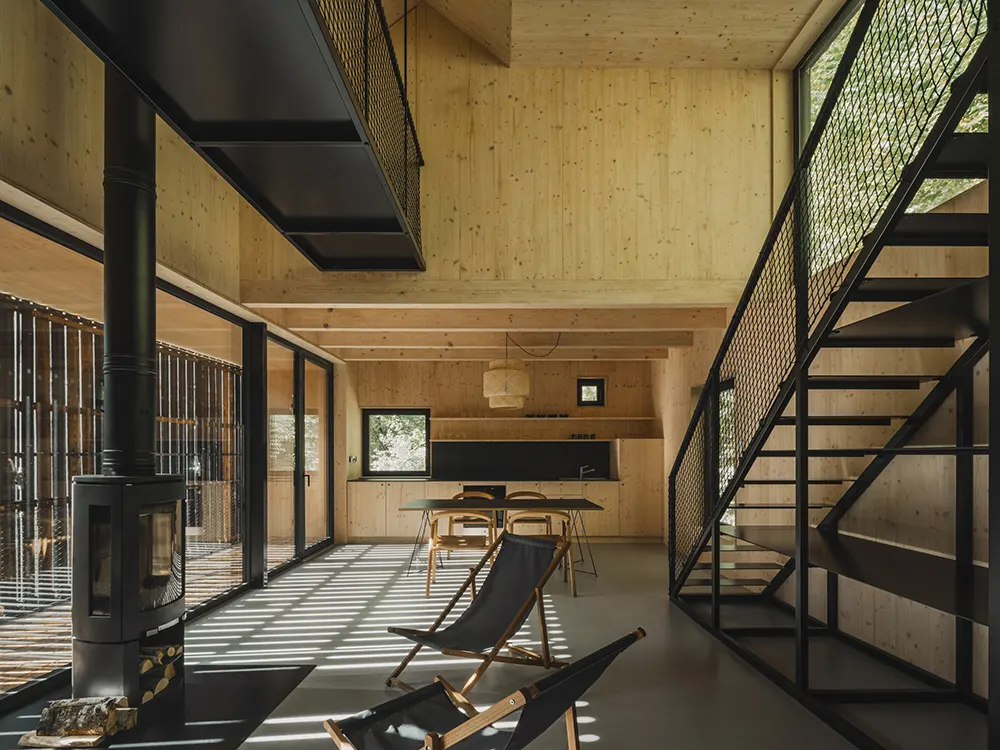
Inside, spruce panels line the structure, establishing a consistent tone across walls and ceilings. Black metal elements, including the stove and staircase, extend the exterior language inward. The result reads as a single, continuous interior rather than a collection of separate components. The space holds a contained atmosphere, closer to a shelter than a conventional house.
The plan remains compact and deliberate. The main living area occupies the full height of the cabin, while sleeping spaces reduce to minimal attic volumes. This compression of private zones allows the central space to expand, supporting collective use rather than separation. The design prioritizes shared time, aligning with the cabin’s role as a place to withdraw from routine.
The connection to the river defines the main facade. Full-length glazing opens the interior toward the water, extending the living space outward onto a raised terrace. This elevation maintains a visual link while avoiding direct contact with the ground, reinforcing the sense of distance already established by the plinth.
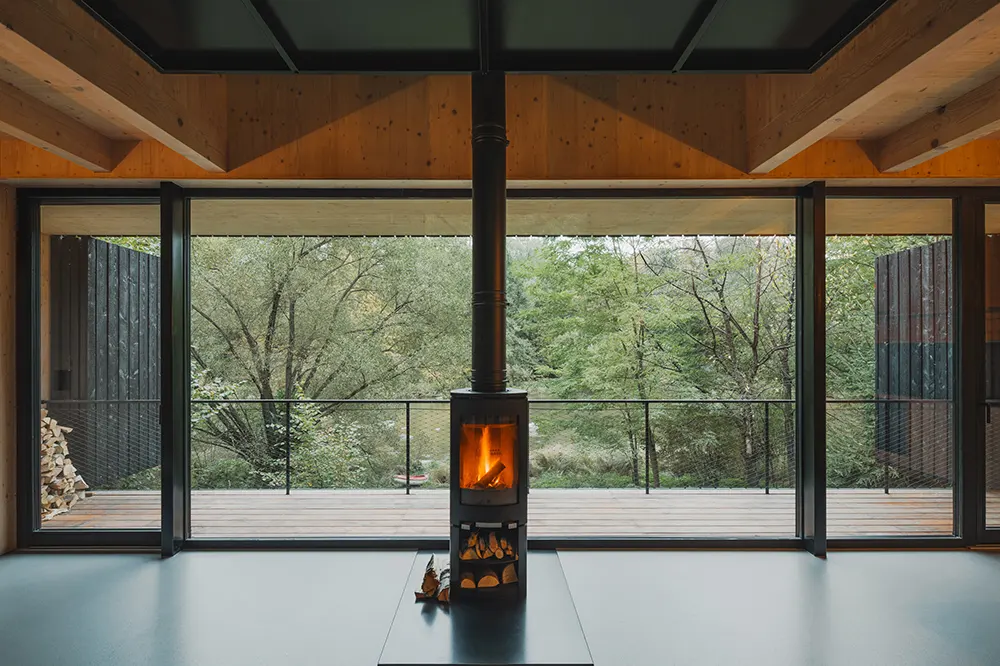
A folding shutter introduces a second layer of control. When closed, it transforms the cabin into a compact, protected volume. When open, it removes any barrier between inside and outside. This simple mechanism allows the building to shift between exposure and withdrawal, depending on season and use.
Technical systems follow the same restrained logic. The cabin operates largely as a self-sufficient unit, with water sourced from an on-site well and wastewater managed within the plinth. Heating relies on a wood stove supported by electric systems. The approach avoids unnecessary complexity while supporting year-round use.
Between the rock and the river, the project maintains clarity. It builds from what remained, limits its means, and focuses on how space is used rather than how it appears. The result feels precise and grounded, shaped as much by absence and memory as by construction.