
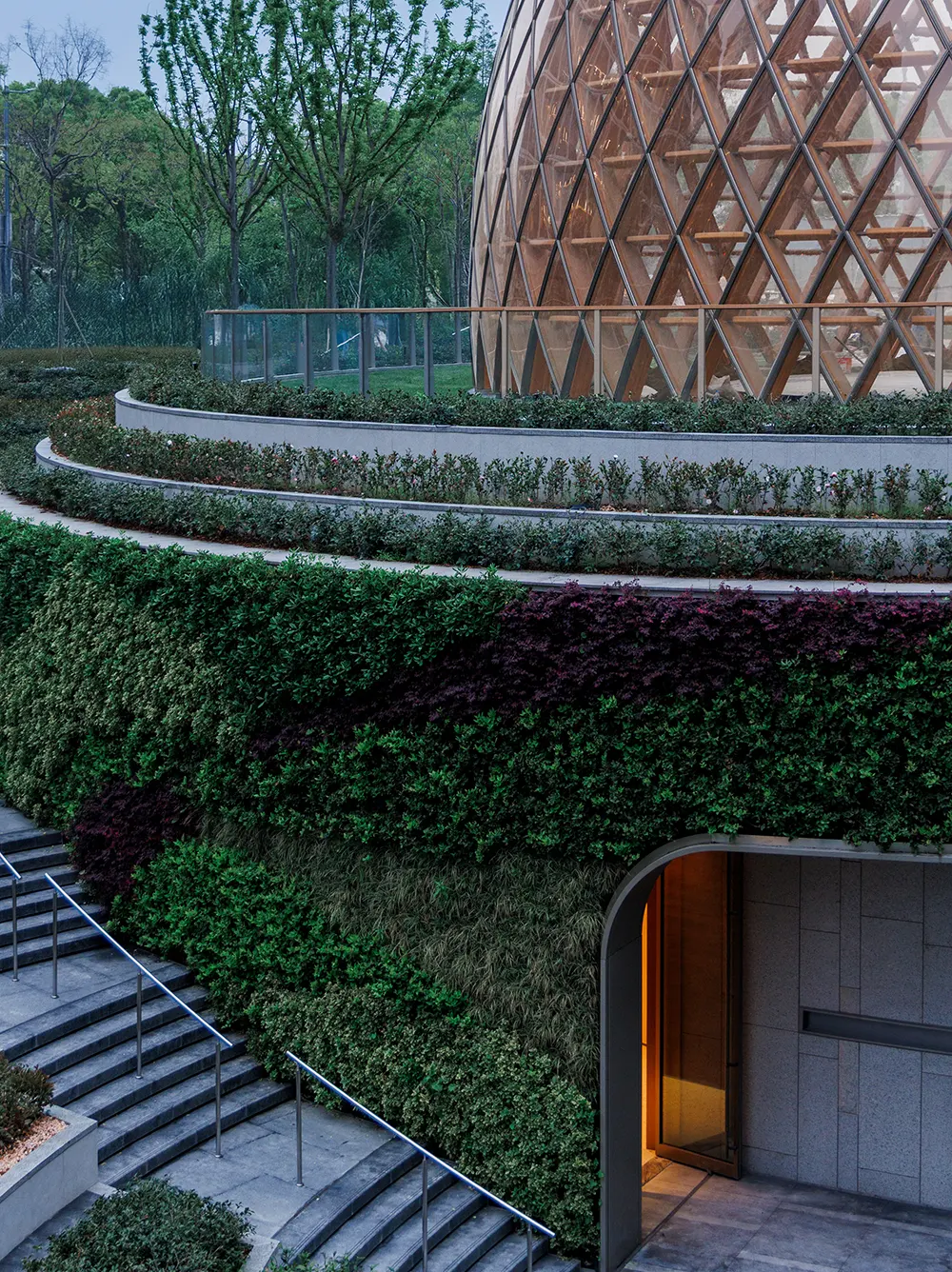
Wutopia Lab approaches The Seed as an architectural descent. Commissioned by Hongkong Land and completed on April 30, 2026, the project forms part of West Bund Central in Xuhui, Shanghai, where it sits alongside Orbit, completed in 2023. By the time Wutopia Lab joined the project, the architectural scheme had already taken shape. The main task came through narrative: the exhibition space needed a spatial idea strong enough to connect the above-ground condition with the underground interior.
CULTURAL
The starting point comes from the site’s deeper cultural context. In 1607, Xu Guangqi planted the seeds of modern Chinese civilization in Xuhui, giving the location a metaphor that Wutopia Lab expands through architecture. The studio turns to the archetype of the Tree of Life, yet avoids literal representation. Instead, it extracts relationships between seed, root, soil, time, and growth. This conceptual framework gives the project its structure: what remains unseen below the surface becomes the source of movement, light, and spatial identity.
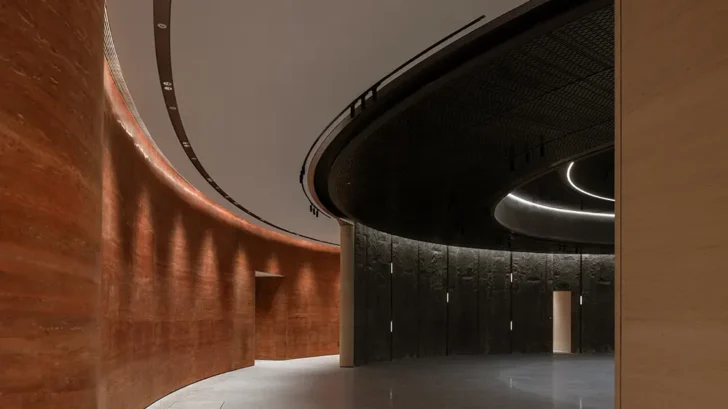
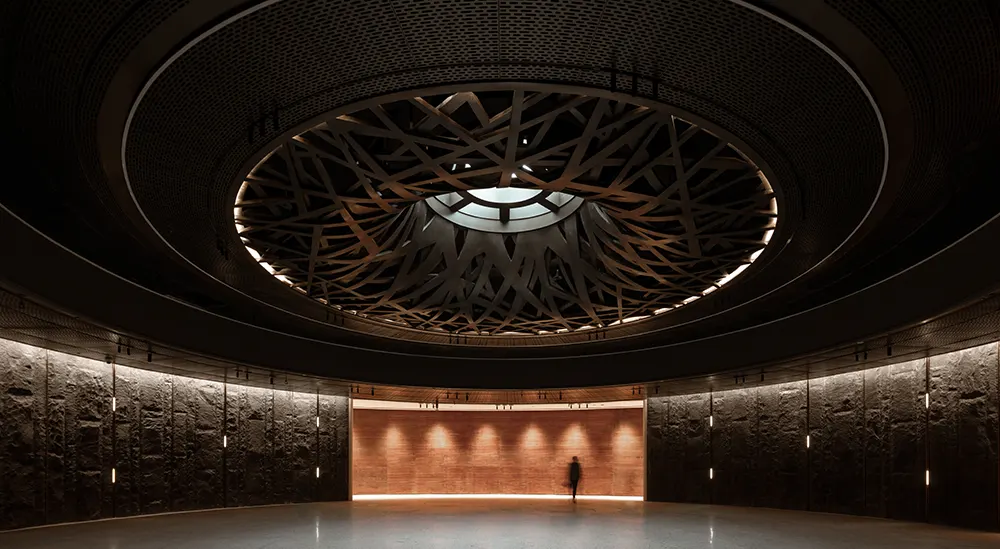
The underground level becomes The Root. Wutopia Lab treats the cave as a translated architectural language, defined by enclosure, incubation, and formation. Roots appear as paths of force, extending from the ground plane into the underground space. They create a connection between visible order above and invisible growth below. The result turns the exhibition interior into a generative system, where light defines direction, material responds to illumination, and texture slowly emerges through contrast.
The most decisive architectural move begins with subtraction. Wutopia Lab removed the internal elevator and staircase and worked with structural engineers to eliminate eight existing columns. This intervention opened a complete column-free underground space, giving the exhibition hall a rare sense of continuity. The studio also closed the side glass curtain wall and introduced a descending corridor, allowing visitors to enter through a controlled sequence where light contracts before the space opens.
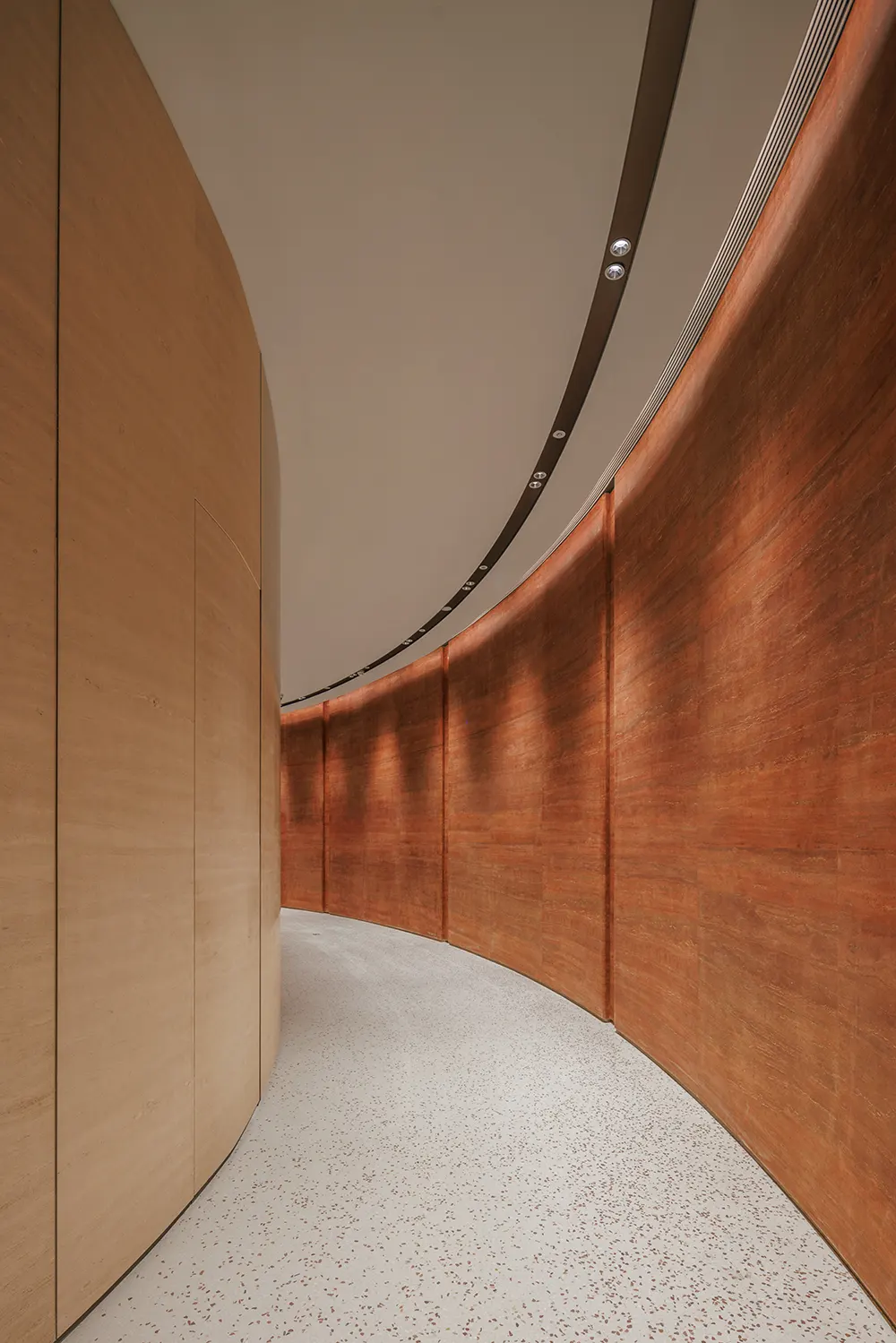
A skylight at the center of the ground floor establishes the project’s vertical axis. Natural light cuts through the structure and reaches the underground level, creating a clear relationship between the two worlds. This gesture gives the project its emotional force. Visitors do not simply enter an exhibition space; they move downward while light moves toward them from above. The root system mediates that encounter, turning structure into spatial drama.
Textured stainless steel forms the root system, extending down into the underground space and anchoring within the cave-like interior. The installation also integrates smoke exhaust, sprinklers, HVAC, lighting, and maintenance access, allowing the ceiling to function as both technical infrastructure and symbolic surface. This dual role gives the project its strength. The root reads as an expressive element, yet it also works as a disciplined architectural interface.
Material choices deepen the underground atmosphere. Rough-chiseled basalt walls define the central exhibition hall, while organic terrazzo flooring takes inspiration from the sedimentation of fallen leaves. Through shifts in scale, texture, and assembly, Wutopia Lab interprets the cave as a condition shaped by erosion and time. The materials operate beyond finish. They become active participants in the way light touches, reveals, and transforms the space.
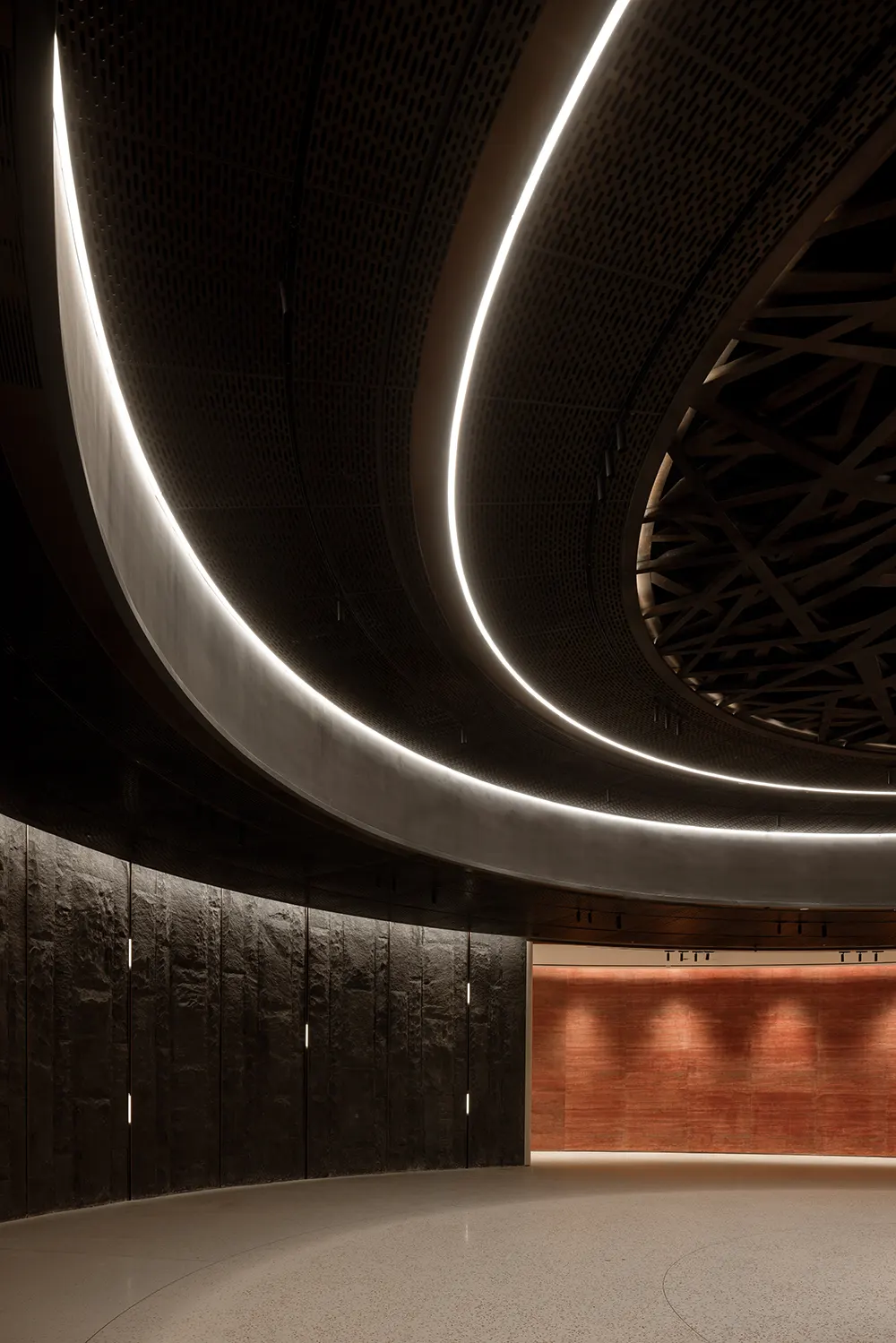
The Seed continues Wutopia Lab’s interest in exhibition space as a designed mode of viewing. Orbit organized experience through flow, while The Seed uses descent. Movement becomes slower, more inward, and more spatially charged. The visitor’s body registers the change through light, height, texture, and direction. Above ground and underground no longer operate as separate layers. They become two parts of one system, one visible and ordered, the other enclosed and generative.
At 864 square meters, The Seed creates a compact yet ambitious interior where architecture carries narrative without relying on decoration. Wutopia Lab turns an underground exhibition space into a study of growth, pressure, darkness, and light. The project finds its strongest expression in the idea that what shapes space often begins out of sight. Growth, as The Root suggests, takes place in the unseen before it reaches the surface.