
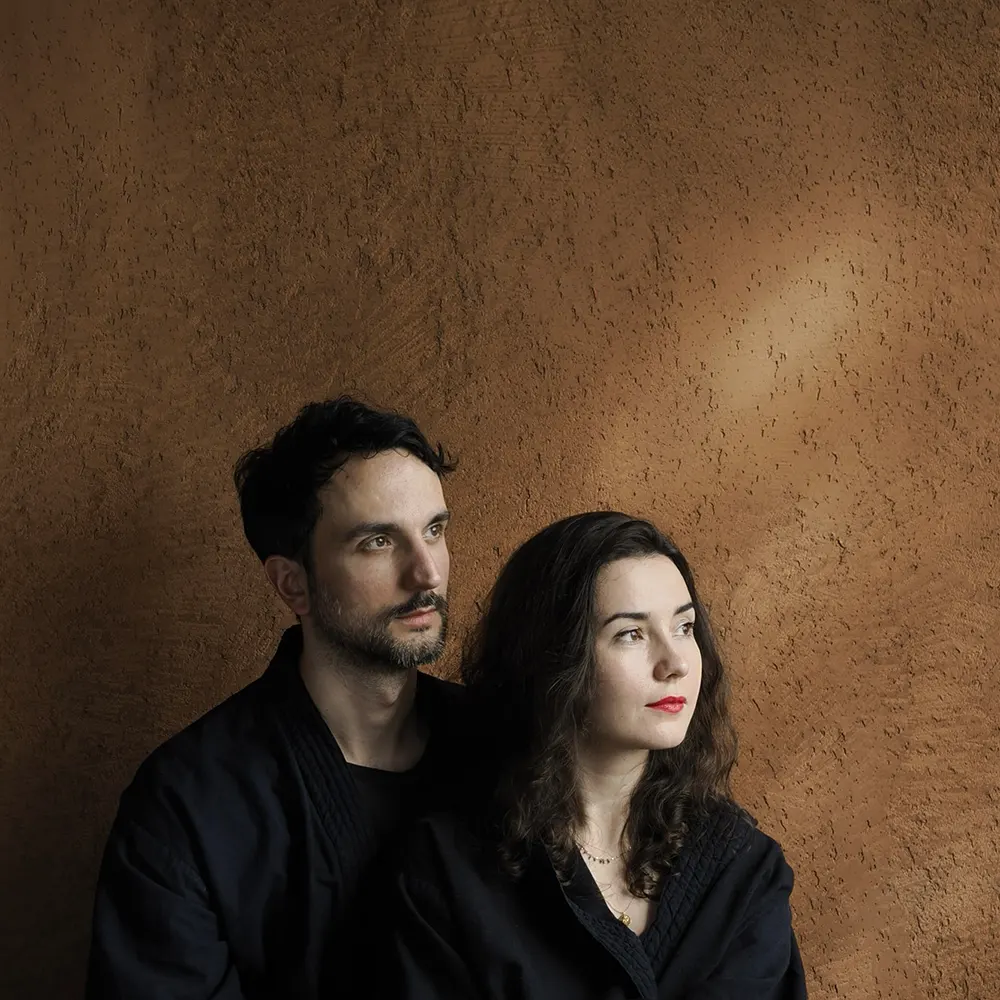
Camille Breuil and Luca Beltrame of Beltrame Breuil speak with ARCHISCENE Magazine about PIÇULE, a furniture and object collection rooted in Alpine origins and shaped for contemporary European interiors. Working between Tarvisio and Vienna, the studio moves across architecture, interiors, landscape, and product design, drawing from forests, lakes, mountain topography, and the atmosphere of daily life in the Alps. PIÇULE translates those references into domestic pieces with a clear visual identity, where each object carries a specific natural impression into the home.
INTERVIEWS
The collection brings together the CLVR Chair, LKT Table, MTN Lamp, and LKV Vase, developed through bent wood, painted surfaces, resin 3D printing, transparent filaments, and small-series production. In this interview, Breuil and Beltrame discuss craft, limited production, asymmetry, material experimentation, and the studio’s belief that design can respond to nature through dialogue, contrast, and form. The conversation offers a closer look at how PIÇULE turns Alpine memory into furniture without treating the natural environment as decoration.
PIÇULE introduces “Alpine origins, European living” as a guiding idea. How do you translate a regional context into objects that function in different interiors?
We took inspiration from the nature and landscapes that surrounds our life and memories. The intent is to draw from these special places a series of conditions that can be replicated into our urban lives. We explored how these personal perceptions can translate into built objects by reflecting each time on a single principle or aspiration.
You draw from forests, lakes, and mountain topography. What specific observation from the Alpine landscape shaped this collection most directly?
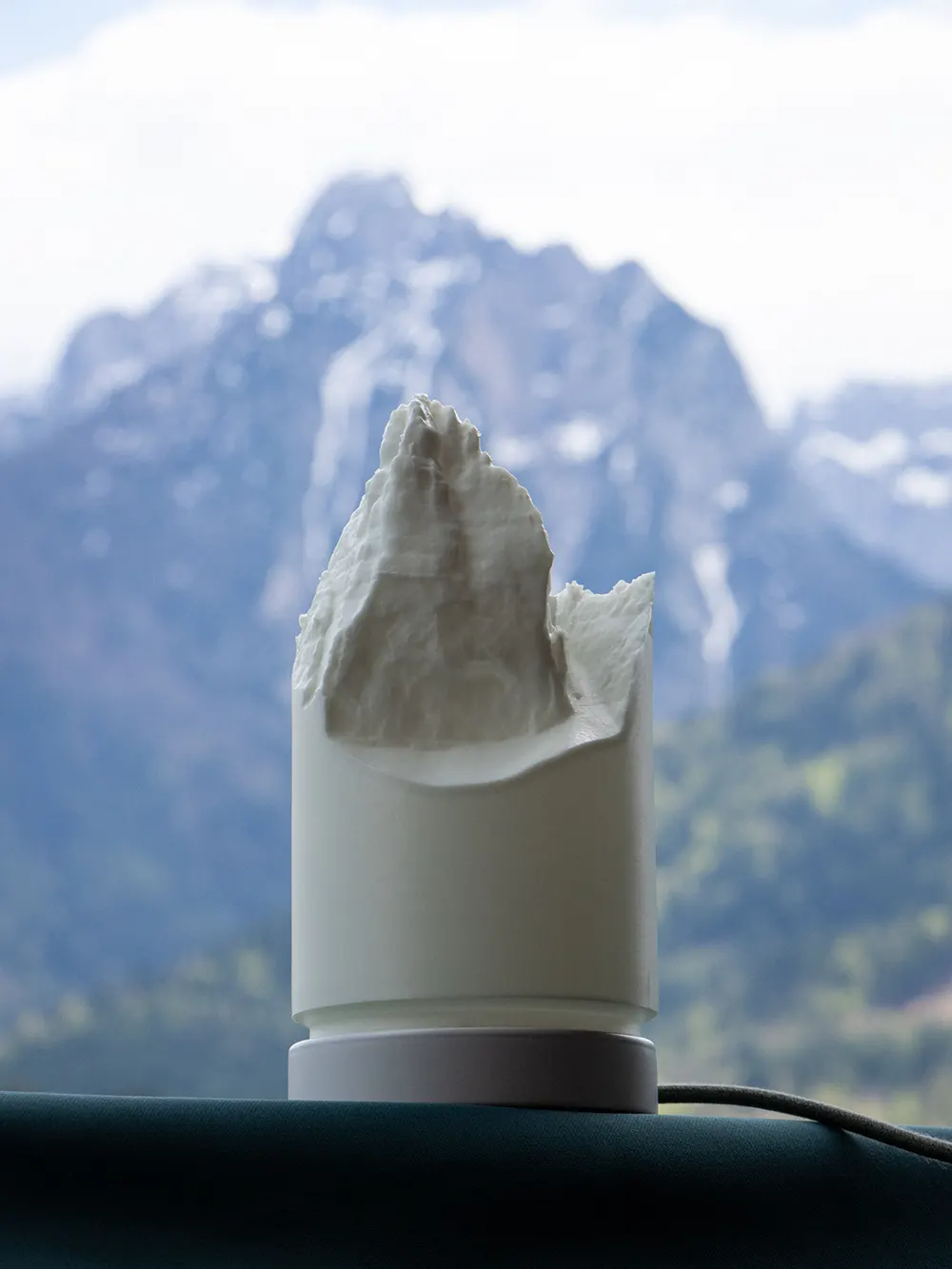
The uplifting freshness of a sprouting plant. The shimmering light of a lake. The sunset on the rocky ridge of a cliff. The playful contact with a pond. Each product is a direct metaphor of an alpine condition. We believe that the sense of awe that nature possess can be celebrated by design, exploring material properties and geometries.
PIÇULE is described as an ongoing story. Which elements of the Alpine landscape are you exploring next?
For us this first collection has been characterized by a playful and intuitive approach. We are currently investigating other applications for a variety of uses, which would bring the products we exhibited into new contexts and situations, as well as looking into industrial design logics. As per which elements of the alpine landscape we are investigating and inspired from, for now we can just say that the nature of a forest is an endless source of inspiration.
The nature of a forest is an endless source of inspiration.
You describe the collection as “bold in concept, minimal in form.” How do you decide what to keep and what to remove?
When an idea emerges, we push towards its conceptualisation and refining its essence first: defining its narratives, the story that drives it… how it can be converted into a geometry or a space that is defined by the most minimal amount of gestures for its message/scope. Once this one is clear and strong, every decision follows a natural logic. There is a hierarchy that tells you what serves the whole and what doesn’t. Removing something becomes easy when you have in mind what the piece is really about. With this approach, we designed a collection of products that conveys the idea without any ornament or decorative choice.
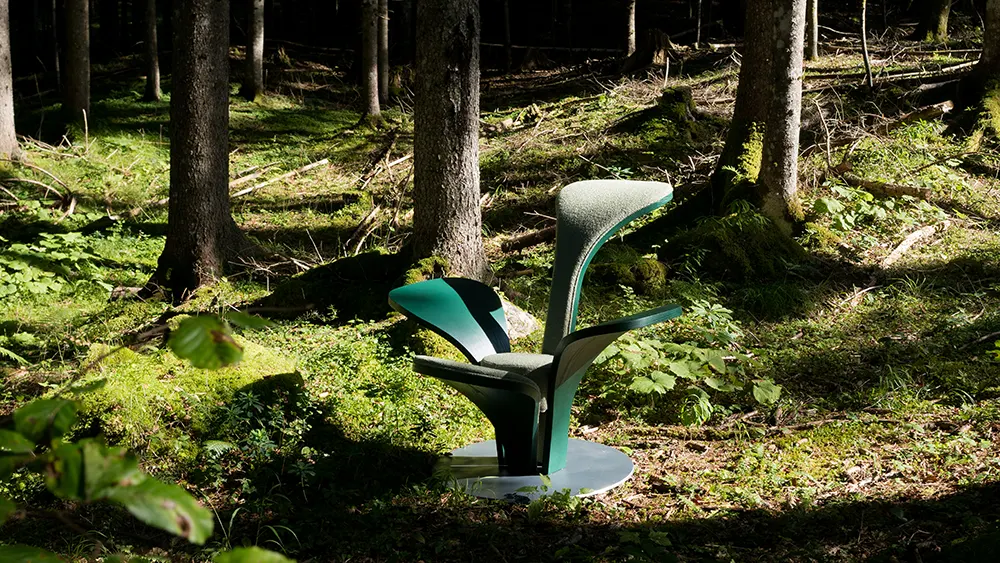
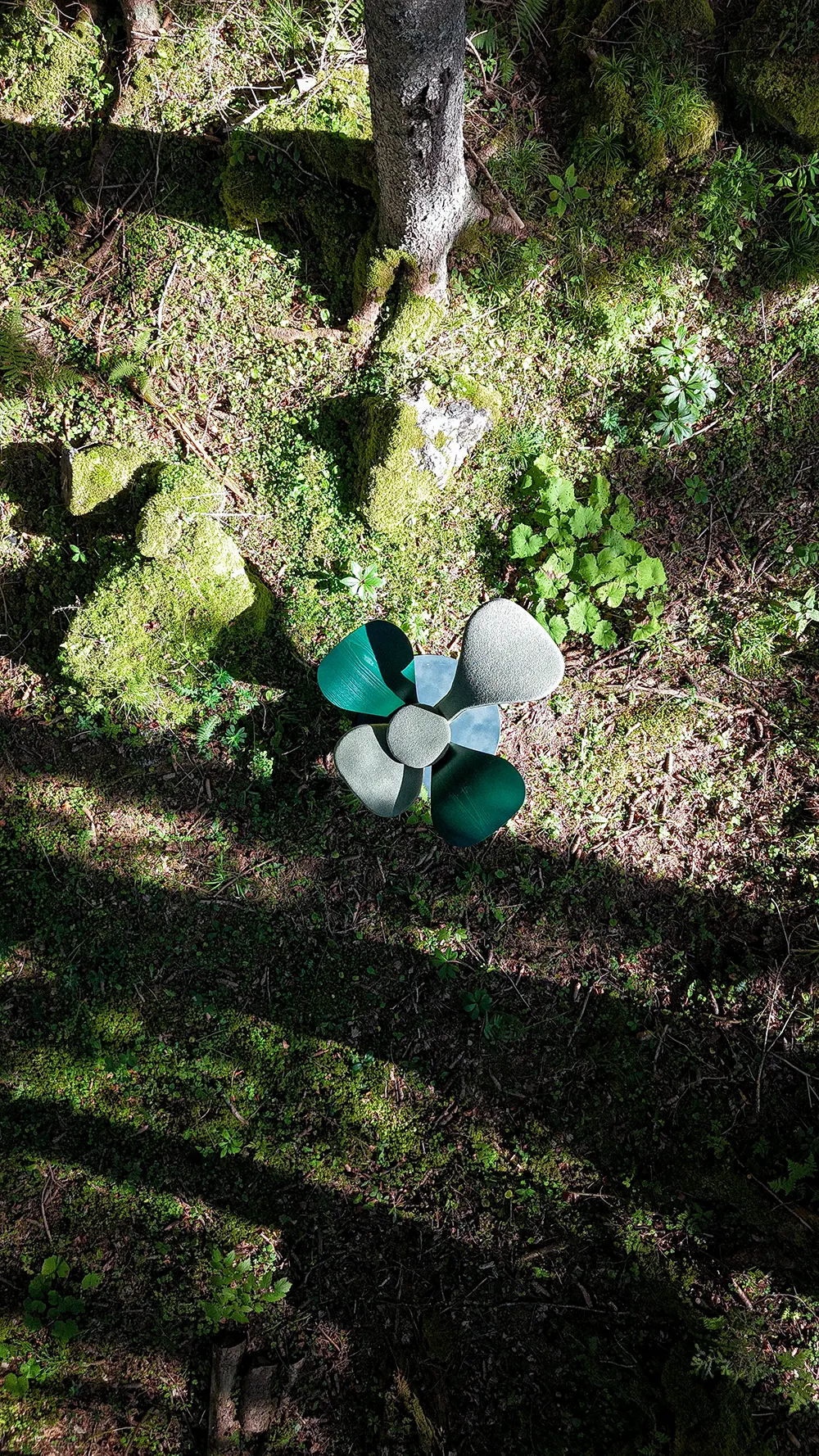
The CLVR Chair features a “four-leaf” construction. What challenges came with using a single curvature across all four elements?
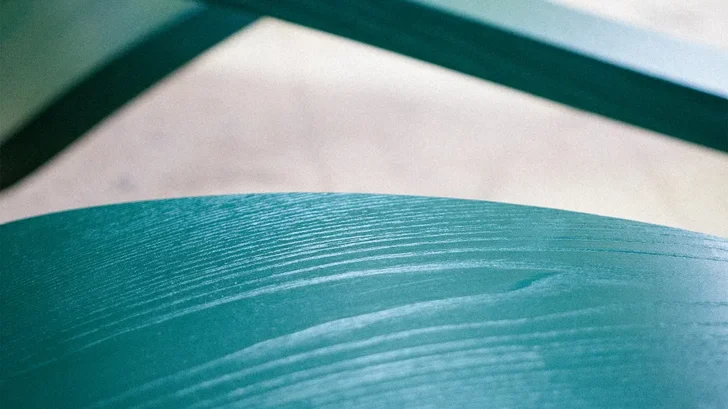
The main challenge has been keeping it comfortable while preserving the idea of a sprouting clover. The inclination between the back and the frontal leaf has defined the overall shape, we didn’t want to open up too much compromising the silhouette but at the same time we had to find enough space to accommodate the seat and allow for the back to rest. We studied it through a series of test, both digitally and with models.
The LKT Table uses irregular legs and one contrasting element. What role does imbalance play in your design language?
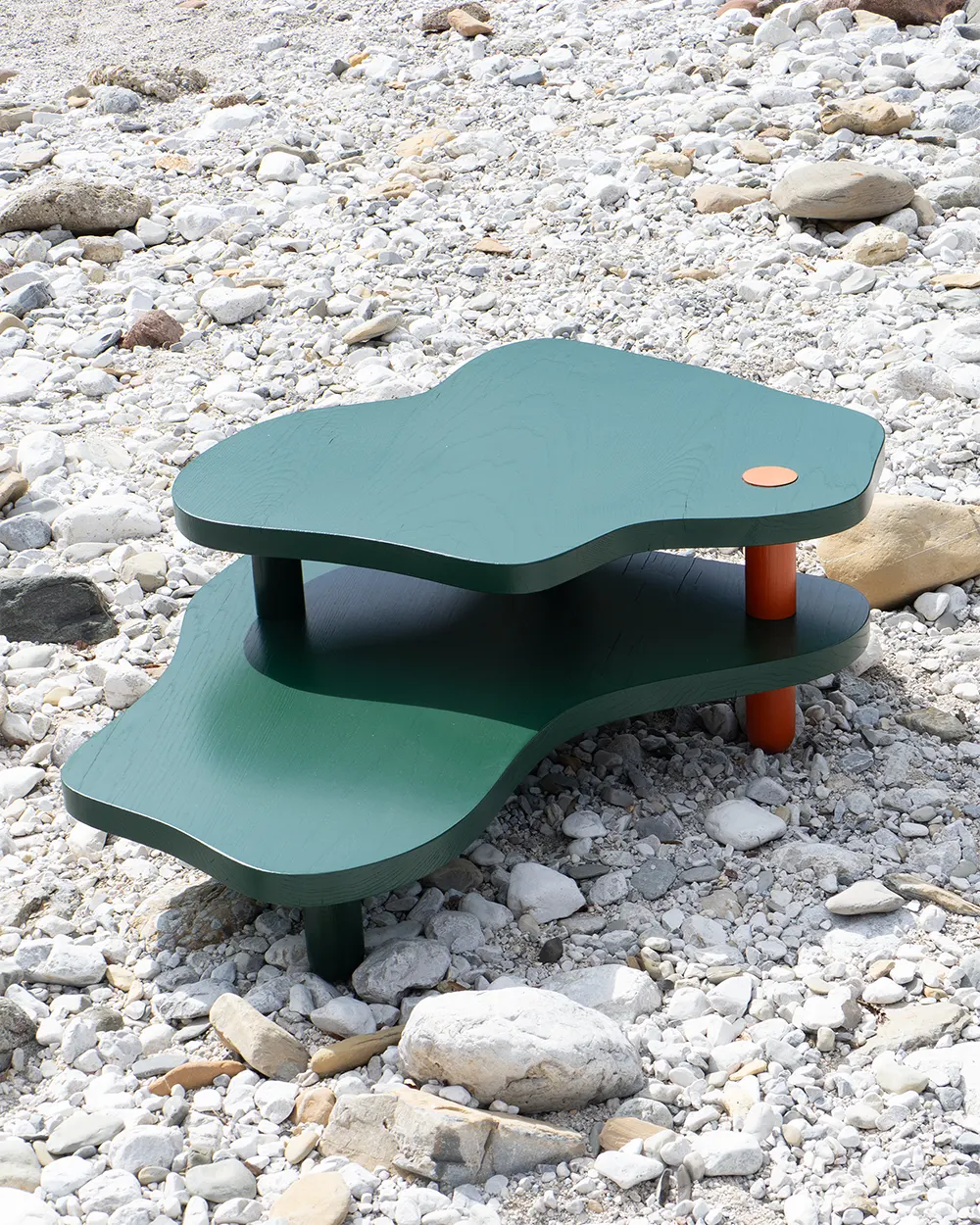
Playfulness, surprise, quirky, unexpected, spontaneity are topics that we really like to engage with. If symmetry communicates accomplishment and a final state, imbalance and asymmetry allow for a dialogue and openness towards something else and a certain energy into a project. An unexpected choice of colour, geometry or material invites questions: What does it echo? What does it mean? From there, each person can build their own reading, their own interpretation comes into play, layering their story onto the object over time. The LKT table is a playful statement, inspired by two overlapping water bodies, it seeks for a joyful look, asking not to be taken too seriously.
We don’t see our practice as bounded by scale, but rather driven by a unifying mindset.
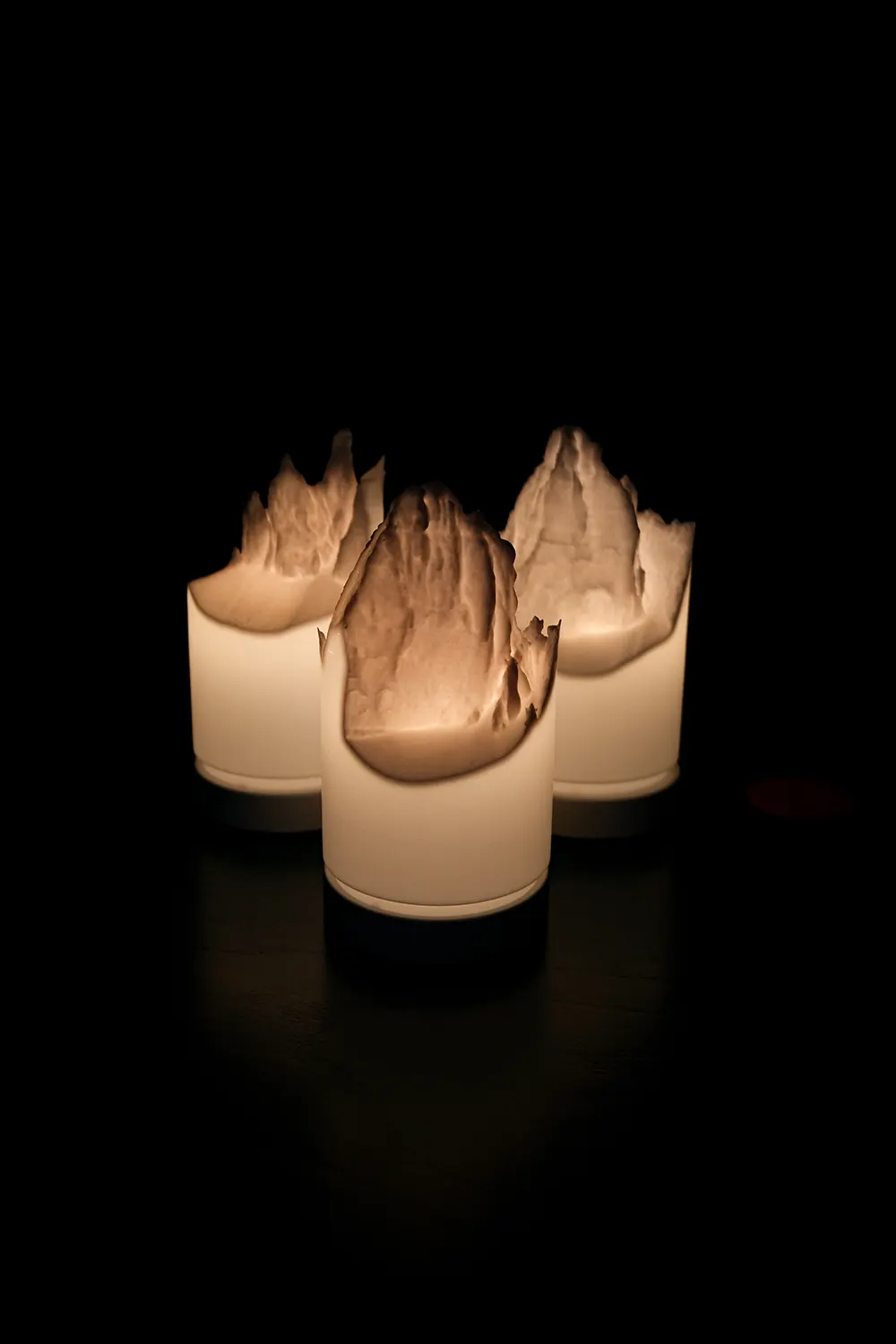
You mention that each MTN Lamp may differ slightly. What kind of differences emerge through the process?
The production of the MTN lamps starts with a very precise computational operation and ends with manual finishes. This leaves space for uniqueness in the form of subtle variation of tones and shapes, as direct response to the temperature of the production day and the artisanal finishing process.
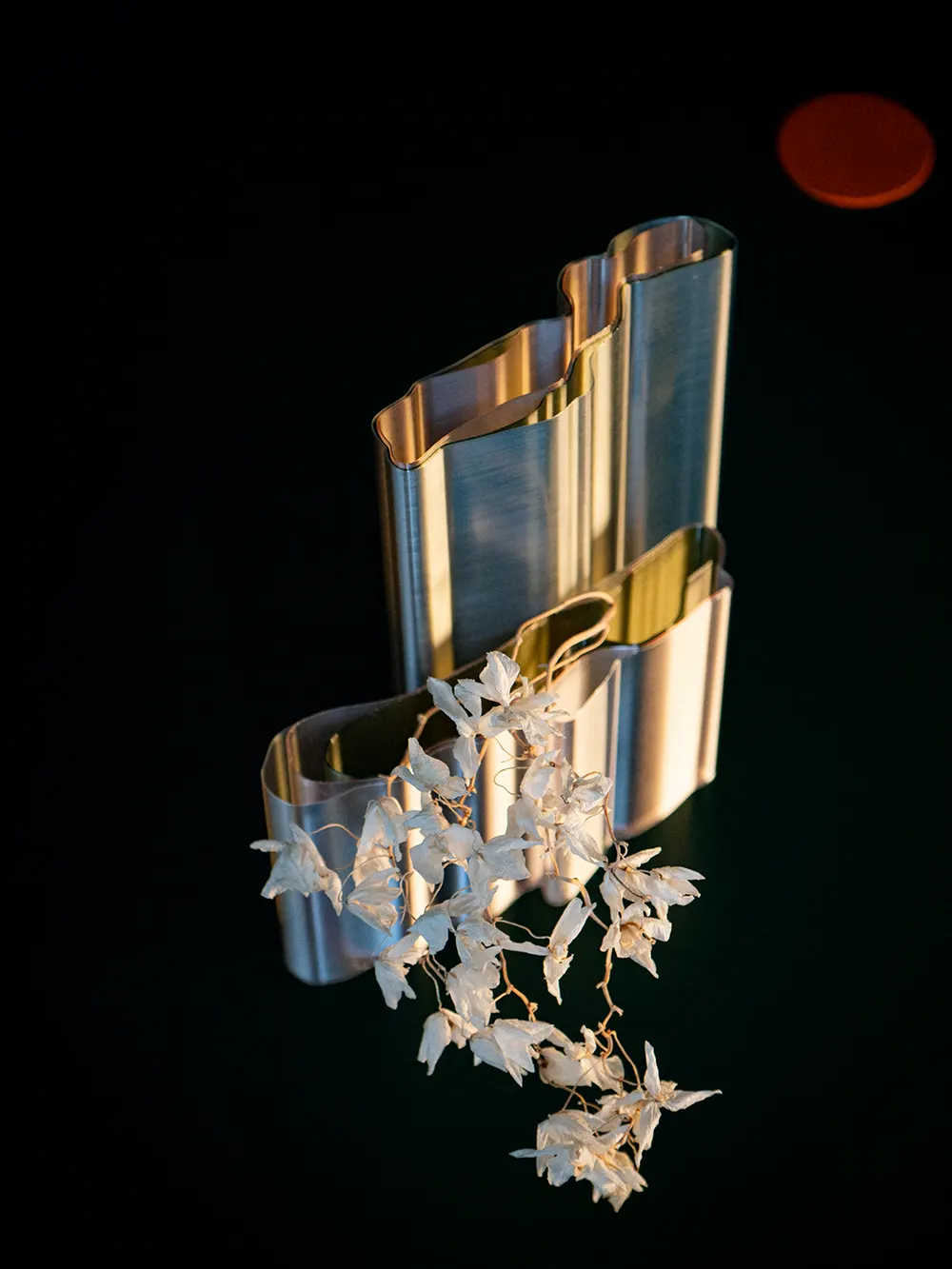
The LKV Vase refers to ripples on a lake. How did you translate that into a stable form?
Rather than aiming for a static shape, we designed the LKV vase to be a dynamic piece. It is composed of three interlocking 3D-printed vessels made of distinct colour tones. As the light hits the transparent and reflective material, it creates unique chromatic effects that shift and evolve as the viewer moves in space around the piece.
You move away from architecture that blends into its surroundings. How do you approach that differently in your work?
That’s exactly right: rather than simply blending in, our architecture engages in a dialogue with its surroundings. It is essential for us not only to respect a site’s existing conditions, but to actively enhance them. We find a deep connection between the genius loci and our geometric solutions. Our designs interact with their environment – sometimes contrasting through bold identity, colour, materiality, or form, and other times echoing the context while maintaining their own distinct presence. We believe a building is a character within a larger narrative; it can belong to a landscape without disappearing into it. It fits on its own terms. For example, in a recent project, we designed a minimal-footprint, three-storeys structure within a forest, allowing inhabitants to experience the vegetation differently on every level. In another home currently under construction, we shaped a facade that curves in plan to maximize the alpine views, resembling the silhouette of the mountain chain that sits before it.
We believe that the sense of awe that nature possess can be celebrated by design, exploring material properties and geometries.
Beltrame Breuil operates across architecture, landscape, and product design. How does that shape the way you think about furniture?
We are passionate about everything that can be designed. We don’t see our practice as bounded by scale, but rather driven by a unifying mindset. Whether we are conceptualizing a public space or a small vase, our methodology remains the same: we aim to provide geometric solutions to programmatic questions. We start from a pure idea and translate it into physical reality, generating designs that are consciously abstract, striving to remain attached to their imagined forms. Our visions are transcribed into the built environment at any size, making furniture a natural extension of this approach. Working on smaller scale is particularly compelling to us; it allows for an intimate proximity, bringing us into direct contact with craft, materiality, the human body, and senses.