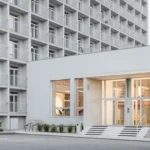

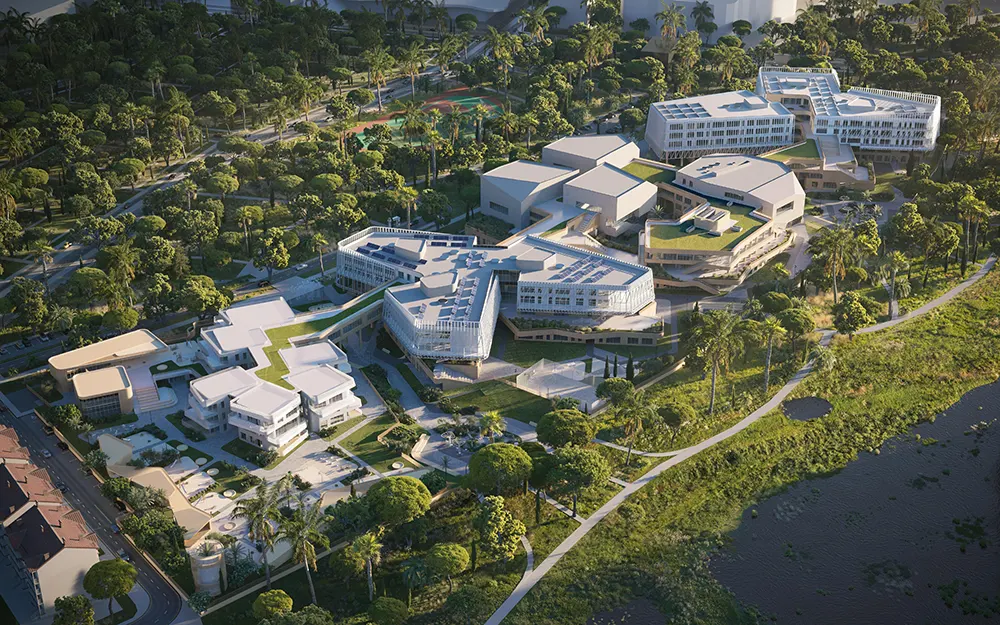
Educational Complex Sirius by ATRIUM proposes a school as a district campus, arranged through separate functional clusters connected by public space. The project moves away from the single-building model and creates a decentralized setting where education, sport, culture, and community activity can operate together. ATRIUM organizes the complex through four main parts: a primary school, a secondary school, a sports cluster, and a congress centre.
EDUCATIONAL ARCHITECTURE
A network of open boulevards, plazas, atriums, and landscaped terraces connects these volumes and gives the site the structure of a small city. Streets, squares, parks, and courtyards become part of school life, giving students varied places for study, movement, play, and social exchange. The plan expands the idea of a school beyond classrooms and corridors, using urban space as a daily educational tool.
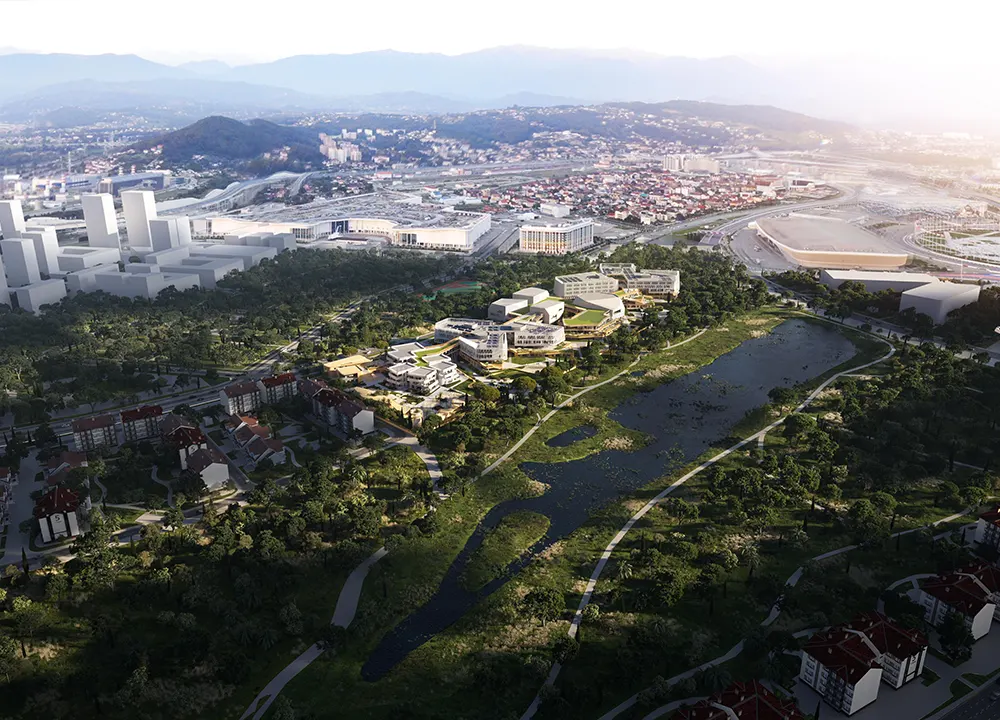
The second-floor level plays a key role in circulation. Enclosed pedestrian bridges connect all functional blocks and allow students to move across the campus safely in changing weather. Each block centers on an atrium that supports gatherings, informal learning, exhibitions, and community events. These atriums give every building a shared interior point while allowing each cluster to keep its own program and identity.
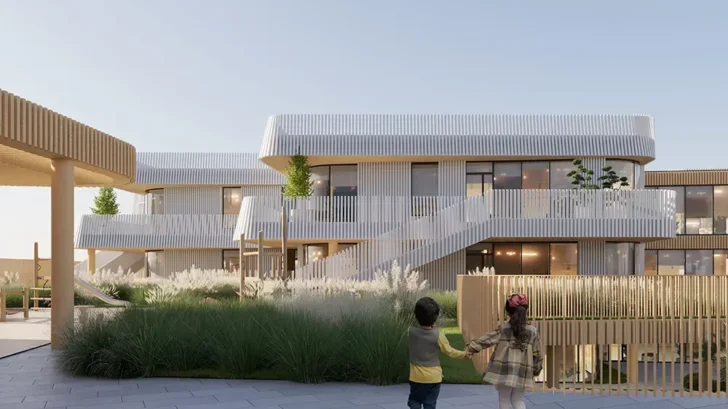
ATRIUM tailors the interior program to different age groups and learning needs. The complex includes group study pods, open-access laboratories, workshops, technology and art clusters, natural science hubs, libraries, dining areas, and administrative spaces. These zones encourage different forms of learning, from focused study to teamwork, experimentation, and public presentation.
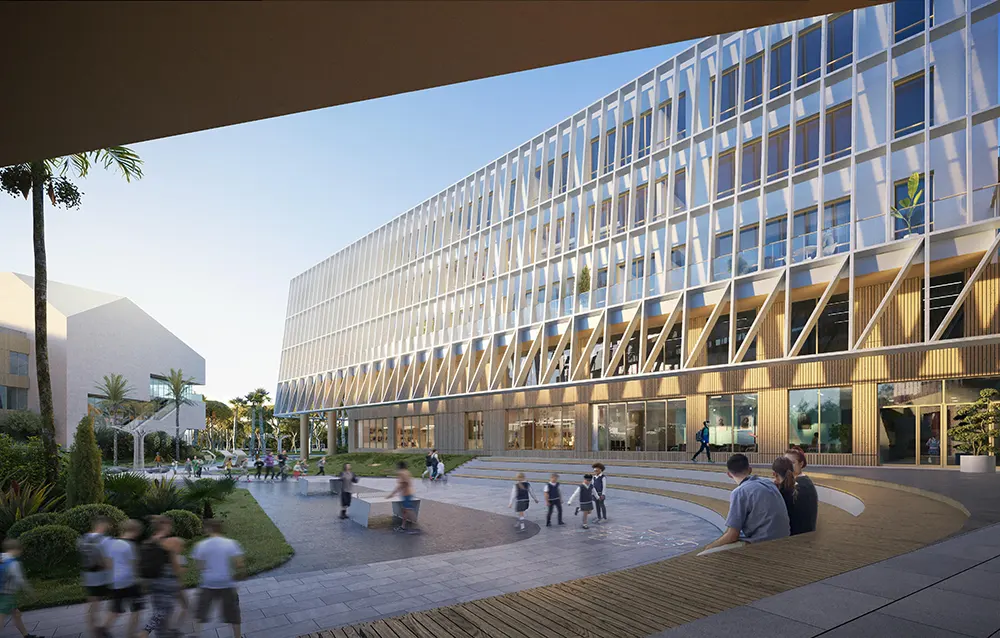
Classrooms support flexible use through movable partitions. Teachers and students can adjust spaces for standard lessons, double-period formats, academic competitions, lectures, and public presentations. This system allows the school to respond to changing teaching models and to host programs outside regular hours. The same rooms can serve daily education, district events, and wider community use.
One of the project’s strongest features comes through its system of specialized libraries. Each library works as a competence center, giving students a place for interdisciplinary work, peer mentoring, and team projects across different age groups. Shared creative studios and maker spaces extend this approach, supporting hands-on learning and helping younger children move gradually from preschool settings into formal education.
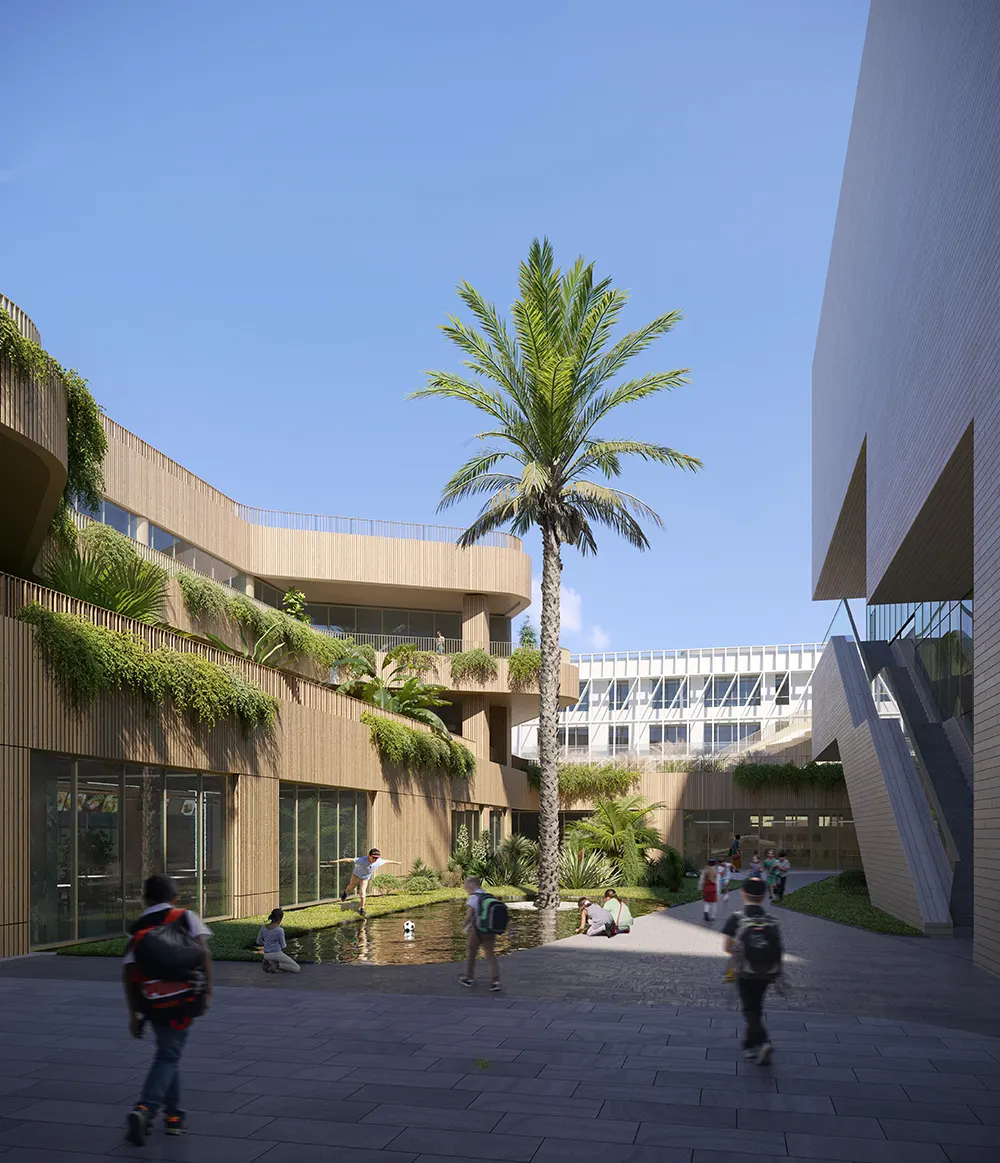
The design responds directly to the southern climate. Green roofs, shaded terraces, and outdoor dining areas give students usable exterior spaces throughout the day. Several elevated areas also work as observation decks overlooking the nearby ornithological park. These platforms extend the school into nature and create direct opportunities for environmental education and wildlife observation.
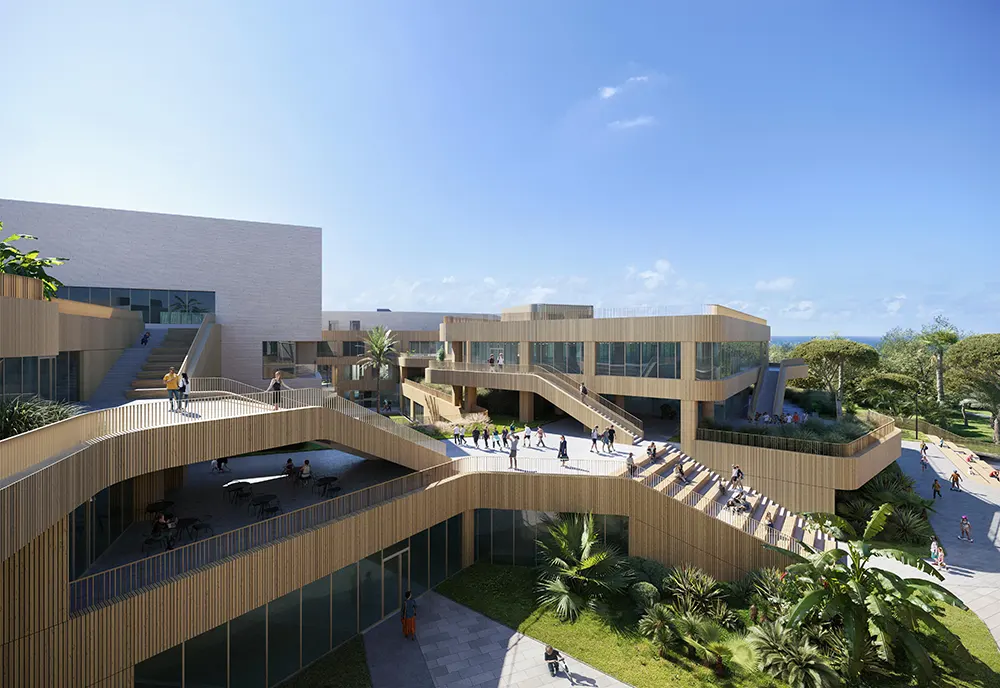
Sustainability informs the building systems and campus planning. Photovoltaic panels support renewable energy use, while carbon dioxide sensors monitor indoor air quality. Natural daylight, cross-ventilation guided by building orientation, rainwater management, and a continuous green framework help connect the complex to its regional setting.
ATRIUM also addresses long-term resilience. The complex can withstand seismic activity up to magnitude 9, while its raised position helps reduce flood risk. Its public-facing layout allows individual blocks to function after school hours as cultural or leisure venues. Through this structure, Educational Complex Sirius serves students during the day and gives the district a wider civic resource.
Location: Sochi, Russia
Project: 2024
Site area: 5.8 ha
Total area: 73.800 m²
Number of students: 2.500
Project team: Anton Nadtochiy, Vera Butko, Petr Alimov, Anna Vorobyova, Anastasia Galutkina, Artem Karpets, Ekaterina Kotlova, Olga Yefimova, Olga Kozak, Diana Mingazova, Yana Oshkina, Ivan Khripkov, Nikita Rybin, Yuri Uymanov, Yulia Mazurova, Almira Shagiakhmetova