

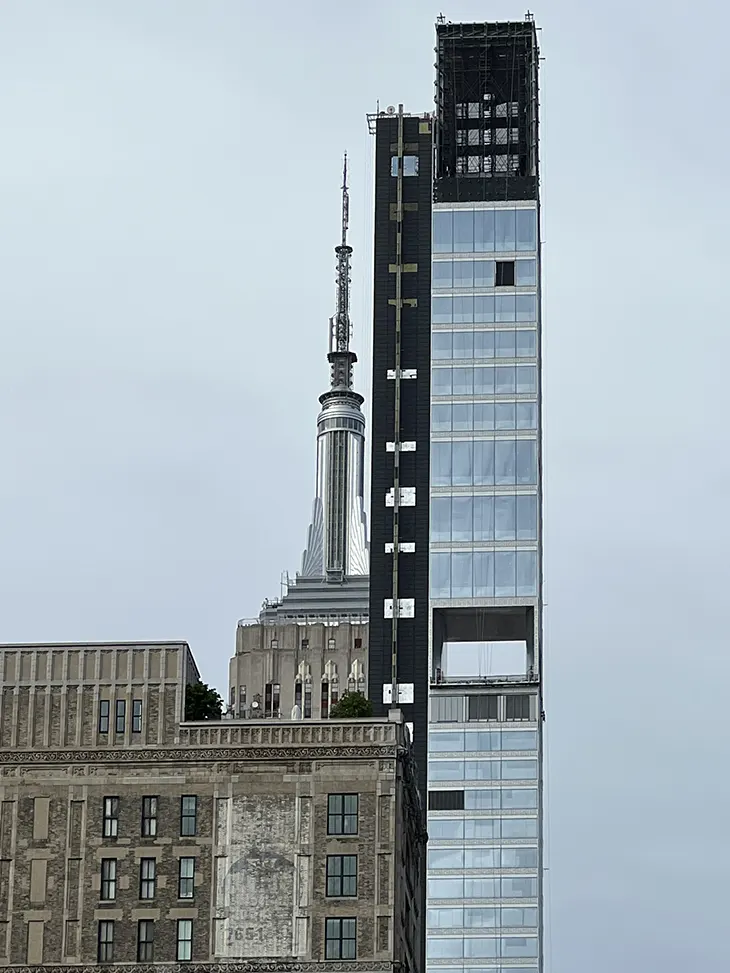
262 Fifth Avenue is one of those New York City buildings you do not need to enter to have an opinion about. You only have to look up from the Flatiron District, or catch the skyline from Midtown, and you see it, a thin, pale residential tower that slices into sightlines many people assumed were untouchable. For decades, the Empire State Building has been the city’s most democratic landmark, visible from sidewalks, bridges, and rooftops that belong to everyone. The controversy around 262 Fifth Avenue is not simply about aesthetics, it is about who New York is being built for, and what the city is willing to trade for luxury real estate.
The controversy around 262 Fifth Avenue is not simply about aesthetics, it is about who New York is being built for, and what the city is willing to trade for luxury real estate.
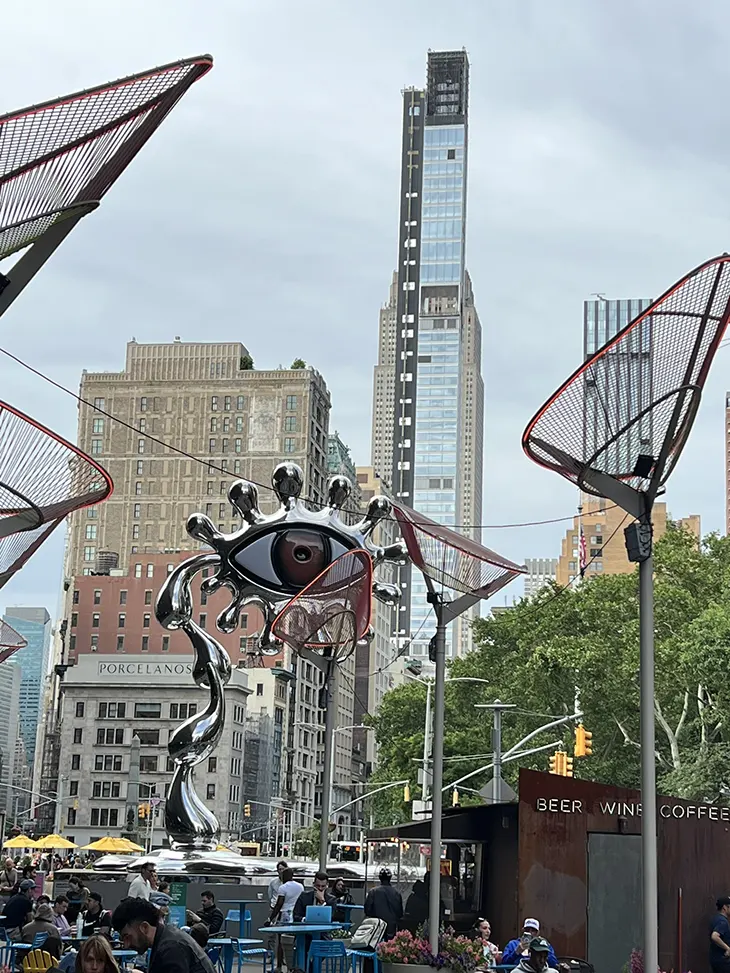
Often described as a “pencil tower” or “skinny skyscraper,” 262 Fifth Avenue became infamous because it interrupts views of the Empire State Building from certain angles, especially around Fifth Avenue and the Flatiron area. That interruption hits a nerve because the Empire State Building is not just another tower, it is a shared cultural reference point. When a new building inserts itself into that visual story, it feels like a private deal rewriting a public image.
What is 262 Fifth Avenue?
262 Fifth Avenue is a luxury residential skyscraper on Fifth Avenue near Madison Square Park. It is part of a wave of ultra-thin, high-end towers that have reshaped Manhattan’s skyline in the last decade. Like other super-slender buildings, it is engineered to rise high on a relatively small footprint, maximizing saleable views and prestige.
New York’s skyline is a composition, and 262 Fifth Avenue is now in that composition whether New Yorkers like it or not.
If you want the developer-facing version of the story, start with the building’s official site at 262 Fifth Avenue.
The building’s notoriety is tied to a simple urban fact: New York’s skyline is a composition, and 262 Fifth Avenue is now in that composition whether New Yorkers like it or not. Nevertheless, even before its completion
Why 262 Fifth Avenue is so controversial in New York
The backlash is not only about one building blocking the Empire State Building. It is about the feeling that the city’s most valuable assets, light, air, views, and skyline identity, are being monetized.
Key reasons the building triggers such a strong reaction:
- It changes a classic view corridor, a skyline moment people associate with New York itself.
- It represents the rise of luxury development that feels disconnected from everyday city life.
- It highlights how zoning rules, air rights, and development bonuses can produce extreme forms.
New Yorkers are used to construction, and even to losing views. But when the new object looks like a thin blade and reads as a financial instrument more than a building, the anger becomes symbolic.
For a clean official primer on how the city’s rules shape what gets built, start with the NYC Department of City Planning’s overview of NYC zoning. The zoning is a complex subject, one that is certainly not getting a pull back.
Impact of Billionaires’ Row, and Why It Is Allowed
To understand 262 Fifth Avenue, you have to understand the broader ecosystem that made it possible. Billionaires’ Row, the cluster of supertall luxury towers near Central Park, is the most famous expression of this trend, but the logic extends across Manhattan.
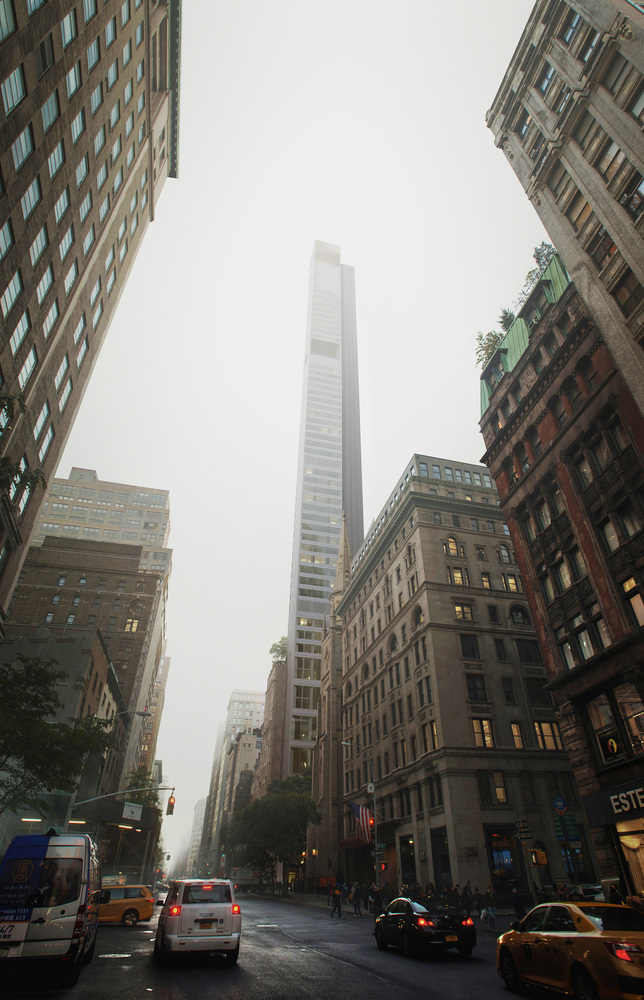
Billionaires’ Row matters because it normalized a specific development model:
- Build extremely tall, extremely thin residential towers.
- Sell a small number of ultra-expensive apartments.
- Market the building globally as a safe asset, not just a home.
This model is allowed because New York City’s zoning and real estate framework makes it rational. Developers can assemble lots, purchase air rights, and use zoning mechanisms to increase allowable height and floor area. In practice, that means the city can end up with towers that are legally compliant but culturally disruptive.
If you want the “why is it legal” explanation in plain institutional language, the key concepts are floor area ratio, zoning envelopes, and transferable development rights. NYC Planning’s explainer on Transferable Development Rights is a strong authority reference, and it pairs well with the broader About Zoning page.

What is the impact on the skyline, streets, and daily life?
The skyline impact is obvious: a new vertical object changes the way the city reads from distance. But the street-level impact is where the debate becomes more political.
Common concerns tied to super-slender luxury towers include:
- Shadows and loss of sunlight in parks and public spaces.
- Wind effects created by tall, narrow forms.
- A sense of hollow buildings, when units are used as investments and remain dark.
- Rising land values that pressure surrounding neighborhoods.
Even when a building is not on Billionaires’ Row, it can still operate within the same luxury logic. The result is a city that looks more expensive, feels more exclusive, and becomes harder to live in for the people who make it function.
Why do people say the design is bad?
Design criticism of 262 Fifth Avenue tends to be blunt, and it usually centers on proportion, material expression, and the feeling that the building is optimized for profit rather than civic presence. Ideally, the design will improve with the finalization, taking in account the expertise of the noted firms working on it.
The harshest version of the argument is that the building is not ugly by accident, it is ugly because it is the purest expression of a financial model.
In New York, even disliked buildings can earn a kind of respect if they contribute something to the street, the skyline, or the architectural conversation. With many luxury pencil towers, the critique is that they do not.
Common complaints include:
- The tower reads as a thin extrusion, more like a product than a place.
- The facade can feel flat, repetitive, and indifferent to context.
- The building’s relationship to the street is often minimal, with limited public benefit.
The harshest version of the argument is that the building is not ugly by accident, it is ugly because it is the purest expression of a financial model.
Architecture practice behind 262 Fifth Avenue
The design team for 262 Fifth Avenue is credited to MEGANOM and NORM CPH, a pairing that signals a distinctly European design sensibility applied to a very New York development equation. In a city where zoning, air rights, and sales strategy often dictate the envelope, the architect’s role becomes a tightrope walk between expression and compliance. For the most direct design-side reference, see NORM CPH’s 262 Fifth Avenue project page.
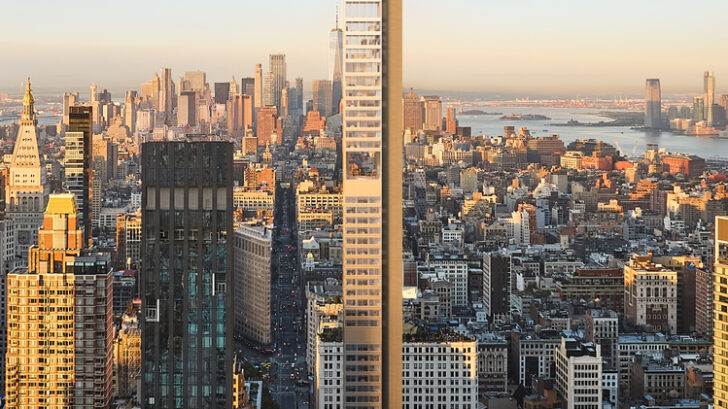
What makes the 262 Fifth Avenue conversation so heated is that the building’s form reads as inevitable, a slender extrusion optimized for height and views, while its visual presence feels optional, a choice. That gap is where New Yorkers tend to aim their criticism. If the tower is going to interrupt a landmark sightline, the argument goes, it should at least earn its place with a facade and silhouette that feel intentional, contextual, and civic. The most recent addition to the NYC skyline was also the massive JP Morgan Chase headquarters building. Discover more of the design in images from MEGANOM:
The real question: Who gets to shape New York’s image?
The Empire State Building is a landmark, but it is also a symbol. When a new luxury tower interrupts that symbol, the public reaction is about more than sightlines. It is about whether New York’s identity is being shaped by residents, or by capital.
262 Fifth Avenue is a case study in how contemporary Manhattan is built:
- Zoning rules and air rights create the possibility.
- Global wealth creates the demand.
- Engineering makes the form feasible.
- The public absorbs the consequences.
If New York wants a different outcome, it has to change the rules that reward extreme height, privatized views, and minimal public return.
What should New York do about towers like 262 Fifth Avenue?
There is no single fix, but the policy conversation tends to circle a few options:
- Tighten zoning rules that enable extreme slenderness.
- Revisit air rights transfers and development bonuses.
- Require stronger public benefits tied to luxury development.
- Strengthen design review in sensitive skyline and landmark contexts.
The point is not to freeze the skyline. New York has always evolved. The point is to ask whether the city’s evolution is still producing a skyline that belongs to the public imagination, or one that is increasingly bought, sliced, and resold.
Finally, 262 Fifth Avenue is infamous because it touches a New York nerve: the belief that some things, like the Empire State Building’s presence in the skyline, should not be casually disrupted. The building’s impact is visual, but the argument it ignites is structural. It forces New Yorkers to confront how luxury development, Billionaires’ Row economics, and zoning loopholes can turn the skyline into a marketplace.
And once you see the skyline that way, it becomes hard to unsee it.