
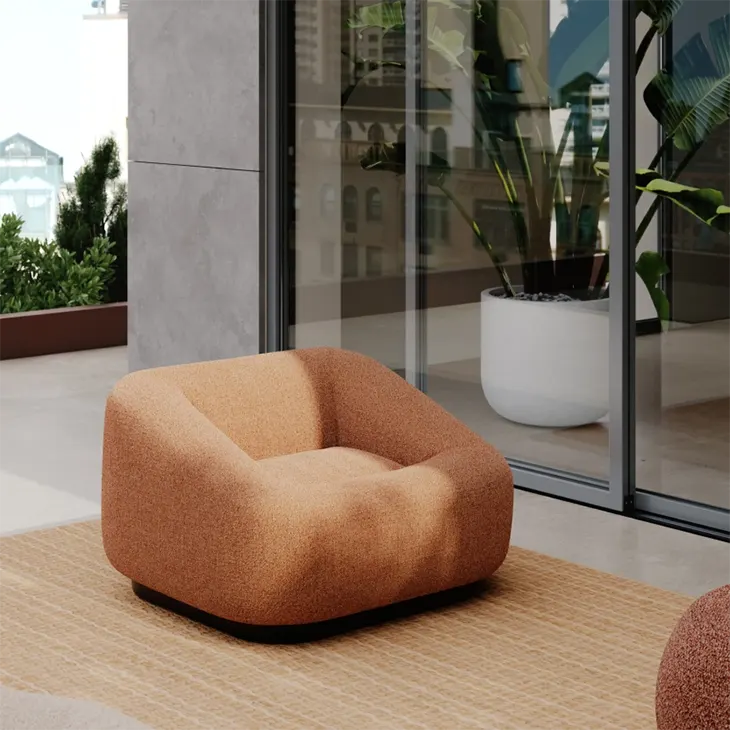
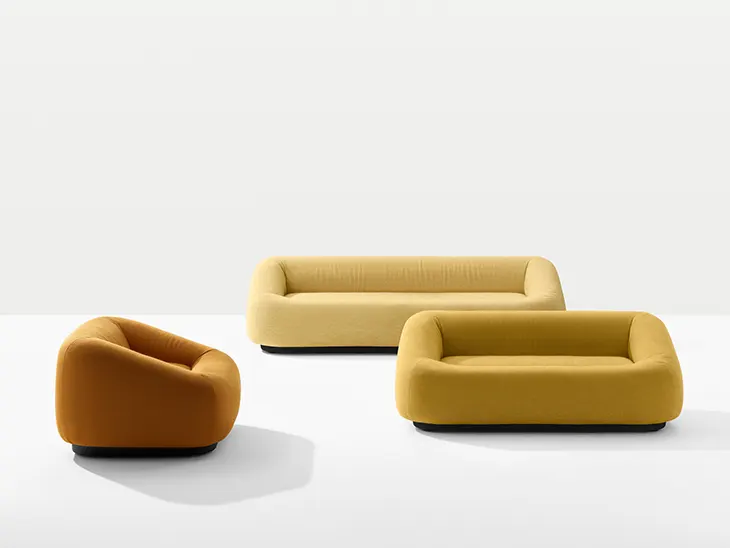
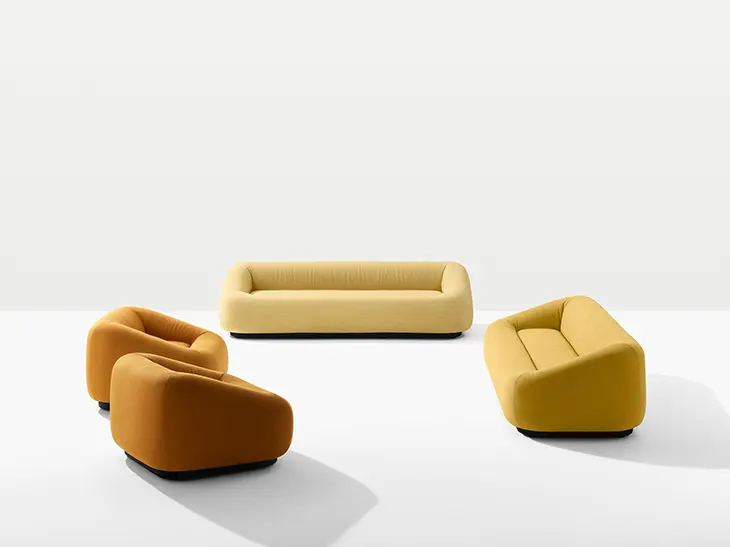
When Jean-Marie Massaud approached the brief for Aom developed with Arper, he did not treat sustainability as a marketing addendum. Instead, he made it foundational, embedding environmental responsibility into the product’s DNA through a radical principle of subtraction. The result is a collection of sofas and armchairs that challenge the furniture industry’s relationship with materials, manufacturing, and longevity.
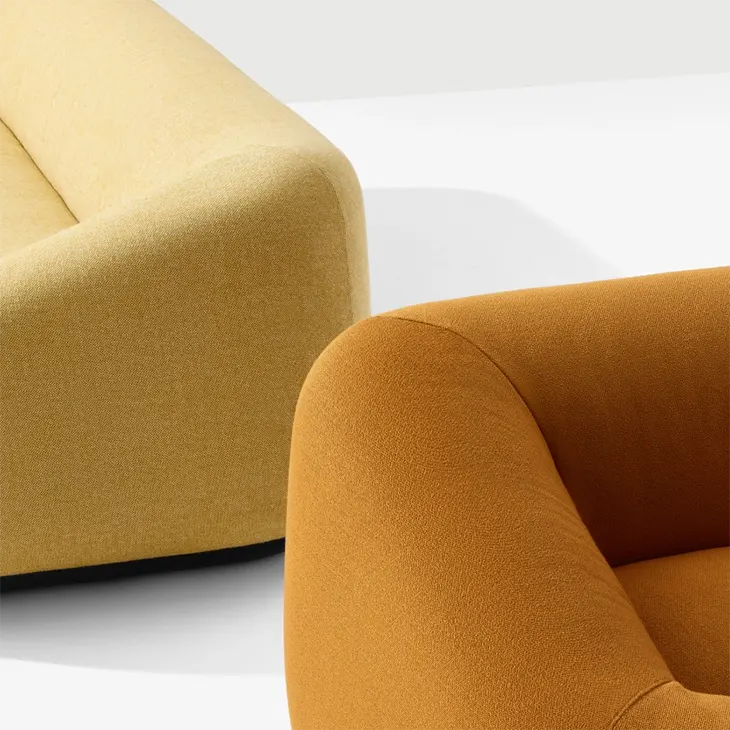
Aom reinterprets contemporary seating by removing the unnecessary. A lightweight structure in expanded polypropylene combines with Breathair® recycled polyester padding, eliminating polyurethane entirely and creating a nearly 100 percent reclaimable product. But more importantly, the design embraces a glue-free mechanical assembly system. Every component interlocks like a puzzle, held together by gravity and structural wrapping, allowing for complete disassembly and material recovery. This is not design concealing sustainability; it is design revealing it.
For a designer whose career has spanned everything from architectural environments to industrial objects, this tension between desire and obligation remains central. His work synthesizes three imperatives: individual and collective fulfilment, economic efficiency, and environmental necessity.
Yet Aom’s greatest strength may be its refusal to rely on moral virtue. Massaud describes it candidly as a hedonist product, one that should be purchased because people love it. The radical sustainability is, as he puts it, an invisible built-in bonus. This honesty is refreshing in an era where brands routinely conflate abstract promises with concrete action. Greenwashing, he argues, begins the moment marketing prioritizes emotional feeling over verifiable metrics.
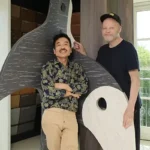
In conversation with ARCHISCENE‘s Editor in Chief Zarko Davinic, Massaud reflects on material choices, the role of designers in circular economy systems, and what success actually looks like for a responsible product. In our conversation Jean-Marie Massaud unpacks the philosophy behind Aom, from its engineering challenges to its place within an industry still grappling with the difference between less bad and meaningfully sustainable.
At what point in your process did you decide to treat the BOM as a design constraint rather than a logistical afterthought? – Designing a sofa and tackling upholstery with Arper provides a unique industrial framework and singular resources. The challenges of lightness, ecology, durability, and comfort were our initial, uncompromising ambition for this project. We explored several conceptual paths and different product architectures before refocusing on the Aom solution as it is industrialized today.
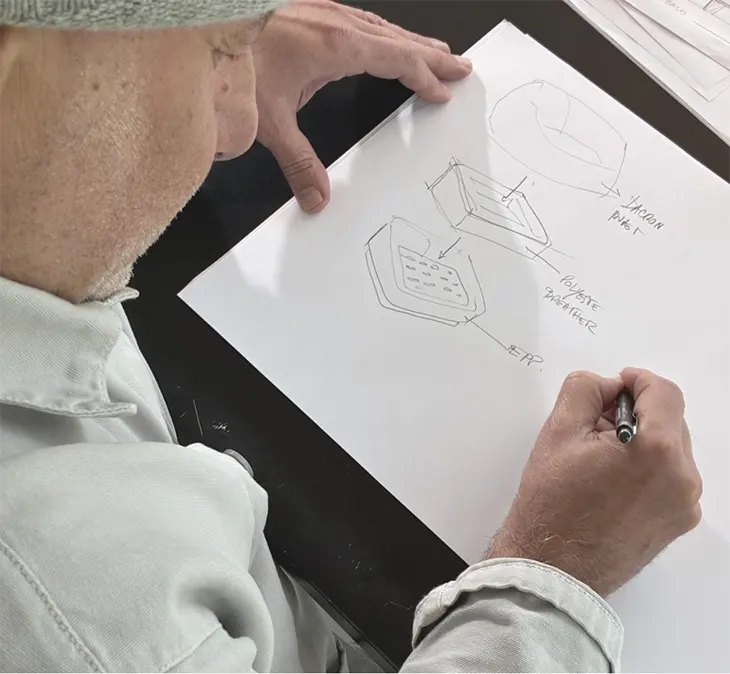
Breathair® is still a synthetic elastomer. How do you draw the line between a material that is meaningfully more sustainable and one that is simply less bad? – Providing soft, rot-resistant comfort for both indoor and outdoor use requires a flexible, deformable material. Our material is not a traditional elastomer, but rather a recyclable polyester, capable of multiple cycles, whose low density allows for significant savings in material mass. The most sustainable alternative would be to sit on a stretched fabric, like a hammock or a deckchair, but I do not think this is a model that users are ready to embrace just yet.
Good products last. For example, classic products such as Eames’ are still used and continually valued on the secondhand market. Recycling chains for complex, multi-material products are not yet very widespread, but they are growing, this is the inevitable direction of history.
Aom is “nearly 100% reclaimable.” What is the remaining fraction, and what would it take to close it? – There is no 100 % percent reclaimable product. Even with a mono material construction. You lose a small part of the matter while re-processing it. With Aom we are as close as we can of a totally circular item.
What was the hardest engineering problem you had to solve to make glue-free mechanical assembly hold up under real contract use? – Combining comfort and robustness for intensive indoor and outdoor use was the major challenge. Everything relies on interlocking, puzzle-like connections, gravity, and structural wrapping to ensure the cohesion of all components and successfully pass standard regulatory testing cycles.
Do you think Salone del Mobile still serves its original purpose, or has it become something else? – This is indeed a reflection of our era, its behaviors, and its preoccupations, driving desire and impulse buying at ever-cheaper prices. However, it is worth noting the emergence of new considerations and proposals that truly integrate and address the critical challenges of our time.
It is a dangerous category dilution. Fast fashion is fundamentally built on the premise of rapid obsolescence and artificial trends. Furniture design must stand for the exact opposite: permanence, material responsibility, and structural longevity.
Fast fashion brands are now positioning themselves within the interiors space at Salone. Is it a natural evolution or a category dilution? – It’s the very principle of the market economy. Brands strive to become empires. The reality is that the middle class is shrinking, leaving an upper class that signals its status through symbols of “luxury,” and lower-income classes who aspire to consume just as much, but at a lower price point. Hence the success of fast fashion within the home interiors market, and Chinese replicas making once-exclusive products accessible.
It is a dangerous category dilution. Fast fashion is fundamentally built on the premise of rapid obsolescence and artificial trends. Furniture design must stand for the exact opposite: permanence, material responsibility, and structural longevity.
Whose responsibility is end-of-life recycling: the designer, the manufacturer, or the retailer? – First of all, good products last. For example, classic products such as Eames’ are still used and continually valued on the secondhand market. Recycling chains for complex, multi-material products are not yet very widespread, but they are growing, this is the inevitable direction of history. Today, mono-material products are the ones being overwhelmingly recycled. That is precisely what motivated our choices for Aom.
Marketing across all brands promises eco-responsibility. However, everything is measurable and verifiable. It comes down to our collective culture, for each and every one of us, from users to the press. Rigorous new certifications are being established, particularly in Europe, and we are currently working on this for Aom.
Where does responsible communication end and greenwashing begin? – Greenwashing begins when you market an emotional feeling or an abstract concept instead of concrete metrics. Today, marketing across all brands promises eco-responsibility. However, everything is measurable and verifiable. It comes down to our collective culture, for each and every one of us, from users to the press. Rigorous new certifications are being established, particularly in Europe, and we are currently working on this for Aom.
Contract furniture gets replaced on short cycles. Does that tension worry you? – It is a fact that will certainly evolve. Then, it validates the entire concept of Aom. The short cycle of contract interiors is precisely why traditional furniture is so destructive. Because Aom is a very modular system, light, easy to move indoor and outdoor, easy to reconfigure. It embraces the reality of change without participating in the reality of waste.
Has your relationship to material responsibility changed over your career? – I have always been mindful of creative challenges and sought to offer symbiotic solutions in my designs, from the football stadium and the Life-Reef towers to the Manned Cloud airship. It is this approach, which reconciles desire and responsibility, that has always motivated me.
In the world of furniture, my work has revolved around the concept of lightness, which, I must admit, was initially more of an expressive and formal pursuit than a militant imperative. Today, it has become an absolute priority.
Purchasing behavior often contradicts sustainable values. Who is Aom actually designed for? – Aom is an hedonist product that proposes an easy chic experience. We hope people will buy it because they love it. Its Radical sustainability is an invisible built-in bonus. We cannot rely on the consumer’s moral virtue to save the world.
What does environmental success look like for Aom in ten years? – Succes would be that after ten years, Aom would be still competent and loved by its users.
For more log on to arper.com. Continue reading here for latest furniture features on ARCHISCENE.