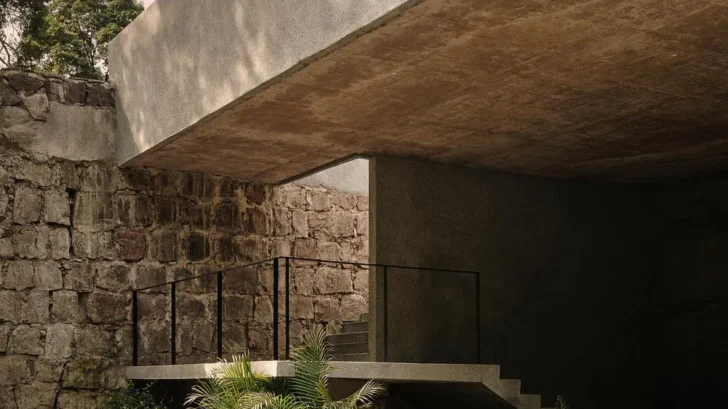

ZOLAND Emei Resort by Studio J. Bridgland approaches hospitality through restoration, restraint and close attention to place. Located in Emeishan City, China, the boutique mountain retreat transforms a group of dilapidated structures into a secluded resort that sits within the forested terrain rather than imposing itself on it. The project covers 2,900 square meters, with 2,516 square meters of indoor space, and was completed in 2025.
HOTELS
The design begins with the idea of architectural quietude. Studio J. Bridgland avoids visual excess and allows the mountain setting to guide the project’s scale, rhythm and material language. Buildings follow a staggered, village-like composition, recalling stone dwellings set into a hillside. Traditional pitched roofs and deep eaves appear through a contemporary lens, creating a connection between local building memory and present-day retreat architecture.
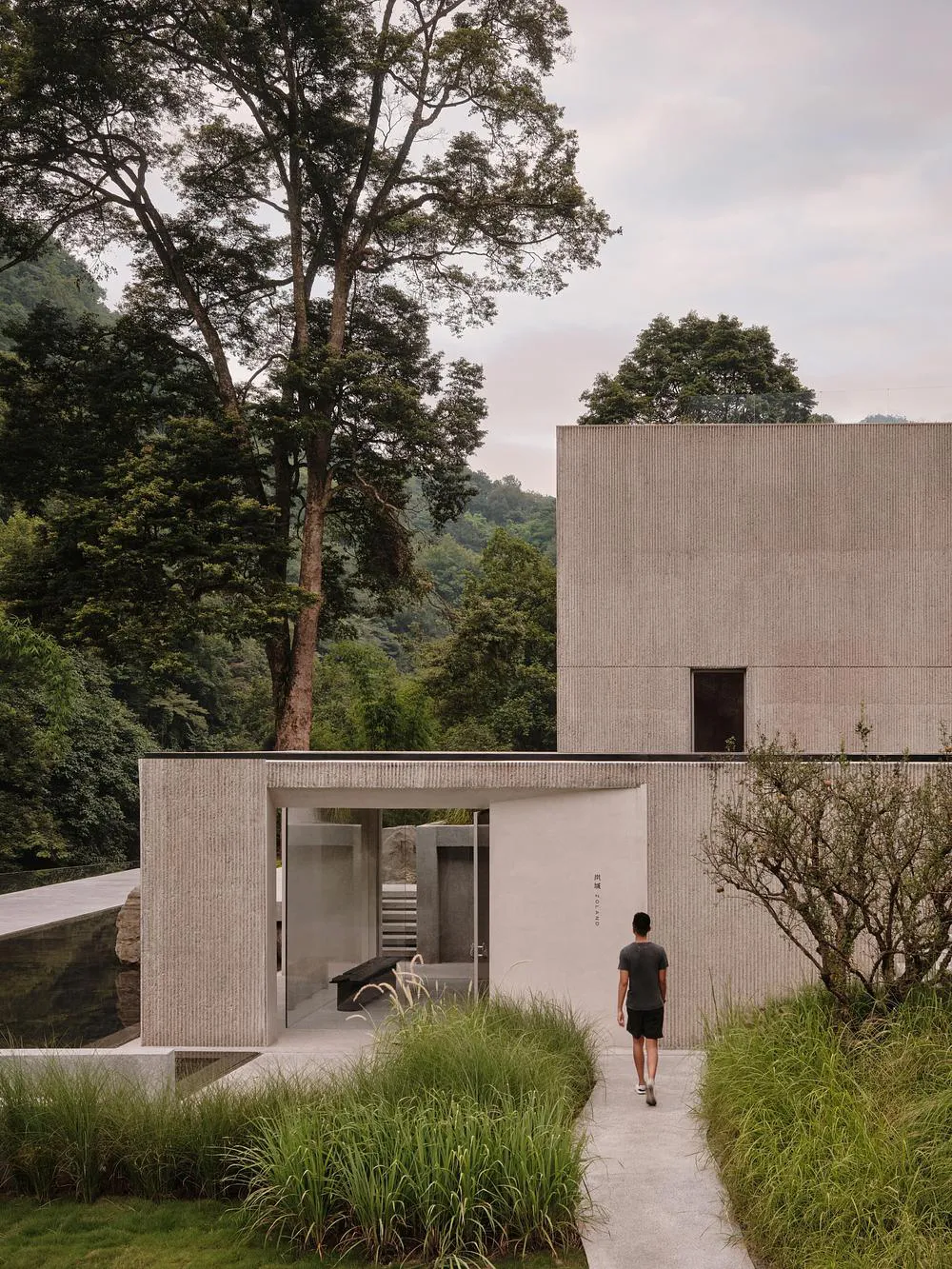
At the entrance, hand-chiseled textured concrete gives the façade a strong physical presence. Its rough surface grounds the resort immediately, introducing a material language based on tactility and craft. Rather than masking the architecture, the concrete expresses weight, labor and permanence, setting the tone for a project built around slow perception.
The central courtyard forms the social heart of the resort. Framed by architecture and mountain views, it brings guests into direct contact with the landscape. An ancient Zhennan tree stands at its center, surrounded by a reflecting pool. As the valley’s oldest and tallest tree, it becomes the project’s natural anchor, giving the courtyard a sense of continuity and quiet authority.
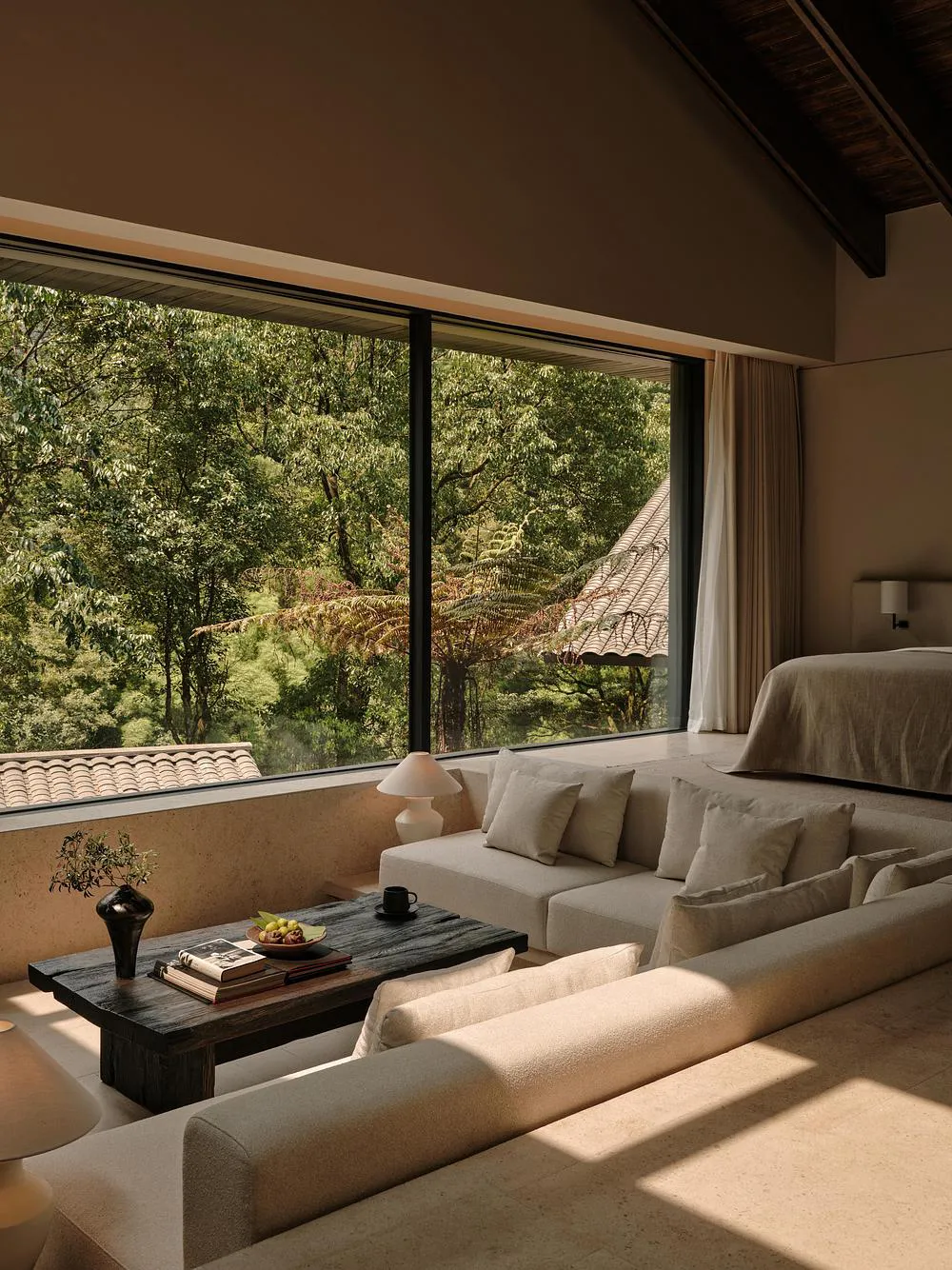
Throughout the resort, Studio J. Bridgland uses thresholds to soften the separation between interior and exterior. In the spiritual space, floor-to-ceiling glazing opens the room toward the forest, allowing light, trees and weather to become part of the interior experience. The architecture does not frame nature as decoration. It uses it as an active presence.
The dining hall continues this dialogue between local craft and refined structure. Traditional Leshan gray tiles cover the roof, while a cedar framework gives the ceiling warmth and rhythm. Schist stone sourced from Emei Mountain roots the walls in the site’s geology, making the building feel tied to its terrain through material as much as form.
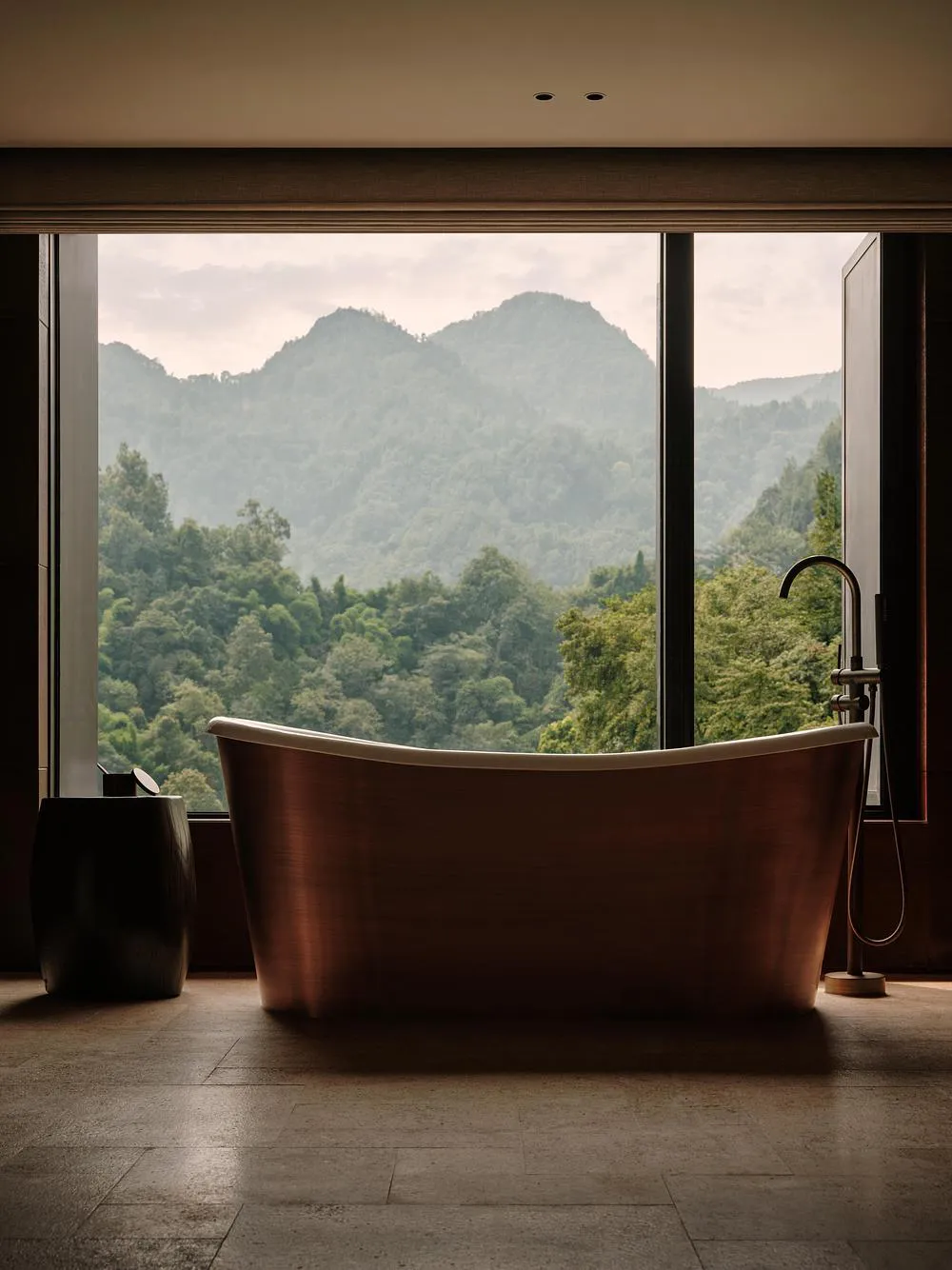
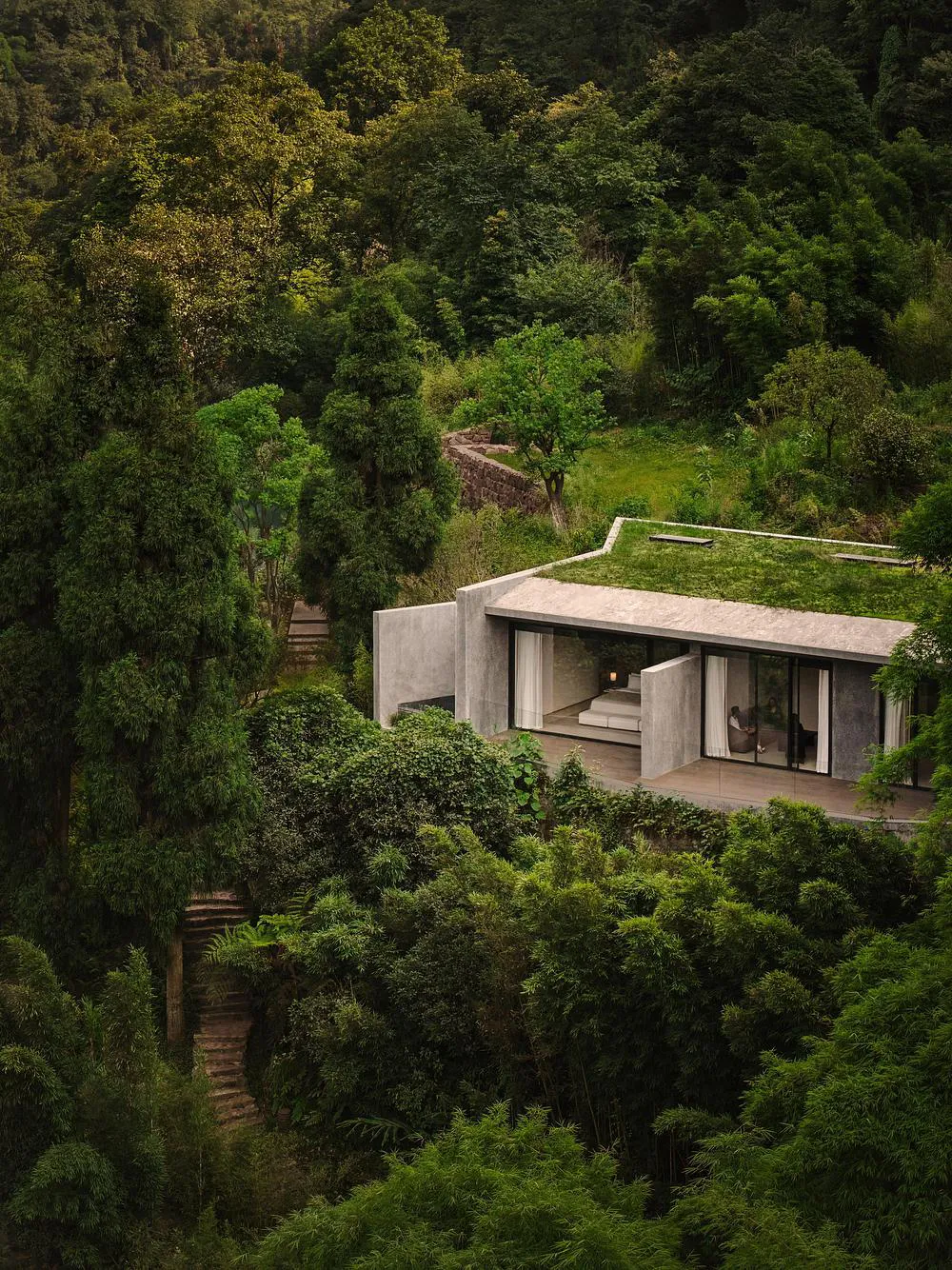
Guest suites occupy a washed stone-clad structure at the highest point of the site. The building sits discreetly beneath a lifted green landscape, nearly disappearing from the exterior. Inside, floor-to-ceiling windows open toward mountain views, turning the rooms into quiet observation points.
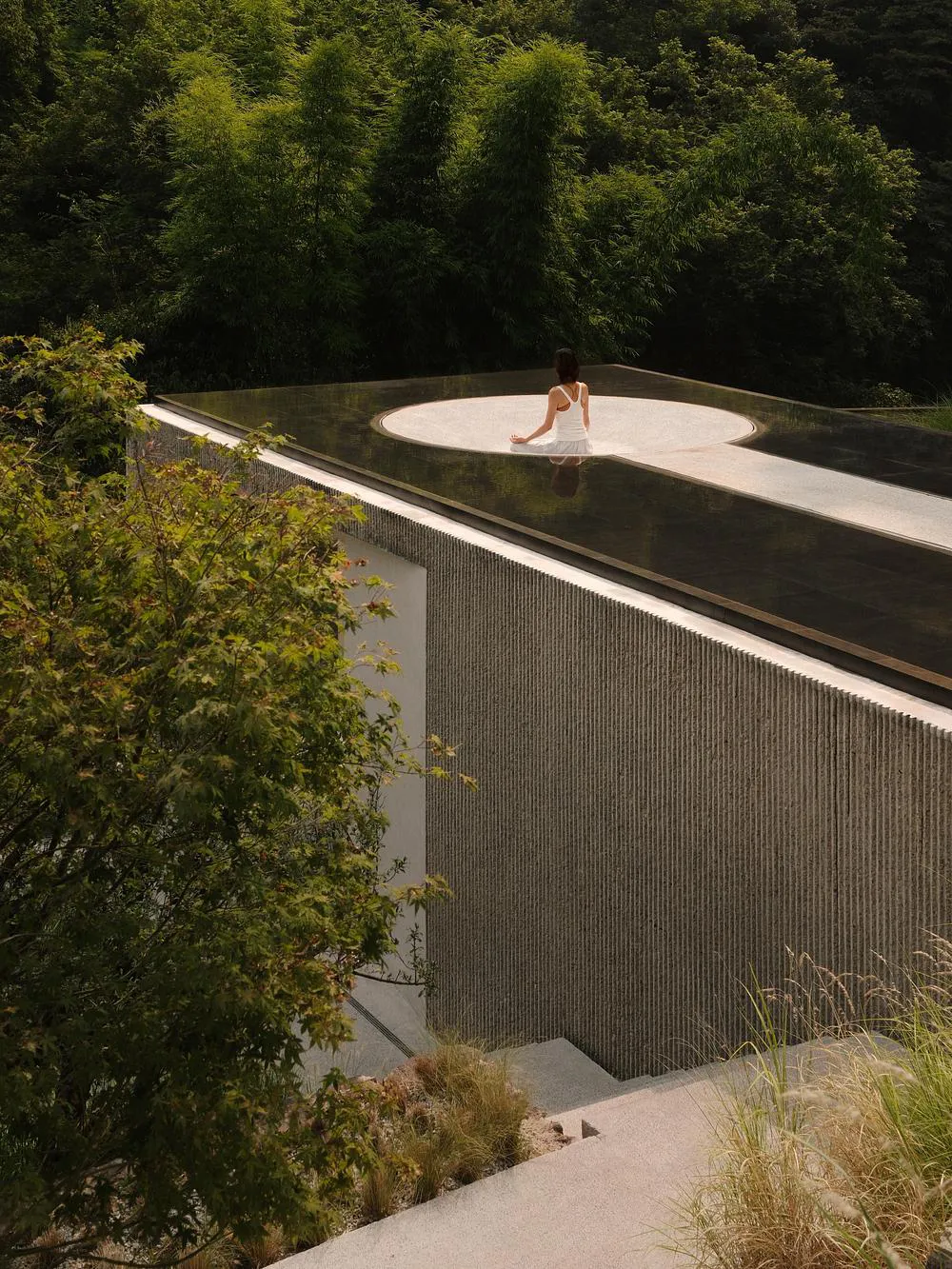
The bathrooms deepen the material connection to the land through deep red local stone. Outdoors, a stone pool finished in washed stone and green granite extends the bathing experience into the mountain terrain. The pool blurs the line between architecture and landscape, giving wellness a direct physical link to place.
ZOLAND Emei Resort treats regeneration as both architectural and experiential. Studio J. Bridgland does more than renew old structures. It creates a retreat where material, landscape and silence work together, inviting guests to slow down and reconnect with the mountain around them.