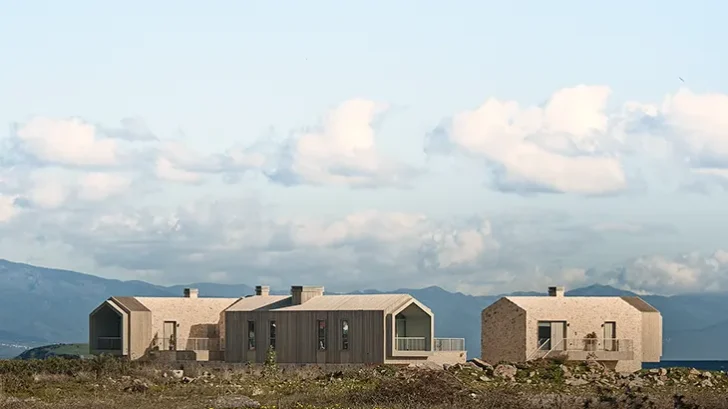

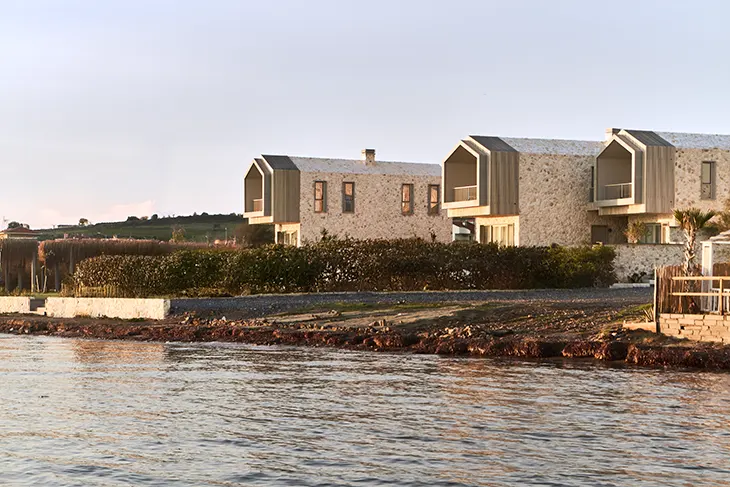
SOUR presents Pur, a residential recording studio set on the Aegean island of Cunda, developed for Pur Records. The project positions architecture as an active participant in music production, working from the idea that the environment shapes not only how sound is made, but how it is experienced and remembered. This premise informs every decision, from spatial sequencing to material selection, establishing the studio as both a technical facility and a social structure.
MIXED USE
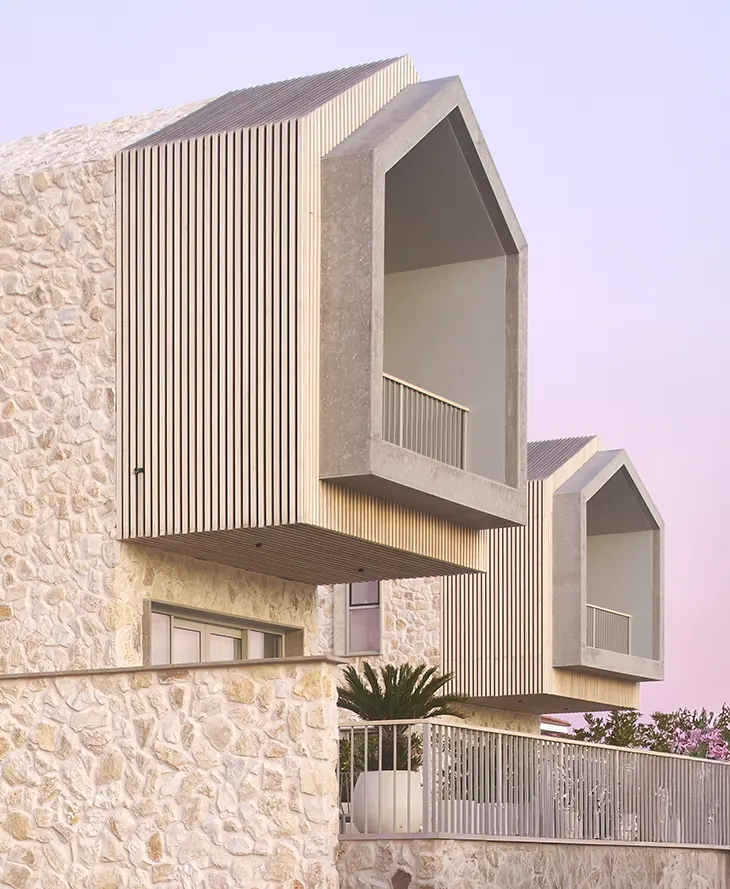
The design operates between two conditions. On one side, the site holds a defined character shaped by sea, wind, olive trees, and local building traditions. On the other, the project demands high acoustic performance at a professional level. SOUR resolves this by aligning the local and the global rather than separating them. The building adopts a two-storey masonry and timber structure that reflects Cunda’s architectural language while refining its construction for contemporary use.
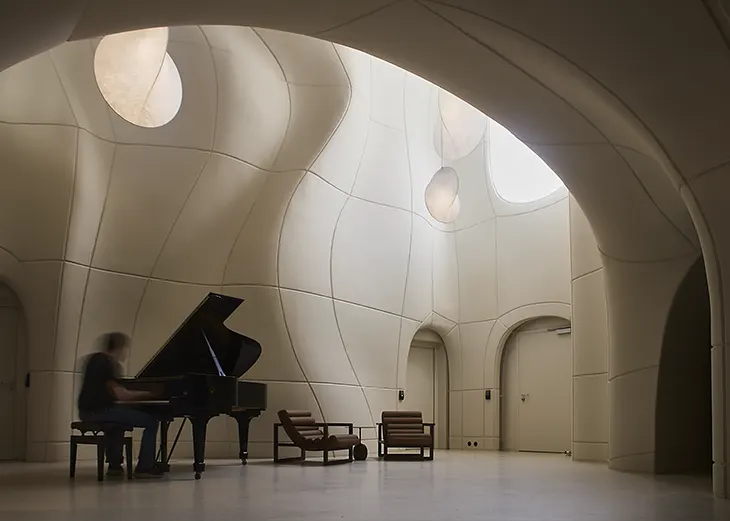
Inside, the project shifts into a controlled acoustic environment. Spaces unfold as a sequence of calibrated sound conditions, where volume, proportion, and surface define how each room performs. The architecture does not act as a neutral container. Each space produces a distinct sonic character, directly tied to its geometry and material composition.
A GFRC shell marks the transition between these two conditions. It introduces a clear threshold that separates the exterior calm of the island from the interior precision of the studio. This shift reads as spatial compression and release, guiding users into an environment where sound becomes the primary organising element. The experience extends vertically, drawing users down into the Musician’s Lounge at a lower level while maintaining access to natural light.
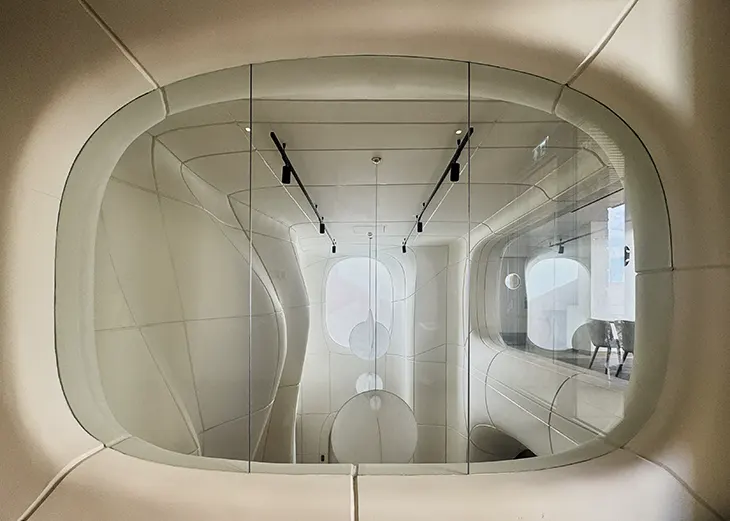
The recording infrastructure follows a box-in-box system, ensuring acoustic isolation across all key spaces, including live rooms, control room, vocal and percussion rooms, and mastering suites. The main live room accommodates up to a 75-piece orchestra, with adjustable ceiling panels and sliding partitions that allow the space to shift in response to different recording conditions. These elements position the studio as a flexible instrument rather than a fixed environment.
Social and technical functions remain closely linked throughout the project. A double-height restaurant anchors the shared experience, connecting interior spaces with outdoor terraces and the surrounding landscape. This integration supports the studio’s role as a place of gathering as much as production, where collaboration extends beyond the recording process.
Pur develops through a co-design process involving both local and international musicians. Their input shapes the spatial logic, prioritising access to nature, spaces for focused work, and areas for rest. The result is a project where architecture operates as infrastructure for cultural production, defined by use, collaboration, and the conditions that support them.