
Set within Toronto’s High Park neighbourhood, this renovation by Reign Architects reworks a traditional Edwardian house into a clear, open domestic environment shaped by light, movement, and material control. The project addresses a familiar condition found in many early 20th-century homes, compartmentalized layouts that restrict daylight and disconnect interior life from the garden. Here, the intervention focuses on removing those barriers and reorganizing the ground floor into a continuous spatial sequence that supports contemporary living without erasing the character of the original structure.
HOUSING
The design begins with a decisive structural move. A double-width brick wall that once divided the plan is removed, allowing the house to open from front to back. This gesture does more than increase space. It establishes long sightlines and introduces a sense of order that was previously absent. Circulation now unfolds naturally, with each zone maintaining its identity while remaining visually connected. The relocation of the kitchen to the rear positions daily activity at the brightest point of the house, where a large sliding opening extends the interior toward the garden and draws daylight deep into the plan.
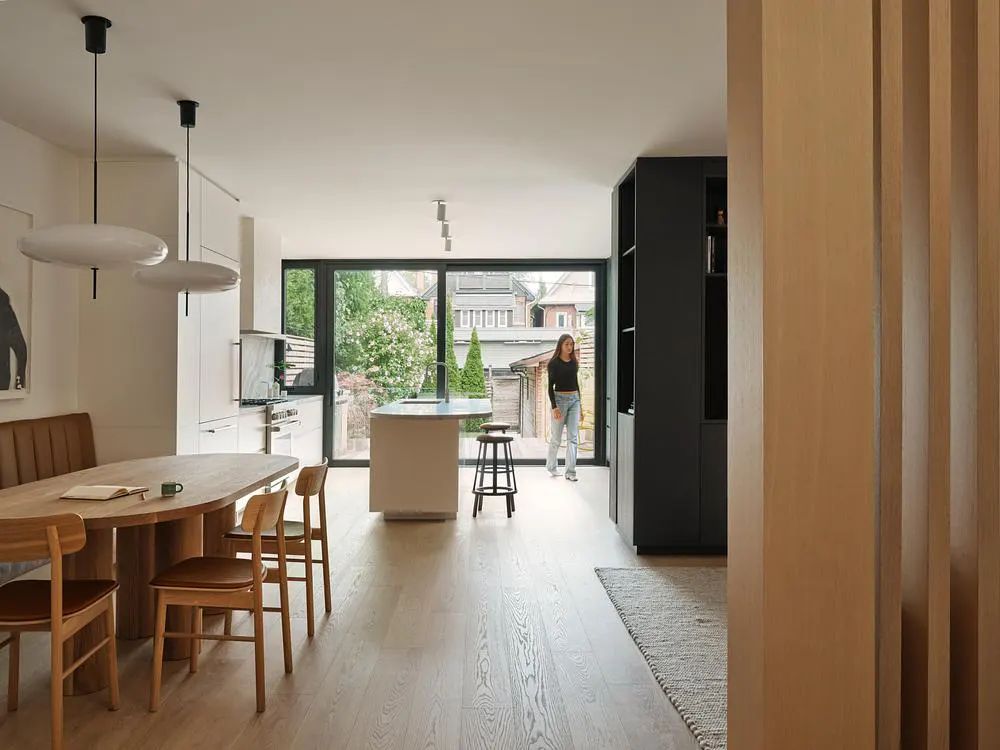
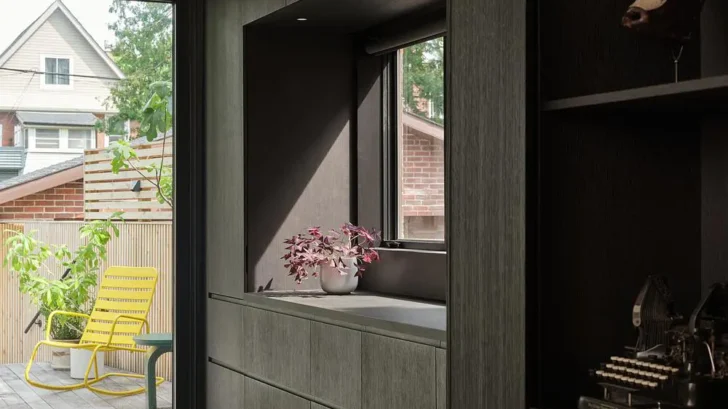
Millwork operates as the primary architectural device. Charcoal-stained oak runs continuously through the main floor, shaping transitions, integrating storage, and defining boundaries without interrupting flow. Its presence feels structural rather than decorative. It anchors the space and guides movement with precision. A recessed opening within this system frames the exterior as a controlled view, where seasonal change becomes part of the interior experience. This move reinforces the project’s focus on framing rather than filling space.
Material selection remains disciplined. White oak flooring stretches across the plan, creating continuity underfoot. Limestone-washed walls soften the interior with a matte, diffused surface that absorbs and reflects light in equal measure. Quartzite introduces variation through subtle veining, adding depth without disrupting the overall restraint. In the kitchen, the absence of upper cabinets keeps sightlines open, replaced instead by a single stone shelf that supports everyday objects while maintaining visual clarity. The curved island introduces a softer geometry, easing movement and defining the space as a central point for gathering.
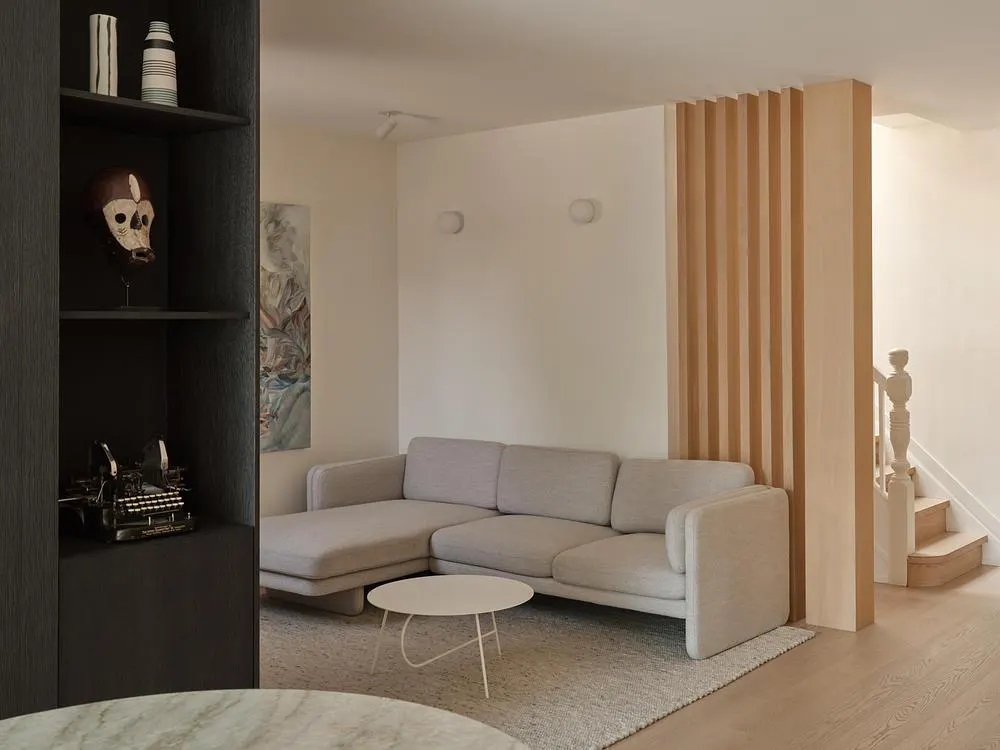
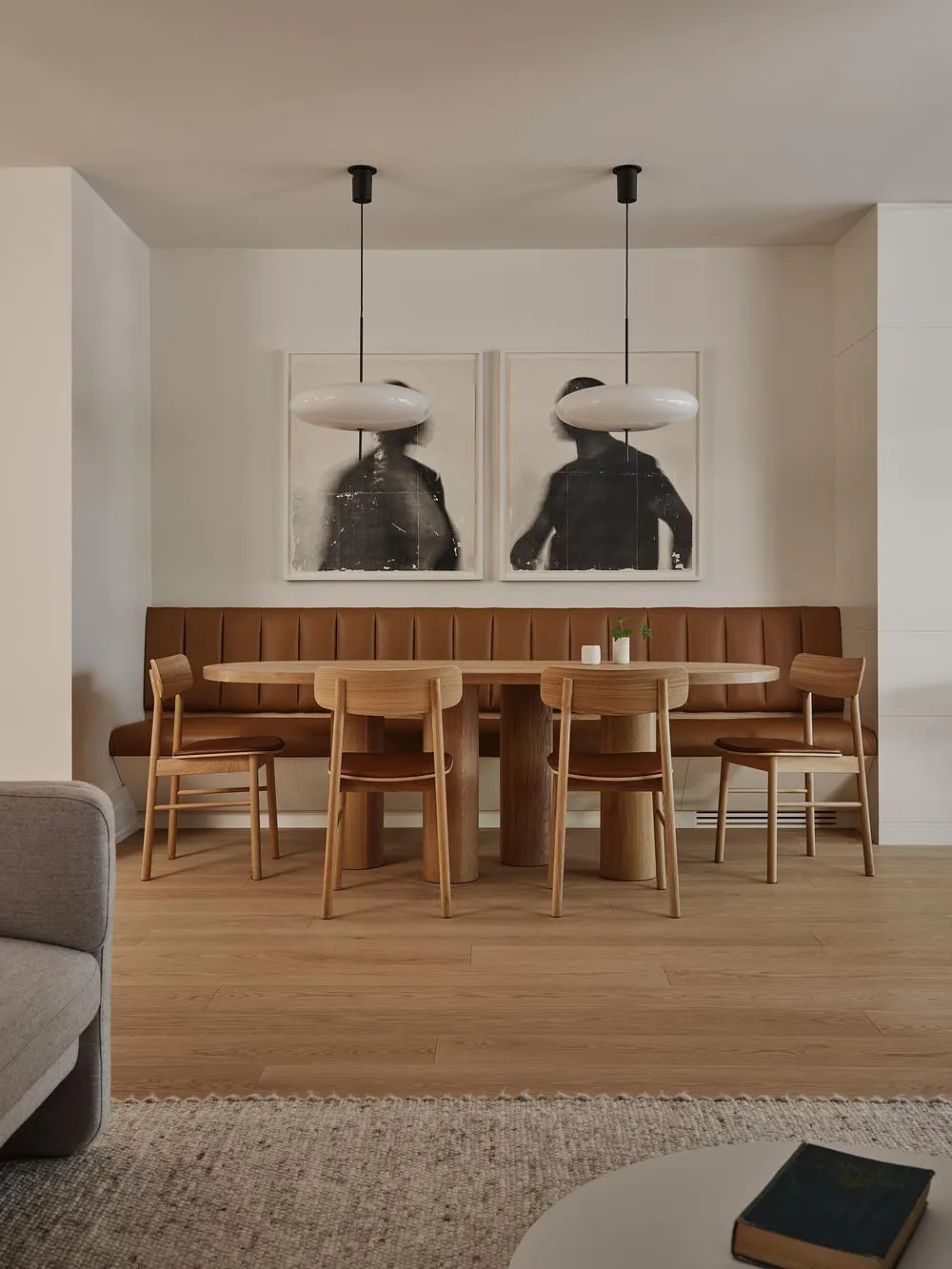
The dining area continues this approach with careful control of scale and proximity. A built-in banquette maintains circulation while creating a focused setting for meals. Rounded edges and tactile materials bring comfort without excess. Every element supports use, with no gesture that feels unnecessary. This restraint allows the architecture to hold attention through proportion and placement rather than visual noise.
The relationship to the garden plays a central role in how the house operates. The rear deck extends the interior outward through flush thresholds and consistent material language. Thermory ash decking and cedar fencing create an enclosed outdoor space that functions as an additional room. Planting and filtered light reinforce a sense of privacy while maintaining openness. This connection allows the house to expand beyond its footprint, giving the main floor a spatial reach that exceeds its physical limits.
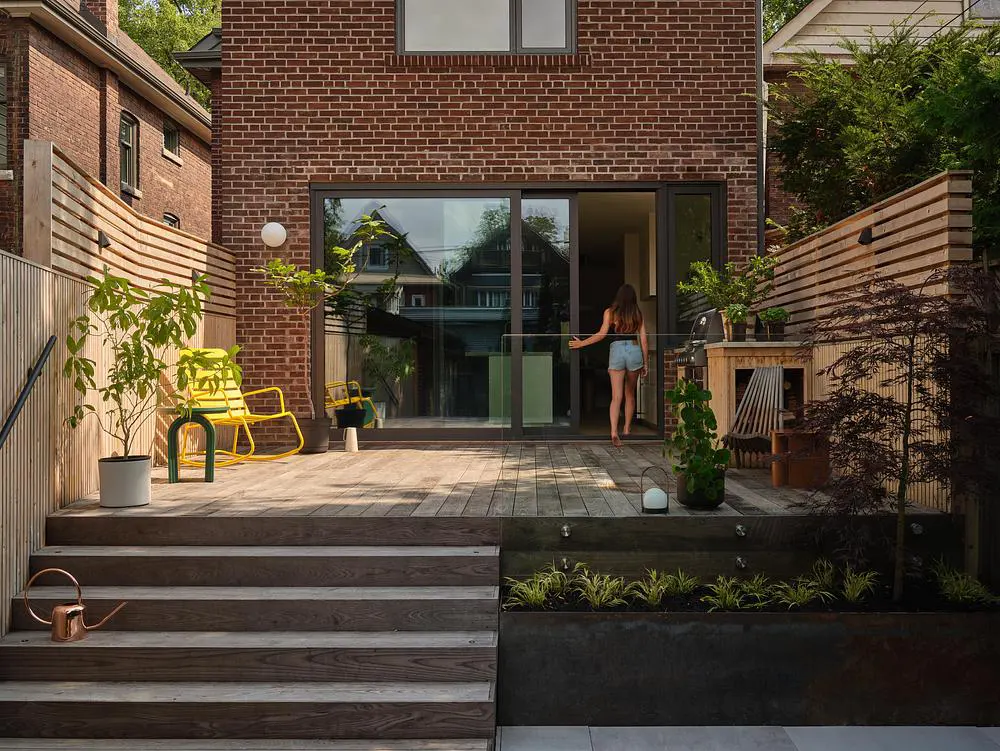
Light remains the defining element throughout the project. With limited opportunities for side openings, the design relies on strategic glazing and reflective surfaces to distribute daylight across the interior. Materials respond to these conditions, shifting tone as light changes throughout the day. Artificial lighting stays secondary, supporting function without competing with natural illumination. This controlled approach ensures that the atmosphere evolves gradually, shaped by time and use.
Reign Architects delivers a project that prioritizes clarity over expression. The renovation refines the existing structure into a coherent living environment where material, proportion, and light work together with precision. The house supports everyday routines with ease while maintaining a strong architectural identity grounded in restraint and continuity.