
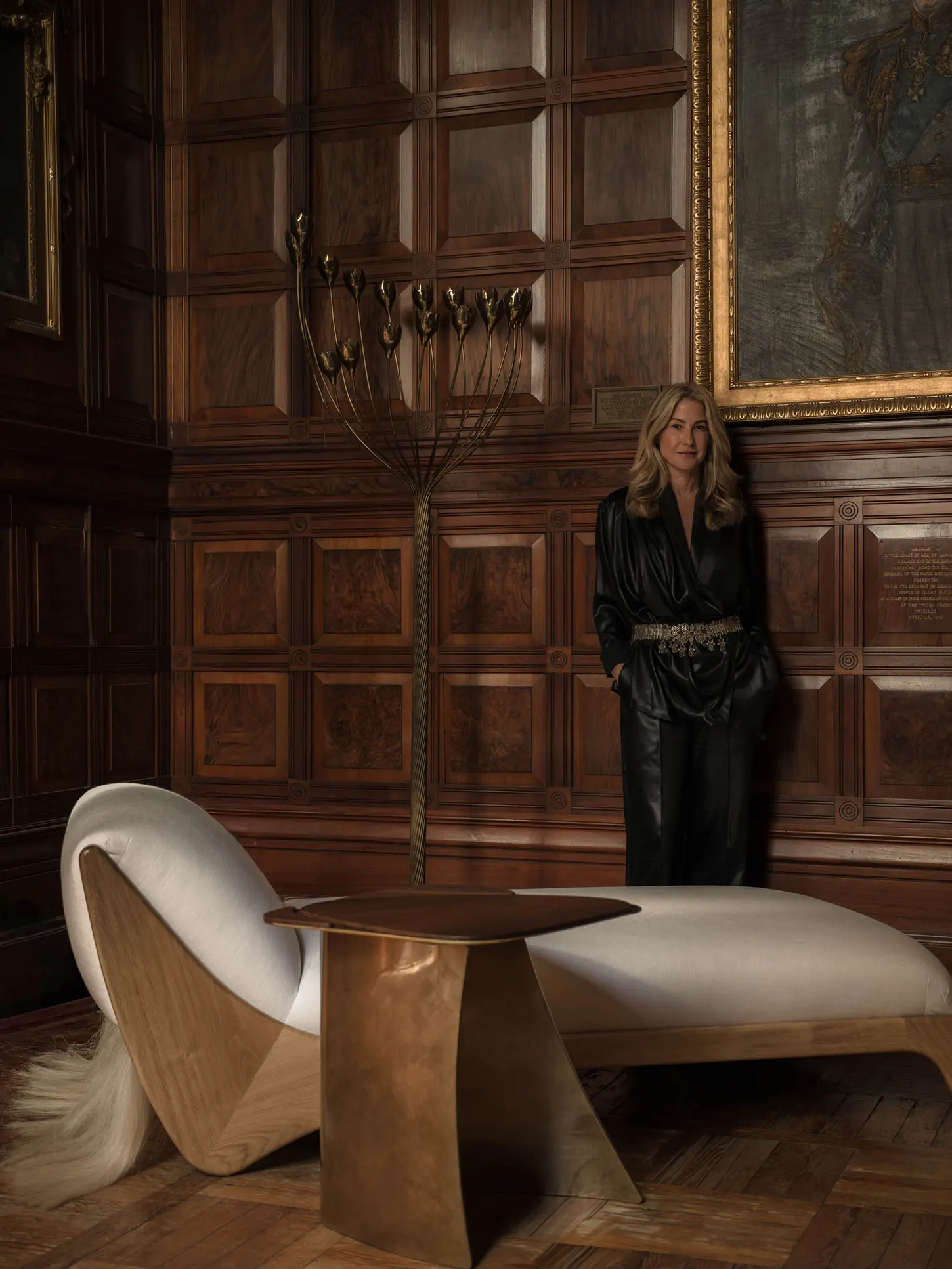
Jessica Gersten has always treated interiors like narrative, not backdrop, and Cavalo reads as her clearest statement yet. Debuting exclusively with STUDIOTWENTYSEVEN, the new lighting collection, co-designed with artist and artisan Jason J. Koharik, lands in a context that understands furniture as art and material as message. For Gersten, that alignment is not branding, it is methodology. The gallery already represents her Lusitano Collection, and Cavalo extends that relationship with the confidence of a second chapter, one that feels personal, precise, and quietly ambitious.
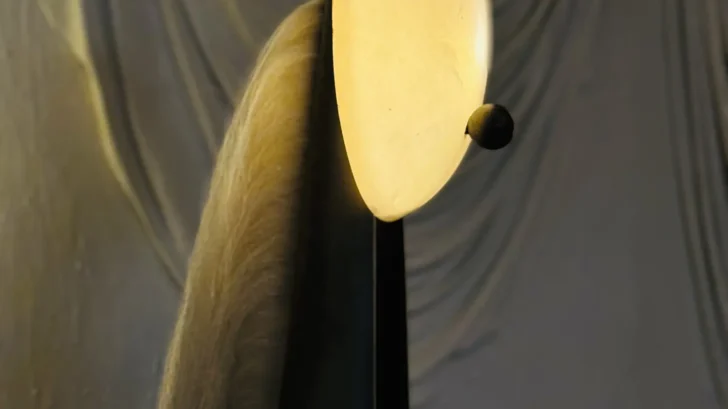
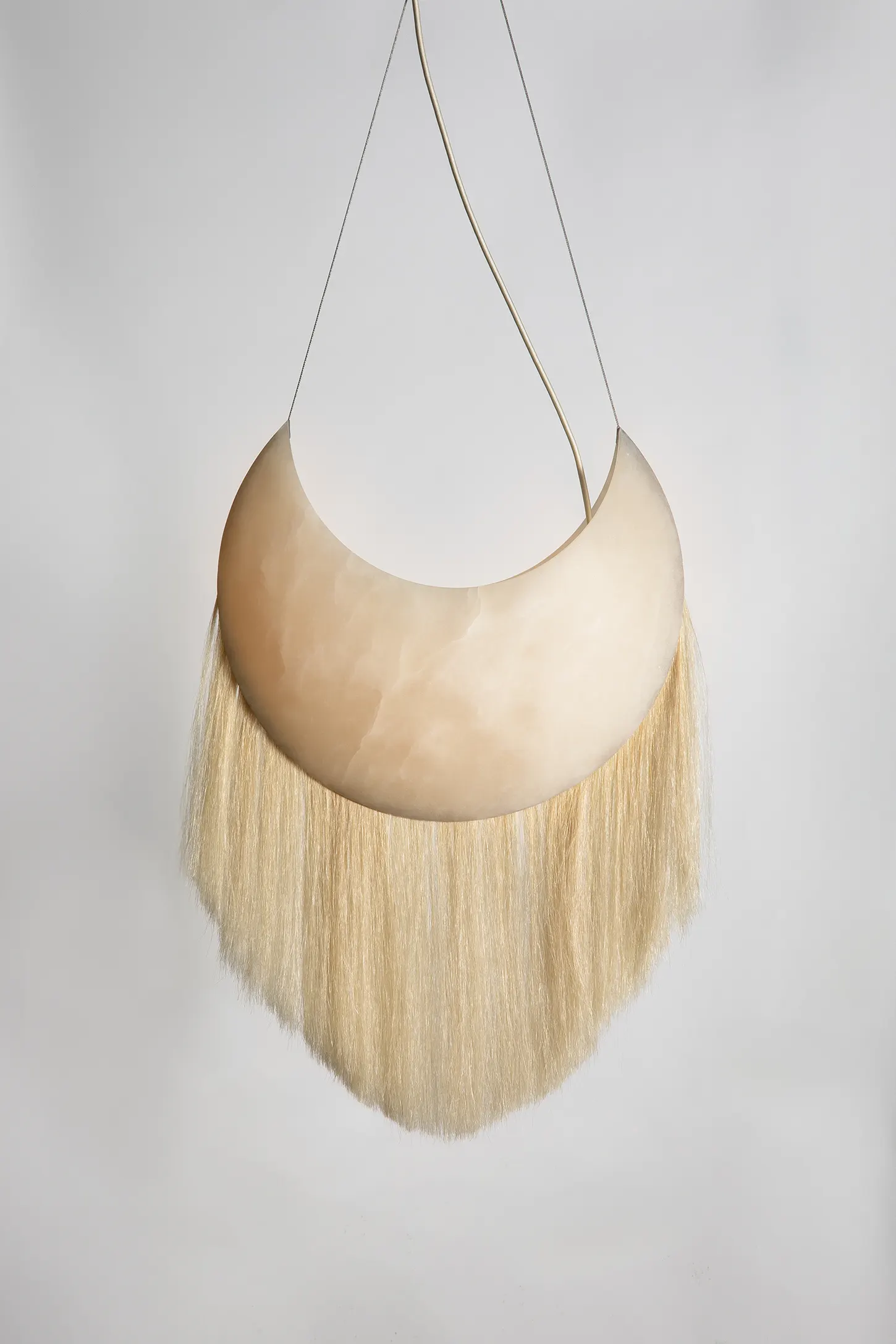
Built from solid antique brass, hand-sculpted alabaster, and woven horsehair, Cavalo is anchored in a shared respect for integrity and craft, but it is the tension between those materials that gives the work its charge. Horsehair, tactile and fashion-coded, becomes architectural, less ornament than structure. Alabaster, luminous and variable, introduces softness and uncertainty, filtering light in a way that shifts the emotional temperature of a room. Brass holds the composition with weight and clarity. The result is lighting that does not simply illuminate, it establishes presence.
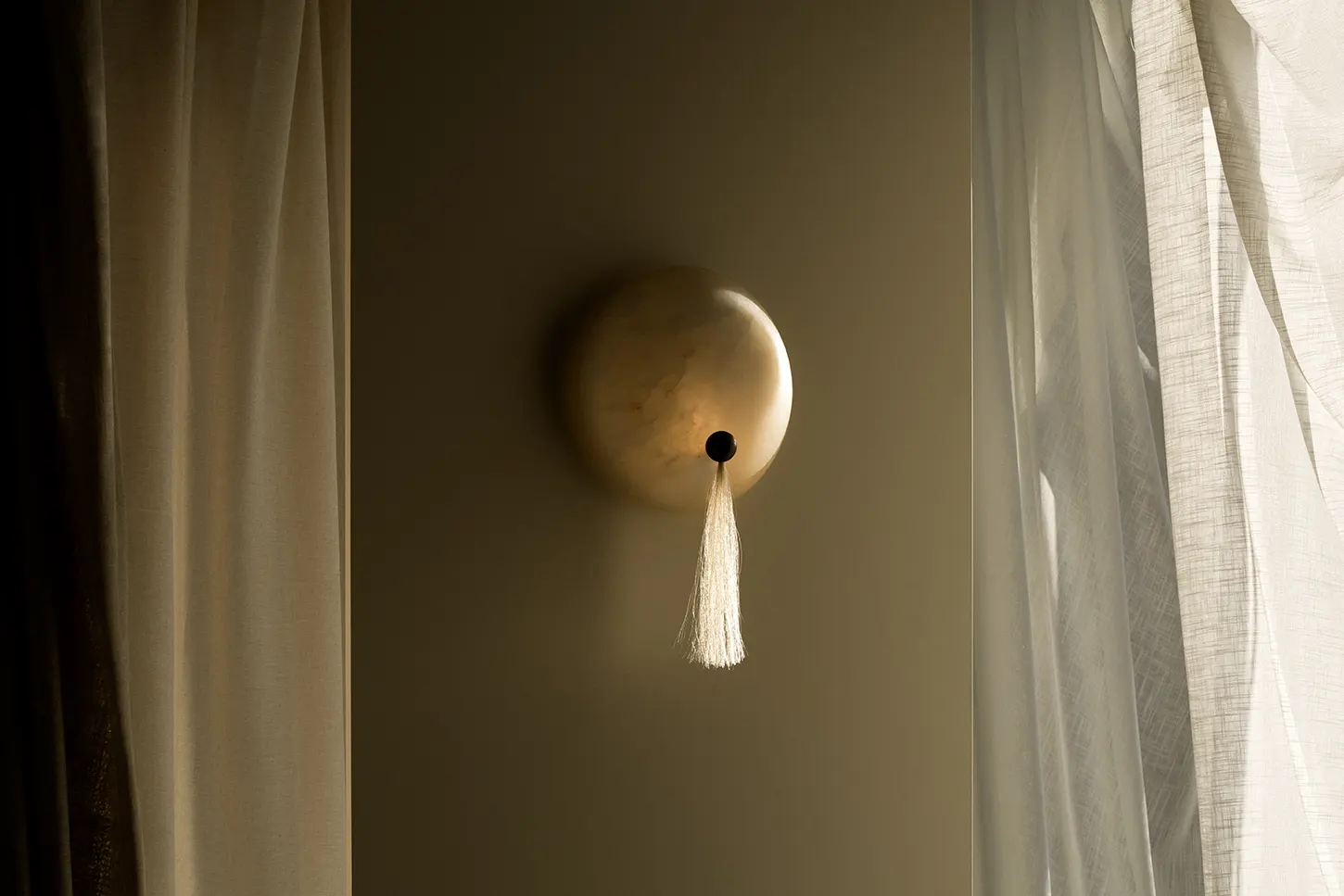
In conversation with ARCHISCENE / DSCENE Magazine Editor in Chief Zarko Davinic, Gersten describes silhouette as the first signal, the element that sets the tone before the details reveal themselves. From there, Cavalo unfolds slowly, through texture, movement, and the subtle drama of light passing through stone. There is also a surreal edge, an untamed energy in the horsehair’s free-flowing quality, that offsets the discipline of the forms and keeps the pieces from feeling overly resolved.
LATEST LIGHTS STORIES ON ARCHISCENE
Cavalo also strengthens the conceptual through-line of Lusitano, rooted in Portugal, in naming, production, and cultural memory. Moving between architecture, interiors, and collectible design, Gersten approaches lighting as atmosphere, a tool for shaping experience. With Cavalo, she makes that atmosphere tangible, sculptural, and unmistakably alive.
Cavalo debuts with STUDIOTWENTYSEVEN. What about their program and point of view made them the right first home for this collection? – STUDIOTWENTYSEVEN is known for its refined curation of collectible design, where furniture is presented as art, so it’s always felt in alignment with how we think about our own work, as pieces meant to be both experienced and admired. It already feels like home, as the gallery carries our Lusitano Collection, our horsehair furniture line, and now introduces Cavalo, our newest collection co-designed with artist and artisan Jason J. Koharik, making the evolution of that relationship feel both natural and personal.
STUDIOTWENTYSEVEN founded by Nacho Polo has a very specific visual language across design and art. How did that context shape how you edited, styled, or presented Cavalo for its debut? – STUDIOTWENTYSEVEN’S focus on unique pieces defined by extraordinary vision and exquisite craftsmanship offered a natural context for how Cavalo could be presented. In dialogue with that refined, art-driven sensibility, often associated with founder Nacho Polo, we leaned into a luxurious materiality and sculptural forms so the collection would feel at ease within the space, rather than shaped by it.
Designing lighting shifts the focus from individual objects to the overall atmosphere, yet, like furniture, materials, and form, it is part of a larger dialogue where all disciplines speak to one another.
When you imagine someone encountering Cavalo for the first time, what do you want them to notice first, silhouette, material tension, or the quality of light? – The silhouette establishes the presence and emotional tone of each piece. The horsehair and material tension reveal themselves, along with the way light softly filters through the alabaster, adding depth and a quiet sense of mystery.
The collection is built around antique brass, hand-sculpted alabaster, and woven horsehair. What was the earliest anchor material, and how did the others get chosen to support it? – Materiality was what first brought Jason and me together creatively for this collection. Horsehair remained the foundation, paired with alabaster as a secondary material, we were drawn to its softness and the way it filters light so beautifully.
Horsehair is a charged material, tactile, fashion-coded, and historically decorative. What associations did you want to keep, and what did you want to subvert? – We wanted to honor horsehair’s rich history, its tactile quality, its association with fashion, and its decorative elegance, while also subverting expectations by using it in a sculptural, architectural way.
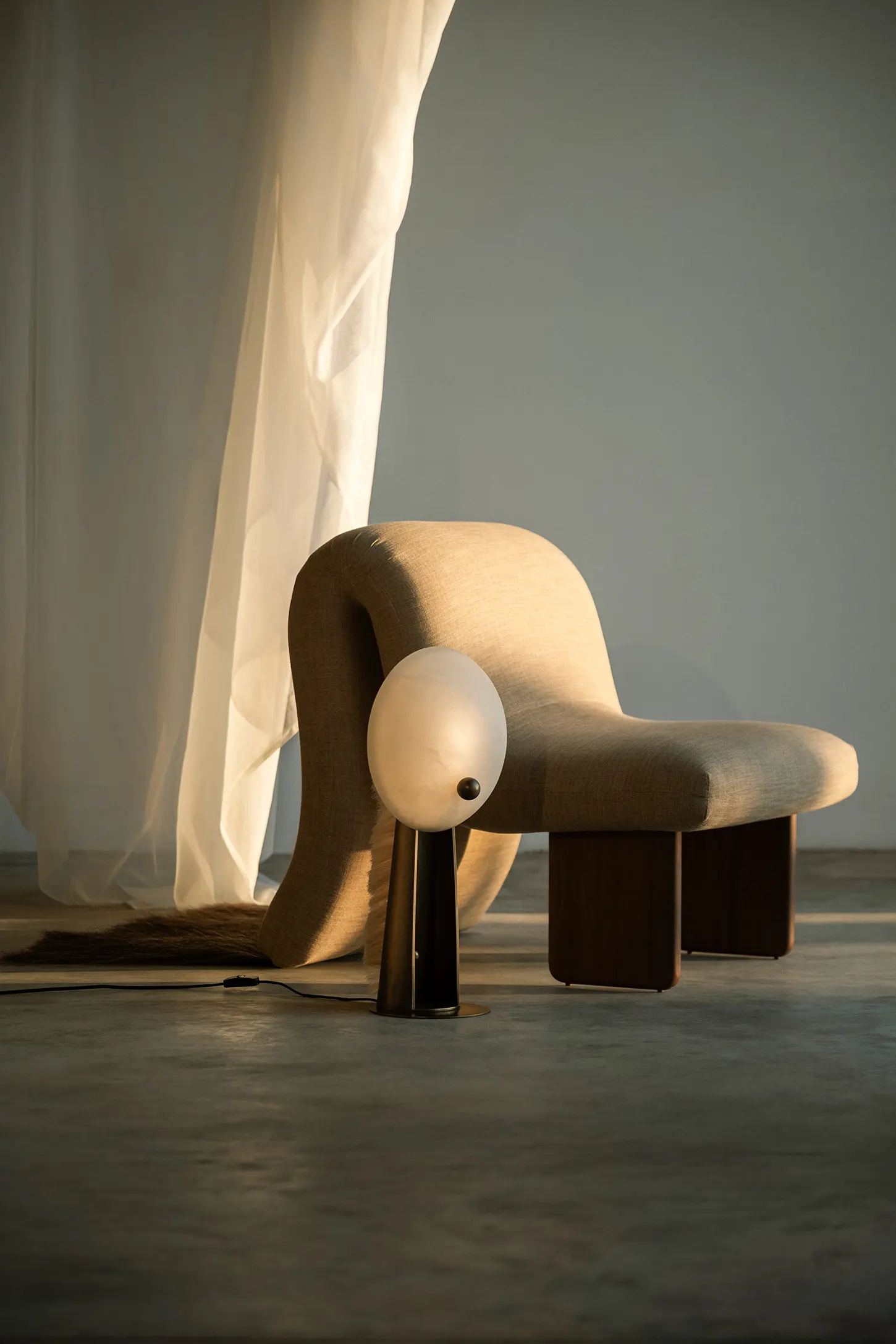
Alabaster can be unforgiving. It is luminous but also heavy, fragile, and variable. How did you work with that unpredictability while still keeping the forms precise? – We embraced alabaster’s fragility and variability, letting its luminous qualities guide the forms.
Your work often balances harmony with a subtle sense of whimsy and irony. Where does that show up in Cavalo, in proportion, detailing, naming, or the way the pieces behave in a room? – In Cavalo, a sense of the surreal comes through the horsehair’s earthy, free-flowing quality. Its natural movement and texture bring an almost untamed energy to the pieces, contrasting with the solidity of brass and the softness of alabaster. This balance of grounded materials and lively, flowing forms creates a collection that feels both sculptural and quietly alive within a space.
Cavalo pairs naturally with your Lusitano furniture line. What is the conceptual through-line between the two collections, beyond the shared use of horsehair? – Beyond the shared use of horsehair, both Cavalo and Lusitano are united by a concept deeply rooted in Portugal. From the names of the pieces to where they are produced, and in the stories and inspirations behind them, each collection reflects a connection to Portuguese heritage, craftsmanship, and cultural identity.
You move between interiors, architecture, and collectible design. How does designing lighting change your thinking about space, mood, and narrative compared to furniture or full residential projects? – Designing lighting shifts the focus from individual objects to the overall atmosphere, yet, like furniture, materials, and form, it is part of a larger dialogue where all disciplines speak to one another. Each element is born from the same point of view and unified sense of aesthetics, shaping not just the look of a space but how it is truly experienced.
Discover more of the collection in our gallery: