
Woak returns to Milano Design Week 2026 with a presentation inside the new Convey building at via San Senatore 10, close to Torre Velasca. The Bosnian furniture brand, known for its work with solid wood, uses the occasion to introduce new collections by Antonio De Marco and Naessi, along with an expanded color palette. Curated by Woak art director /àr-o/ studio, the exposition places the brand’s material language inside a controlled setting shaped by reflection, color, and the structural possibilities of wood.
FURNITURE
For Woak CEO Dalibor Petrović, Milan continues to play a decisive role in the company’s development. This year’s presentation centers on collaboration, with designers invited to expand the brand’s range while staying close to its woodworking knowledge. Houdini, designed by Antonio De Marco, and Pluri, designed by Naessi, approach wood through two different systems of thought. One works through reduction and illusion, while the other builds through repetition, modularity, and personal storage. Together, they show how Woak continues to develop its identity through precision, craft, and formal research.
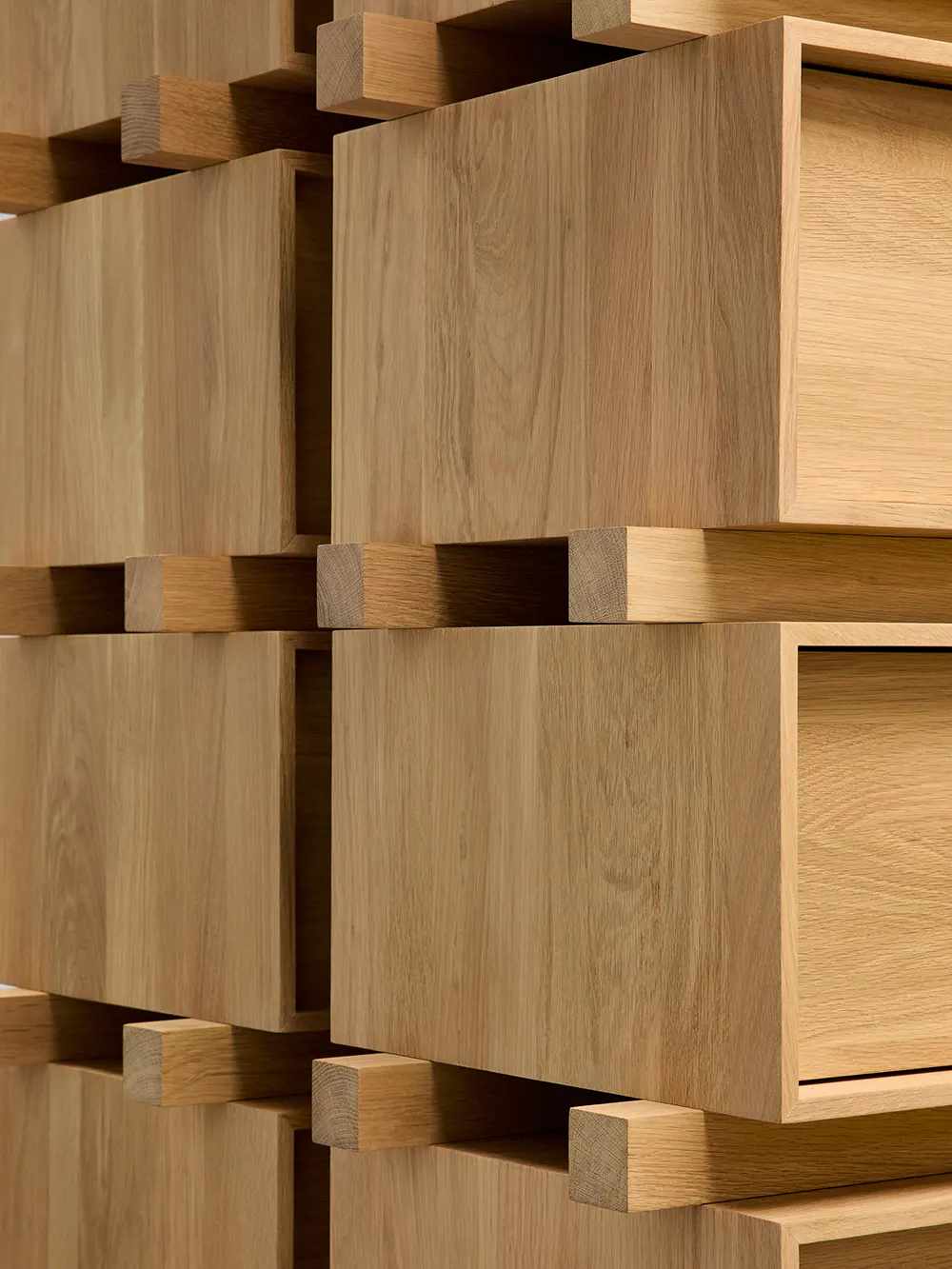
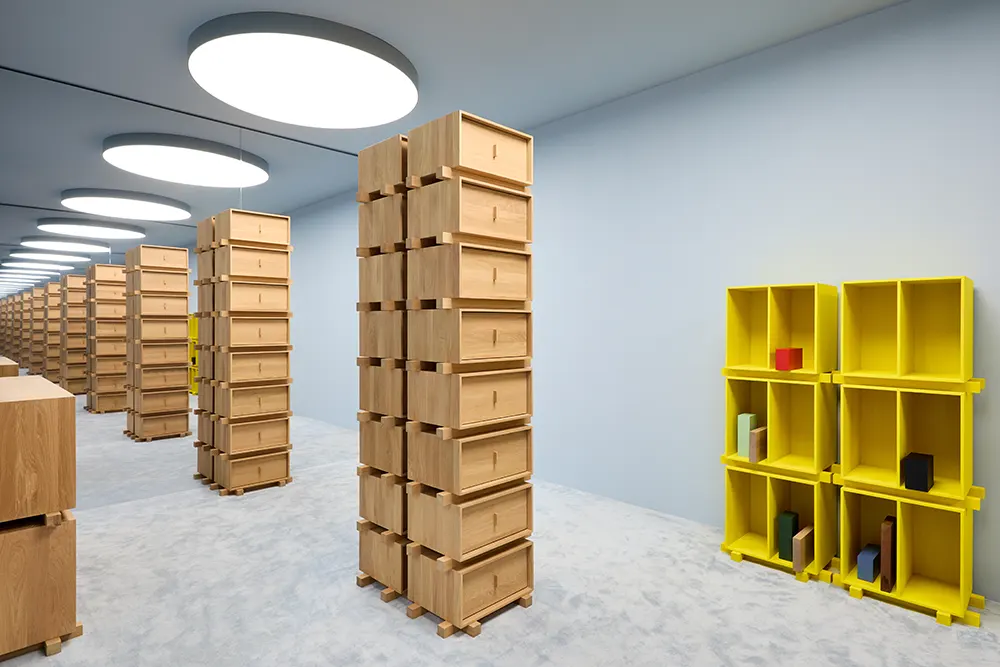
The staging creates a calm, monochromatic environment, with dusty-blue walls forming a restrained shell around the pieces. Against this setting, the warmer tones of wood and the strong red of the Houdini stool create direct points of tension. Mirrored surfaces expand the room, multiply viewpoints, and reinforce the modular logic of Pluri. Andrea Steidl and Raquel Pacchini of /àr-o/ studio describe the concept as a way to express the potentially infinite nature of the Pluri system through reflections that extend its presence across the space. Wood remains the central material, while color and mirror sharpen the reading of each object.
Houdini, Antonio De Marco’s new stool for Woak, reduces seating to three solid wood elements. Made from bent ash, the design consists of a generous curve, a seat, and a transverse base. Its simplicity gives the piece its effect. When someone sits on it, the body hides the curved support, creating the impression that the seat floats. De Marco connects the design to the illusionist Harry Houdini, using the act of sitting as a small spatial performance. The stool turns a functional object into a visual trick, while its construction keeps the focus on the physical limits and expressive potential of solid wood.
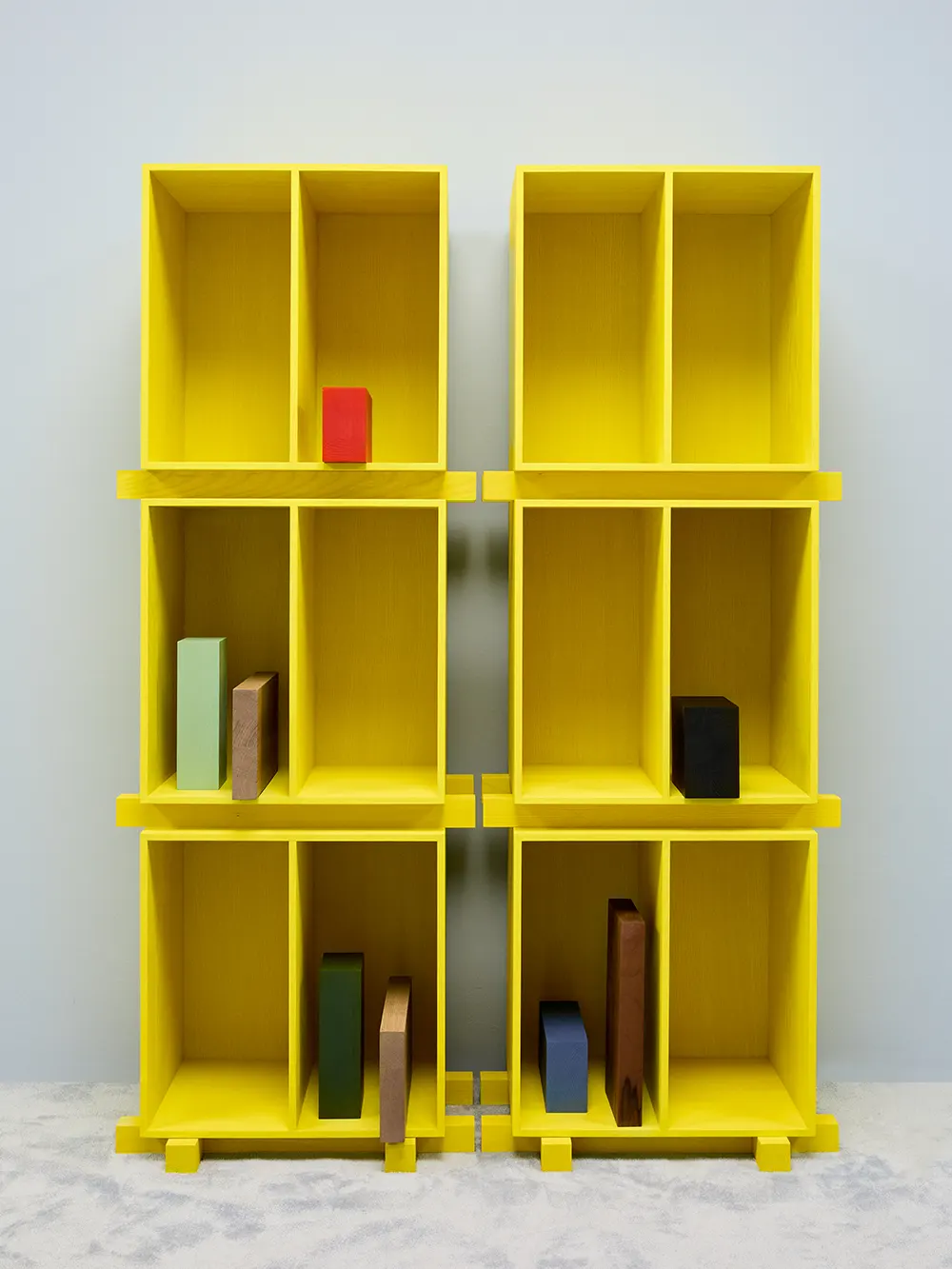
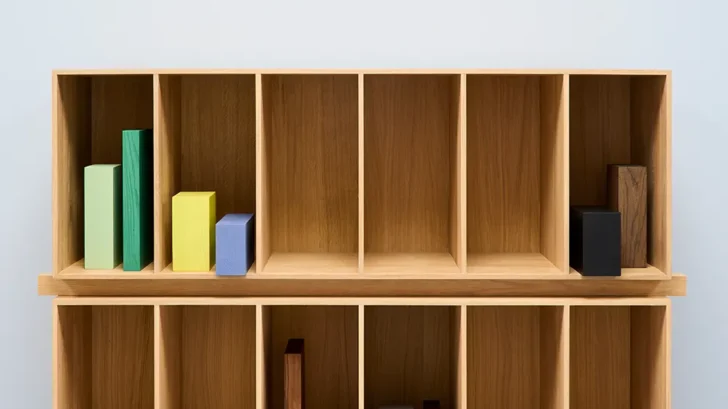
Pluri, designed by Naessi, moves in a different direction. The modular system takes its name from the Latin prefix “pluri,” suggesting plurality, repetition, and variation. Its structure starts from a basic unit, either open or closed, that can repeat and combine into different configurations. The result functions as an open archive for contemporary living, where storage becomes an act of selection and care. Naessi founders Eleonora and Alessandro connect the project to their own habit of collecting fragments, materials, and small objects that carry personal value. Pluri gives that practice a formal structure, turning everyday observation into a design system.
The presentation also introduces a new Woak color palette, with mint green, yellow, red, green, gray, blue, burgundy, and black expanding the brand’s visual range. These colors create new possibilities for composition across the collection, giving solid wood a broader field of expression. The palette works with the material instead of covering its character, allowing color to become part of the construction of atmosphere, use, and identity. In this context, Woak treats color as a design tool that can shift how a piece relates to a room, an object, or a larger architectural setting.
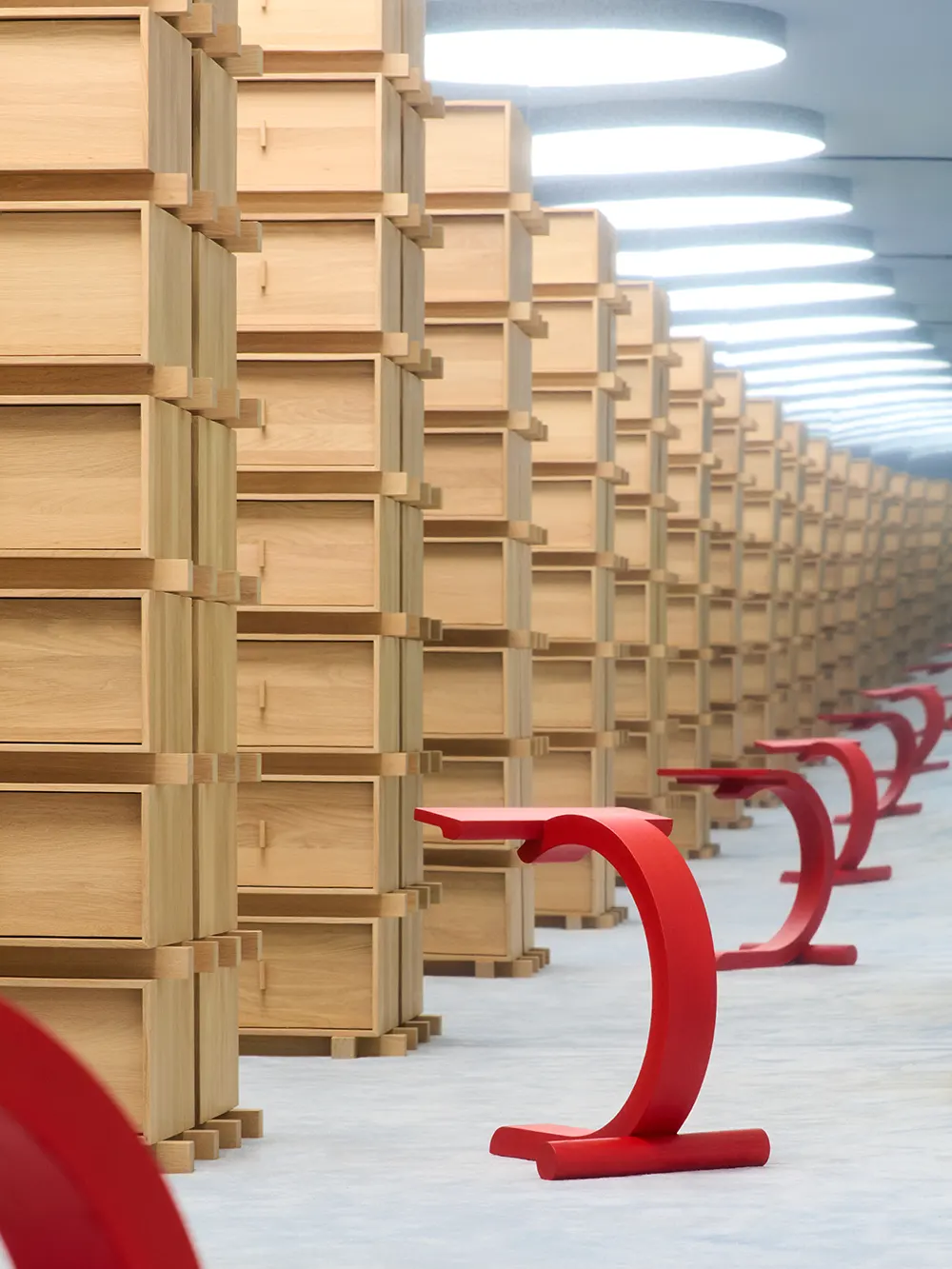
The Rudi stool by Zaven, first presented for Woak during Milano Design Week 2024, completes the installation and connects the new presentation to the brand’s recent design path. Across the Convey building, Woak uses Milano Design Week 2026 to show a clear direction: solid wood remains the foundation, while new collaborations, modular systems, optical effects, and color research open the collection toward more flexible interiors. The result places the brand between craft and experimentation, with each piece carrying a precise idea about how wood can shape space, storage, movement, and perception.